how much beer for a party
How Much Beer for a Party? A Simple Buying Guide
Calculate beer for your party with guest counts, beer share, can and keg sizes, and clear examples for Orange County weddings and private events.
By BeeHive Mobile Bar ··9 min read
Updated
In this guide
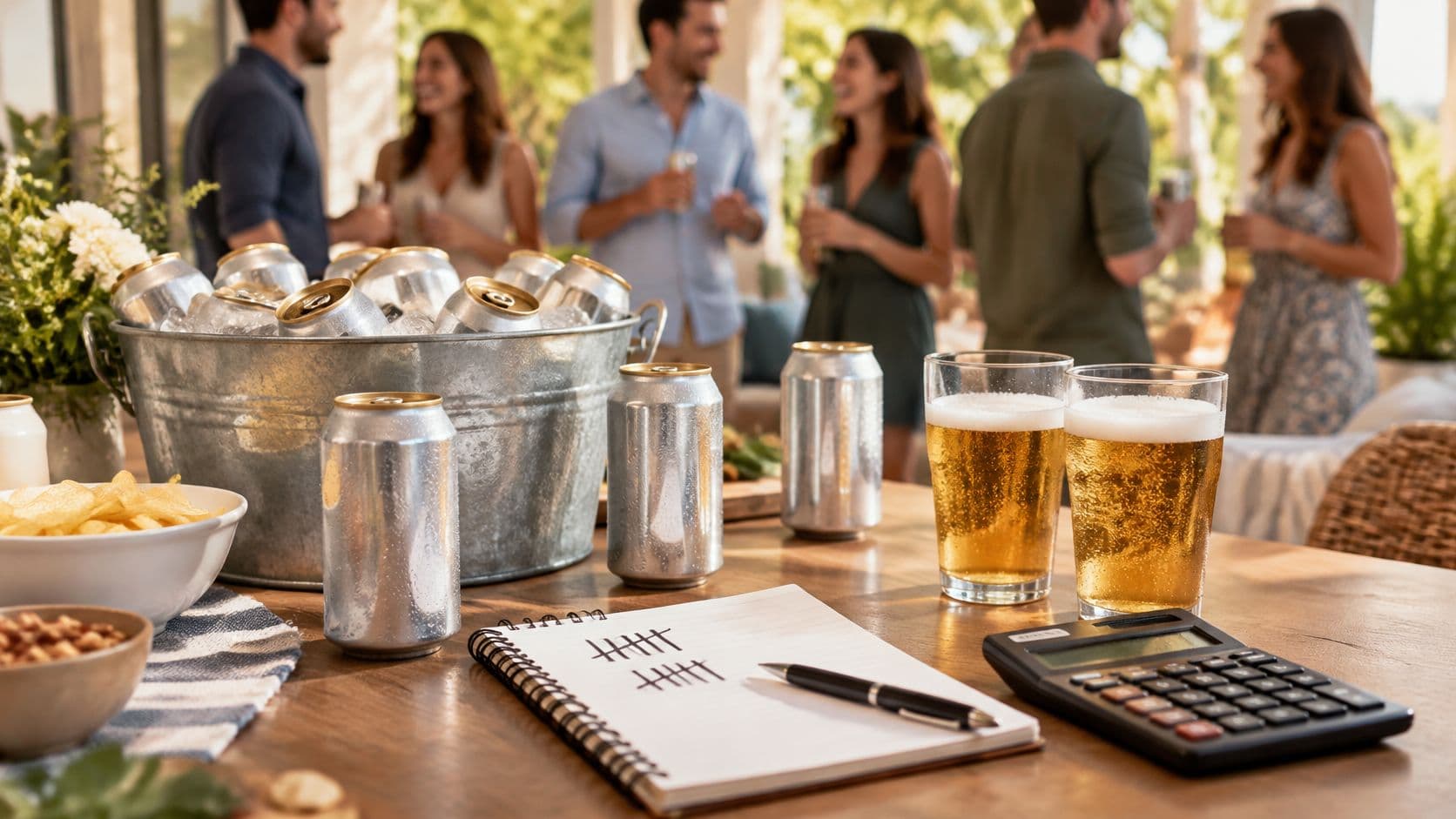
How much beer you need depends on how many adults may drink alcohol, how long the bar is open, and whether you’re also serving wine and cocktails. Estimate the beer quantity first, then turn it into whole packs.
For example, 80 guests who may drink alcohol × 4 planned drinks each × 35% beer gives 112 twelve-ounce beers. Five 24-packs provide 120 cans. This is an estimate for buying stock, not a recommendation for how much anyone should drink.
Start with the right guest count
For a mixed bar, count all adults who may drink alcohol, including people who may choose wine or cocktails. Leave children and guests choosing alcohol-free drinks out of this alcohol calculation, and plan their beverages separately.
Then apply beer’s share of the alcoholic drink total. Do not first reduce the headcount to beer drinkers and then apply the whole bar’s beer percentage again: that discounts the same demand twice.
If you already know exactly who wants beer, you can instead estimate beer directly for that group. Use one approach consistently. Before final RSVPs, label your headcount as an estimate and update it before buying.
Use one formula and write down the assumptions
Beer needed = drinking guests × planned alcoholic drinks per drinking guest × beer share.
Here, each beer means a 12-ounce can or bottle. “Beer share” is the percentage of alcoholic drinks you expect to serve as beer. Your beer, wine and cocktail percentages should add up to 100%; plan water and soft drinks separately.
Beer-only bar: use 100% beer, while stocking water and alcohol-free options separately.
Beer and wine: divide the alcoholic total between those two categories.
Beer, wine and cocktails: estimate each share from your menu and guests’ preferences.
BeeHive’s alcohol calculator has two stock-planning settings: “1 per hour” and “1 per hour + 1 extra.” Use the hours the bar will actually be open, and discuss the menu, meal timing and venue rules with your bartender before choosing a setting.
For a four-hour bar, those two settings mean four or five planned alcoholic drinks per drinking guest. With 80 drinking guests and a 35% beer share, they produce different shopping lists:
One per hour: 80 × 4 × 0.35 = 112 beers → five 24-packs, or 120 cans.
Hours plus one: 80 × 5 × 0.35 = 140 beers → six 24-packs, or 144 cans.
If your hand calculation and the online calculator differ, check that they use the same setting.
Three party examples
These examples use 12-ounce cans or bottles, with no extra reserve. The birthday and wedding use one planned alcoholic drink per drinking guest per service hour. The corporate reception uses hours plus one.
| Event | Guest and service assumptions | Beer calculation | Purchase quantity |
|---|---|---|---|
| Beer-focused birthday | 36 guests; 30 may drink alcohol; 3 service hours; 3 planned drinks each; 100% beer | 30 × 3 × 1 = 90 beers | Four 24-packs = 96; 6 above the estimate |
| Wedding with wine and cocktails | 100 guests; 80 may drink alcohol; 4 service hours; 4 planned drinks each; 35% beer | 80 × 4 × 0.35 = 112 beers | Five 24-packs = 120; 8 above the estimate |
| Corporate reception | 70 guests; 50 may drink alcohol; 2 service hours; 3 planned drinks each; 40% beer | 50 × 3 × 0.40 = 60 beers | Two 24-packs plus one 12-pack = 60 |
Rounding to whole packs already gives you six extra beers for the birthday and eight for the wedding. Count that surplus before deciding to buy a separate reserve.
If you choose a 10% reserve on the 112-beer estimate, the calculation is 112 × 1.10 = 123.2, rounded up to 124 beers. Six 24-packs provide 144. Five 24-packs plus a six-pack provide 126, a closer fit if those sizes are available. The 10% reserve is an example, not a requirement.
For a wedding with several drink categories, our guide to calculating alcohol quantities for a wedding reception explains how to build the wider list.
Turn the estimate into cans, bottles or kegs
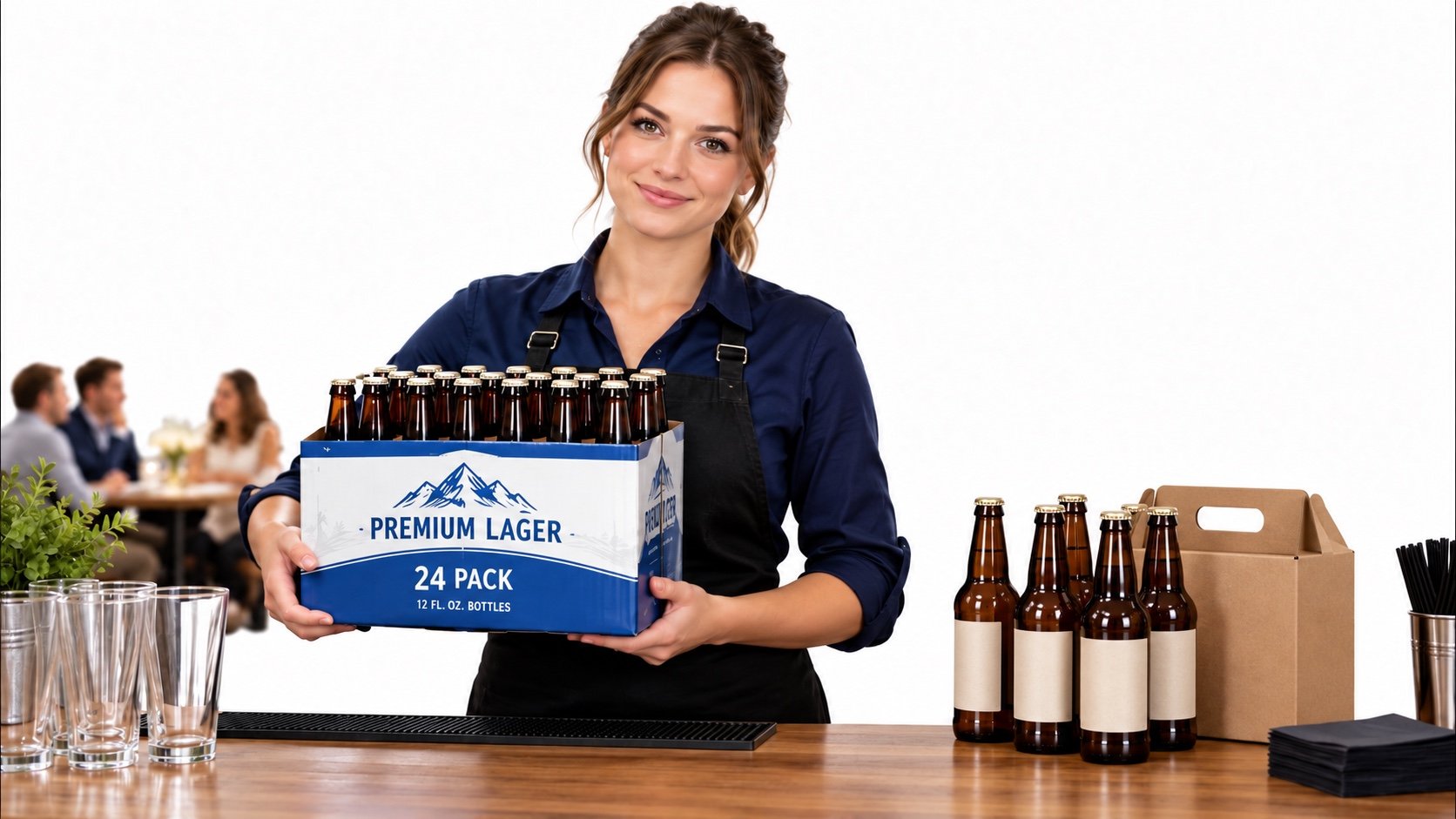
For 12-ounce cans or bottles, one container equals one 12-ounce unit. Divide your beer estimate by the pack size and round up to whole packs. Check the label: a “case” does not always contain 24, and cans are not always 12 ounces.
What changes with 16-ounce cans?
A 16-ounce can contains one-third more beer by volume than a 12-ounce can. Twenty-four 16-ounce cans contain 384 fluid ounces, the same volume as thirty-two 12-ounce cans. You still have only twenty-four containers to hand to guests.
An estimate of 112 twelve-ounce beers equals 1,344 fluid ounces, or 84 sixteen-ounce cans by volume. Before making that substitution, check whether you’ll hand guests individual cans or pour beer into cups. The volume may match while the number of individual drinks changes.
What changes with a keg?
A U.S. half-barrel is 15.5 gallons: 15.5 × 128 = 1,984 fluid ounces. Dividing by the pour size gives a theoretical maximum of about 165 twelve-ounce pours or 124 sixteen-ounce pours, before foam and other losses. The keg-size reference gives an overview of common formats.
Ask the beer supplier to confirm the actual keg volume, suitable dispensing equipment, chilling arrangements and expected usable yield. Do not budget on the theoretical maximum or assume BeeHive provides draft equipment; confirm any draft service and equipment separately in the proposal.
Keep volume and alcohol strength separate
A container count tells you what is in the shopping cart. It does not tell you how much alcohol each drink contains. The NIAAA standard-drink reference defines a 12-ounce beer at 5% alcohol by volume (ABV) as one U.S. standard drink.
A 12-ounce beer at 10% ABV contains about two standard drinks, as the NIAAA serving-size and ABV guidance explains. A 16-ounce can at 5% ABV contains about one and one-third. Check size and ABV together, and agree on appropriate pours and responsible service with your bartender.
Choose a manageable mix and plan alcohol-free drinks
Choose a few beer styles your guests enjoy. A 120-can order could include 72 of a familiar lager and 48 of a second style. Adjust the split to your guests’ preferences; this is one possible mix.
Carbon Six Brewing’s ideas for how to plan a craft beer party can help with style variety. If cocktails will be prominent, our guide to choosing liquor for a party bar can help you plan the rest of the menu alongside your beer order.
Ask guests what they would like to drink; they do not need to explain why. Put alcohol-free beer, mocktails, soft drinks and water on separate shopping-list lines. Guests who sometimes drink alcohol may also want these options. Read product labels rather than assuming all products described as non-alcoholic are 0.0%.
Industry reporting on non-alcoholic beer demand offers background on the category. For your own order, use guest preferences and the event schedule. The BevMo party-planning guide is another general planning reference. Discuss meal timing with your bartender instead of assuming that serving food reduces the beer order by a fixed percentage.
Make the buying and chilling plan practical
| Confirm | Who handles it | What to write down |
|---|---|---|
| Alcohol quantities and purchase | Host, using BeeHive’s shopping list | Drinking guests, service hours, planned drinks per guest, beer share, pack sizes and any reserve |
| Alcohol-free beverages | Host and BeeHive, according to the selected service | Products, quantities, label requirements and who supplies each item |
| Cold storage and ice | Host, venue and BeeHive, according to the proposal | When the host will bring the alcohol, refrigeration space, cooler capacity and chilling schedule |
| Drinkware and opening tools | Venue, host or BeeHive, according to the proposal | Cans versus poured service, glass or plastic cups, bottle openers and any draft equipment |
| End of service | Host and venue, coordinated with BeeHive | Last call, who collects leftovers and the retailer’s policy for unopened purchases |
Use the party ice calculator for a separate estimate. Add cooler ice explicitly if you need it; the tool’s basic drink-ice estimate does not automatically cover a tub full of cans. Keep ice used to chill containers separate from ice served in drinks.
Use BeeHive’s calculator to check your list
Open BeeHive’s Alcohol Calculator →
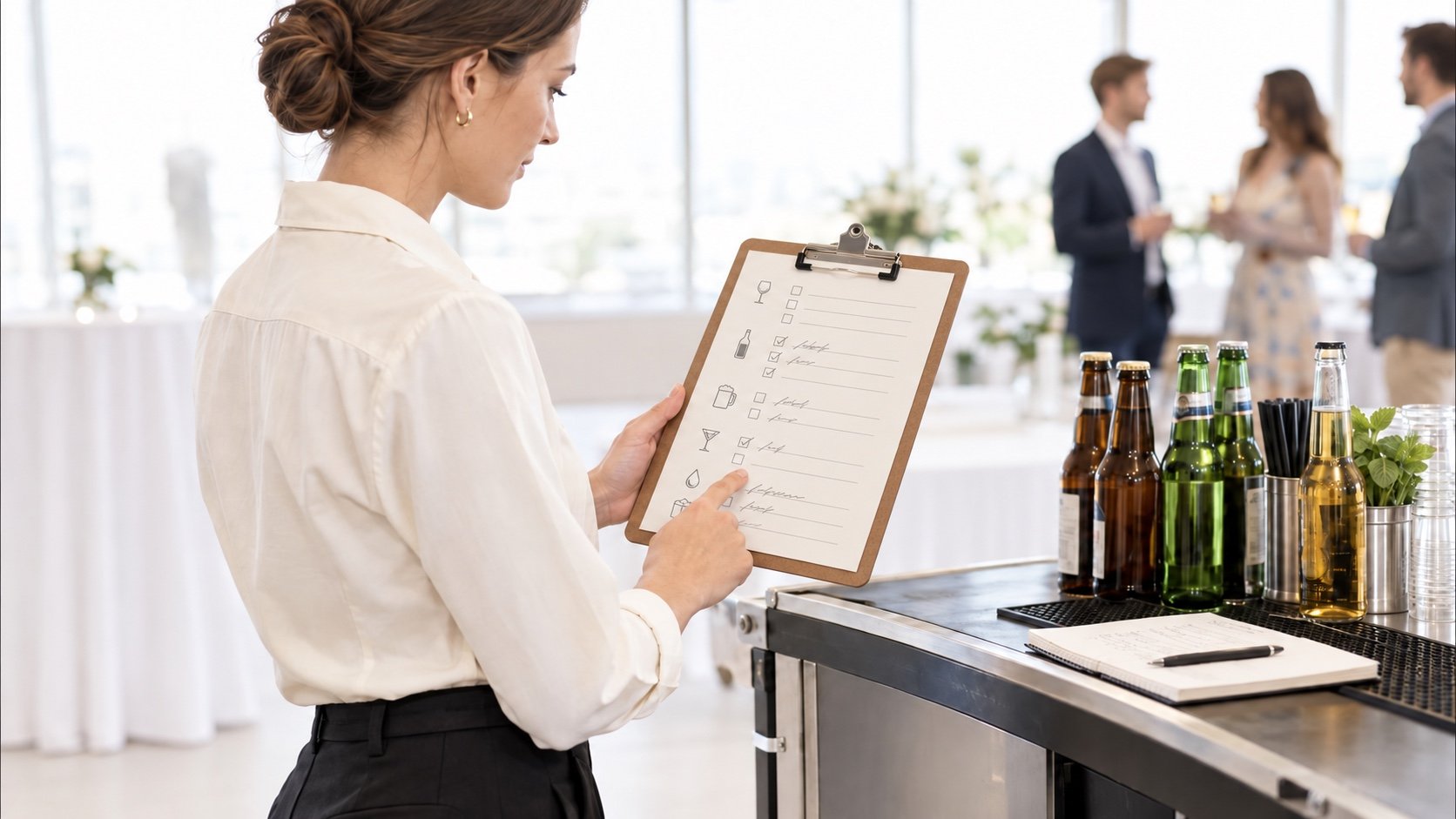
Enter total guests, guests who may drink alcohol, bar-service hours, and the beer and wine shares. Cocktails fill the remaining share. Check the advanced quantity setting, then compare the result with your written calculation.
The alcohol calculator rounds beer to 24-packs and wine and liquor to 750 ml bottles. It uses five-ounce wine pours and allows 1.5- or two-ounce liquor pours. It does not add a reserve. Plan mixers, ice, water, alcohol-free drinks, garnishes and any separate toast outside this estimate.
How BeeHive fits into the plan
BeeHive Mobile Bar serves Orange County, with Southern California events by arrangement. Clients purchase the alcohol using our tailored shopping list. BeeHive does not buy, sell or deliver alcohol.
Bronze, Silver and Gold mobile-bar packages require a three-hour minimum and include a portable bar and the supplies listed for the chosen package. Bartender-only service has a two-hour minimum and includes bartending, bar tools, a shopping list, setup and cleanup. A mobile bar, ice, coolers, mixers, garnishes and drinkware are not automatically included with bartender-only service; confirm responsibilities in the written proposal.
For help turning a beer estimate into an event plan, contact BeeHive Mobile Bar with your date, event location, guest count, service hours and planned drink menu.