wedding reception bar service
Wedding Reception Bar Service for Southern California
Plan wedding reception bar service in Southern California with BeeHive prices, staffing guidance, a sample timeline, and an alcohol shopping example.
By BeeHive Mobile Bar ··12 min read
In this guide
Good wedding reception bar service starts with a few decisions: what your guests will drink, when the bar will open, and who will bring each part of the setup. Make those choices together and it becomes much easier to compare quotes, buy alcohol, and coordinate with your venue.
BeeHive Mobile Bar provides dry-hire service from Orange County for Southern California celebrations by arrangement. You purchase and provide the alcohol using our shopping list; we provide the bartending and the equipment and supplies included in your selected service. Travel fees may apply.
What Wedding Reception Bar Service Covers
Your bar plan should cover the menu, service hours, staffing, equipment, supplies, and any separate toast or alcohol-free drinks. A wedding with 120 guests does not necessarily have 120 alcohol drinkers, but everyone still needs access to suitable refreshments.
Start with what the venue already provides. A reception space with a usable bar and a complete supply setup may suit bartender-only service. A venue where you need the bar, mixers, ice, and serving supplies may suit a mobile-bar package. BeeHive does not purchase, supply, transport, or deliver alcohol.
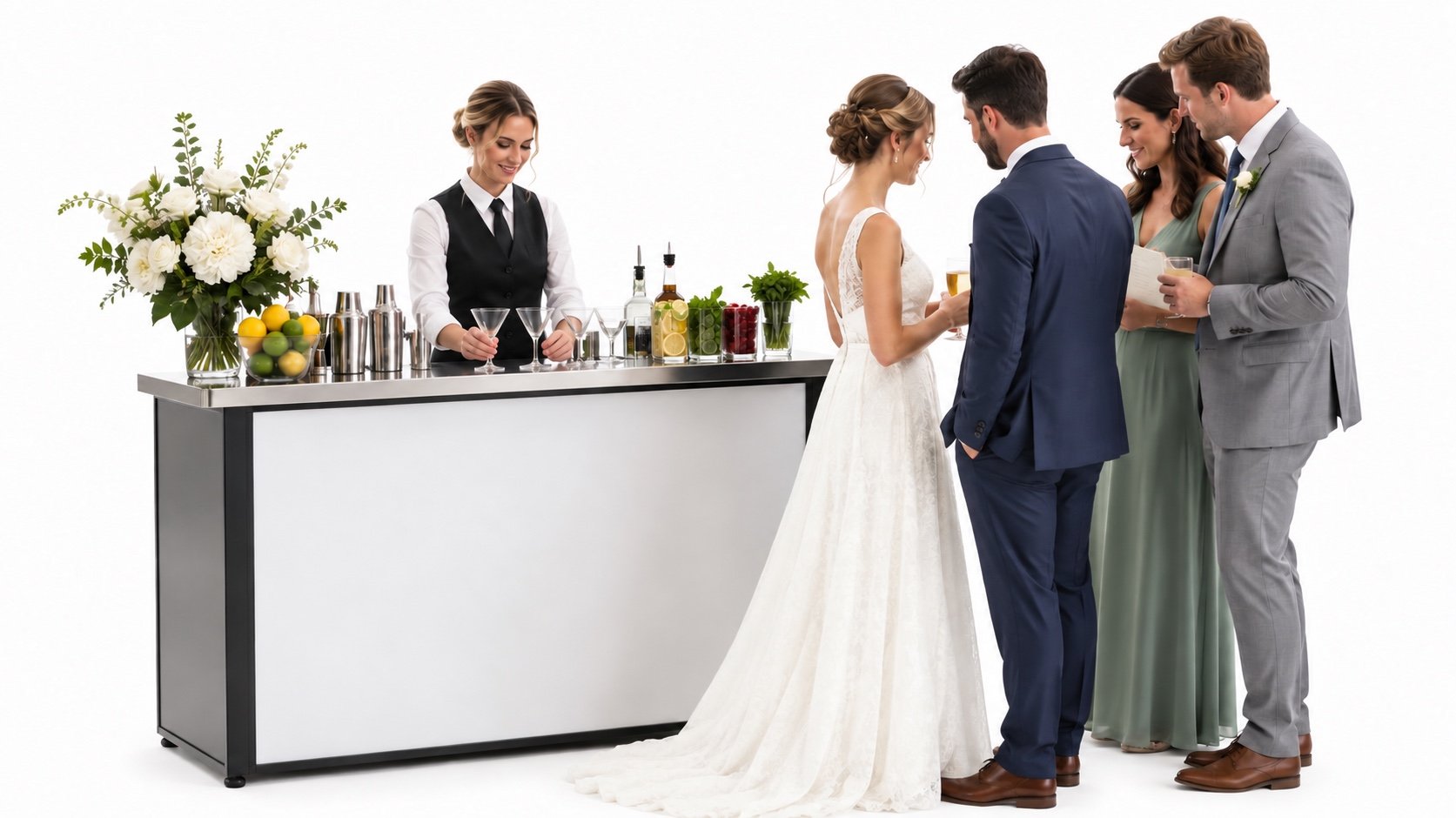
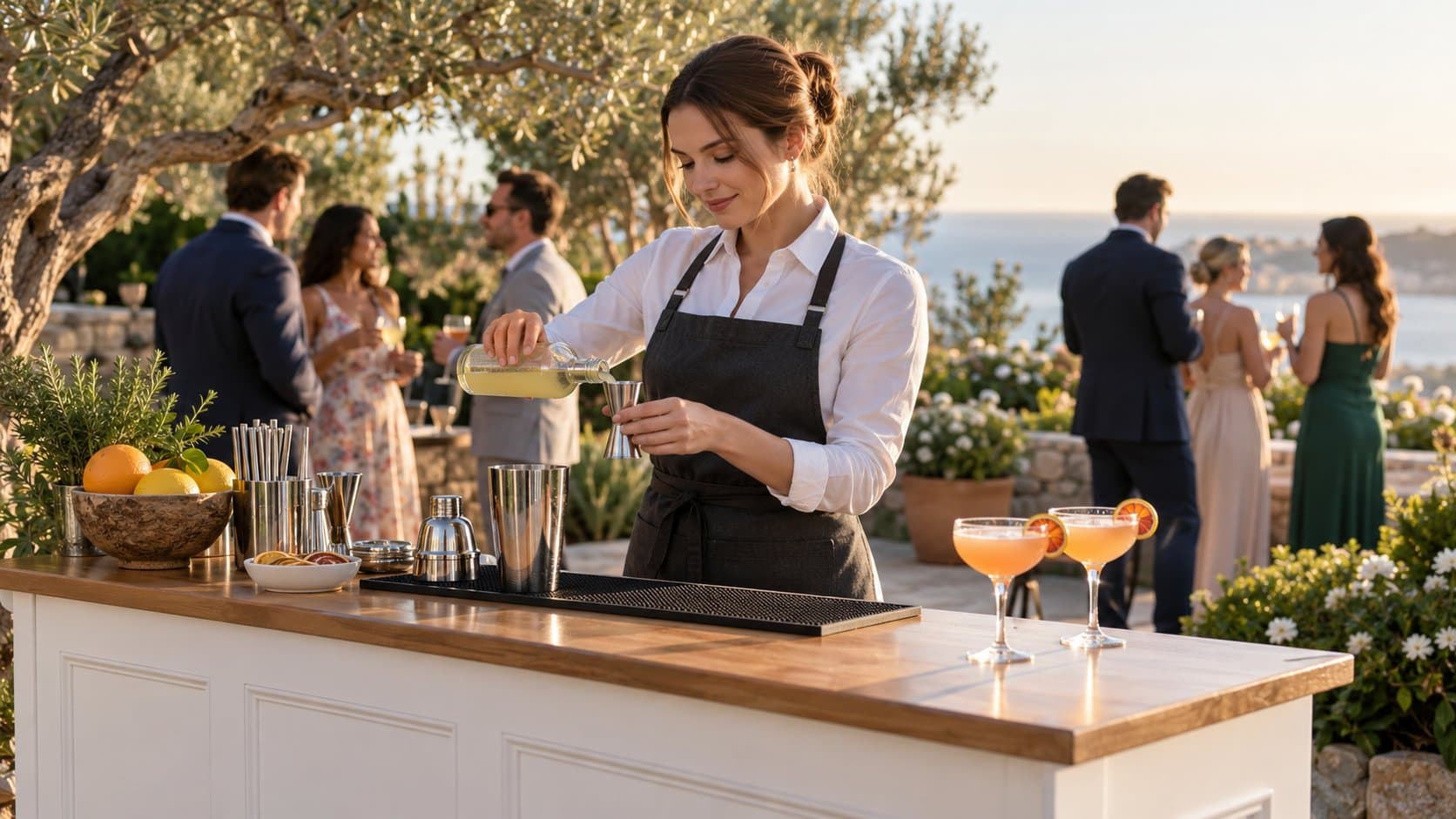
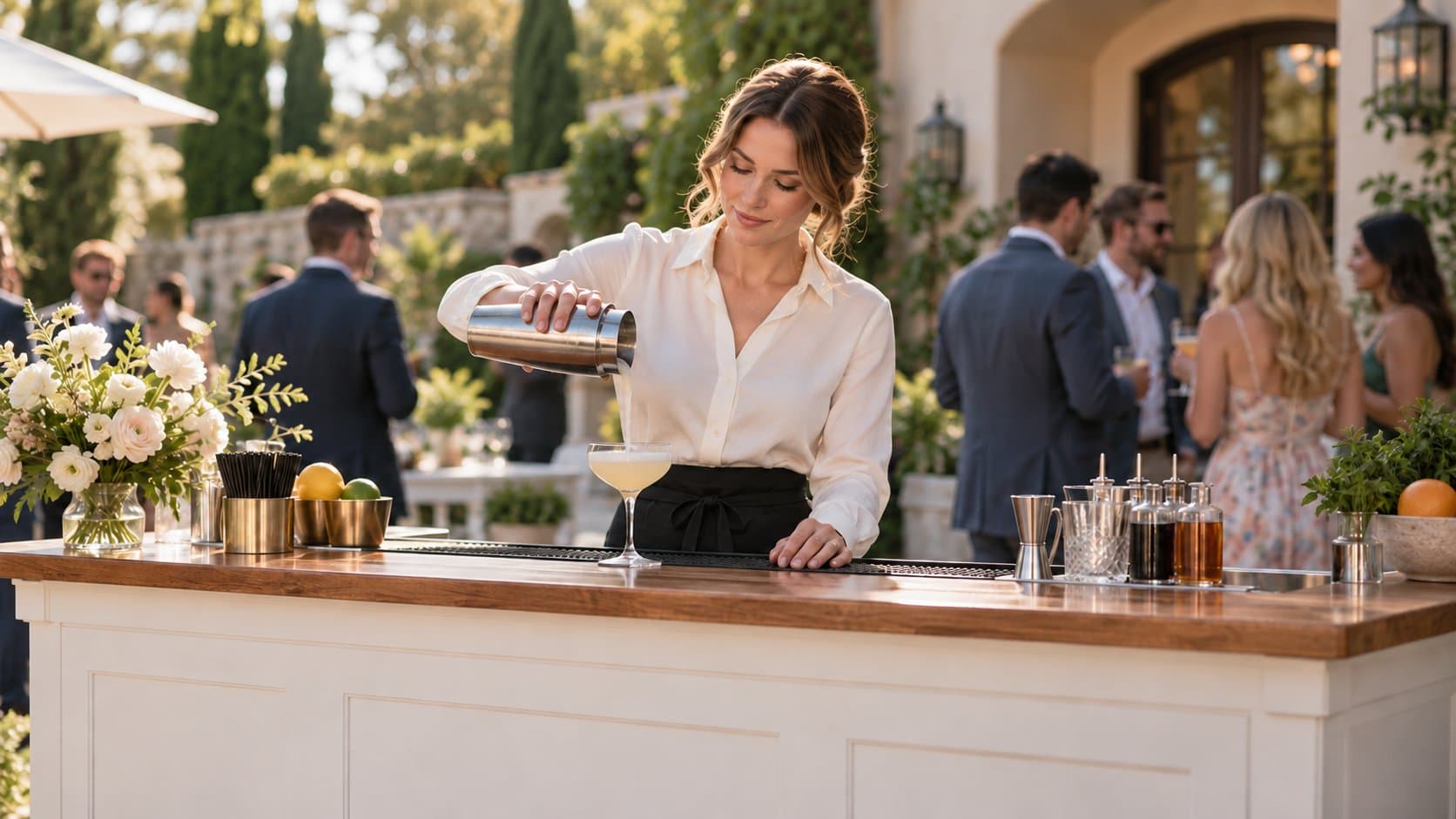
The bar and glassware shown in these illustrative images are examples of reception settings. BeeHive’s mobile-bar packages include plastic glassware; if you prefer other glassware, confirm what the venue or rental provider will supply.
Choose the Menu and Hosting Arrangement
“Open bar” describes who pays. “Dry hire” describes who supplies the alcohol. You can have a hosted open bar using BeeHive’s dry-hire service: you buy the agreed alcohol selection, and invited guests order without paying at the bar.
| Format | What guests can order | Planning decision |
|---|---|---|
| Hosted beer and wine | Your selected beer and wine, plus agreed alcohol-free options | Choose varieties and quantities around your guests’ preferences. |
| Hosted signature cocktails, beer, and wine | A defined cocktail menu alongside the other agreed drinks | Confirm recipes before buying spirits; each recipe determines its ingredients and preparation needs. |
| Cash or no-host bar | Guests pay for drinks | This is a different alcohol-sales arrangement. BeeHive’s dry-hire service should not be presented as a cash-bar service. |
A focused menu can still feel personal. Choose cocktails you enjoy, a beer and wine selection your guests will recognize, and an appealing alcohol-free option. Avoid adding bottles simply to make the bar look extensive.
A staffed bar puts someone in charge of preparing orders, measuring pours, and monitoring inventory. ALBride’s responsible-hosting guide for wedding receptions also discusses professional service, water, food, and transport planning. Its Alabama-specific licensing statements should not be used to determine California requirements.
Compare quotes by what they include. The Knot’s wedding venue and beverage-budget reporting discusses all-inclusive venue arrangements, which can differ substantially from dry hire. For BeeHive, separate your bar-service quote from your alcohol purchases and any venue or rental costs.
Match Wedding Reception Bar Service to Your Timeline
The reception’s length and the bar’s service hours may differ. Agree on opening time, any planned pauses, last orders, and the final closing time before booking. A pause during speeches does not automatically reduce billable hours; confirm the service window in your proposal.
Here is an illustrative five-hour service plan. Adjust the times with your venue, planner, and bar team.
| When | Plan | Who confirms it |
|---|---|---|
| Before 5:00 p.m. | Allow the agreed load-in and setup window; have host-purchased alcohol and venue-supplied items ready. | Host or planner, venue, and bar team |
| 5:00–6:00 p.m. | Open for cocktail hour. Plan staffing around the arrival rush. | Bar team and planner |
| 6:00–7:00 p.m. | Coordinate dinner and speeches. Specify whether guests order at the bar and who handles any table service. | Planner, caterer, and bar team |
| 7:00–10:00 p.m. | Continue the agreed menu through dancing; announce last orders early enough to finish service by 10:00 p.m. | Venue, planner, and bar team |
| After 10:00 p.m. | Use the agreed breakdown window and arrange collection of remaining host-owned alcohol. | Host or planner and bar team |
Table-side wine service and tray-passed toasts need their own staffing discussion; do not assume they are included because bartenders are booked.
Decide whether you want a separate toast
Guests can raise the drink already in their hand, or you can arrange a separate sparkling-wine and alcohol-free toast. VinePair’s reporting on wedding bar and toast choices explores both approaches. Make the choice before buying extra bottles or arranging additional glasses.
If you choose a separate toast, tell the team how many guests want each option, the intended pour size, and who will distribute the drinks. Keep those quantities separate from your main bar estimate unless you deliberately include them in its wine allocation.
Staffing, Setup, and Ice
Staffing depends on more than attendance. A group arriving together after the ceremony creates a different workload from guests ordering gradually. Cocktail preparation, mocktail orders, bar layout, and restocking distances also matter.
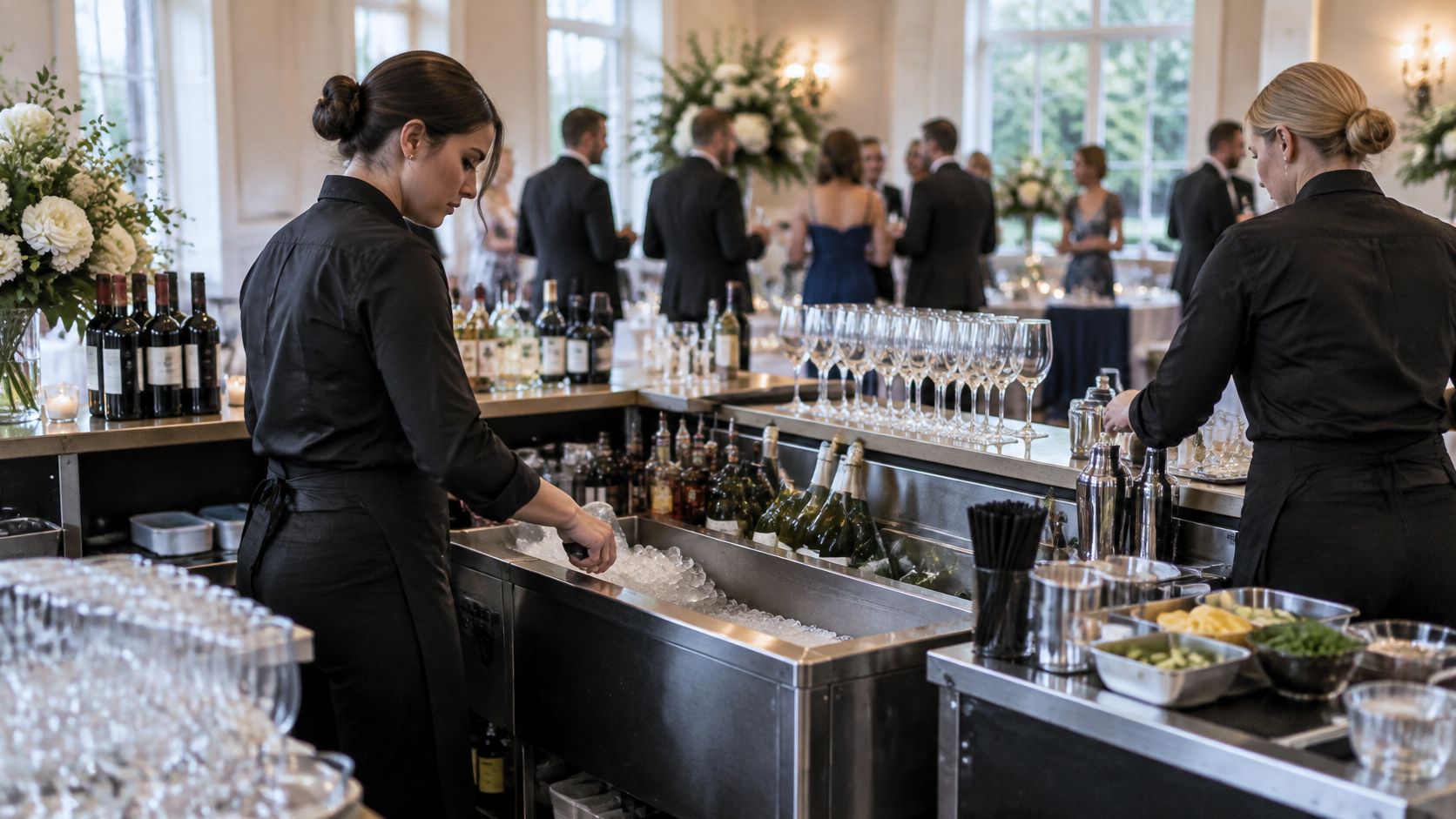
Use our Bartender Staffing Calculator as a starting point, then confirm staffing for your actual menu and timeline. Include all guests in that discussion, including those ordering alcohol-free drinks. Package guest counts are planning guidance, not a promise about wait times.
Additional service for Bronze, Silver, and Gold is $100 per hour per bartender. Bartender-only service is $75 per additional hour. Check the service pricing and terms and confirm any extension, billing increments, and availability in your written proposal.
A setup checklist with clear responsibilities
| Item | Who arranges it | What to confirm |
|---|---|---|
| Bar location and access | Venue and planner, with the bar team | Level working area, load-in route, guest queue space, clear exits, and setup/breakdown times. |
| Alcohol | Host | Purchase from the agreed shopping list and arrange arrival, storage, and collection of leftovers. |
| Ice, coolers, mixers, garnishes, and serving supplies | BeeHive within a mobile-bar package’s agreed inclusions; host or venue for bartender-only service | Quantities must match the menu, attendance, and service hours. Identify any items outside the package. |
| Glassware beyond included plastic glassware | Host, venue, or rental provider | Glass types, quantities, delivery, washing or replacement arrangements, and collection. |
| Water and alcohol-free drinks | Named provider in the proposal or venue plan | Coverage for all guests, including time before and after bar service. |
| Separate toast or table service | Planner and the assigned service team | Pouring, distribution, timing, drinkware, and any additional staffing. |
Keep drink ice separate from ice used to chill bottles. The FDA Food Code's ice requirements in the 2017 model Food Code address drinking-water ice and prohibit reusing cooling ice as a food ingredient. Use a clean scoop and protected, food-safe storage; do not put ice from bottle tubs into drinks.
Check Venue Rules Before Buying Alcohol
Ask whether your venue permits client-purchased alcohol and outside bartending, what vendor documents it requires, and whether it has restrictions on drinkware, bar location, or service hours. Share the answers with your bar team before finalizing the menu.
Dry hire is different from a licensed caterer selling or supplying alcohol. California ABC's caterer's permit guidance explains that Type 58 permits are available to certain existing on-sale licensees. California ABC's event-authorization instructions describes the separate authorization needed for each catered event under that permit.
A California municipal alcohol-event guide identifies situations such as public access, admission charges, fundraising, or drink sales that can change the permitting discussion. That guide is from Palo Alto; your venue’s requirements and advice from California ABC or the relevant local authority should determine what applies to your reception.
Get the venue’s answers in writing. Do not assume either that every private wedding needs the same permit or that booking a bartender resolves the event’s licensing requirements.
How BeeHive Packages Fit Your Reception
Use this comparison to choose a starting point, then confirm the final staffing and inclusions in your quote. All alcohol is purchased separately by the client.
| Service | Starting price and minimum | Guest guidance | Staffing and cocktail menu |
|---|---|---|---|
| Bronze | From $750; three-hour minimum | Up to 70 guests | One bartender and two signature cocktails |
| Silver | From $1,150; three-hour minimum | Up to 120 guests | Two bartenders and three signature cocktails |
| Gold | Custom quote; three-hour minimum | 120+ guests | Two or more bartenders and four signature cocktails; final staffing tailored to the event |
| Bartender-only | From $350; two-hour minimum, then $75 per additional hour | Confirm staffing for your reception | Professional bartending, bar tools, shopping list, and setup and cleanup of the bartending work area |
Bronze, Silver, and Gold include a mobile bar, ice, coolers, bar tools, mixers, garnishes, plastic glassware, napkins, straws, complimentary setup and breakdown, and a custom printed menu. Bar size, cocktail selection, and garnish presentation vary by tier. Gold also includes soft drinks, water, and a Refreshment Station.
With bartender-only service, the host or venue provides the alcohol, mixers, ice, coolers, drinkware, garnishes, other beverages and supplies, and a suitable work surface. The optional $150 mobile bar add-on provides the mobile bar only; it does not add those supplies or turn the booking into a mobile-bar package.
For visual inspiration, our wedding bar ideas can help you choose a style before confirming the setup in your proposal.
A 25% deposit confirms your booking. Your proposal states the remaining balance and when it is due. Tips are optional and appreciated. Tip jars require client and venue approval.
A Worked Dry-Hire Shopping Example
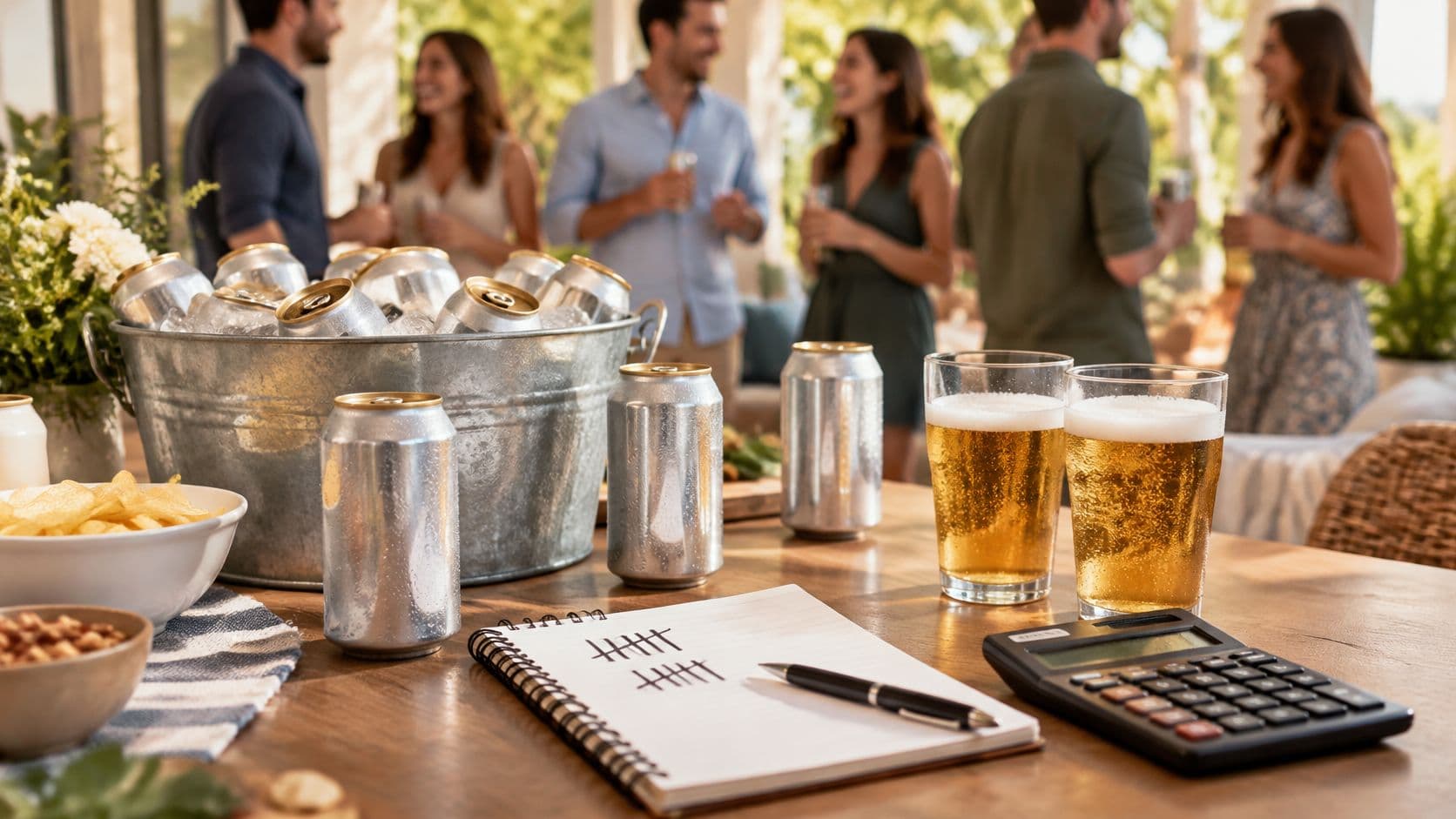
Consider 120 guests, of whom 100 may drink alcohol, with five hours of bar service. In the Wedding Alcohol Calculator, select “1 per hour” rather than the default extra-drink setting. This produces an inventory estimate of 100 × 5 = 500 alcoholic servings. It is a shopping assumption, not a recommendation for anyone’s consumption.
For this example, choose 40% beer, 30% wine, and 30% cocktails. Use 12-ounce single-serving beers, 5-US-fluid-ounce wine pours, and 1.5 US fluid ounces of spirits per cocktail:
| Category | Planned servings | Buying quantity under these assumptions |
|---|---|---|
| Beer | 500 × 40% = 200 | Nine 24-packs = 216 beers |
| Wine | 500 × 30% = 150 | 30 bottles of 750 ml, rounding up the volume needed for 150 five-ounce pours |
| Cocktails | 500 × 30% = 150 | Nine 750 ml bottles of spirits in aggregate, at 1.5 ounces per cocktail; see the recipe split below |
| Total planned servings | 500 | Pack and bottle rounding adds a small amount above the plan; no separate reserve is included |
A 750 ml bottle contains approximately 25.36 US fluid ounces. For the cocktails, 150 × 1.5 = 225 ounces; 225 ÷ 25.36 = 8.87 bottles, rounded up to nine. If all cocktails use the same base spirit, that total is usable as shown.
Round separately when recipes use different spirits. If you expect 75 tequila cocktails and 75 vodka cocktails, each at 1.5 ounces of its base spirit, each category needs 112.5 ounces: 112.5 ÷ 25.36 = 4.44 bottles. That means five tequila bottles plus five vodka bottles, or ten bottles in total. Add any liqueurs separately according to the recipes.
The calculator’s default “1 per hour + 1 extra” setting would produce 600 servings for this same group, so record your chosen setting when sharing a shopping list. Adjust the estimate and beverage split with your bar team. The Los Angeles Times also offers a wedding alcohol-planning guide for broader reading.
Plan mixers, water, alcohol-free drinks, garnishes, and any separate toast alongside the alcohol order. Assign each item to the host, venue, or selected package so that an alcohol shopping list does not become an accidental duplicate supply order.
Optional refreshments
Outside Gold’s inclusions, soft drinks and water are $3 per drink, and a Refreshment Station starts at $125. The Slushie Machine starts at $215 and includes two gallons of one flavor, with approximately 30 guests as the website’s serving guidance. Additional gallons are $45 each. A second flavor requires a second machine station, with pricing confirmed in the proposal. Clients provide any alcohol.
For other ways to plan a memorable wedding for less, choose the details that matter most to your celebration and separate those purchases from the essentials needed for bar service.
Request a Wedding Reception Bar Service Quote
Send your date, venue or event city, total attendance, estimated alcohol-drinking guests, requested bar hours, and preferred menu. Mention any venue-supplied bar or glassware, a separate toast, and alcohol-free drinks. You do not need a finished alcohol order to start the conversation.
BeeHive Mobile Bar can recommend a service format and provide a personalized quote, typically within 24 hours. Review who brings each item and the agreed service window, then use the tailored shopping list to finalize your alcohol purchases.