bartending glasses
Types of Bartending Glasses for Event Hosts
Compare types of bartending glasses by capacity, drink style and event use, with breakage and supply tips for Orange County, California events.
By BeeHive Mobile Bar ··15 min read
In this guide
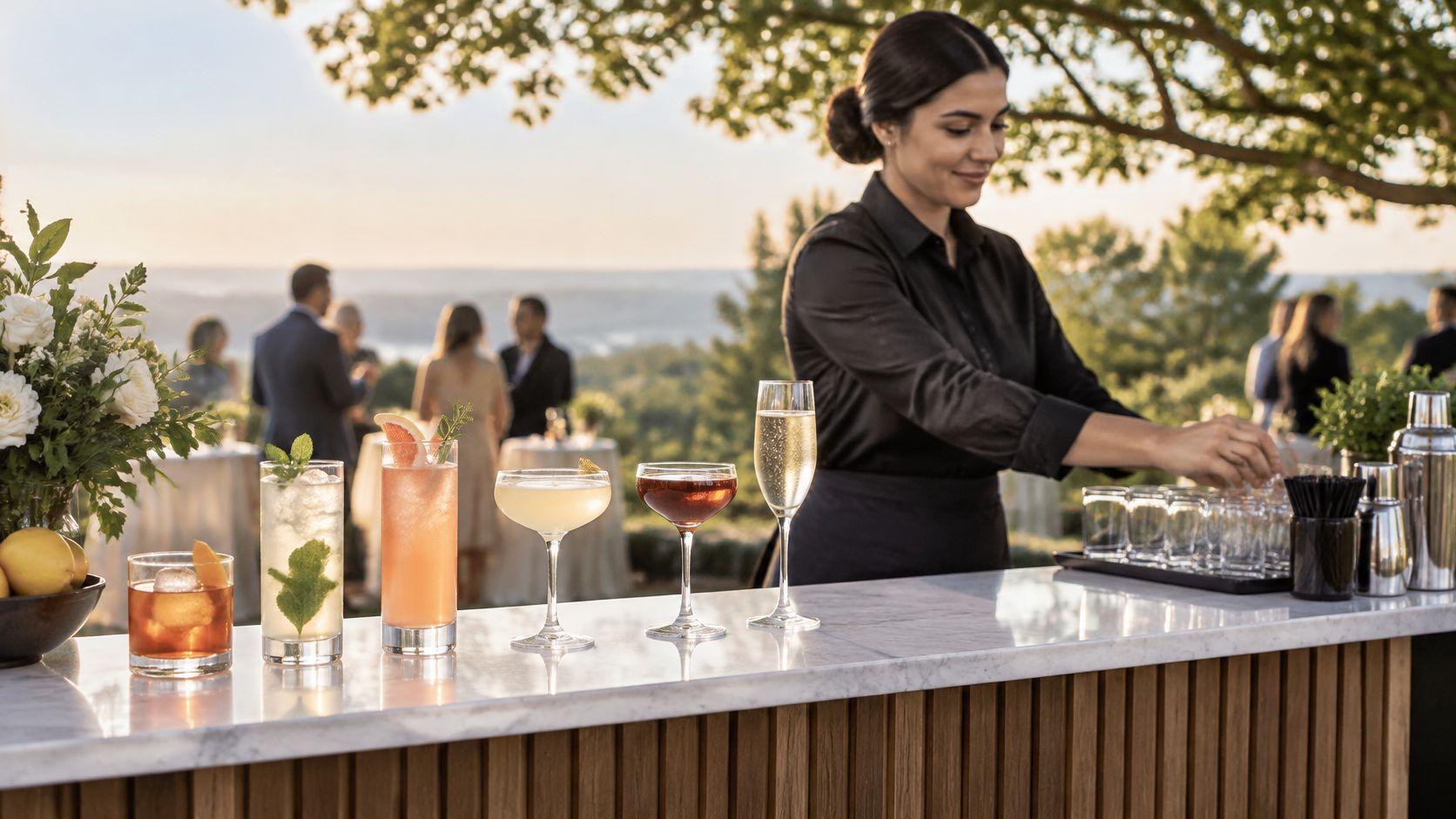
The most practical event glass may be a durable cup, not the traditional glass pictured beside the cocktail recipe. Difford's Guide to cocktail glassware emphasizes final drink volume, ice and service conditions, rather than appearance alone. For hosts comparing types of bartending glasses, the useful starting point is simple: short vessels for drinks over ice, tall vessels for mixer-heavy drinks, stemmed vessels for cocktails served without ice, and dedicated drinkware for wine and toasts.
For an event in Orange County, California, that choice also needs to survive venue rules, outdoor conditions and the cleanup plan. We recommend choosing the drink menu and drinkware together, before you commit to specialty glassware or finalize your bar-service proposal.
Glass Types and Capacities at a Glance
Common bartending glass types, capacities and best-suited drinks
| Glass | Typical capacity | Best-suited drinks | Service note |
|---|---|---|---|
| Rocks or old-fashioned | 6–8 oz (180–240 ml); some references list 9–11 oz | Spirits neat, over ice, or with a short mixer | Wide, stable base; suits muddling in the glass |
| Highball | 8–10 oz (240–300 ml) | Spirit with soda or another nonalcoholic mixer | Tall; keeps carbonated drinks contained |
| Collins | 8–12 oz (240–355 ml) | Tom Collins and other long, fizzy drinks | Tall; suits drinks with more mixer |
| Martini or cocktail | 4–8 oz (120–240 ml); 6–7 oz common | Martini, Manhattan, Cosmopolitan and other drinks served up | Stemmed; served without ice |
| Coupe | 5–8 oz across references | Shaken cocktails and Champagne toasts | Wide, shallow bowl; warms faster |
| Nick & Nora | About 150–180 ml, approximately 5–6 oz | Stirred, spirit-forward drinks served up | Small, deep bowl; less surface exposed to air |
| Flute | 6–10 oz | Sparkling wine and toasts | Narrow shape helps retain carbonation |
| Wine glass | Confirm the selected vessel's capacity with the supplier | Still red and white wine | Size to be confirmed with the glass supplier |
For the foundational ranges, Edgepedia's glassware guide lists rocks glasses at about 6–8 oz, highballs at 8–10 oz, Collins glasses at 8–12 oz, and cocktail glasses at 4–8 oz. These are working references, not universal sizing standards.
The larger rocks-glass range isn't a mistake: Esatto's cocktail-glass guide lists typical rocks glasses at 9–11 oz. Likewise, the Nicolet College beverage glassware guide describes martini glasses as generally 4–8 oz, with 6–7 oz common. Manufacturers use familiar names for vessels with different dimensions, so the product name alone doesn't settle your order.
Treat capacity as a planning reference
A glass's listed capacity usually describes how much it can hold, not how much beverage a bartender should pour into it. Ice, garnish and comfortable carrying space all occupy room. A tall cup that looks generous can still be unsuitable if the intended drink becomes mostly mixer.
Ask to see the actual vessel or its specification before approving a rental order. Check the opening, base and usable space with the intended ice, not just the ounce figure printed beside the product photo.
You also don't need every shape in the table. For an Orange County wedding or private celebration, shortlist three shapes that match your menu, then check venue rules before choosing the final material and size. A focused selection is easier to organize than a collection of specialty vessels with overlapping jobs.
Matching Drink Styles to the Right Glass
Choose by how the drink is served, not by the cocktail's name alone. The same familiar drink may have an over-ice presentation or a strained presentation, and those versions need different space and temperature management.
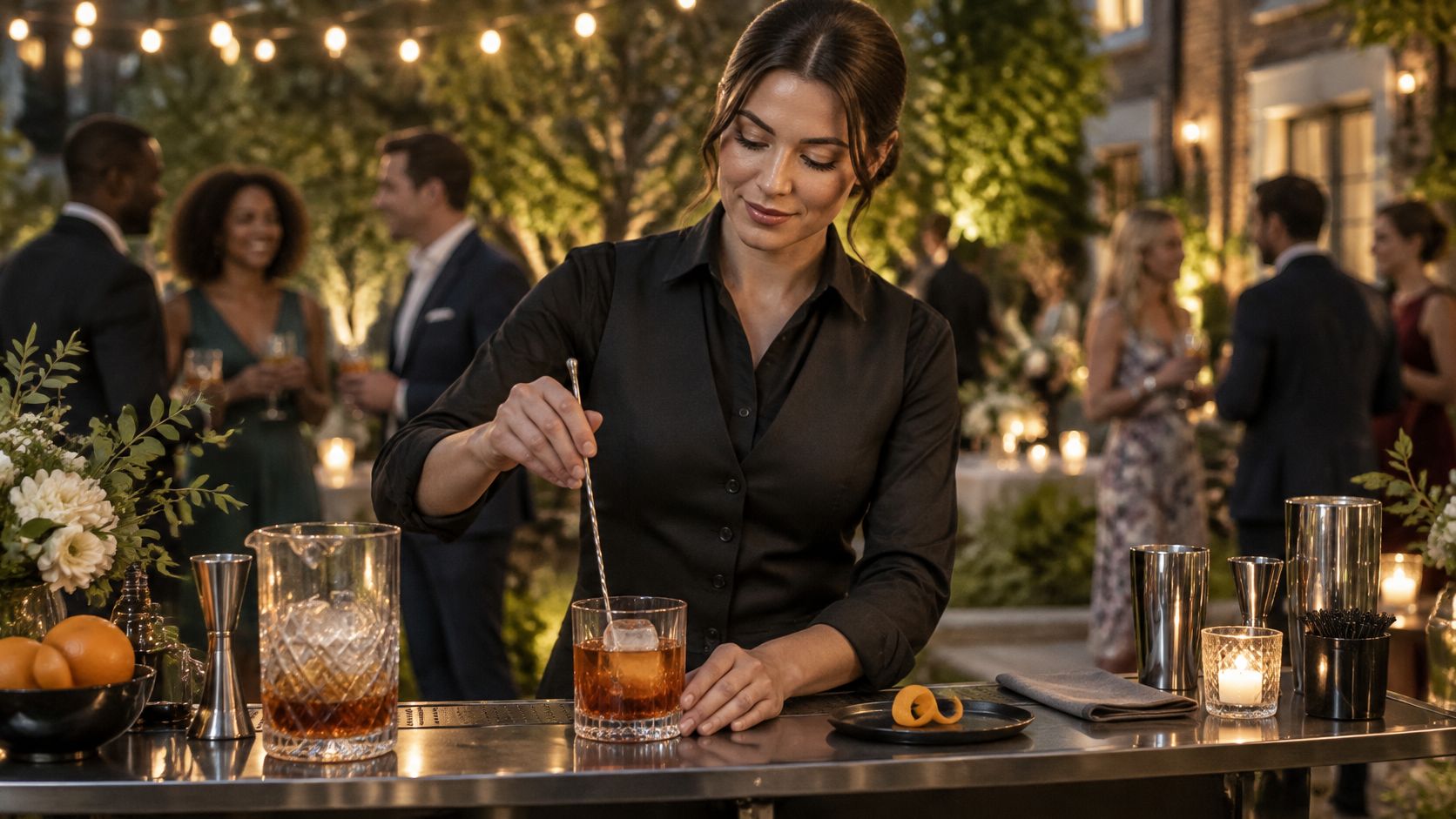
Built over ice, served up or topped with soda
Drinks built over ice belong in a short, stable vessel when the recipe is spirit-forward and doesn't need much mixer. A rocks glass suits an Old Fashioned or Negroni because the bartender can accommodate the ice without hiding a short drink inside an oversized bowl. If the recipe involves muddling, confirm that the vessel is suitable for it.
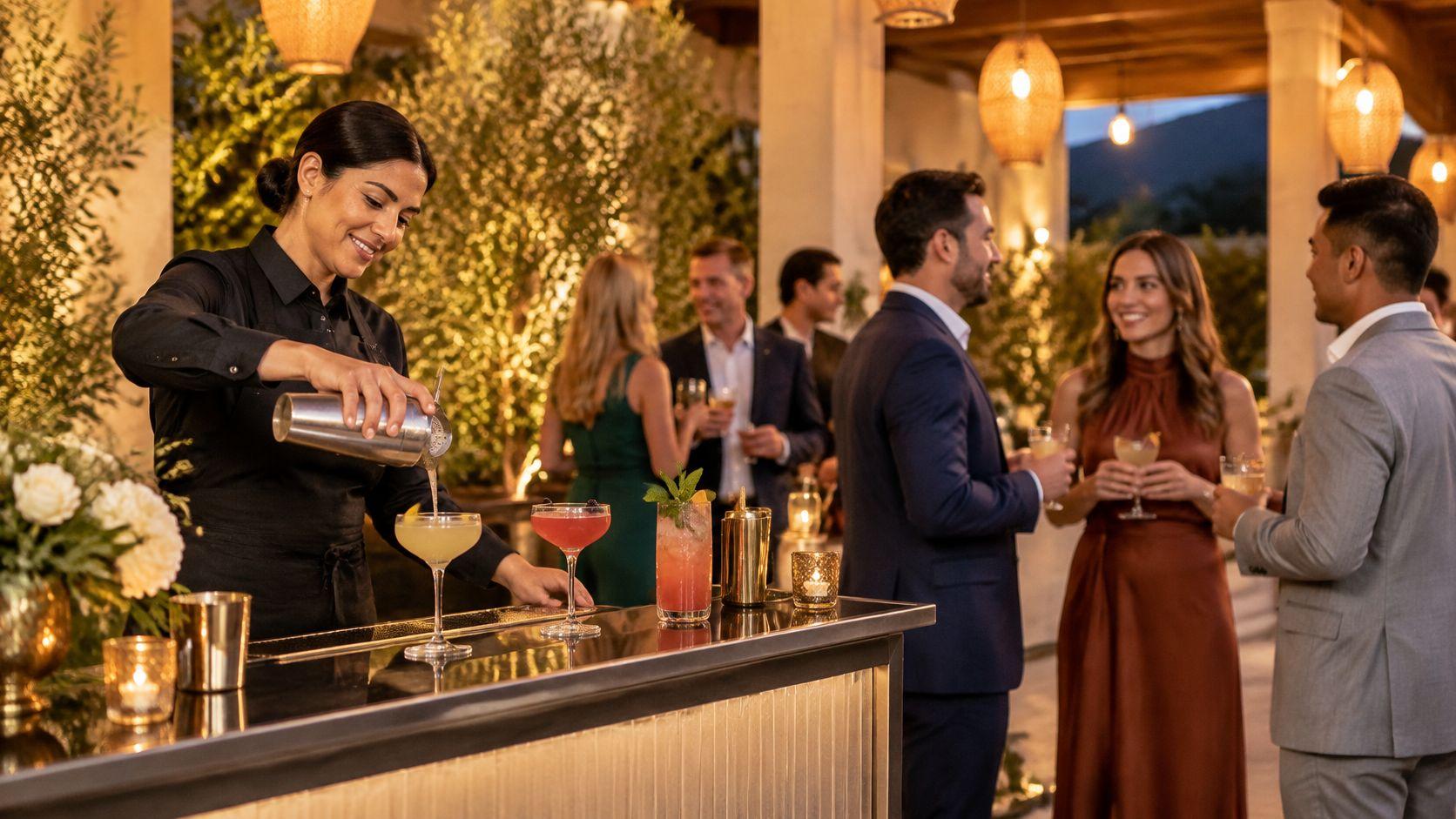
Drinks served up are shaken or stirred with ice, then strained into the serving glass without that ice. A stem allows guests to hold the drink without wrapping a warm hand around its bowl. These drinks need deliberate service timing because there's no ice remaining in the glass to maintain the chill.
Tall, carbonated drinks need room for ice and their intended mixer. A highball or Collins-style vessel works for a gin and tonic, Tom Collins or a suitably sized spritz. Don't choose a cup so small that the bartender must cut the soda, or so large that filling it changes the recipe.
Nick & Nora versus coupe
For stirred cocktails, choose the Nick & Nora when temperature and controlled presentation matter most. Mixology School's glassware guide places it at about 150–180 ml, with a smaller, deeper bowl that exposes less liquid surface to room-temperature air than a coupe.
A coupe gives a shaken sour more visual space for foam and garnish. Its broad, shallow bowl also creates more spill exposure when guests walk through a reception, so it's a less forgiving choice for a crowded standing event.
Hypothetical Orange County wedding menu
Old Fashioned: A rocks glass, with the ice format agreed during menu planning.
Manhattan: A Nick & Nora for a compact, chilled presentation.
Spritz: A highball with enough usable space for the recipe, ice and garnish.
That menu doesn't automatically require real glass. Decide whether the desired presentation justifies arranging specialty vessels, or whether an appropriate durable alternative better suits the event.
Practical rule: Choose the service mechanic first. Then standardize the fewest shapes that serve the menu properly.
Why Glass Size Changes the Strength of a Drink
Glass capacity shapes portion expectations as much as appearance. A larger vessel leaves the recipe unchanged, yet a half-empty look tempts whoever is pouring to add alcohol or mixer until the bowl looks full. Resist that urge.
The Oxford Companion to Spirits & Cocktails records double Martini glasses at approximately 180–240 ml by 1939, some examples reaching 480 ml in the 1970s, and a return toward 150 ml during the twenty-first-century cocktail revival. That history is a warning: a martini glass from a rental catalog can hold twice what your recipe was built around. Confirm the actual capacity before you commit to a vessel.
Compare the pour, not the apparent fullness
Pour comparison, worked through: A cocktail made with a 1.5 oz spirit pour and one made with a 2 oz spirit pour don't contain the same amount of spirit. Those are the standard and larger liquor options in BeeHive's Wedding Alcohol Calculator on beehive-bar.com, and the final cocktail volume also includes any other ingredients and dilution.For example, a finished 4 oz cocktail would leave 1 oz of space in a 5 oz glass, before allowing for any garnish. Check the actual finished volume, including dilution, and the glass shape before choosing a vessel. A larger glass does not call for a heavier pour.
A 2 oz spirit pour alone does not fill most of a 5 oz bowl. Distinguish the spirit measure from the completed cocktail, and never use the glass rim as a pouring target.
A full-looking glass is a presentation choice, not a reason to increase the serving.
Put the serving specification in writing
Use the menu-planning notes to record the recipe, serving style and selected vessel. A specification such as Manhattan, measured recipe, served up in a 5–6 oz cocktail glass gives the bartender and the glass supplier something concrete to coordinate. This step matters more when the people pouring and the people supplying vessels are different parties: bartender-only staffing doesn't include glassware, so the written spec is what tells whoever provides the drinkware which sizes to deliver.
Keep the technical pouring detail in the service plan rather than crowding the guest-facing menu. The printed menu can stay welcoming and readable while the working notes establish consistent portions.
Wine needs the same distinction between vessel capacity and serving size. Our guide to how many glasses of wine are in a bottle helps connect the planned pour to purchasing, instead of assuming every wine glass should be filled.
Use these figures to plan the menu and the shopping. Nobody should be encouraged to drink more because an oversized glass looks unfinished.
Event Glassware Trade-offs for Breakage and Access
A glass can suit the cocktail and still be wrong for the event. A delicate stem makes little sense if guests will carry it onto a restricted pool deck or if nobody has agreed to collect and wash it.
Arc Cardinal's drinkware discussion identifies durability and multipurpose vessels as practical inventory considerations. For hosts, the decision should go further: judge each vessel against the conditions it will encounter.
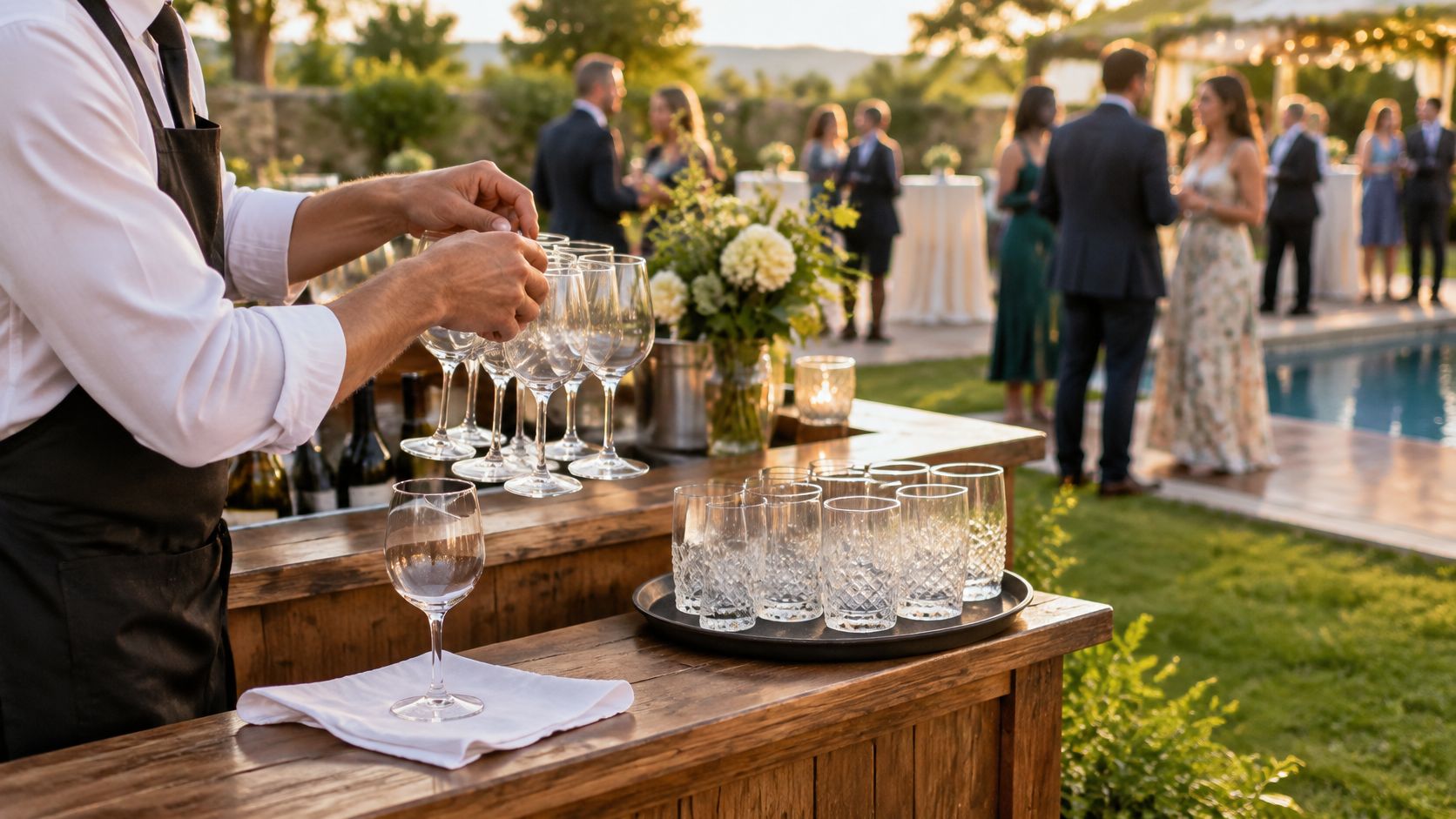
Check the conditions before the appearance
Breakage and restricted areas: Ask the venue directly whether glass is allowed on lawns, near the pool and around the dance floor. Agree on who isolates a broken-glass area, handles cleanup and supplies a replacement vessel. Don't assume permission in the dining room extends throughout the property.
Weight and transport: Heavy tumblers and fragile stems need suitable racks, protected transport and somewhere secure to wait before service. Durable plastic is lighter to move and avoids the handling demands of fragile glass. Confirm delivery access before arranging an extensive rental order.
Washing access: A sink somewhere on the property isn't a washing plan. Confirm who washes, what equipment they can use, where clean vessels dry and how they return to the bar. Without a confirmed process, plan enough clean drinkware to avoid relying on washing during service.
The number of vessel types: A short and a tall option can cover a focused cocktail-and-mocktail menu. Add a stemmed format when the selected presentation calls for it, rather than ordering specialty shapes that barely leave their racks.
Match the material to guest movement
Real glass makes the strongest case at an indoor, seated reception with controlled clearing and reliable back-of-house access. For an outdoor birthday, busy brand activation or standing corporate reception, we'd prioritize durability and straightforward handling.
Entertainment affects that decision too. If you're deciding between a seated program and a more active reception, GetBill's guide to compare acts for corporate gatherings can help clarify how guests may move through the space. Use that movement plan when deciding where drinks can travel.
The visually correct glass isn't always the practical vessel. Choose for the room, the walking route and the people responsible for handling it.
Don't include real-glass rental or washing in your budget assumptions unless those arrangements are explicitly confirmed. A beautiful place setting won't solve an unstaffed collection area behind the bar.
Who Supplies Glassware and Who Cleans Up
A clear supply plan assigns every glass and every cleanup task to someone. BeeHive's Bronze, Silver and Gold packages include plastic glassware, napkins and straws. Real-glass rental and glasswashing must be arranged separately.
Bartender-only service is separate from those packages. The client provides drinkware, the bar or work surface, mixers, ice, coolers, garnishes, other beverages and supplies. BeeHive provides professional bartending, standard bar tools, a shopping list, and setup and cleanup of the bartending work area. The optional mobile bar add-on provides the mobile bar only.
Assign responsibilities in service order
Start with delivery and finish with removal. Use this mobile bartending supplies guide to organize items and assign responsibility.
Before service: Name who delivers the drinkware, checks its condition and places clean stock within the bartender's reach.
During service: Assign someone to replenish the bar from stored stock. Confirm who clears used glasses from tables and gathering areas.
After service: Specify who washes, sorts and packs rented glassware, removes used cups and returns rental racks.
For breakage: Record who handles cleanup and replacement costs so guests and vendors aren't left to improvise.BeeHive handles cleanup of its bartending work area. Confirm separately in the event agreement who will clear tables, wash or pack venue glassware, and return any rentals.
Plan clean stock beyond the opening setFor example, for 50 guests drinking alcohol over three hours, assume each uses two cocktail cups and no cups are washed and reused during service. That is 100 cocktail cups; adding 10 spares gives a starting stock of 110. Adjust for the menu, service pattern, breakage and actual reuse. Plan separate cups for water, alcohol-free drinks and anyone else attending. This is an illustrative stock plan, not a guaranteed requirement or a drinking recommendation.
Account separately for soda, water and alcohol-free drinks, including cups for guests who aren't drinking alcohol.
Clients purchase and provide all alcohol. Keep that responsibility separate from the drinkware plan.
Before approving the proposal, confirm drinkware source, restocking, clearing, washing, breakage and final removal. For bartender-only service, assign each supply responsibility explicitly rather than assuming package inclusions apply.
Glasses for Sparkling Wine and ToastsWork the toast count before ordering glassware. For 80 people joining a toast, plan 80 suitable glasses plus spares, including glasses for guests having alcohol-free drinks. This glass count applies whether toast pours are already in the main beverage estimate or added separately.
A wine-glass guide to sparkling-wine styles gives typical capacities of 6–10 oz for flutes and 5–8 oz for coupes. Flutes have a narrow profile; tulips have a wider middle and narrower rim.
Sparkling-wine glass comparison
| Glass | Typical capacity | Best use | Service note |
|---|---|---|---|
| Flute | 6–10 oz | Sparkling wine and toasts | Narrow shape helps retain carbonation |
| Tulip | Varies by glass | Sparkling wine | Wider middle allows more aroma while narrowing at the rim |
| Coupe | 5–8 oz | Champagne toasts and cocktails served up | Shallow bowl; carbonation dissipates quickly |
Choose a flute to help preserve bubbles. A tulip gives sparkling wine more room for aroma while keeping a narrower rim. A coupe suits a vintage-style presentation, but its shallow, open bowl lets carbonation dissipate faster.

Count the toast without counting it twiceFirst decide whether toast pours are included in the regular beverage estimate or added on top, so the drinks are counted once. For 80 toast participants, reserve 80 glasses plus spares and allocate sparkling wine and alcohol-free alternatives according to guests’ preferences.
Use the Champagne toast calculator to estimate the sparkling-wine purchase, then coordinate the glass count with the venue.
Confirm staging and distribution
Set the toast-glass location and distribution plan before the event. Confirm who pours and hands out the glasses, and how alcohol-free alternatives will be identified if glasses are placed at seats in advance.
Approve the glass style, pour, count and spare stock before ordering. Keep toast glasses on a separate line from cocktail glassware.
Choose Your Glassware Plan Before You Book
A settled drinkware plan makes bar-service proposals easier to compare. You can distinguish the cost of bartending from the separate work of supplying, handling and removing specialty glassware.
Use this checklist before approving your event arrangements.
List the drinks you want to serve. Keep the menu focused enough that each choice has a clear purpose. Include alcohol-free options at the start, not after the drinkware order is placed.
Map each drink to its serving format. Mark it as over ice, served up, tall and mixer-heavy, still wine or sparkling wine. Select vessels that accommodate the finished recipe rather than choosing by appearance alone.
Get the venue's glass rules in writing. Check outdoor areas, pool access, dance floors and any restrictions on outside drinkware. A general approval to operate a bar doesn't answer every material or access question.
Assign supply and handling responsibilities. Identify who delivers, stores, replenishes, clears, washes and replaces the vessels. Put those responsibilities in the proposal, especially when the venue and host are supplying different items.
Estimate stock for the whole service period. Use drinking guests and booked beverage-service hours as planning inputs, then account for fresh vessels, water, mixers and alcohol-free service. Don't treat the alcohol-purchasing estimate as a complete cup count.
Separate the toast allocation. Confirm whether its beverages are included in the main estimate or additional, and reserve the appropriate glassware and spares. Assign staging and distribution before the schedule is finalized.
Compare the complete scope
For Orange County bartending costs, the useful comparison isn't just the headline service price. Consider any separately arranged glassware, delivery, collection and washing responsibilities alongside the bar proposal.
Use the supply responsibilities above to distinguish package bookings from bartender-only arrangements without assuming they contain the same items. For events elsewhere in Southern California, travel beyond Orange County is by arrangement.
The goal is a plan that lets guests enjoy the drinks without leaving the host to solve missing cups or unclaimed cleanup duties during the celebration.
We offer dry-hire mobile bar packages and separate bartender-only service for weddings, private celebrations and corporate events, with drink planning matched to your occasion. Visit BeeHive Mobile Bar to explore the options or request a quote with your menu, venue rules and drinkware needs.