glasses per bottle
How Many Glasses of Wine Per Bottle? A Pour Size Guide
See how many full glasses a wine bottle provides at 4, 5 and 6 oz pours, plus practical bottle and sparkling-toast calculations.
By BeeHive Mobile Bar ··10 min read
Updated
In this guide
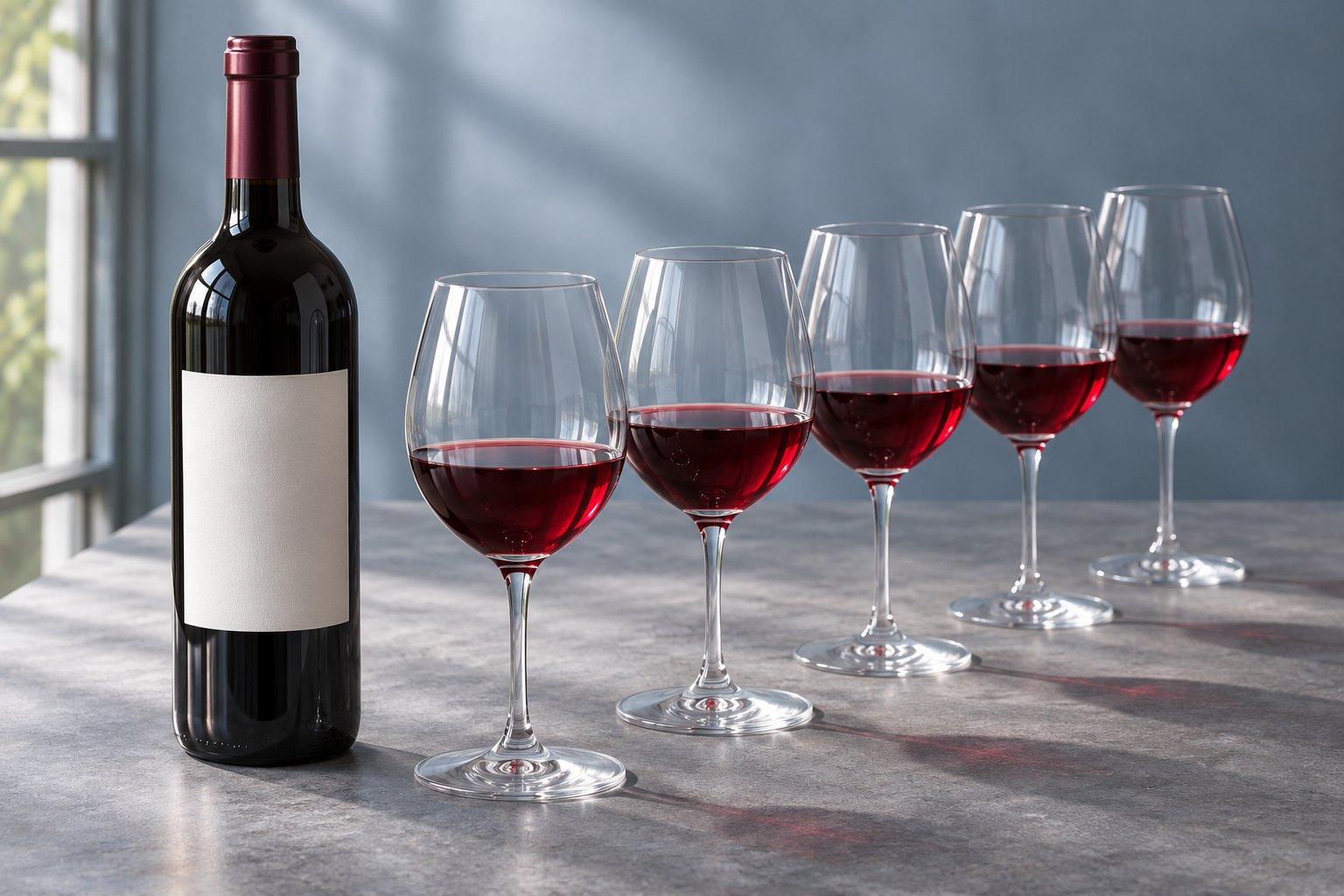
A standard 750 mL bottle holds about 25.36 US fl oz. It provides six complete 4 oz pours, five complete 5 oz pours or four complete 6 oz pours, with a little wine left over. Choose the pour size before working out your bottle order.
For weddings, private celebrations and corporate events in Orange County, the next step is deciding how many wine servings to plan for and whether bottles will be shared across a continuous bar or allocated to separate tables.
Glasses per Bottle at Common Pour Sizes
The table below shows theoretical volume yields. The decimal is useful for calculations, but it is not an extra full glass from an individual bottle.
Bottle size and pour size are separate inputs. A larger container increases available volume; a larger pour reduces the number of glasses available from that container.
Convert the Volume Before Dividing
Use the same units throughout:
Bottle volume in US fluid ounces ÷ pour size in US fluid ounces = theoretical glasses.
For the calculated comparison below, one US fluid ounce is approximately 29.57 mL. The figures are rounded to one decimal place, so they describe fractional yield rather than a promise of complete servings.
Theoretical glasses per bottle by pour size
| Bottle size | Volume (US fl oz) | 4 oz pours | 5 oz pours | 6 oz pours |
|---|---|---|---|---|
| 375 mL half bottle | 12.7 | 3.2 | 2.5 | 2.1 |
| 750 mL standard bottle | 25.4 | 6.3 | 5.1 | 4.2 |
| 1.5 L magnum | 50.7 | 12.7 | 10.1 | 8.5 |
| 3 L box, about four 750 mL bottles | 101.5 | 25.4 | 20.3 | 16.9 |
These are calculated volume equivalents, not different definitions of a glass. A fractional result means there's wine remaining after the full pours, but not enough to fill another glass at the selected measure.
The container itself doesn't change that arithmetic. A magnum isn't more efficient than smaller bottles because it holds more wine, although service arrangements can affect how easily staff use the remaining volume.
Why Use the Reference Pour?
The NIAAA's standard-drink definition identifies 5 US fl oz of table wine at approximately 12% alcohol by volume as one standard drink, containing about 0.6 US fl oz, or 14 grams, of pure alcohol. That makes it a useful reference for comparing volume and alcohol content, not a recommended consumption amount.
A glass's capacity isn't its pour size. Choose the measure first, then use appropriate glassware rather than filling every glass to a similar-looking height.
Practical rule: Find the container and pour size in the table, then round down when counting complete glasses available from an individual bottle.
Why Five Glasses Is Only a Planning Estimate
The familiar rule assumes consistent measured pours and usable bottle volume. The Institute of Culinary Education describes a standard 750 mL bottle as five 5-ounce glasses with approximately 0.4 ounces remaining; using 25.36 US fl oz, the calculation is 25.36 ÷ 5 = 5.07, leaving about 0.36 US fl oz after the full glasses.
That remainder isn't another serving. It's a small amount that may contribute to a later pour if service staff can use it.
Where the Usable Count Changes
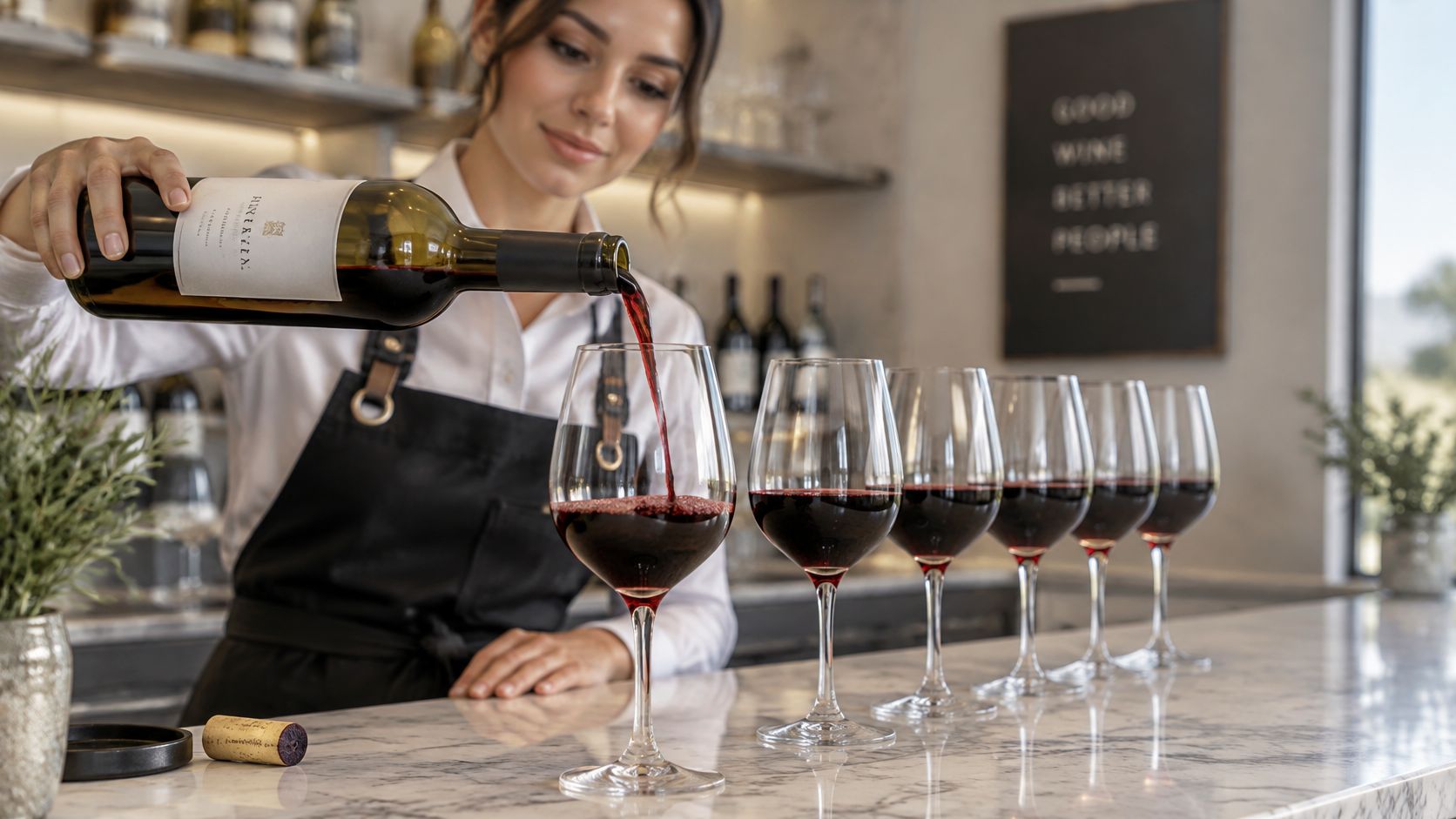
Larger pours consume the remainder faster. If the bartender pours beyond the agreed measure, the bottle won't deliver the expected number of complete glasses.
Top-offs obscure the count. Adding wine before a glass is empty uses inventory without creating an obvious new serving.
Spills and breakage remove usable wine. Wine poured onto a tray or lost with a dropped glass can't be served.
Unfinished glasses still use inventory. A guest who leaves wine behind has received a pour, even if they haven't finished it.
Glass shape affects visual judgment. A wide bowl can make a substantial pour look modest. Pour height alone isn't a dependable measurement.
The operational distinction is between wine poured and wine finished. Purchasing calculations need to account for the former because the bottle is depleted when the bartender serves it, not when a guest empties the glass.
Count complete pours you can serve, not decimal portions you hope will become another glass.
Measured service makes the comparison table useful. Open pouring and repeated top-offs can bring the usable count below its theoretical value, so agree on the service method rather than treating the arithmetic as a guarantee.
Glass Count and Alcohol Strength Are Different
A 750 mL bottle gives the same physical number of 5 oz pours whether the wine is 12% or 14% ABV. The stronger wine simply contains more alcohol in each pour.
The NIAAA standard-drink definition uses 5 US fl oz of wine at 12% ABV. At 14% ABV, the same 5 oz glass contains about 1.17 US standard drinks: 5 × 0.14 ÷ 0.6. A standard drink is an alcohol measure, not a suggested amount to consume.
For dessert or fortified wine, agree a smaller pour appropriate to your menu and calculate its yield separately. Do not treat a labeling reference size as a required event pour.
Choose a Pour Size by Event Type
Choose the service format before converting glasses into bottles. Event type helps identify the questions to resolve, but it doesn't automatically determine the correct pour.
For a seated dinner, agree on a measured dinner-wine pour and how staff will handle refills. At a standing reception, establish whether bartenders will serve fresh glasses or offer top-offs. For corporate events with several beverage choices, estimate wine demand separately from cocktails, beer and alcohol-free drinks.
Compare Assumptions, Not Just Bottle Totals
These are possible planning choices, not consumption recommendations:
Seated dinner: Use the reference wine measure when that matches the agreed service.
Standing reception: Test a larger-pour scenario if generous service is intended.
Corporate reception: A smaller measured pour can be modeled when the host specifically selects it.
Private celebration: Write down one agreed measure so the host and bartender aren't calculating different quantities.
Hypothetical reception: Assume 80 drinking guests, 2 booked beverage-service hours, one drink per service hour and a 50% wine share. That produces 160 estimated drinks, including 80 wine servings.
At a 6 oz assumed pour, 80 × 6 = 480 US fl oz; 480 ÷ 25.36 = approximately 18.9, rounded up to 19 bottles. At 5 oz, the calculation is 400 ÷ 25.36 = approximately 15.8, rounded up to 16 bottles.
The difference comes from pour size, not guest count. The 19-bottle estimate assumes usable remainders of the same wine can contribute to successive pours. If you allow only four full 6 oz pours per bottle, use 80 ÷ 4 = 20 bottles before any reserve. Both calculations should be labeled with their assumptions. For demand planning, see our event alcohol quantity guide.
Turn Your Yield Into a Bottle Count
A bottle count combines two inputs: the usable volume each bottle delivers and the number of wine servings you budget for. A precise division can still produce a weak order if the demand estimate behind it is guesswork, so build the estimate before you divide.
Build the Calculation in Order
Count drinking guests. Use the adults expected to choose alcohol, not total attendance. Plan alcohol-free beverages separately.
Estimate wine's share. Decide what portion of the estimated alcoholic drinks will be wine rather than beer or cocktails.
Select the pour size. Record it beside the wine selection so the purchasing and service plans match.
Divide wine servings by bottle yield. Use unrounded volume calculations when combining inventory across bottles.
Round up the purchase. Bottles must be purchased as whole containers, even when the calculation produces a fraction.
Hypothetical purchase calculation: With 50 drinking guests and 3 booked beverage-service hours, a one-drink-per-hour assumption produces 150 estimated drinks. If 40% are wine, that gives 60 wine servings.
At 5 oz per serving, 60 × 5 = 300 US fl oz. Dividing 300 by 25.36 gives approximately 11.8 bottles, rounded up to 12 bottles.
Decide How to Handle Remainders
The earlier yield calculation showed why a 750 mL bottle leaves a leftover fraction after its last full pour. How that remainder counts depends on how service is organized.
Dividing total required ounces by total bottle volume assumes staff can carry remainders into successive pours, which suits a single continuous bar. For separate tables, isolated stations or wines that will never be combined, calculate each allocation independently and round its bottle count up. The second approach buys more bottles, and that difference provides for full pours at each location before any allowance for spills or additional demand.
Inventory check: Don't treat an unused portion of one wine as interchangeable with another wine unless the service plan allows that substitution.
Our four free bar-planning calculators include an alcohol shopping list calculator that turns your event assumptions into a bottle-level purchase list. Its shopping list excludes mixers, water, alcohol-free drinks, ice, garnishes and a separate toast, so carry those onto their own budget lines.
Treat the result as a purchasing estimate, not a consumption recommendation. As a dry-hire service, we provide the personalized shopping list while you purchase and provide the alcohol. Every event is quoted individually based on guest count, service hours and any add-ons, so keep the alcohol purchase budget separate from the quote for staffing and agreed bar-service responsibilities.
Count Sparkling Toasts Separately
For a 3 oz toast, the calculated yield from a 750 mL sparkling bottle is 25.36 ÷ 3 = 8.45, meaning eight full toast pours with about 1.4 US fl oz remaining. This is a selected toast-pour assumption, not a recommended consumption amount.
Sparkling service deserves its own calculation because a synchronized toast is different from guests choosing wine throughout a reception. The operational considerations around separate toast service and usable bottle yield are described in this wine bottle-yield guide.
Give the Toast Its Own Inventory Line
Hypothetical toast: If 100 guests each receive a 3 oz pour, the total requirement is 300 US fl oz. Dividing by 25.36 gives approximately 11.8 bottles, rounded up to 12 bottles for the toast alone.
Twelve bottles is the mathematical volume minimum if the remaining wine is usable across successive pours. For a simpler purchase plan of eight complete 3 oz pours per bottle, 100 ÷ 8 = 12.5: buy 13 bottles before a reserve. If bottles go to separate tables, calculate and round each table’s allocation independently.
Before ordering, confirm whether the toast is already included in the event's wine demand or is additional. Count it once.
Toast line: Record sparkling wine, chosen pour and participating guests.
Mixers and garnish line: List these separately, alongside alcohol-free drinks.
Ice and water line: Assign quantities and responsibility outside the alcohol total.
Use BeeHive’s Champagne Toast Calculator to check your bottle count, then reconcile the toast with your main beverage plan so each serving is counted once.
At BeeHive Mobile Bar, we offer dry-hire mobile bar packages and separate bartender-only service, with a personalized alcohol shopping list to connect your pour assumptions to your event plan. Visit BeeHive Mobile Bar to request a quote with your guest count, service hours and planned wine or toast service.