gala bar service planning
Gala Planning: Bar Service for Reception, Dinner and Toast
A practical gala planning guide to bar service, with reception and toast timing, drink quantities, staffing and clear host responsibilities.
By BeeHive Mobile Bar ··18 min read
In this guide
Your venue is booked, the caterer has the courses timed, and the program has a slot for the appeal from the stage. What's still unresolved is the bar. When does it open, when does it need to go quiet so the room can hear the speaker, and who is buying the sparkling wine for the toast so it doesn't get bought twice?
Gala planning brings the venue, caterer, program and bar team onto one schedule. These are useful questions to settle before confirming the bar-service proposal. A formal gala rarely wobbles because the cocktails were wrong. It wobbles when the bar and the program run on different clocks.
Gala Planning: Set the Bar-Service Schedule First
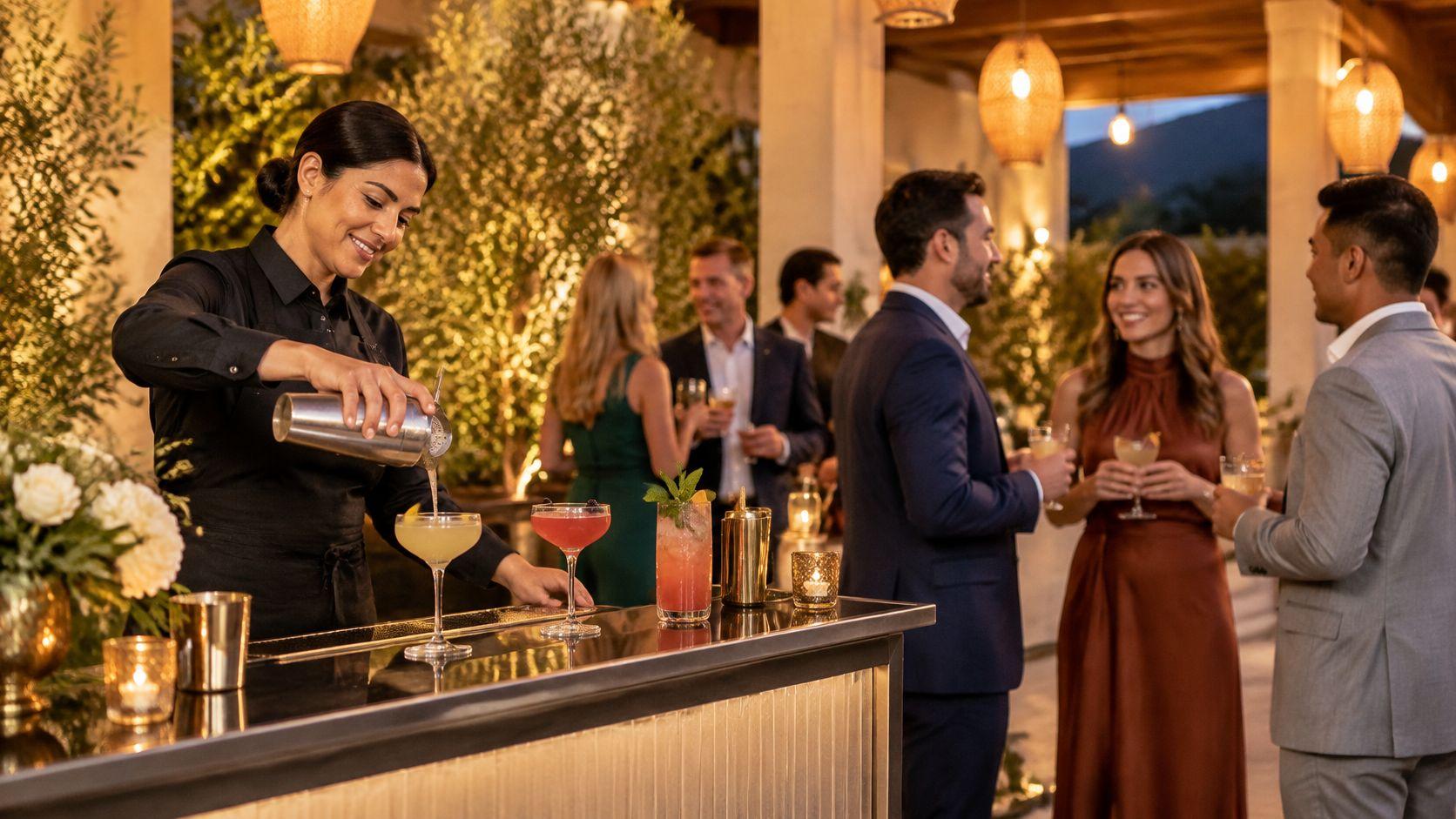
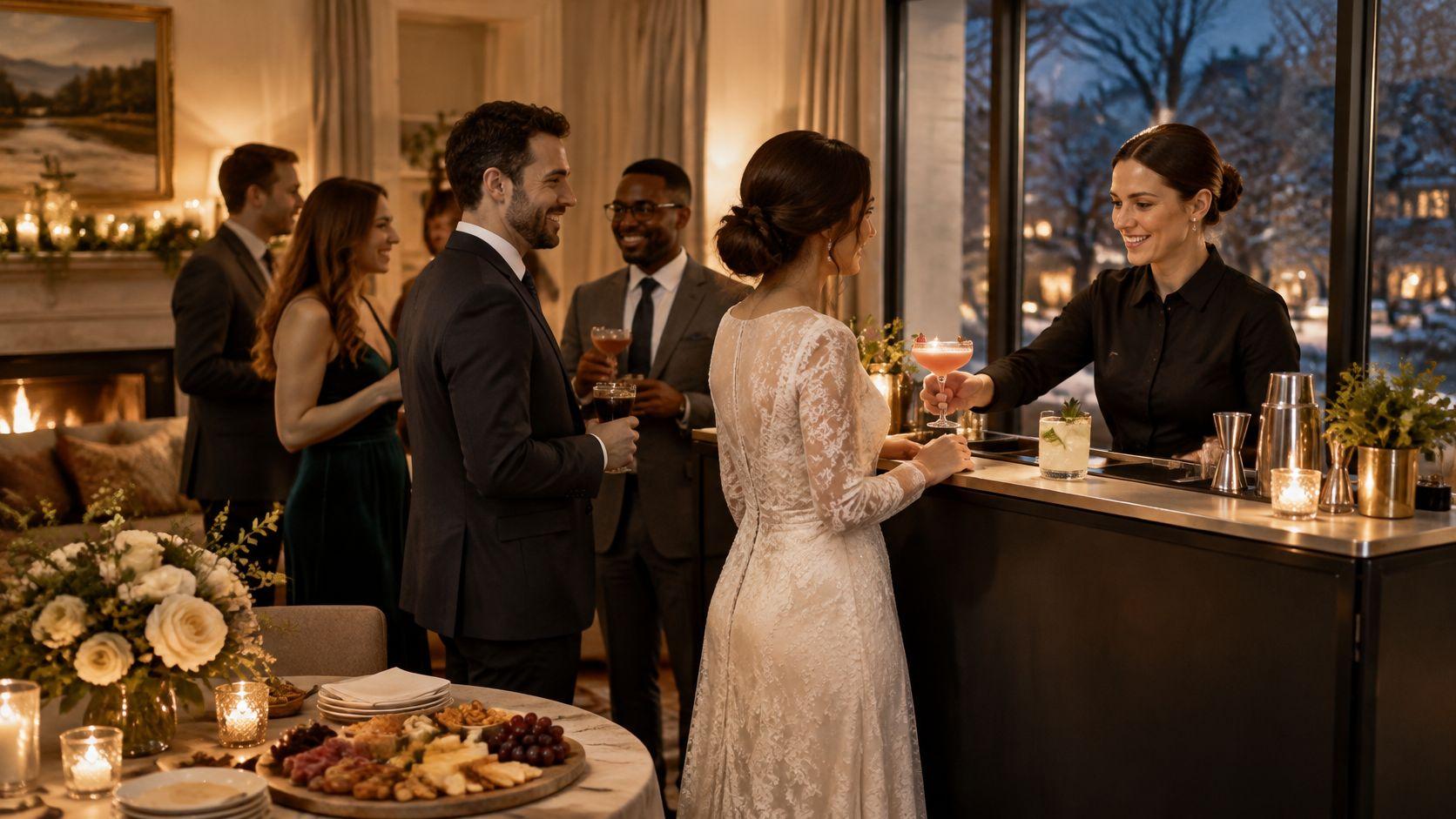
A gala's drinks are usually served in three distinct windows: the arrival reception, the seated dinner and program, and the toast after the main remarks. Treating the whole evening as one uninterrupted bar period can blur who is responsible for each pour and when service should pause.
Our scope is bar service: quoting, staffing and running the bar so the organizer can spend more time with guests. We do not buy, sell, supply, transport or deliver alcohol, cater the meal, or run the program.
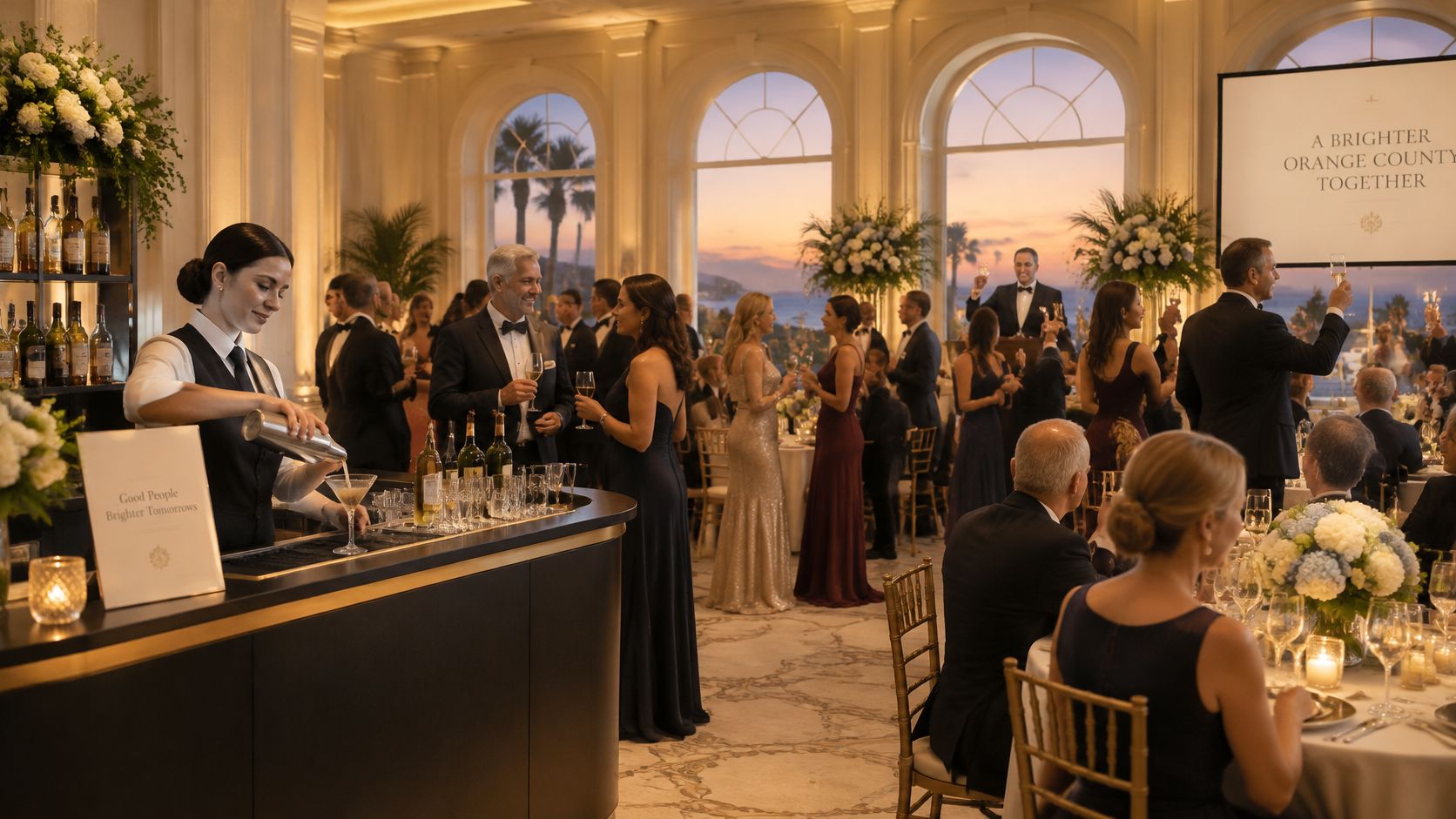
For a typical Orange County evening, doors might open at 6 pm, guests sit at 7:15, remarks begin at 8:15, the toast follows at 8:40, and dancing continues until 10. Those times create three clocks that need separate decisions.
Three clocks that rarely match
Event duration: the full evening listed on the invitation. In this example, it is four hours, the period the venue, caterer and entertainment work around.
Booked beverage-service hours: the hours covered by the quote and contract. This period may be shorter than the event. Confirm setup access before service and breakdown access afterward separately; they should not be subtracted from the agreed service hours.
Alcohol-service hours: the time when drinks are poured. If service pauses during remarks and closes for last call at 9:30, this window is shorter than the event and the booked service period.
Only the event duration appears on the invitation. An early alcohol cutoff does not shorten booked hours or remove a service minimum. If the proposal covers three hours and the bar closes at 9:30, the remaining booked time is still part of the contract, even when no drinks are being poured.
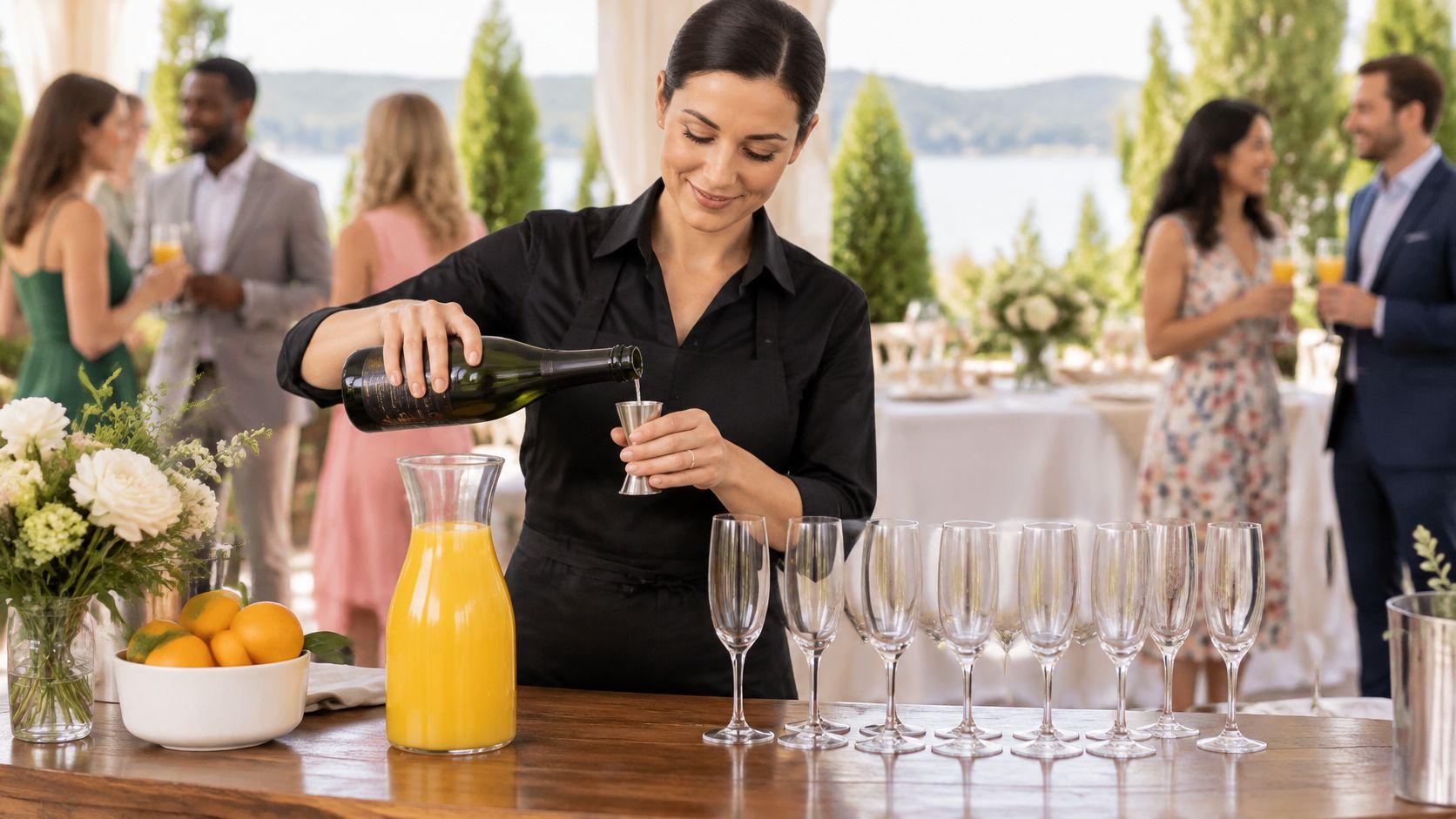
Separate the toast from reception purchasing as carefully as the service windows. If sparkling wine for the toast is added to the general reception shopping list without being identified, the same drinks may be counted twice. Decide who provides that alcohol and how it will be tracked.
Before confirming a proposal, settle three points: when alcohol service is open and when it pauses during the program; who provides the alcohol, bar and service supplies; and how toast drinks stay separate from reception purchasing. Travel beyond Orange County is by arrangement.
A Gala Run of Show for Beverage Service
Here's a labeled hypothetical, not a client event: 150 invited guests, about 110 of whom may drink alcohol, a 75-minute reception, a 90-minute seated dinner and program, a 10-minute toast after the main remarks, then 35 minutes of socializing and a 30-minute close. The table below sets the order we plan in.
| Phase | Hypothetical window | Bar decision | Who confirms the clock |
|---|---|---|---|
| Guest arrival and reception | 75 minutes before seating | Open service; highest cocktail volume; alcohol-free drinks equally visible | Organizer with BeeHive |
| Seated dinner and program | 90 minutes | Slow or pause cocktails during speeches; water and soft drinks stay available | Organizer, venue or caterer, and BeeHive |
| Separately timed toast | About 10 minutes | Pour count set by the toast calculator, counted apart from reception drinks unless the proposal says otherwise | Organizer provides alcohol; Agreed bar team or separate servers pour and distribute; confirm staffing and scope |
| Close and last call | 30 minutes | End alcohol service on the agreed clock; booked hours still run to the contract end | Written proposal |
The arrival window carries the highest volume
Guests reach the bar in clusters during the first 20 minutes, and the room has nowhere else to be. A published drinks-per-guest benchmark estimates one drink per guest in hour one and about 0.75 per guest in each later hour, roughly 4 drinks per guest across a five-hour reception as an inventory estimate, not a drinking target, with a 40% wine, 30% beer, 20% spirits and 10% non-alcoholic split. That shape, rather than any single total, is why the reception usually needs the fullest staffing of the night.
Two decisions make the reception work. Keep alcohol-free drinks on the same printed list as the signature cocktails, with equally visible descriptions and clear drink identification, so nobody has to hunt for them. And stage the highest-volume phase first, with the bar fully stocked and the ice already split before doors open.
Speeches need a quieter bar, not a closed one
During the 90-minute dinner and program, slow or pause cocktail production. A blender running through a tribute speech is a planning failure, not a guest's fault. Coordinate the pause with the caterer's course timing so the bar reopens as plates clear, and keep water and soft drinks available the whole time.
The test we use: if the bar can be heard over the speaker, the bar is too loud for that minute.
Some seated guests may prefer not to leave the table mid-program, so the drinks they can reach without leaving the table matter more than what's on the cocktail menu. A self-serve refreshment setup earns its place in this window.
The toast is a separate service
Allow about ten minutes for the toast, with one pour per participating guest. Count speakers within the total unless they are additional attendees. The organizer chooses champagne, wine or an alcohol-free pour, and those servings aren't already inside the reception estimate unless the proposal says so. If the chair's remarks run long, the toast slips; the pour plan should be able to move ten minutes without restaffing the bar.
Last call runs on the contract clock
Alcohol service ends at the agreed time, and the booked hours run to the end of the contract regardless. Pacing is part of that close: NIAAA's binge-drinking guidance defines binge drinking for a typical adult as five or more drinks for men, or four or more for women, within about two hours, which is a fair reference point for how quickly a reception, dinner and toast can stack up when nobody is watching the clock. Settle how guests get home as well, whether that's a shuttle, rideshare or designated drivers.
Before anyone is hired, confirm the same clock with the venue. A room turn or a delayed salad course can move the toast without changing the booked bar hours. General room logistics and load-in sequences belong in our Corporate Event Setup guide, which is worth settling before bar times are fixed.
Who Handles Alcohol, the Venue and the Bar
Take this matrix into the venue meeting. It's the fastest way to find the one row where two people each assumed the other was handling it.
| Task | Organizer | Venue or caterer | BeeHive |
|---|---|---|---|
| Alcohol | Buy and provide all of it | Say what may enter and where it is stored | Do not buy, sell, supply, transport or deliver it |
| Event format and permissions | Confirm private, ticketed, charitable or public status and any alcohol conditions | State house rules and access | Do not determine permit status |
| Bar surface and service supplies | Provide the bar and other supplies for bartender-only service; the $150 add-on supplies only the bar | Load-in, power and storage | Quoted setup, service and work-area cleanup |
| Food, speeches and fundraising | Set the program clock | Meal service and room turns | Bar service only; not catering, auctions, ticketing or production |
| Tips | Optional; approve a jar with the venue | Approve a jar together with the client | No tip required |
The alcohol row
The organizer buys and provides every alcoholic beverage and arranges how it reaches the venue. We'll suggest quantities and build a shopping list, but we don't purchase, sell, supply, transport or deliver alcohol. That line holds for a donor gala exactly as it does for a backyard party, and it's worth confirming with whoever is receiving deliveries at the loading dock.
The permissions row
The organizer confirms whether the gathering is a closed invited group or involves tickets, donations, public entry or a cash bar. California's Alcoholic Beverage Control discusses private functions at Type 74 craft-distillery premises specifically. That advisory should not be treated as a universal rule for gala venues. A gala with public walk-ins, ticket sales, donations or fundraising activity may trigger different permit requirements, and local venue rules can add their own.
For private parties, ABC's licensing FAQ describes hiring an unlicensed bartender who is paid for service rather than alcohol sales, with the host buying all alcohol in advance and the bartender unable to bring alcohol, charge guests by the drink, buy alcohol for reimbursement or deliver it to the venue. Do not assume that a gala or fundraiser qualifies for this arrangement; confirm the actual event format with ABC and the venue. Confirm it with ABC before choosing any cash-bar or ticketed format. We don't decide an individual event's permit status and don't offer a legal conclusion.
Where a daily alcohol license is applicable and the applicant qualifies, ABC's application instructions set a window of at least 10 days and no more than 30 days before the event, with property-owner authorization; a site diagram may be required for outdoor events. Police approval can also apply for large attendance or public areas. Verify current timing directly with ABC. If the gala is in an Orange County park, OC Parks permit information states that serving alcohol requires a permit, additional fees and other requirements, and that only certain facilities allow it, so check the facility rules with the park office before booking.
The room and supplies row
The venue or caterer controls load-in, power, guest access, food service and any house restriction on glass, ice storage or tip jars. We handle the quoted bartending, the agreed work-area setup and cleanup, and the menu we planned together. We don't run registration, the auction or the show flow.
A signed proposal that says nothing about waste, leftover alcohol or room reset means the venue decides those things for you at 11 pm.
Write any exception into the proposal rather than assuming the bar team absorbs it. Tips are optional, and a tip jar needs both client and venue approval. For how bar staffing fits the rest of a corporate program, our guide to corporate event bartenders covers the working relationship.
Dry-Hire Packages or Bartender-Only Service
Every service we offer is dry hire, so the client provides the alcohol either way. What changes between a package and bartender-only booking is who brings the bar and the supplies around it, and that single question decides most gala bookings.
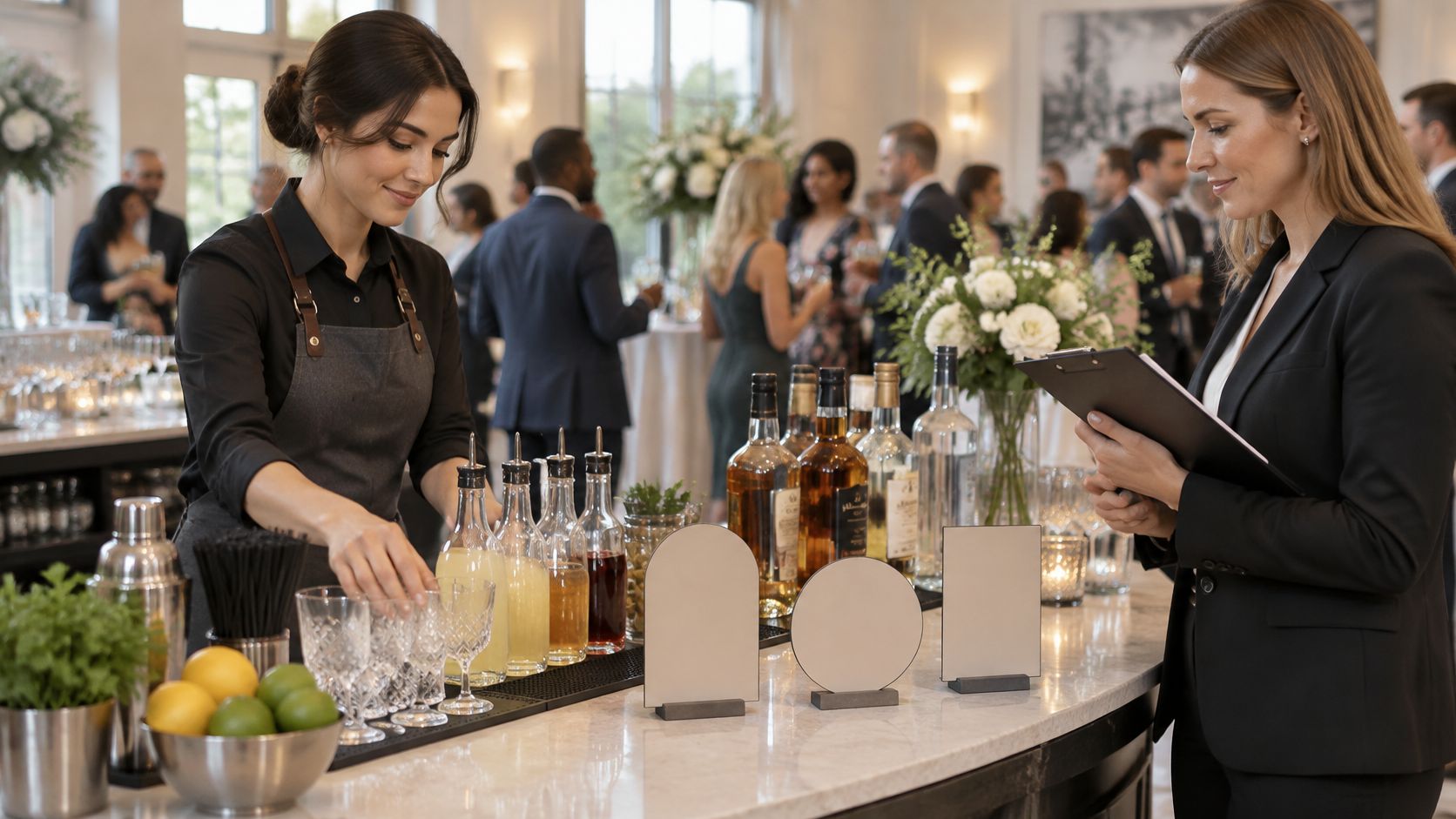
Bronze, Silver and Gold are a separate service from bartender-only. A package suits a gala that needs our portable bar plus the working supplies: bar tools, mixers, ice, coolers, plastic glassware, napkins, straws, setup, breakdown, an alcohol shopping list, menu planning and a printed menu.
| Factor | Dry-hire package (Bronze, Silver or Gold) | Bartender-only service |
|---|---|---|
| Alcohol | Client buys and provides all of it | Client buys and provides all of it |
| Bar and service supplies | Included in packages: portable bar, tools, mixers, ice, coolers, plastic glassware, napkins and straws | Organizer supplies mixers, ice, coolers, drinkware, garnishes and other beverages; optional $150 add-on supplies the mobile bar only |
| Printed menu | Included in packages | Not included automatically |
| Soft drinks and water | Gold includes them with the self-serve Refreshment Station; other packages are quoted separately | Organizer supplies them |
| Best fit | Gala needs our bar and service supplies | Venue already has a work surface and the organizer controls the other supplies |
| Hours | 3-hour minimum; extra service is $100/hour per bartender, subject to availability and agreement | 2-hour minimum; additional service is $75/hour, subject to availability and agreement |
What a package brings to a gala
Guest-count bands are planning guidance rather than guaranteed capacity, and final staffing depends on the room, the menu and the service window. Gold is custom-quoted and carries the fuller setup: a custom-styled mobile bar, four signature cocktails, two or more professional bartenders, premium garnishes and presentation, soft drinks, water and the self-serve Refreshment Station.
Bronze and Silver cover smaller rooms where the cocktail list is shorter and the guest count is tighter.
When bartender-only is the better shape
Bartender-only service starts at $350 and includes two hours of bar service, with a two-hour minimum. It covers professional bartending, standard bar tools, setup and cleanup of the work area, and a shopping list. The organizer supplies the work surface, alcohol, mixers, ice, coolers, drinkware, garnishes and other beverages.
The optional $150 add-on supplies the mobile bar only. No mixers, ice, coolers, drinkware, garnishes or other supplies, and no printed menu. This is the part people misread: bartender-only clients don't only buy alcohol, they buy the whole back-bar. Additional bartender-only time is $75 per hour, subject to availability and written agreement, and any partial-hour billing is confirmed in the proposal rather than applied from a standing rule.
The decision test is simple. If the venue's bar top and supplies are already locked, bartender-only can work well. If the organizer needs the bar itself and the supplies that go with it, choose a package.
How to Size Staffing, Drinks and the Toast
At a gala, a single drink estimate can blur three different moments: the arrival reception, the seated program and the toast. Plan each beverage window separately, then make clear whether toast pours are part of the main estimate. That keeps the guest count, service hours and purchasing list aligned.
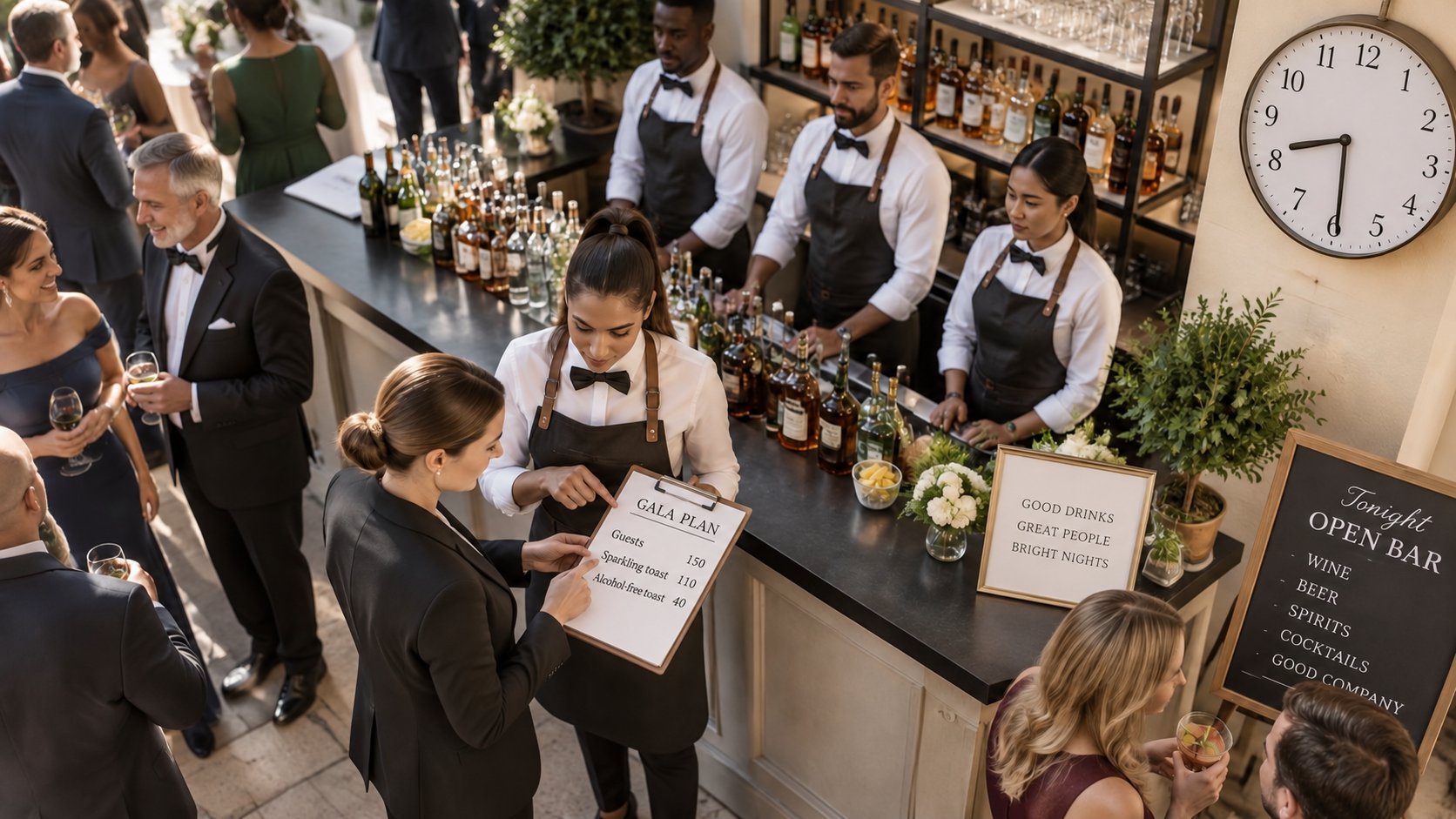
Count drinking guests separately from attendance. Invitations and attendance include guests who will not drink alcohol for health, religious or personal reasons. Use the hypothetical 110-drinking-guest evening from the run of show as the beverage-planning count.
Write down the service clocks. Record the event duration, booked beverage-service hours and any shorter alcohol-service window if speeches pause service. These details define the time available for each beverage window and give the proposal a clear schedule.
Match staffing to the busy period. Use the inputs requested by our Bartender Staffing Calculator, and share both total attendance and the number drinking alcohol with BeeHive; alcohol-free guests also need service. Arrival often creates a faster rush than the seated program, so plan for the pace of each period rather than sizing the team to an event-wide average. Our bartender staffing is matched to the guest count.
Build the alcohol list from the same planning inputs. Our alcohol shopping list calculator uses the drinking-guest count, service hours and the planned beer, wine and cocktail mix to estimate what to purchase. The mix matters: a list built around wine and beer will differ from one that includes more cocktails. Use the estimate as a planning aid, then keep the arrival reception and seated program distinct when assigning drinks to each window.
Plan the toast as its own timed pour. Use the Champagne Toast Calculator to estimate the toast pours. Then state in the proposal whether those pours are already included in the main shopping estimate or should be purchased separately. That decision prevents the toast from being counted twice.
List non-alcohol supplies separately. Track mixers, water, alcohol-free drinks, garnishes and ice apart from the alcohol total. They serve different purposes and need their own quantities and supply responsibilities.
Treat chilling ice and drink ice as separate supplies
Keep ice for chilling sealed bottles separate from clean, protected ice intended for consumption. Use separate scoops and storage containers, and keep beverage tubing and cooling devices away from consumable ice. The FDA Food Code says ice used to cool the exterior of packaged foods or beverages may not later be used as food, and restricts beverage tubing and cold-plate devices from being installed in contact with stored ice.
One cooler should not serve as a catch-all for bottle chilling and drink service. In the proposal, identify who supplies the ice, who replenishes it and who disposes of what remains. Plan enough for the service period and expected melting, just as the alcohol list accounts for the timing and mix of drinks.
A worked toast example for 150 guests
Assume 110 guests choose sparkling wine and 40 choose an alcohol-free alternative, each with a three-US-fluid-ounce toast pour. The wine requires 330 oz (about 9.76 litres), covered by 14 bottles of 750 mL.
The alcohol-free pours require 120 oz (about 3.55 litres), covered by five 750 mL bottles. These base quantities round up separately and exclude any extra allowance for spillage or larger pours.
Count these 150 toast servings separately only if they are not already allocated within the main drinks order.
Timing Mistakes That Disrupt a Seated Program
A gala bar can be fully stocked and still fall behind if staffing is based on the evening's average pace. Arrival service often brings guests to the bar at once, while the seated program changes how they can reach it. Size each phase for its own demand rather than treating the event as one continuous open bar.
Staffing to the average moment. A team sized for the reception rush may be underused during dinner, while a team sized for a quieter seated period can leave arrival guests waiting. Match bartender staffing to the guest count and schedule, with a clear plan for when service pauses or resumes around the program. A correct number applied to the wrong hour is still a poor fit.
Mixing up glassware. Confirm which glassware is supplied and who is responsible for it. Packages that include glassware and bartender-only service do not have the same supplies, so treating them as interchangeable can leave the bar short. List the glassware needed for each service point and confirm that it is in place before guests arrive.
Using the same glassware and garnish for alcoholic and alcohol-free drinks. Distinct presentation helps guests identify their drink and helps bartenders avoid serving the wrong one in a busy room. Agree on the glassware and garnish for each option before service begins.
For the separate planning decisions around the toast, alcohol-free menu visibility and booked service hours, make sure the event proposal states what is included and when.
Guests should be able to identify their drink without having to ask.
Before signing, check that the proposal records phase times, the alcohol owner, the toast count and the ice split.
Request a Quote for Your Gala Bar
A gala bar quote starts with the shape of the evening. Share the reception start time, the seated-program window, when the toast takes place, your estimated number of drinking guests, and whether the venue provides a bar top. These details help us tailor the menu and setup. We quote each event individually based on guest count, service hours and any add-ons.
For venue alcohol permissions, use the guidance in the earlier venue-planning section. Confirm those arrangements before booking.
Reserving a date requires a signed contract and a 25% deposit. The proposal states the remaining balance and its deadline. Once those are in place, the written phase times, alcohol owner, toast count and ice split guide the evening's service.
We plan the bar around your program and handle setup, service and cleanup, so you can spend more time with guests. BeeHive Mobile Bar offers dry-hire packages and separate bartender-only service for galas, donor receptions and corporate events in Orange County and nearby Southern California. Send your event details to BeeHive Mobile Bar to request a quote.