company anniversary celebration
Company Anniversary Celebration: Plan a Milestone Reception
Plan a company anniversary celebration in Orange County with a milestone reception, recognition, toast timing and a clear bar brief.
By BeeHive Mobile Bar ··15 min read
In this guide
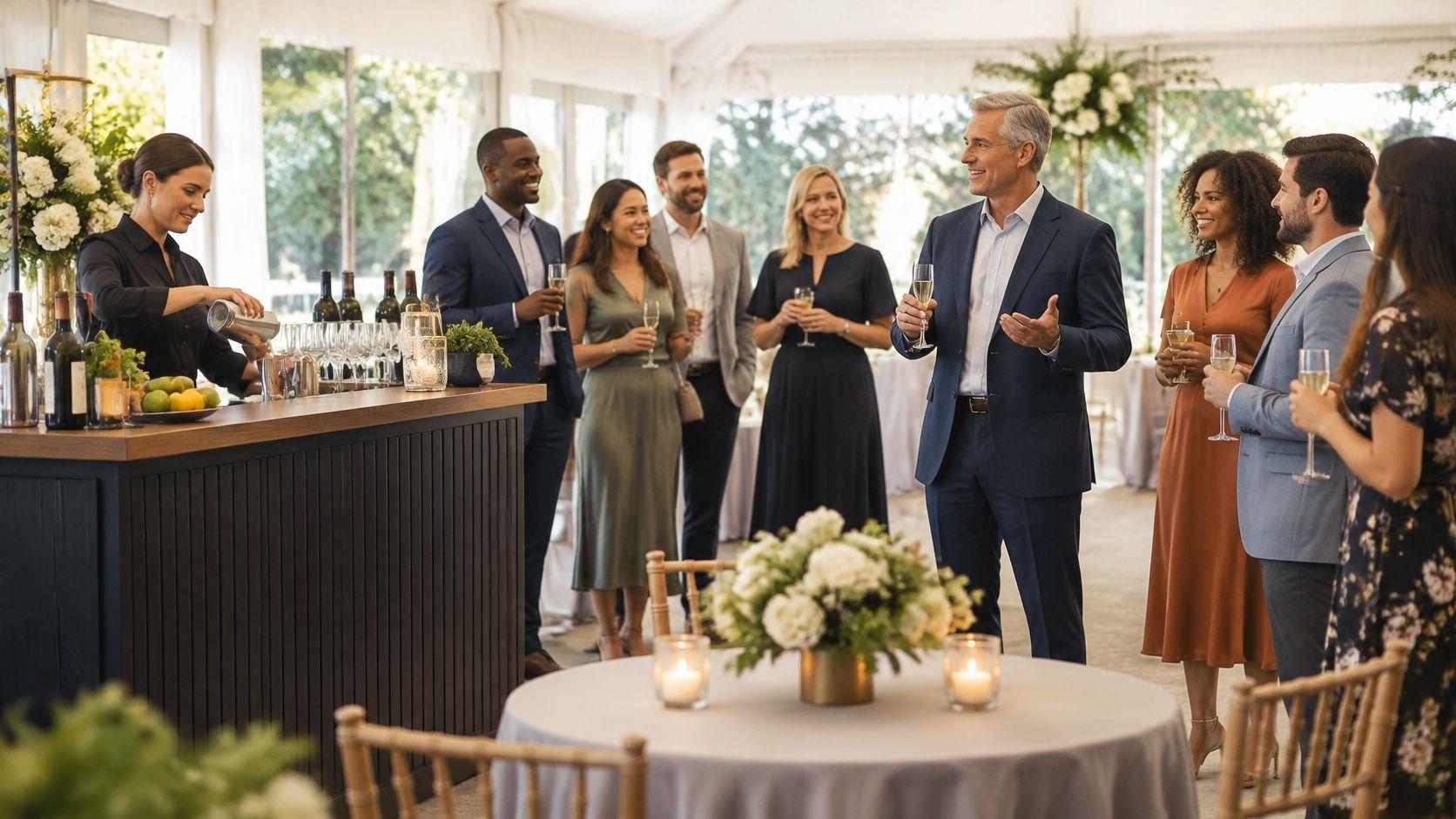
Your leadership team wants to mark another year in business, and you're the person turning that idea into an evening employees will enjoy. A company anniversary celebration is a hosted reception honoring a business's founding date or years in operation. For an indoor reception in Orange County, California, the most useful starting point isn't the drink menu. It's a short recognition program, a clear company story and a toast timed around the speeches.
Define the Milestone and the Guest List
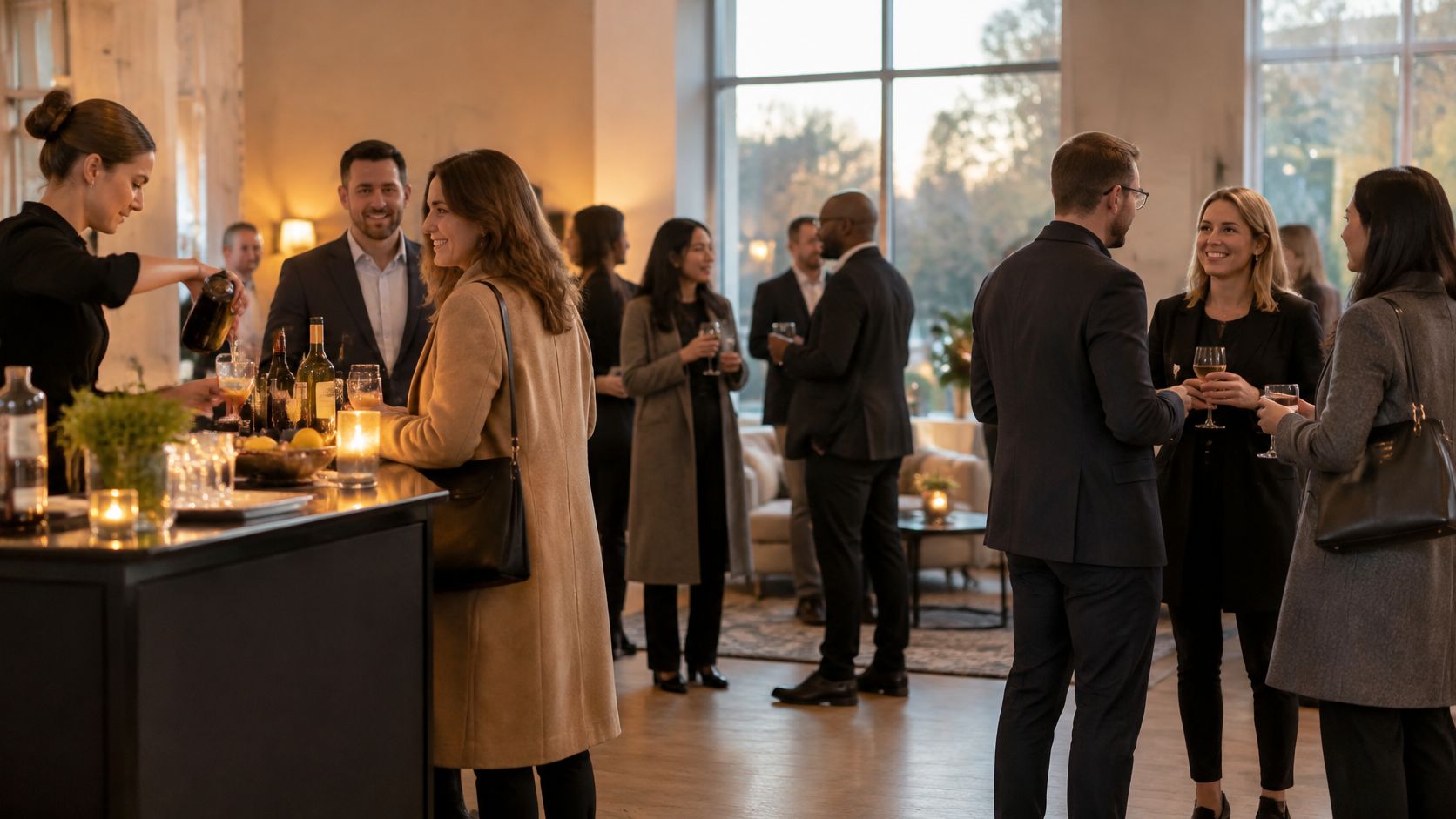
Say you're an office manager arranging a November reception for employees and a limited group of invited clients. Leadership wants the occasion to feel meaningful without turning it into a lengthy awards ceremony. Start by writing one sentence that identifies what everyone is celebrating.
For example, a hypothetical company might mark twenty-five years in business by recognizing the people who helped it grow from a small founding team into its current organization. That sentence gives you a reason for the gathering and a filter for the guest list.
This is not a couple's wedding anniversary, grand opening, holiday party, routine office happy hour, networking event or broad client-appreciation gathering. Clients can attend, but the business milestone remains the reason everyone is in the room.
Separate recognition from attendance
Build the invitation list around two groups:
People to recognize: Employees, founders and contributors whose work belongs in the company story.
Guests who should hear that story: Invited clients and other approved guests who have a meaningful connection to the milestone.
Some people will belong to both groups. Keep a separate recognition list so an RSVP spreadsheet doesn't become your only record of who deserves acknowledgment.
For invitation wording, reminders and response tracking, the Express Text event RSVP guide offers a useful planning resource. Ask guests about attendance and relevant access or refreshment needs without turning the response form into a survey.
Keep the scope manageable
Meaning comes from specific acknowledgments, a concise company history and a shared toast, not necessarily more décor or a larger production. We can handle the agreed bar service so the host can stay with employees and clients.
We don't produce the full event, book entertainment, supply food or reserve the venue. Your working plan should name task owners, select a reception format, identify recognition moments and connect the program timing to a clear bar-service brief.
Assign Every Planning Task Before You Book
Who owns each anniversary reception task
| Task | Company organizer | Venue | Bartending team |
|---|---|---|---|
| Milestone and invitations | Name the years and the employee or client list | Confirm capacity and access | Treat the count as an estimate |
| Program and recognition | Write the story, remarks and acknowledgments | Provide a speaking area if available | Pace service around the agreed cue |
| Alcohol | Buy and bring every alcoholic beverage | Approve outside alcohol if required | Do not buy, sell, supply, transport or deliver it |
| Toast drinks | Confirm whether toast quantities are already included; add any additional servings once, including alcohol-free pours | Approve where drinks are staged | Pour or distribute only as agreed in advance |
| Bar surface and supplies | Provide the work surface when hiring bartender-only service | Set load-in and house rules | Bring package supplies, or the mobile bar only when that add-on is booked |
| Service hours | Book hours in writing, including any extra time | Set access and any alcohol cutoff | Serve the booked hours; a cutoff does not shorten the booking |
Put an actual person's name beside each organizer responsibility. A department name isn't enough when someone needs to approve a changed speech cue or locate the toast drinkware.
The organizer should maintain one shared event note containing the approved schedule, venue contact, purchasing responsibilities and bar scope. Use that same information when reviewing the proposal so vendors aren't working from different versions.
Confirm the room before committing
Ask the venue to confirm the bar location, load-in route, access times and any restrictions on outside vendors. Check where guests will stand during remarks and whether the bar queue would block the speaking area or an exit.
Use our corporate event setup guide to work through the physical arrangement. A convenient place to put a bar isn't always a practical place to operate one, particularly when guests arrive together.
Also confirm venue requirements for outside alcohol, insurance documentation, age verification and written approvals. The company and venue should identify who handles access control and who receives any service-related escalation.
Keep the private-event check with the host and venue
The California ABC guidance on private events and private functions at craft distilleries states that private events must be closed to the general public and discusses factors such as invitations and access restrictions. Its license-specific context matters, so the company and venue should confirm the rules applicable to their actual event rather than treating the page as blanket authorization.
If guests would pay for drinks, confirm the applicable requirements with the venue and official ABC sources before advertising that arrangement. We don't determine an individual event's permit status.
Planning rule: Host-purchased alcohol and alcohol sales are different arrangements. Make the actual arrangement explicit before anyone books service.
Finally, distinguish event duration, booked beverage-service hours and alcohol-service hours in the shared note. An early alcohol cutoff doesn't shorten booked service or waive a minimum. Extra time requires availability and written agreement, with any partial-hour billing confirmed in the proposal.
Pick a Reception Format That Fits the Room
Milestone reception formats compared
| Format | Best audience | Program shape | Bar implication |
|---|---|---|---|
| Employee milestone reception | Staff and a few leaders | Longer recognition and a short toast | Service must be able to pause for remarks |
| Client and team reception | Invited clients plus employees | Brief history and fewer awards | Plan for a concentrated arrival rush |
| Covered evening reception | Mixed invited guests | Early remarks, then mingling | Booked hours continue even if alcohol service ends early |
For a November evening, choose an indoor room or a covered reception area rather than treating shelter as a last-minute backup. Check that guests can hear the speaker without gathering around the bar or standing in a circulation route.
An employee milestone reception gives you the most room for internal stories. It suits a company that wants to acknowledge long-serving colleagues, mentoring and contributions that clients might not recognize without explanation.
A client and team reception needs a tighter edit. Give invited clients enough context to understand the milestone, but avoid internal shorthand and a long sequence of awards. Employees should still hear their contributions acknowledged rather than finding themselves at a sales presentation.
Match the program to the setting
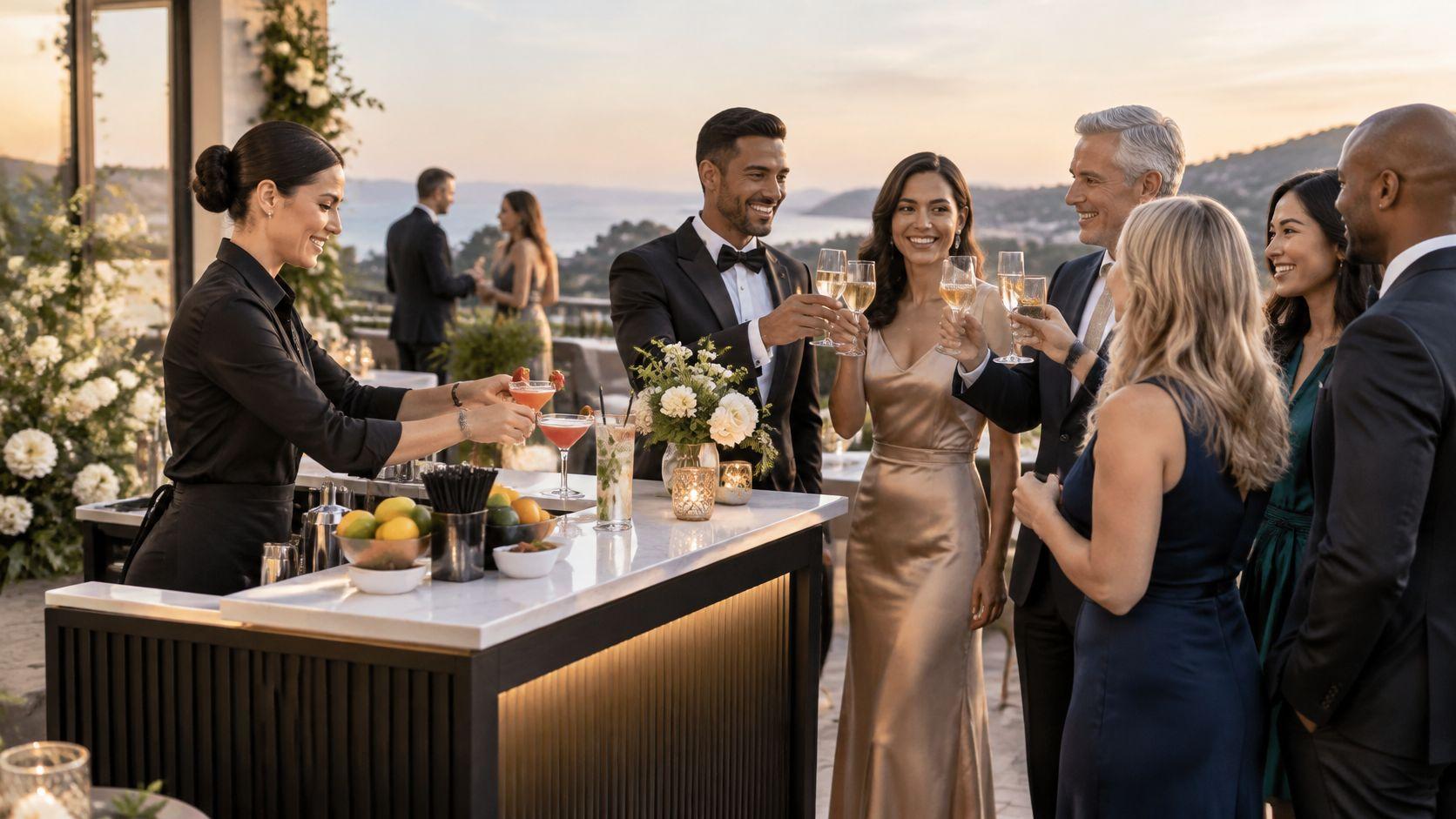
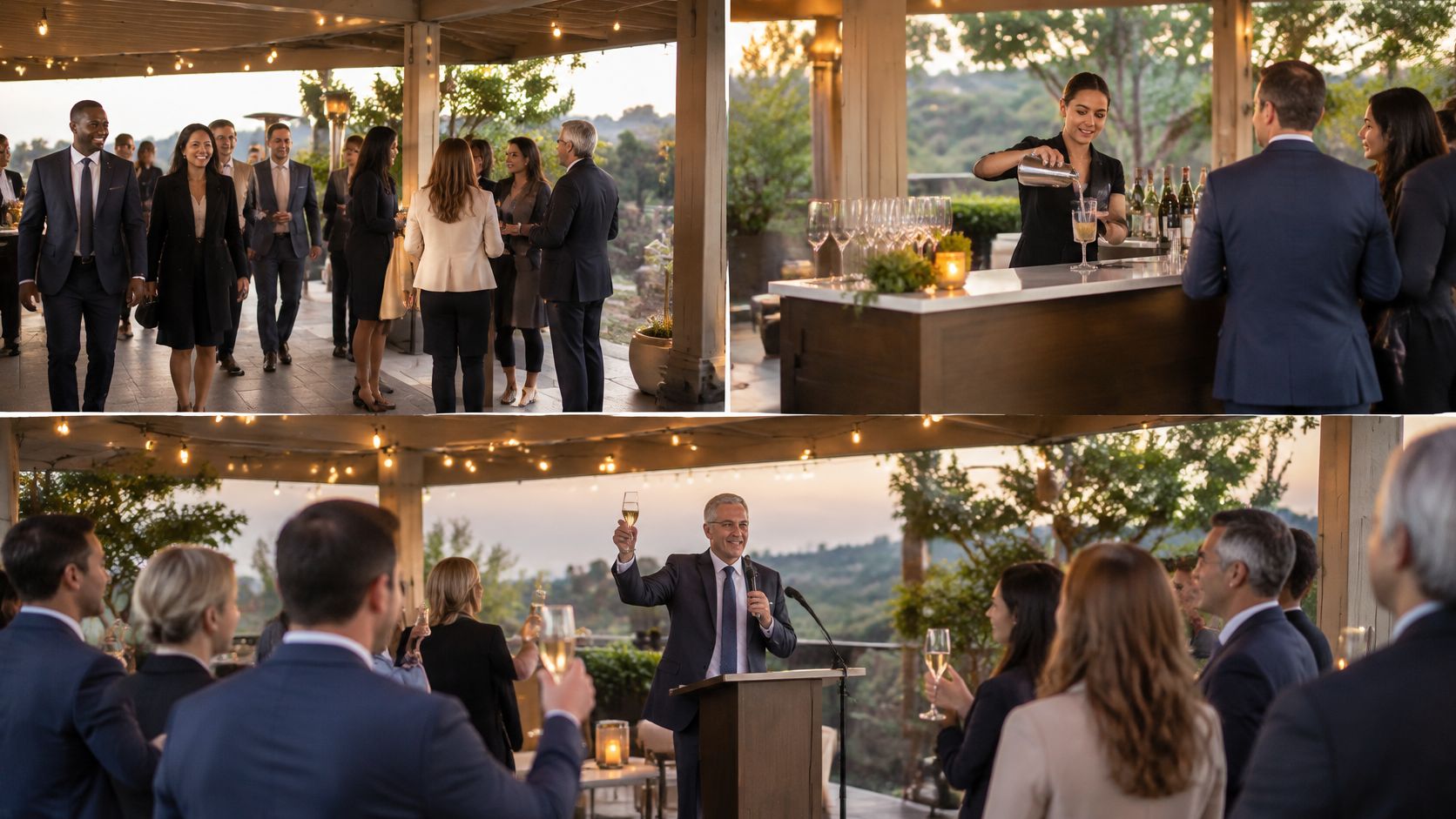
A sheltered terrace can suit a mixed invited group if the venue approves the layout and the speaking area works under cover. Deliver the formal remarks early, while guests are gathered, then leave the remainder of the booked reception for conversation.
For any standing reception, keep the program within the time your audience can comfortably stand and listen. Rehearse the remarks aloud, including speaker handoffs and applause, rather than judging length from a document.
Choose employee-focused recognition when colleagues are the primary audience.
Choose a concise shared history when clients need context.
Choose early remarks when a covered setting makes later movement or room changes likely.
If the company independently decides to provide staff apparel, Dirt Cheap Product, Inc.’s guide to ordering custom event shirts on deadline can help the organizer keep that separate purchasing task on schedule. Apparel isn't necessary for the reception, and it isn't part of our bar service.
We're a service-area business with no public storefront. Travel beyond Orange County into surrounding Southern California areas is by arrangement.
Circle one format before writing the remarks. That choice determines how many acknowledgments fit, how much context guests need and where the toast belongs.
Build Recognition Into the Company Story
A logo, playlist and blanket thank-you don't explain why the company lasted. Employees need to hear what their work contributed, while invited clients need a story they can follow without knowing every internal milestone.
In its 2025 State of Employee Recognition report announcement, O.C. Tanner links more meaningful awards with company purpose, employee impact and feeling valued. Its survey included 2,815 employees at organizations with 500 or more employees in five countries. This supports making acknowledgments specific; it does not predict the impact of an individual anniversary reception.
The practical lesson is to explain contributions, not read names.

Give each acknowledgment a reason
A useful program sequence moves from the company's beginning to the people sustaining it:
Explain the founding purpose. A founder or leader briefly describes why the company started and what this milestone means.
Name specific contributions. In a hypothetical reception, three to five acknowledgments could each include a verified impact line about tenure, mentoring, a delivered project or a client result.
Include peer memories selectively. Collect concise recollections in advance, then choose those that help guests understand the company's character.
A hypothetical acknowledgment might explain that a colleague trained new team members through an operational change. That's more informative than describing the person as dedicated without saying what they did.
Confirm names, pronunciation and permission before finalizing the remarks. Pair public mentions with an optional private note so appreciation doesn't depend on attending or drinking.
Let supporting details reinforce the story
If the company has approved historical photos, Photo for Video's guide to turn anniversary photos into a tribute can help the organizer consider a concise visual companion. Keep any photo presentation subordinate to the people speaking, and assign its preparation outside the bar scope.
For a hypothetical drinks menu, discuss a cocktail named after the founding year and a mocktail named after a company value. These are suggestions, not examples from a past client event.
Bronze, Silver and Gold include menu planning and a custom printed menu where those names can appear. Collect the verified company details first, then use our corporate event bartender guide when considering how the beverage service will support the program.
Personalization should make the company story clearer. It shouldn't add another explanation guests must sit through.
Brief the Bar Without Mixing Up Services
Send a bar-service brief that describes the reception rather than asking for an unspecified open bar. Clear inputs help us plan the menu and setup around your program.
Guest estimates: Total invited guests, expected attendance and the estimated number of drinking guests.
Venue: The approved indoor or covered location, bar position and access arrangements.
Service window: Requested beverage-service hours, speech cues and any separate alcohol cutoff.
Menu: Preferred cocktails, alcohol-free choices and other refreshments.
Printed menu: Whether it's included in the selected service.
Alcohol responsibility: Confirmation that the host will purchase and provide all alcohol.
Guest counts and serving counts are planning estimates, not promises about capacity or consumption. The proposal confirms staffing for the actual menu, arrival pattern and program.
Compare the scope, not just the starting price
Bronze, Silver and Gold are mobile-bar packages, each with a three-hour minimum. They include the bar, tools, mixers, ice, coolers, plastic glassware, napkins, straws, setup and breakdown, an alcohol shopping list, menu planning and a custom printed menu. Gold also includes soft drinks, water and the self-serve Refreshment Station.
Bartender-only service is separate. It starts at $350, includes two hours of bar service and has a two-hour minimum. It includes professional bartending, standard tools, setup and cleanup of the bartending work area, and an alcohol shopping list.
With bartender-only service, the client supplies the work surface, alcohol, mixers, ice, coolers, drinkware, garnishes, other beverages and supplies. The optional $150 add-on provides the mobile bar only. It doesn't add package supplies or automatically include a printed menu.
Account for preparation work
Bartender-only service can suit a workplace that already has an appropriate counter and someone assigned to purchase and stage supplies. A package transfers more of that supply preparation to us while leaving alcohol purchasing with the host.
Package guest guidance, including up to 70, up to 120 or 120-plus, isn't guaranteed capacity. A concentrated arrival and a cocktail requiring more preparation can change the staffing needs.
Additional bartender-only service costs $75 per hour. Additional package service costs $100 per hour per bartender, subject to availability and written agreement. Compare the full scope and organizer workload rather than treating the lowest starting figure as the complete event cost.
Time Speeches and the Toast Together
The toast is a coordinated service moment, not just the last sentence of a speech. Someone needs to know when drinks should be ready, where they'll wait and how they'll reach guests without interrupting recognition.
The following is a hypothetical indoor or covered November reception in Orange County, not a past BeeHive event or a staffing ratio. Invited employees and a small client group arrive at 5:00 p.m., with remarks before a shared toast and conversation afterward.
Hypothetical November reception timeline
| Time | Program | Bar |
|---|---|---|
| Before 5:00 p.m. | Organizer checks speakers, recognition names and the agreed cue | Team completes agreed setup; assigned people confirm toast staging and supplies |
| 5:00–5:30 p.m. | Employees and invited clients arrive and mingle | Serve the arrival rush with agreed cocktail recipes and alcohol-free choices ready |
| 5:30–6:00 p.m. | Leader shares company history and named acknowledgments | Slow or pause preparation as agreed; designated people stage toast drinks |
| 6:00 p.m. | Leader gives the toast | Assigned people finish distribution, including alcohol-free options |
| 6:00–8:00 p.m. | Guests resume conversation | Resume regular service through the booked end time, observing any separate alcohol cutoff |
Walk through the cues before guests arrive
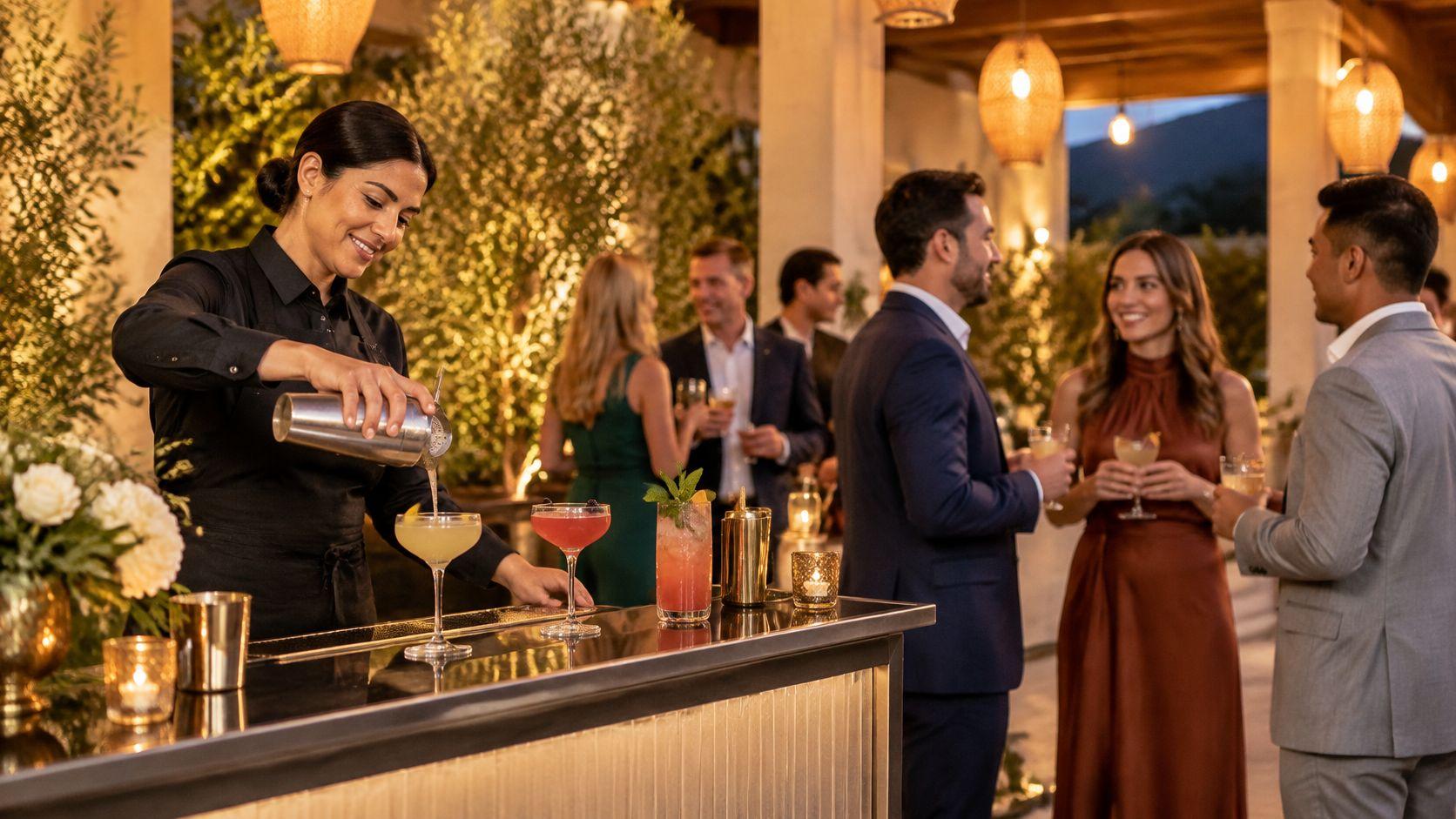
During arrivals, guests may order at the same time rather than gradually throughout the evening. Finalize cocktail recipes and alcohol-free choices before service begins so the team isn't resolving menu questions during that rush.
When remarks begin, the organizer should give the agreed cue directly to the designated bar contact. Decide beforehand whether service pauses completely or continues discreetly, and identify any preparation that would compete with the speaker.
The organizer remains responsible for the overall program and other vendors. We handle the agreed bar tasks, not speaker management or the entire reception schedule.
Give the toast its own supply plan
Before the event, assign who pours, who distributes and who clears toast drinks. Don't assume those are all the bartender's duties, particularly when regular service and toast preparation overlap.
Stage toast drinks separately from the regular bar where the venue approves. Confirm separate drinkware and supplies, choose drinkware that won't be confused with regular service glasses, and provide an alcohol-free toast for every guest who wants one.
Toast purchasing check: If toast servings are already included in the alcohol estimate, don't purchase them again. If they aren't included, count them once as additional purchases.
Concentrated arrivals, drink preparation and simultaneous toast distribution can require different staffing. Our proposal confirms staffing for this event; the corporate setup and bartender guides provide supporting detail without relying on a universal guest-to-bartender ratio.
For a closer look at coordinating formal remarks and beverage service, use our gala bar-service planning guide. Apply the timing principles to your milestone reception without expanding it into a gala production.
After the toast, give guests room to reconnect. Keep the agreed service endpoint clear so the organizer isn't negotiating timing while colleagues are waiting to speak with them.
Confirm Scope and Request a Quote
Turn the working plan into a confirmed scope by sending the milestone, audience, chosen format, proposed program timing, toast plan and bar brief together. Replace the hypothetical schedule with the times your company and venue have approved.
We use those details to tailor the menu and setup, then quote the event based on guest count, service hours and confirmed add-ons. Resolve any missing task owner before signing, particularly for alcohol purchasing, toast supplies and venue access.
Reserve the date with the complete agreement
A date is reserved only when both the contract is signed and the 25% booking deposit is paid. The proposal or contract states the total price, remaining balance and payment deadline.
Tips are optional, and a tip jar requires approval from both the client and venue. Keep those decisions in the event agreement rather than leaving them for arrival day.
The finished plan should let your host stay with employees and clients for the recognition and toast while we handle the agreed bar service.
We offer mobile-bar packages and separate bartender-only service that can fit your company anniversary celebration's recognition program and timed toast. Visit BeeHive Mobile Bar to request a quote, or contact us at (949) 740-6960 or beehivebarco@gmail.com with your venue, guest estimate and proposed service hours.