networking event ideas
Networking Event Ideas for a Reception That Connects
Practical networking event ideas for Orange County mixers: compare formats, bar placement, menus and timing to help attendees start real conversations.
By BeeHive Mobile Bar ··20 min read
In this guide
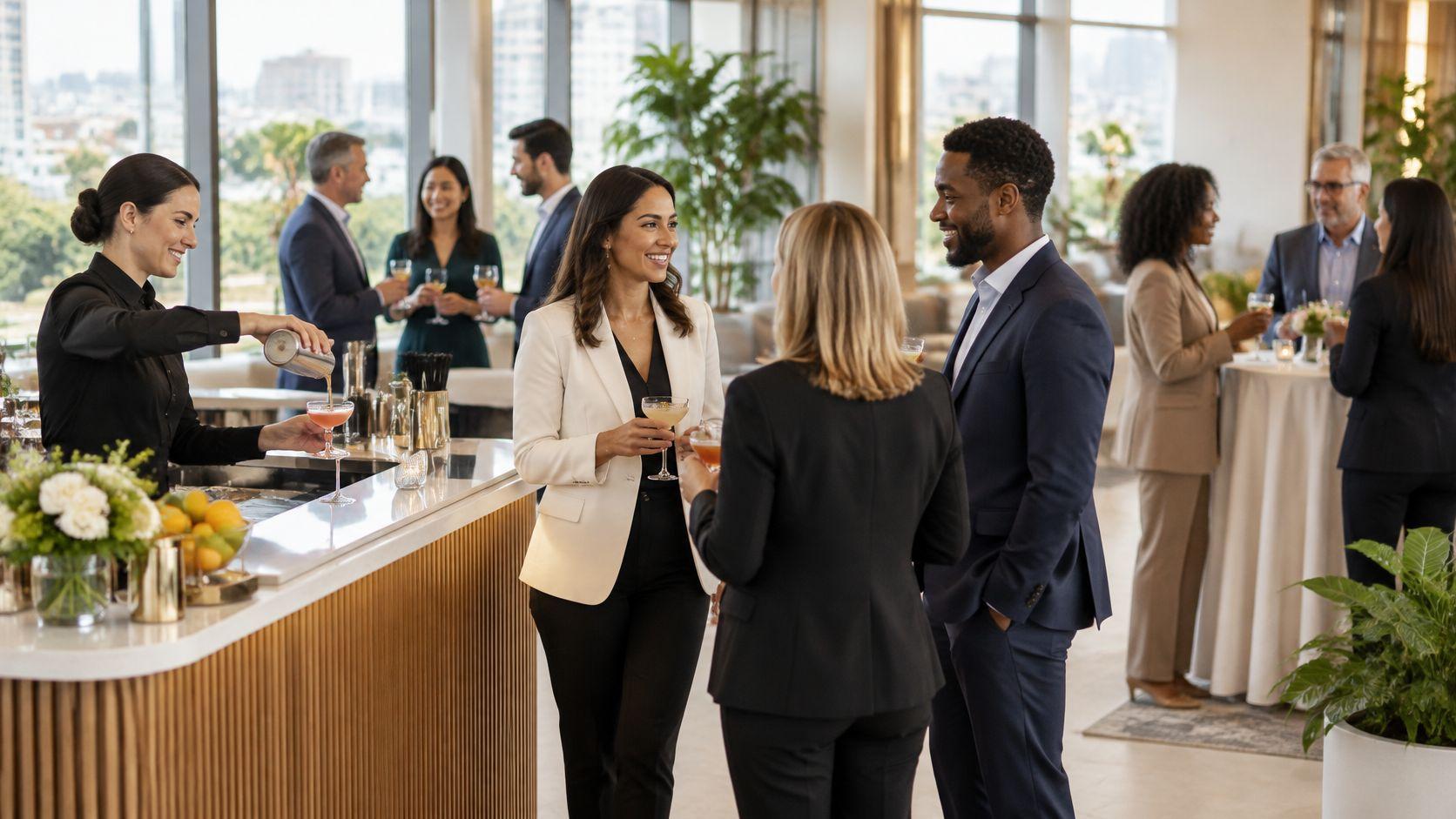
The room is full and nothing is happening. Four clusters of people who arrived together stand in tight circles with drinks in hand, and the two guests who came alone are reading the same printed agenda for the third time. Nobody is unfriendly. The format hasn't given anyone a reason to say the first sentence to a stranger.
The best networking event ideas solve that one problem: they make the first conversation easy to start. Three practical decisions do most of the work, and only one of them is the activity itself. The other two are where the bar sits and when people arrive relative to the program. Attendance suggests the appetite is already there. Freeman's 2025 Networking Trends Report found that 51% of attendees said successful networking was sufficient reason to return to an event (Trade Show Executive). People want the connections. They need the room arranged so they can make them.
This guide compares eight networking event ideas for professional mixers in Orange County, California, where guests form new business connections rather than catch up with colleagues. It includes a sample indoor year-end run-of-show with named responsibilities. BeeHive Mobile Bar supplies its quoted bar services only, not networking facilitation, event production, food or alcohol.
1. Hosted Introduction Mixer
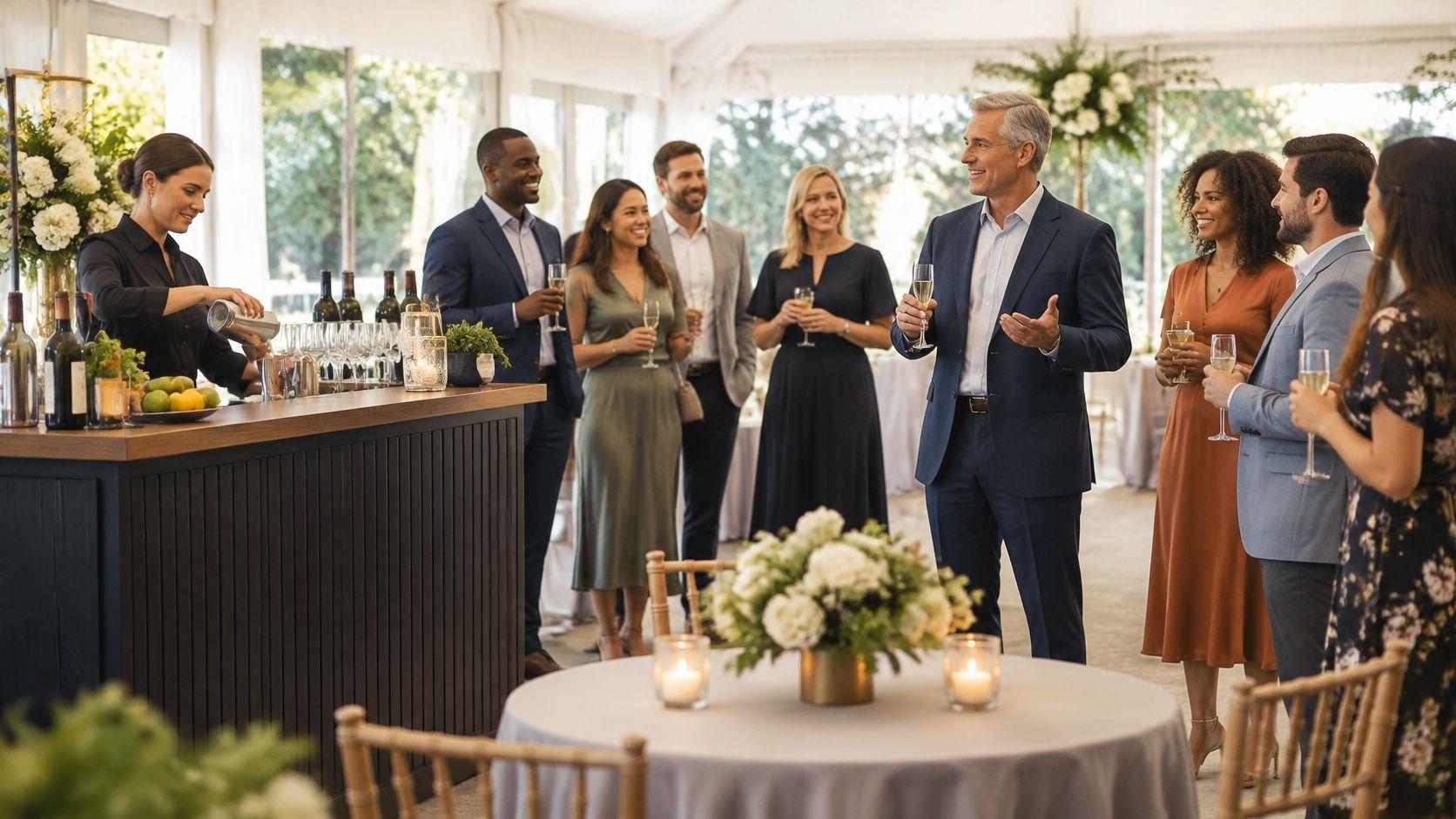
A hosted introduction mixer gives one person the job of starting conversations. That host greets arrivals in small groups, introduces people whose work connects, and hands off to the bar and the open floor once the room is moving.
Here's the scene the format is built for.
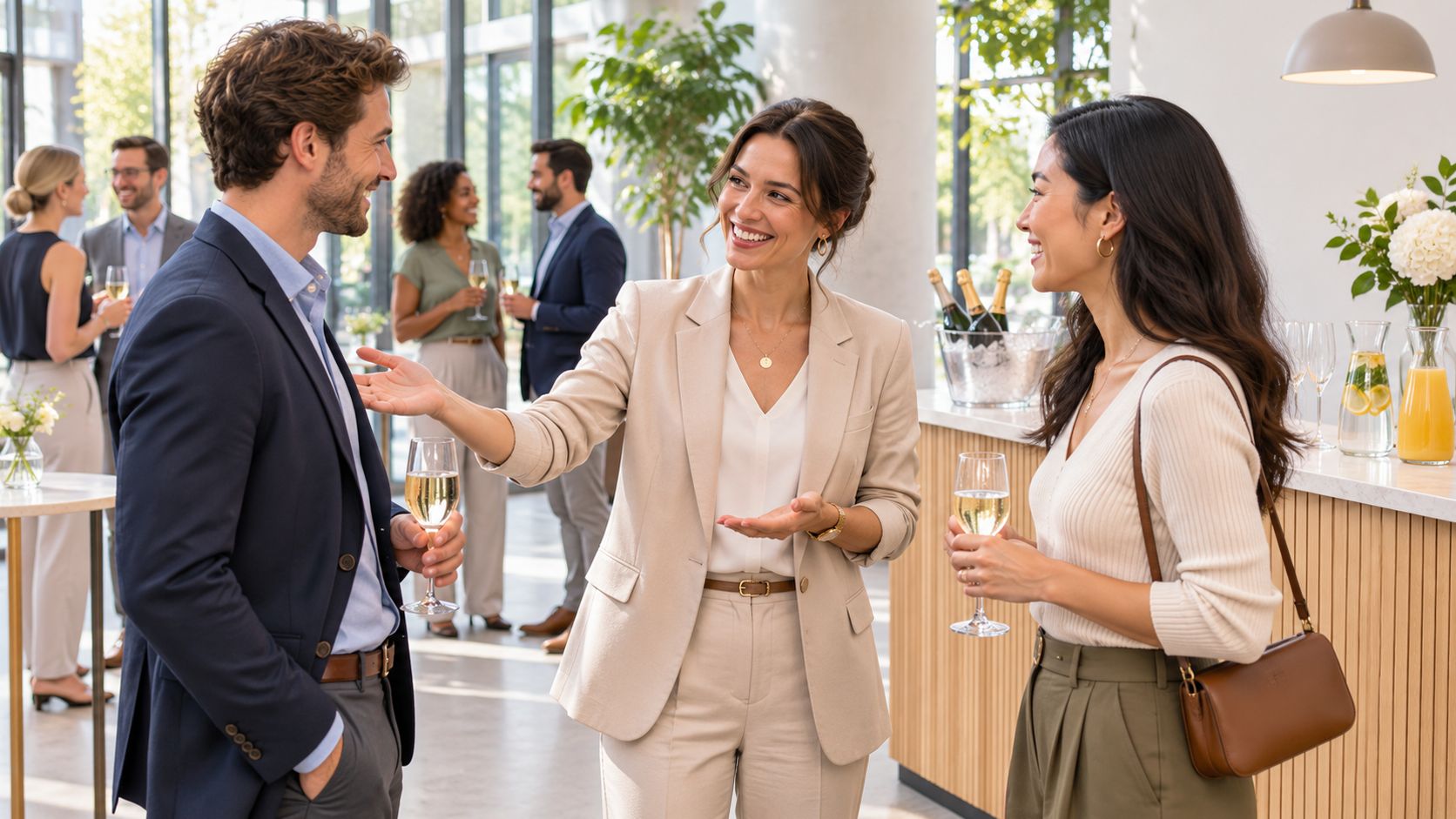
Use a host when most guests are strangers and the goal is new business contacts rather than social catch-up. The friction is real. In a BizBash report on events shifting toward networking as the main attendance draw, 40% of professionals said they consider networking awkward and 30% said they struggle to initiate conversations (BizBash). A host absorbs that friction for the first few exchanges, so nobody has to invent an opener.
The mechanics that keep it from stalling
One line at registration. Ask each attendee what they do and who they'd like to meet, then brief the host from that list. Specific introductions land; generic ones die in three seconds.
Thirty seconds per introduction. The host names both people, gives each one sentence of context, and steps away. Anything longer becomes a presentation with two listeners.
A destination for the handoff. Point the pair toward the bar. A short, readable cocktail and mocktail menu gives them an immediate shared decision, which beats a shared silence.
Bar at the entry or along a side wall. Guests collect a drink without walking through the introduction area, and the queue forms away from the host.
The 20-minute test: if the host left after 20 minutes, would anyone still be talking to someone new? If not, the introductions were carrying the event and the room layout was carrying nothing.
Hypothetical example: a 90-person year-end mixer where the host introduces each arrival group to two people from a different department before guests move to the open bar. Every arrival leaves the greeting with two names and a drink in hand.
A printed menu at the bar gives the host a natural reason to walk a pair over, and gives the pair something to react to once they arrive. Bar position, load-in timing and venue access all sit inside our guide to corporate event setup. For founders deciding who should meet whom, this piece on networking mixer ideas for founders covers a few adjacent structures.
2. Small Conversation Groups
Small conversation groups divide the room into tables or circles of four to six people, each with a loose discussion prompt, and rotate attendees after a set interval. Everyone meets several new contacts without ever approaching a stranger alone.
Structure like this is rarer than most organizers assume. A 2025 industry networking report found that only 53% of surveyed events offered structured networking tools or opportunities, and attendees most often relied on random encounters (30%) or introductions from others (29%) instead (2025 Event Networking Report). Random works for the outgoing half of the room.

Assigning groups before the doors open
Five to a table. Six is workable, five is better, because a quiet guest still gets a turn before the rotation.
Printed assignment cards at the entry. One desk with forty people checking a list creates the queue you were trying to avoid. Hand the card over with the name badge.
Drinks at the bar, not delivered to the tables. A tray of cocktails set down mid-conversation interrupts the discussion it's meant to support. Let people step out, order, and rejoin.
A prompt that fits on a card. Hiring challenges, referral needs, a tool the group can't work without. Two sentences of setup, then let the table run.
Pick the prompt from registration answers, not from the organizer's imagination. The best table topic in the room is the one eight attendees already said they wanted to discuss.
Hypothetical example: 24 attendees in four groups of six, each with a prompt about current hiring challenges, rotating twice during a 75-minute mixer. Guests can meet several new people without cold approaches; the number depends on how groups rotate.
Confirm table and furniture needs with the venue before the event. BeeHive provides the quoted bar service; the organizer arranges seating, signage and group cards.
3. Short Reception After a Presentation
A short reception follows a brief presentation or panel, giving everyone in the room the same first topic. The speaker's content does the work a forced icebreaker usually fails to do, and the conversation has somewhere to go from the first minute.
A year-end mixer run-of-show
Hypothetical run-of-show for a 90-attendee indoor year-end professional mixer in Orange County, California, using our Silver package with two professional bartenders. Times are estimates to adjust in the proposal.
4:30 to 5:30pm, setup. The bar, tools, ice and glassware are built out. Setup is shown separately from booked service and confirmed in the proposal.
5:30 to 5:45pm, arrival and bar opening. A greeter checks guests in (client responsibility) while the lead bartender opens the bar.
5:45 to 6:00pm, welcome and agenda. The program host (client) introduces the speaker.
6:00 to 6:20pm, presentation on year-end industry trends. The speaker (client) presents while the bar stays quiet.
6:20 to 8:00pm, open reception with conversation prompt cards. The lead bartender runs the cocktail and mocktail bar; the second bartender runs the mocktail station and handles ice and garnish refills.
8:00 to 8:15pm, closing remarks and thanks. The program host closes the program.
8:15 to 8:30pm, final service. The bar team wraps service within the booked hours.
8:30 to 9:15pm, breakdown and cleanup. Shown separately from booked service.
Booked bar service runs 5:30 to 8:30pm. Confirm in the proposal how any alcohol cutoff the client or venue sets affects those service hours.
Post the cocktail and mocktail list where the queue can read it before reaching the bar. A guest who already knows their order keeps the line moving during the post-presentation rush, when sixty people want a drink in the same ten minutes.
Three decisions that make or break the night
Keep the presentation under 20 minutes. A guest who came to meet people will forgive a short talk. They won't forgive a long one.
Open the bar before the speaker starts. Guests pick up a drink during the transition, and a quiet bar during the talk reads as part of the published schedule.
Settle the permit question before publishing the invitation. Confirm the venue’s alcohol policy and any applicable licensing requirements with the venue and California ABC before sending invitations. Type 77 guidance applies to eligible licensees and adjacent premises (California ABC). Confirm with the venue which party holds the license before you book bar service.
If your program marks a milestone instead of hosting a trend talk, the planning notes in our company anniversary celebration guide follow the same presentation-then-reception shape.
4. Speed Networking Rounds
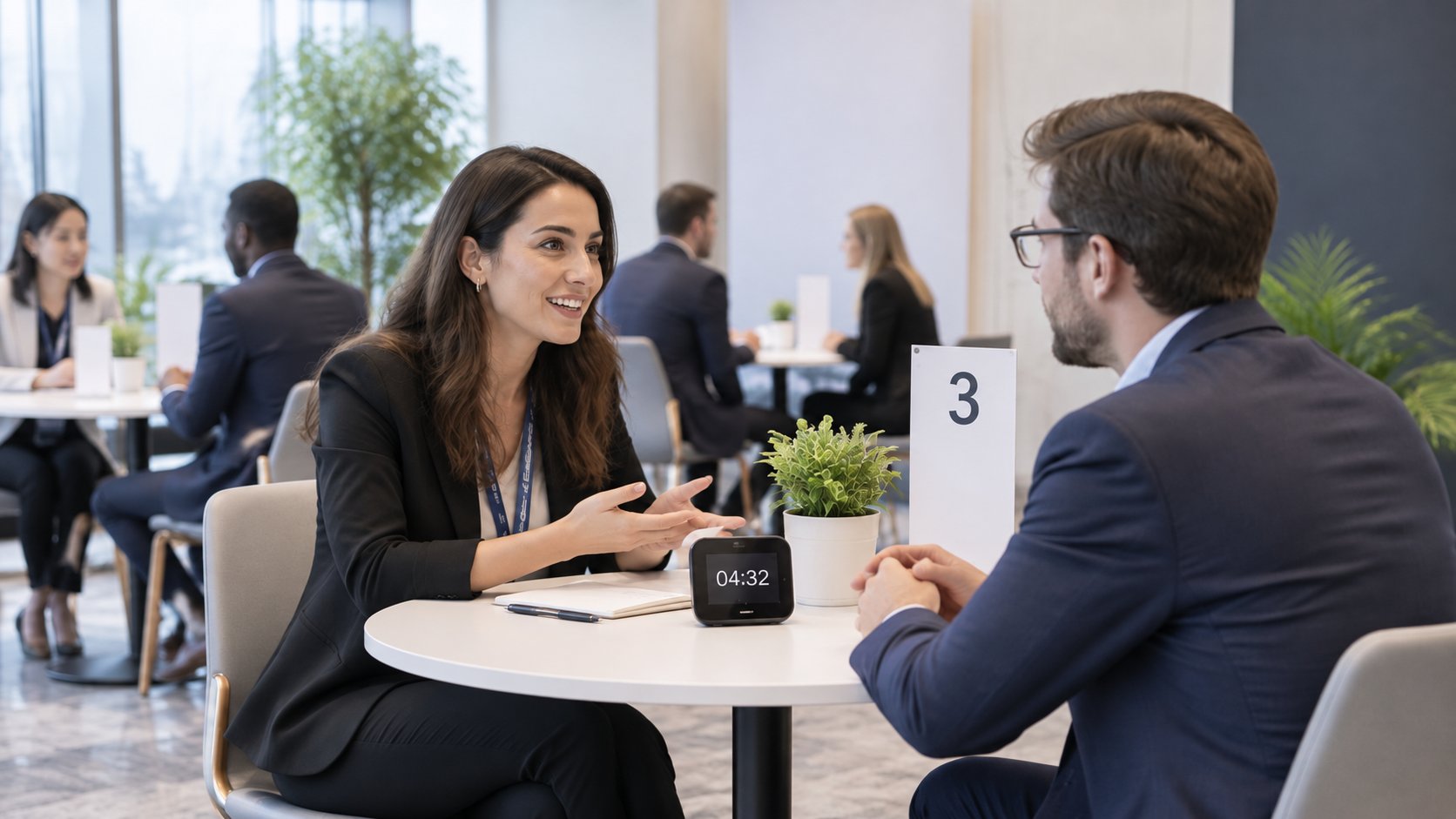
Speed networking runs timed one-on-one conversations, with a signal sending everyone to a new partner. Rounds are short, so a guest meets eight or ten people in the time a normal mixer delivers two.
One established event-planning guide recommends rounds of 3 to 5 minutes, with attendees rotating through multiple connections (Guidebook). Short enough that nobody runs out of things to say, long enough to decide whether a follow-up is worth it.
Setting up the room for rotation
Two facing rows. One row stays seated, the other moves one seat on each signal. No confusion about who moves where.
A visible timer and one consistent sound. A chime beats a shout across a loud room, and a chime is easier to hear from a chair.
The bar outside the rotation zone. If the queue forms beside the moving row, people miss the signal and the schedule slips by ten minutes before anyone notices.
A prompt for each round. "What are you trying to solve this quarter" produces a better four minutes than "tell me about yourself".
Practical rule: speed rounds create breadth. The reception afterwards is where the useful second conversation happens, so never end the evening on the last rotation.
Matchmaking mechanics matter as much as the stopwatch. Brella analyzed more than 10,000 in-person events held from 2016 through 2021 and identified approximately 30% as a healthy meeting-acceptance rate, which means a substantial share of proposed connections can become real conversations when attendees receive relevant matches and clear scheduling tools (Brella State of Networking Research Report).
Hypothetical example: 40 attendees rotate through eight rounds of four minutes each, then move to a 30-minute open reception at the bar to continue the two conversations worth pursuing.
5. Industry or Interest Pods
Pods arrange the room into labelled zones by sector, role or shared goal: commercial real estate, marketing, legal services, operations. Guests choose the pod that matches their work, which puts them next to people with relevant needs and referral potential.
Most business starts with strong connections. In a 2022 survey reported by VPN Alert, 66% of respondents said their highest-quality leads came from referrals within their networks, while trade shows and events generated quality leads for another 44% (VPN Alert). Referrals need proximity first and a reason to talk second.
Labelling pods so people actually move
Collect industry and role at registration. Pre-assign pods and print the assignment on the badge, so nobody stands at the entrance deciding.
One pod leader per zone. Their job is to draw out the quiet guest and stop one voice from owning the circle for forty minutes.
Signage kept plain. A pod name and a single prompt card. Skip invented logos or extra branded signage unless the client has approved the artwork.
The bar between the pods, not inside one. Placing it centrally turns the room into a loop, with a drink stop between two groups. For a smaller room, four well-used pods often work better than eight quiet ones. Choose the number based on your guest count and layout.
Hypothetical example: a 90-person mixer with four pods for finance, marketing, operations and professional services, each with a leader and one shared prompt card, and the bar set at the crossing point between all four.
For teams weighing a narrower community against a broad open room, this piece on niche networks is a useful counterweight.
6. Prompt-Card Reception
A prompt-card reception hands each guest a small set of conversation cards. The cards replace the search for an opening line with a specific question, and they give people a reason to collect a name before they part.

The reception itself stays open. Guests choose who to approach and when to move on, which suits the people who find a formal rotation too rigid to enjoy.
Writing prompts that produce a next step
Aim at the coming year. "What are you trying to fix in the first quarter" produces a real answer. "Tell me about your business" produces a job title.
Include one card that asks for an introduction. "Who would you like to be introduced to tonight" turns the card into a referral tool, and it's usually the card people photograph.
Keep each prompt short enough to read in a few seconds. If it needs a second glance, it becomes homework.
Put the card station away from the bar. The card table and the drink queue compete for the same floor space if you let them.
Print at standing distance. Large type on a light background, and use the same design as a table card so seated guests meet the prompts too.
The card is a prop, not a script. Give people permission to abandon the prompt the moment the conversation goes somewhere better.
Hypothetical example: three cards for a year-end mixer, one about goals for the coming year, one about an industry change the guest is watching, and one about a current project that needs an introduction.
The prompt cards are supplied by the client or organizer. Our bartenders can pair a drink order with a cocktail or mocktail card, which keeps the bar part of the conversation without becoming the whole event. If the mixer has a hybrid audience, these ways to engage remote attendees translate a few card prompts to a shared screen.
7. Station-Led Reception With Rotating Drink Stops
One bar against the back wall means one queue, one crowded corner, and a room that goes quiet everywhere else. A station-led reception breaks that pattern: the main bar sits at one point in the space and one or two smaller drink stops sit at others, so guests walk, meet and talk while they move. Traffic flows around the room instead of stacking into a single line.
Layout is also an accessibility question, and a venue's answer sheet rarely settles it. Research involving 1,000 recent event delegates found that 93% of disabled delegates encountered participation barriers, including inaccessible layouts, overstimulating environments, untrained staff and missing accessibility information (TTG MICE). Standing-only cocktail areas and name tags that depend on reading small type across a room are two barriers a floor plan check will miss.
Positioning the stops
Main bar near the entry. Arrival is the heaviest demand window of the night, so put the full bar where guests reach a drink within a minute of walking in, with the queue growing away from the conversation zones.
The alcohol-free stop on the far side. It pulls traffic through the room and gives guests who aren't drinking a real order, something better than water in a plastic cup.
Three or four drinks per station, one of them alcohol-free. Readable names and listed ingredients beat clever ones. A printed menu gives every guest the same information at a glance, so nobody holds up the queue to ask what's in something.
Seated and quiet zones. A few high tables away from the speakers and the bar queue make the event usable for guests who can't stand for two hours.
Wide paths between stations. Leave clearance for wheelchairs and for two people talking without blocking the route.
A self-serve Refreshment Station works well as the second stop: lemonade, infused water or iced tea for roughly 45 guests, offered as an add-on priced from $125. Our basic bar setup guide covers the equipment side, and we tailor bartender staffing to the guest count so each stop stays fast.
Hypothetical example: a 90-person mixer with the main bar near the entry, a mocktail station on the far wall and a card table by the windows, three natural stops that keep guests circulating until the room empties.
8. Post-Event Follow-Up Reception
A follow-up reception brings back people who met at an earlier workshop, presentation or mixer, with the goal of deepening those connections rather than starting new ones. It runs smaller and shorter than the first event, and nobody walks in cold.
A published B2B matchmaking framework sets a 20 to 30% second-meeting conversion target within 30 to 90 days, alongside benchmarks such as at least 80% of scheduled meetings taking place (Converve KPI framework). That target is the whole reason for the reception. Thirty guests who already share a conversation convert better than a room full of strangers, so the guest list matters more than the venue.
Inviting the right thirty people
Invite from the earlier attendee list. Everyone in the room should have had at least one conversation worth continuing.
Say why each person was invited. One line naming the project or the introduction that prompted it raises the odds they show up.
Keep the drinks simple. A short printed menu with two cocktails and two mocktails keeps the bar fast, so conversations aren't stuck in a queue. In a room this size, one bar position near the entry clears the arrival rush, which is when most guests decide whether to stay.
Set a clear end time. Guests who want to keep talking can move on together, and the ones with an early start can leave without ceremony. Hypothetical example: a two-hour follow-up reception for 30 attendees who met at an earlier workshop. For bartender-only service, the client provides the bar setup, alcohol and supplies; an optional mobile bar may be added. If the event involves alcohol sales or a licensed venue, confirm the applicable requirements with the venue and California ABC. Daily license guidance for eligible applicants is available from (California ABC).
Networking Event Formats at a Glance
| Format | Group Size per Activity | Facilitation Needed | Best For | Bar Placement Note |
|---|---|---|---|---|
| Hosted Introduction Mixer | Small arrival groups; 2–3 introductions per group | Host and greeter | Guests seeking new business contacts | Near the entry or along a side wall |
| Small Conversation Groups | 4–6 people per group | Group facilitators or group leaders; rotation announcements | Deeper conversations and quieter attendees | Keep drinks at the bar, away from group tables |
| Short Reception After a Presentation | Mid-sized or large room; reception groups are open | Speaker, host and bar team coordination | A shared conversation starter before open networking | Open the bar before the presentation; manage service timing to limit noise |
| Speed Networking Rounds | One-on-one pairs | Timekeeper and seating plan | Meeting many new contacts quickly | Away from the round seating so signals are audible |
| Industry or Interest Pods | Multiple industry or interest groups; sizes may vary | Pod leaders | Relevant connections among attendees from different industries | Between pods to support movement through the room |
| Prompt-Card Reception | Open reception; no assigned groups | Minimal facilitation | Easy conversation starters and follow-up notes | Place the prompt-card station away from the bar line |
| Station-Led Reception With Rotating Drink Stops | Open circulation among multiple stations | Bar team; staffing depends on room and stations | Guest movement and mixing, including alcohol-free options | Place stations apart with clear paths; keep the bar near the entry or along a side wall |
| Post-Event Follow-Up Reception | Smaller guest list; example has 30 attendees | Light facilitation | Deepening existing professional connections | Keep bar service simple with a focused menu and alcohol-free option |
Plan the Room, Then Plan the Bar
Eight formats, one pattern. Pick a single structure and commit to it, keep any presentation short, place the bar where it helps traffic instead of blocking it, and give every guest an alcohol-free choice that's easy to find. The organizers run the activity. The room runs the conversation.
Bar position does the same job in every format on this list. Near the entry, it gives arrivals an immediate destination and pulls the queue away from the introduction area.
Between pods or stations, it becomes the reason guests walk across the room and meet someone from another group. Tucked into a corner, it becomes a place people hide.
Before you finalize the floor plan, stand where a first-time guest will stand, look at where the bar sits, and ask whether that spot makes the next conversation easier or harder.
An easy-to-read menu carries more weight than most organizers expect. Three or four drinks, listed ingredients, one alcohol-free option that sounds as considered as the cocktails. Guests who can order in five seconds get back to talking, and guests who don't drink get a choice that doesn't require an explanation. The printed menu itself is a small piece of event design, not decoration.
Arrival timing is the third lever. Opening the bar before the program starts removes the bottleneck at the worst possible moment and gives early arrivals something to do besides stand alone.
Keep an eye on the clock during the reception too. A bar that closes without warning strands a conversation, while a clean final service at a stated time gives people permission to exchange details and leave.
A few practical notes close the loop. Your proposal specifies the bartending and supplies included: mobile bar packages include a bar, mixers, ice and disposable drinkware, while bartender-only service uses the client’s setup and supplies.
We don't supply alcohol, food, networking facilitation or event production, and we don't run the introductions, the rotations or the prompt cards. Those belong to your host, your program lead and your sign-in team, which is exactly why naming those responsibilities in the run-of-show matters.
Hosts who know they own the first ten minutes tend to run them well.
Start with our Corporate Event Setup guide for load-in timing, venue access and floor-plan questions, then use the Bartender Staffing Calculator to size the team against guest count and service hours. When the room is settled, request a personalized quote with your date, guest count and service hours. Quotes typically come back within 24 hours, and a signed contract plus a 25% deposit are what reserve the date. BeeHive Mobile Bar provides dry-hire mobile bar packages and separate bartender-only service for corporate events and professional mixers in Orange County and surrounding Southern California. Packages include a portable bar and a custom printed menu; bartender-only service uses the client’s setup and supplies. Send us your date, guest count and service hours and we'll tailor the menu and bar setup to the room you're planning. Visit BeeHive Mobile Bar to see the packages and request a quote.