basic bar setup
Basic Bar Setup for Events: Layout, Supplies and Staffing
Plan a basic bar setup with clear supply responsibilities, practical layout tips and staffing examples, plus BeeHive’s current service options.
By BeeHive Mobile Bar ··9 min read
In this guide
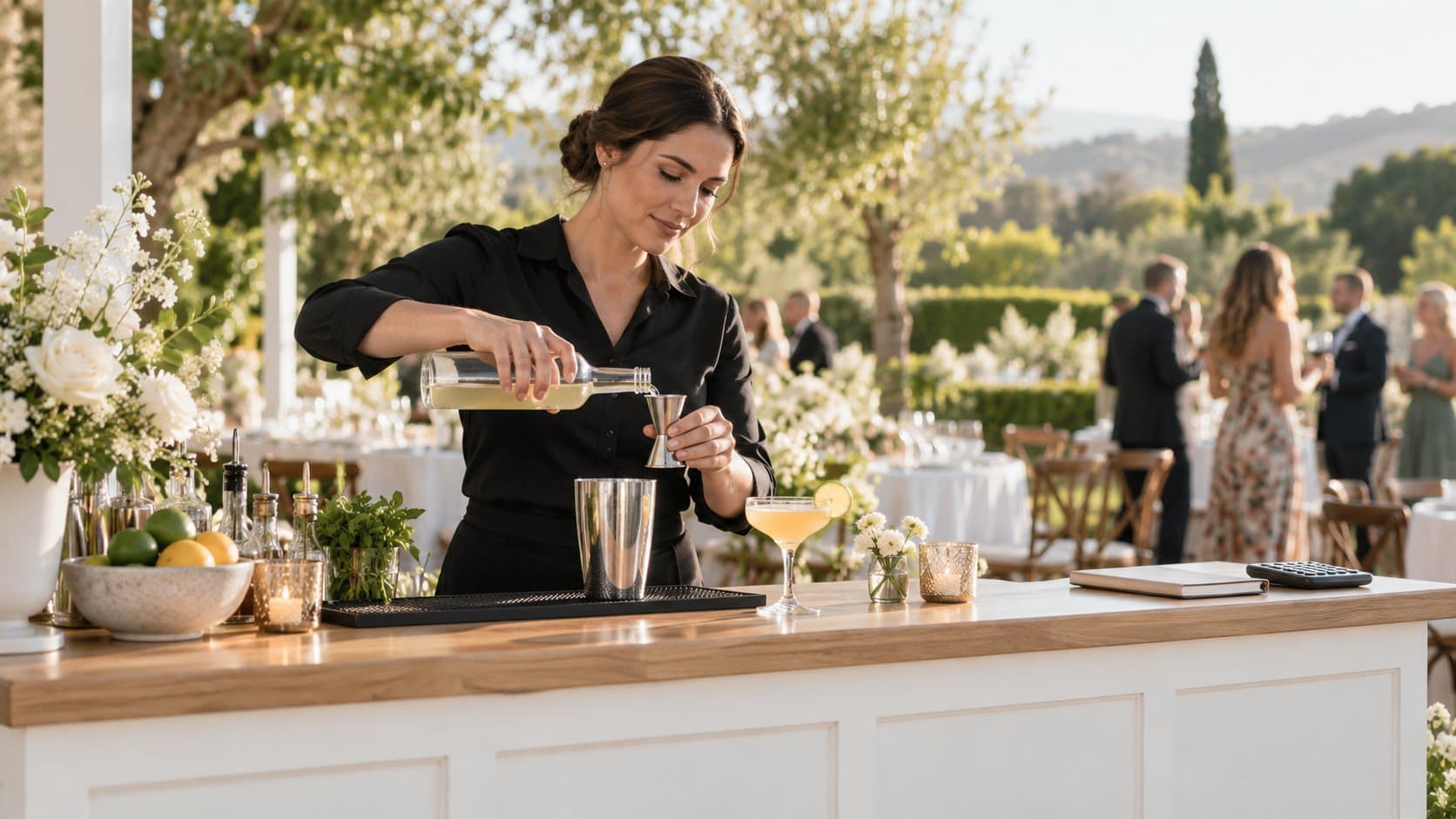
Illustrative bar setup. Hosts purchase alcohol; glassware and the exact equipment depend on the agreed service.
A good event bar lets guests order easily and gives the bartender room to work. Before you choose the decor, settle four details: the drink menu, who brings each supply, where the station will go, and how many people will serve.
This guide walks through a basic bar setup for a backyard celebration, wedding or corporate event. You can use it to compare a venue bar with bartender-only service, a mobile-bar package, or a simple host-managed refreshment station.
1. Choose the service before buying supplies
Bartender-only service fits an event where the host or venue can supply the physical setup. BeeHive’s service starts at $350 for a two-hour minimum, with each additional hour at $75. It includes professional bartending, bar tools, setup and cleanup, and a tailored alcohol shopping list. Confirm the setup and cleanup scope in your proposal.
For bartender-only service, you may add BeeHive’s mobile bar for $150. This add-on supplies the mobile bar only. It does not add ice, coolers, mixers, garnishes, drinkware or other supplies.
A mobile-bar package suits a host who wants the bar and its listed operating supplies arranged together. Bronze starts at $750 for up to 70 guests, with one bartender and two signature cocktails. Silver starts at $1,150 for up to 120 guests, with two bartenders and three signature cocktails. Gold is custom quoted for 120+ guests, with two or more bartenders and four signature cocktails. Bronze, Silver and Gold require a three-hour minimum; guest ranges are planning guidance, and the final proposal confirms staffing and scope.
A host-managed station works best with a short, simple menu and someone assigned to restock and clean. Check venue permission and the event’s alcohol-service requirements before choosing self-service alcohol. Water and other refreshments can have a separate station even when bartenders handle the main bar.
| Item | BeeHive mobile-bar package | BeeHive bartender-only service |
|---|---|---|
| Physical bar | Included; style follows the package | Host or venue supplies it, or add the mobile bar only for $150 |
| Bartending and bar tools | Included; staffing follows the proposal | Included; staffing follows the proposal |
| Ice, coolers, mixers and garnishes | Included for the agreed menu | Host arranges these supplies |
| Plastic glassware, napkins and straws | Included | Host arranges these supplies |
| Alcohol | Host purchases separately | Host purchases separately |
| Handwashing facilities, waste bins and disposal | Confirm with the venue and in the proposal | Confirm with the venue and in the proposal |
BeeHive does not sell, purchase, supply or deliver alcohol. The host buys it using the shopping list and arranges for it to be at the venue before service. California ABC’s mobile-bartending guidance distinguishes paid bartending services from alcohol sales. Check the requirements for your particular venue and event with the venue and ABC, especially for public events, ticketed admission or alcohol sales.
2. Separate the guest path from the working area
Place the bar on a stable surface where guests can approach without blocking an entrance, food line or main walkway. Check the delivery route, stairs, setup access time and any power needs before choosing the location.
Behind the bar, organize supplies around how the bartender makes the menu’s drinks. Keep clean cups or glasses in a protected staging area, with working ice, tools and frequently used ingredients within reach. Leave a clear space to build and finish drinks. Used glassware and waste need a separate collection point.
On the guest side, make it obvious where to order and where to collect a finished drink. For a busy bar, distinct ordering and pickup spots can help keep guests from clustering in one place. Adapt the arrangement to the bar’s size and the bartender’s working style.
Clean staging: Protected drinkware and dry napkins, away from returns and splashes.
Preparation: Ice, measuring tools, mixers and the ingredients used most often.
Finishing and handoff: Garnishes, a clear working surface and space for finished drinks.
Restocking and returns: Backup supplies and a separate route for used items, kept out of the guest path.
Walk through the space before service: can someone replenish ice while the bartender makes a drink, and can a guest collect it without reaching over the preparation area? Adjust the layout until both movements are straightforward.
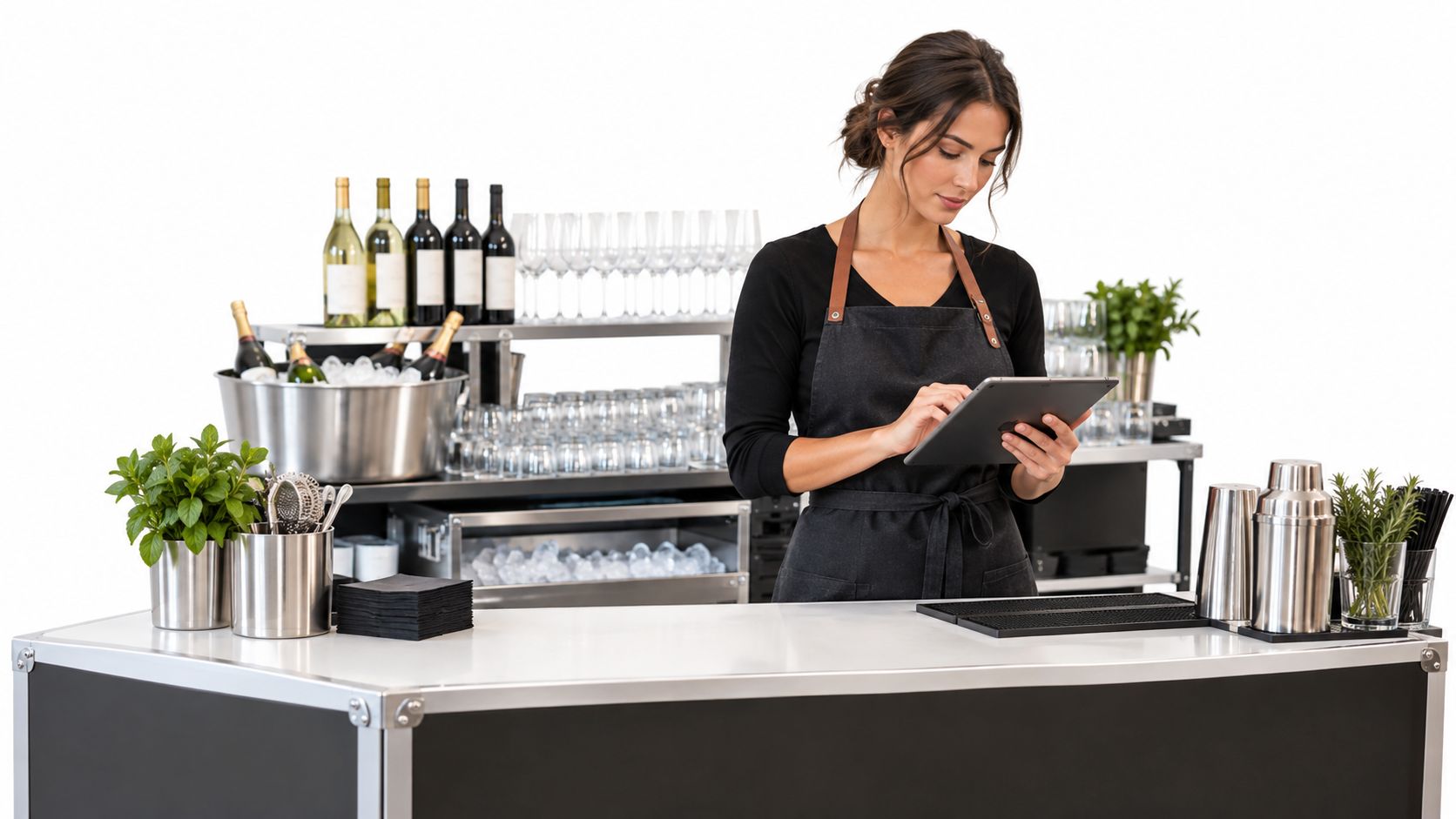
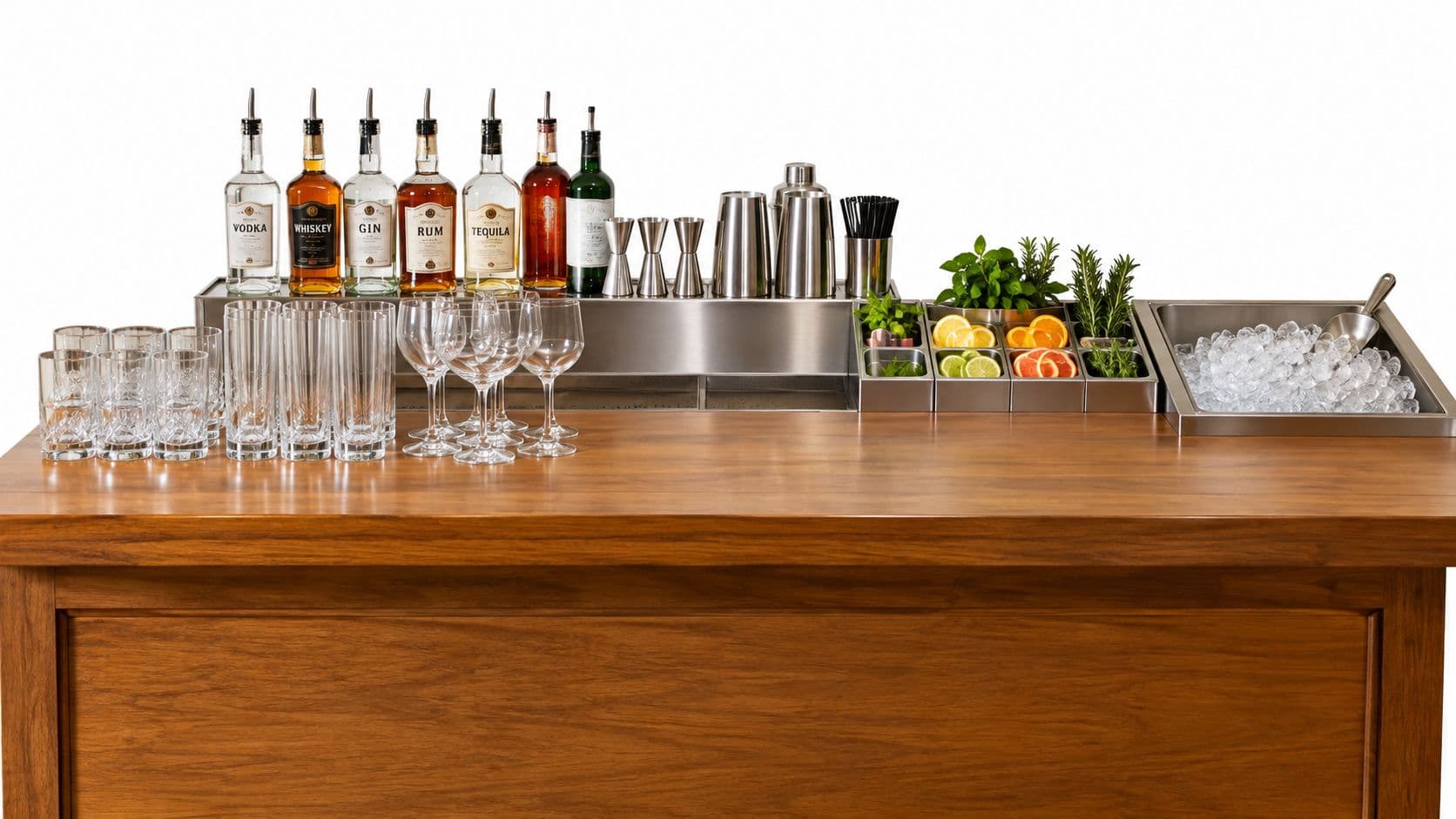
Illustrative setup; glassware and equipment are confirmed in the proposal.
3. Build the equipment list around the menu
Choose the drinks before ordering glassware or extra equipment. Beer, wine and soft drinks need a different setup from shaken cocktails. A short cocktail menu may use a shaker, jigger, strainer, bar spoon, opener, wine key and garnish tools; a specialty drink may need additional equipment to confirm in advance.
BeeHive’s mobile-bar packages include plastic glassware. If the host or venue provides glassware, confirm suitable sizes, quantities, venue rules, collection and washing or rental-return arrangements. Do not assume the glassware shown in an inspiration image is included.
For host-supplied ingredients, calculate quantities from the actual recipes. As a simple example, if you plan 60 servings of a drink using 2 US fluid ounces of juice each, you need 120 fluid ounces of juice.
Two 64-fluid-ounce containers provide 128 fluid ounces, leaving 8 fluid ounces beyond the recipe total. Any additional reserve is a separate planning choice.
This example covers one juice ingredient only; calculate other mixers, garnishes and separate refreshments on their own lines.
Keep serving ice separate from ice used to chill bottles and cans. Use a dedicated scoop or tongs, protect the handle from contamination, and store backup ice in clean, covered insulated containers. Agree where meltwater and bar waste will go. The mobile bartending supplies checklist can help you turn these categories into an assignment sheet.
4. Size the team for the menu and busiest period
Count everyone who will order at the bar, including guests choosing mocktails. Consider whether guests arrive gradually or all ask for drinks after a ceremony, speech or meeting. Made-to-order mocktails also take preparation time.
BeeHive’s bartender staffing calculator uses starting baselines of 60 guests per bartender for cocktails and mocktails, and 75 for beer, wine and soft drinks. The examples below assume one bar station, divide guests using the bar by that baseline, and round up to a whole bartender.
| Guests using one bar | Cocktails and mocktails | Beer, wine and soft drinks |
|---|---|---|
| 50 | 1 bartender | 1 bartender |
| 100 | 2 bartenders | 2 bartenders |
| 150 | 3 bartenders | 2 bartenders |
These are starting estimates, not guaranteed service speeds or automatic changes to a package’s included staffing. Package guest guidance and the calculator serve different planning purposes. Confirm the final team for your menu, arrival pattern and venue layout. Multiple bars, intricate drinks or a concentrated rush may need a different plan.
For example, 100 guests ordering cocktails from one bar produce a starting estimate of two bartenders. If service lasts four hours and you allow one hour for setup plus half an hour for cleanup, that is 5.5 hours per bartender, or 11 total staff hours. Those timing allowances are planning inputs, not a statement about what a package price includes.
5. Give alcohol-free drinks their own plan
Make water and alcohol-free choices easy to find on the menu. Confirm the ingredients in any mocktail and discuss dietary needs with the bar team. A separate refreshment station can keep guests who only want water or a quick drink from joining the cocktail queue.
BeeHive’s soft drinks and water add-on is $3 per drink and is included in Gold. The Refreshment Station starts at $125 and includes four gallons of one chosen house-made drink, serving approximately 45 guests; additional gallons are $25 each. The station is also included in Gold. Confirm the selected drink and setup in your proposal.
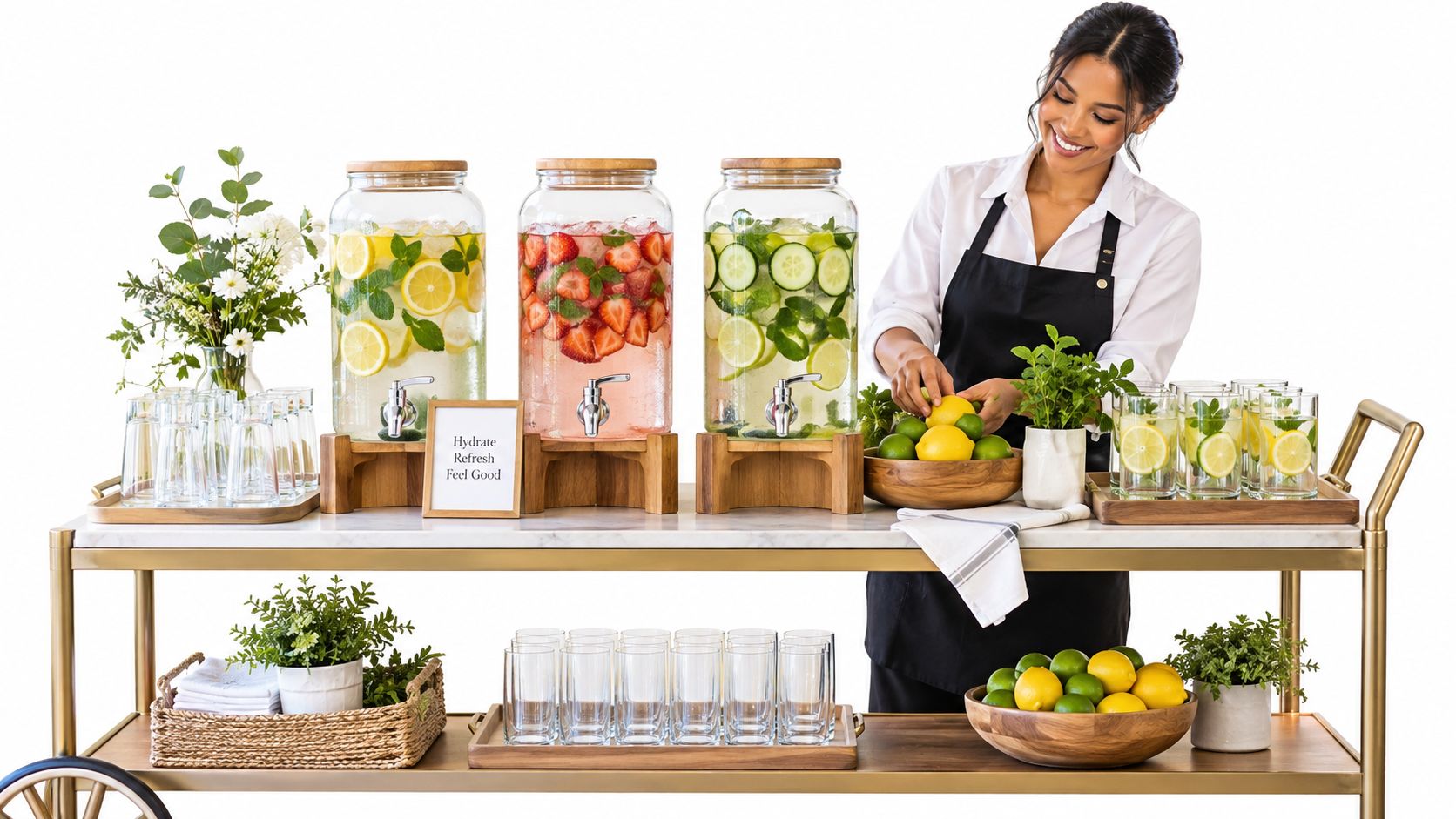
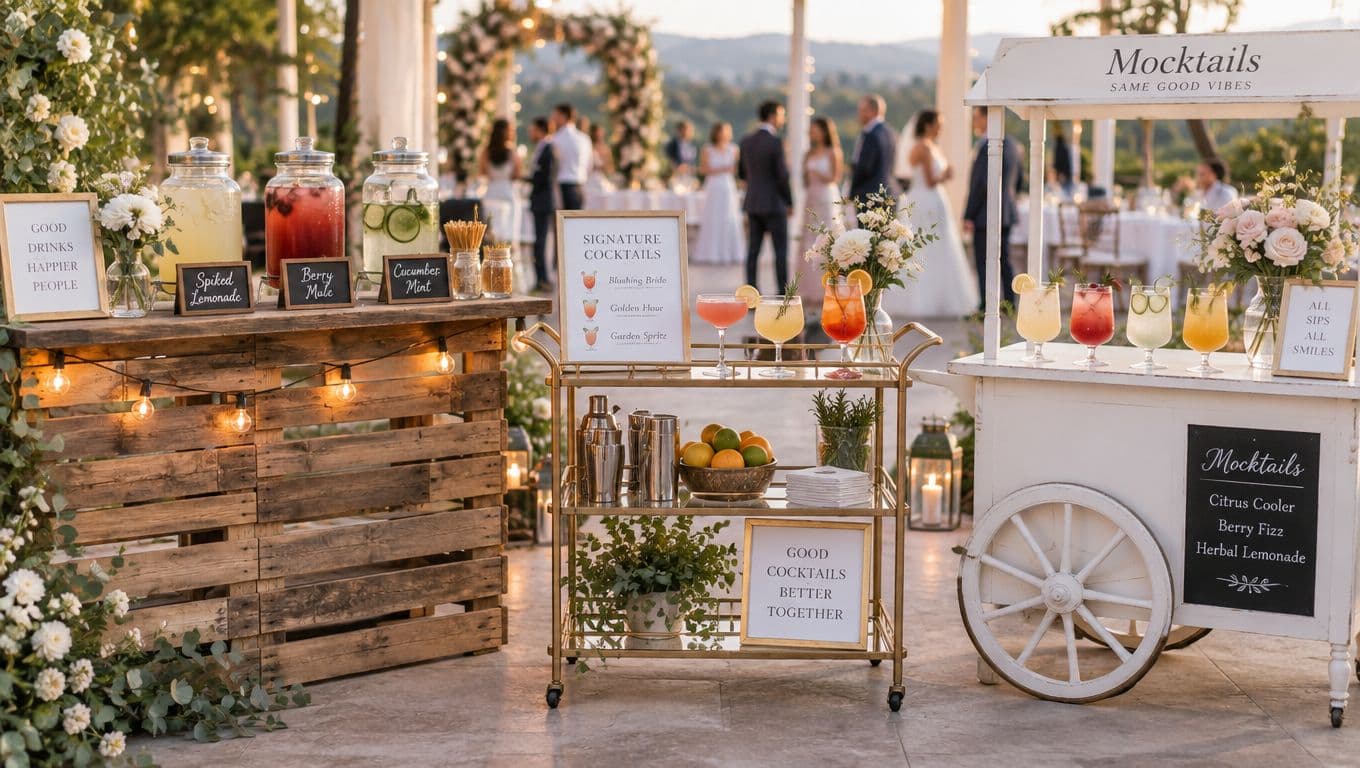
Refreshment-station inspiration. The starting BeeHive add-on includes one chosen drink; this three-dispenser display is illustrative.
For more menu inspiration, see these non-alcoholic wedding drink ideas. Choose options that suit your event and confirm any specialty ingredients or equipment before finalizing the menu.

Alcohol-free menu inspiration; pictured drinks and decor are illustrative and subject to the agreed menu.
6. Assign the final checks before event day
Put a name beside each responsibility. For every host-supplied item, record what is arriving, the quantity, the delivery time and where it will be stored.
| Check | Practical planning basis | Who confirms it |
|---|---|---|
| Menu and service window | Final recipes, expected bar users, opening and closing times | Host and bar team |
| Alcohol purchase and arrival | Shopping list and an agreed delivery or drop-off time | Host or the host’s designated contact |
| Bar and access | Equipment footprint, unloading route and setup access | Venue and bar provider |
| Ice, cups and ingredients | Package inclusions or recipe-based host quantities, with agreed backups | Bar provider for included supplies; named host contact for the rest |
| Handwashing and cleaning | Accessible facilities, appropriate supplies and a cleaning plan | Venue and bar team; confirm any extra equipment |
| Waste and used glassware | Collection points, bins, disposal route and rental-return terms | Venue and host, with the provider’s scope agreed |
| Teardown | Last service time, bar cleanup, alcohol handover and pickup access | Host, venue and bar team |
Before opening, check the menu against the ingredients, test the working layout, stock backup supplies and confirm that cold ingredients can be held appropriately. Clean and sanitize reusable food-contact tools and surfaces as appropriate before service and whenever contamination occurs. Follow the cleaning requirements that apply to the equipment, ingredients and event; a single 24-hour rule does not cover every situation. The FDA Food Code’s equipment-cleaning guidance explains why schedules vary.
During service, keep the preparation area clear, replenish supplies and separate used items from clean stock. At closing, hand remaining host-owned alcohol to the designated contact and complete the agreed bar cleanup. Venue-wide cleaning, waste removal and rental returns should have their own confirmed responsibilities.
Planning an Orange County celebration? Request a BeeHive quote with your date, city, guest count, preferred drinks and service hours so we can confirm a setup that fits your event.