wedding welcome party
Wedding Welcome Party: How to Plan, Staff and Stock Drinks
Plan a wedding welcome party with a sample arrival timeline, staffing benchmarks, alcohol-free drink menus and a host, venue and bar checklist.
By BeeHive Mobile Bar ··15 min read
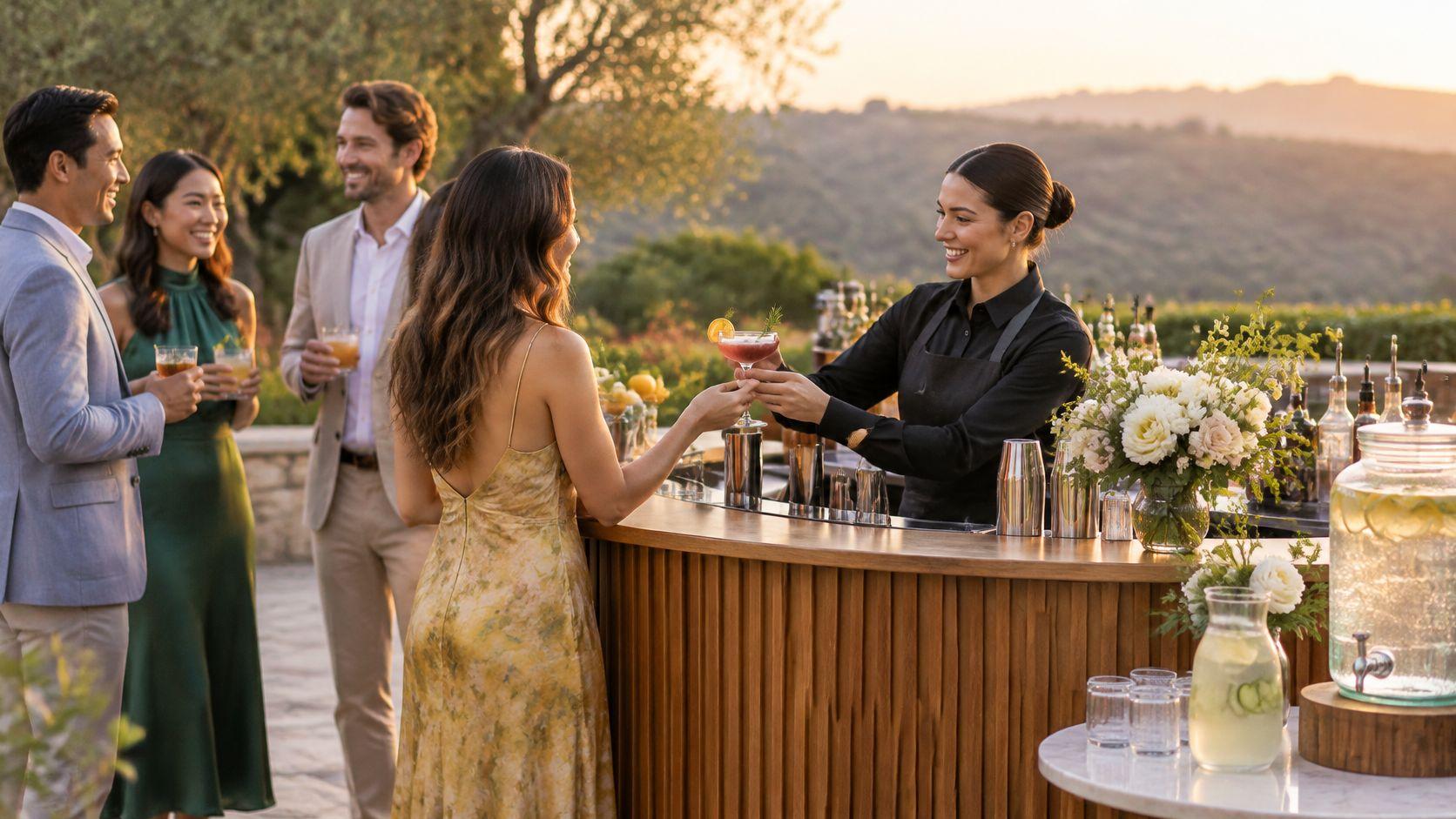
In this guide
You've set the date, booked the venue and watched the guest list grow past the number a rehearsal dinner can hold. Now the texts arrive: what's happening the night before, where should we stay, is there anything on Friday.
Somewhere in that stretch a wedding welcome party turns from a nice idea into a real event with its own guest count, its own budget line and its own arrival problem.
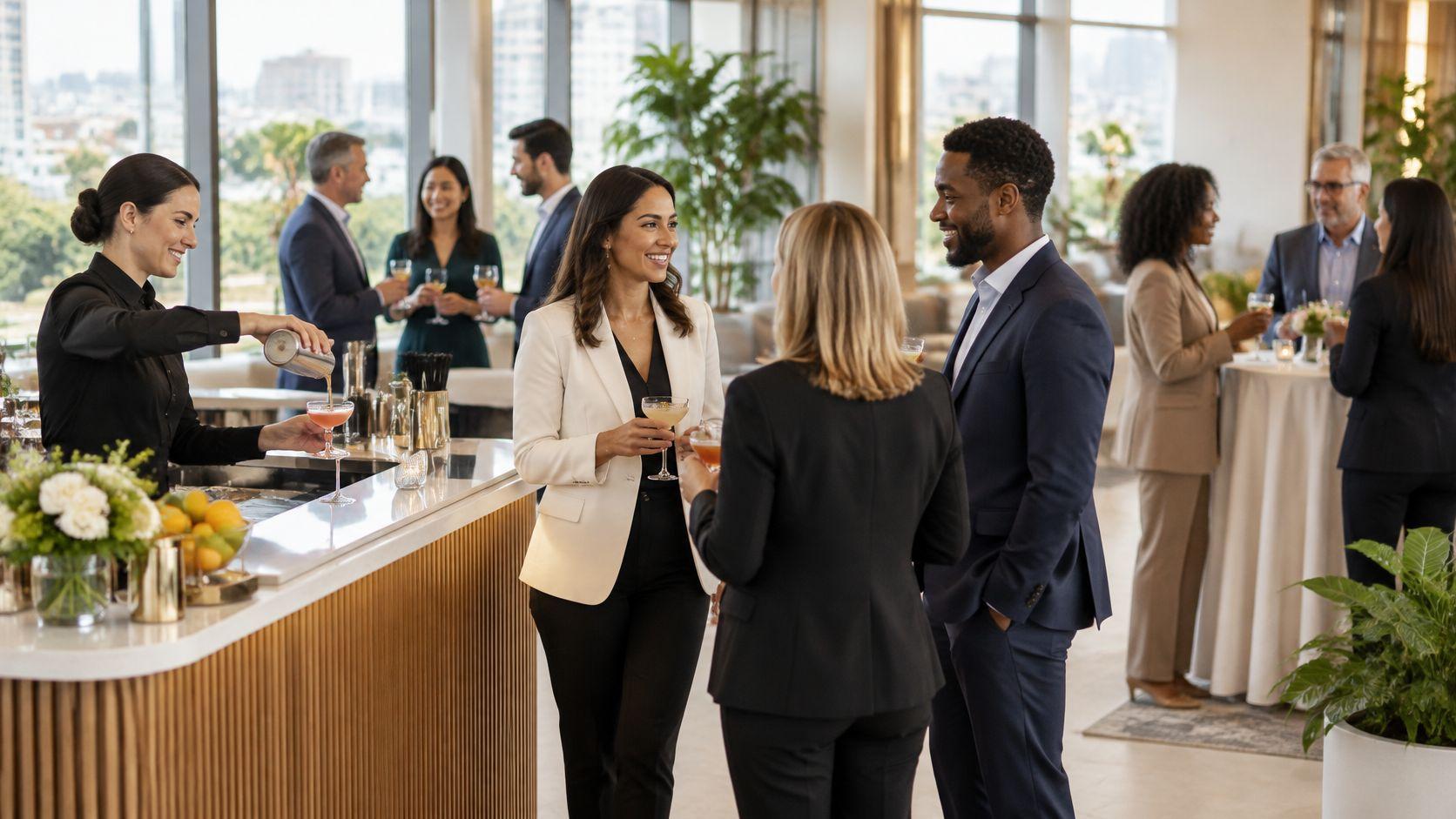
It also behaves nothing like a reception. People arrive in waves across ninety minutes, many straight from an airport or a hotel check-in, hungry before they're thirsty.
The drink list is the least of it. What decides whether the evening works is whether the bar absorbs the 6:15 p.m. surge, whether food is out before the first toast, and whether the guest who orders a mocktail gets something as considered as the cocktail beside it.
Get the first hour right and the rest of the evening follows. The decisions that make that happen are timing, staffing, an alcohol-free menu with equal standing, and a quote that spells out who supplies what.
Welcome Party, Rehearsal Dinner or Reception
A wedding welcome party is a relaxed, cocktail-style gathering open to most or all wedding guests, usually on the first evening of a wedding weekend, and built for people who have traveled in and don't yet know anyone in the room. The rehearsal dinner is a seated meal for the wedding party, the officiant and close family. The welcome party is wider, looser and organized around arrival rather than around a seating chart.
Couples are choosing the wider format on purpose. For 2025 weddings, 26% of couples planned a wedding welcome party for the entire attendee list, according to The Knot's wedding planning research. The weekend around the wedding is stretching at the same time. In The Knot's 2025 study of couples planning that year's weddings, 30% of Millennials planned a welcome gathering compared with 15% of Gen Z couples, and Millennials were also more likely to add an after-party or a morning-after brunch.
| Event | Who attends | Format and timing | Drink focus |
|---|---|---|---|
| Welcome party | Most or all wedding guests, including out-of-town guests | Cocktail-style, about two to three hours, early evening, often the first event of the weekend | Welcome cocktail and alcohol-free drink on arrival |
| Rehearsal dinner | Wedding party, officiant and close family | Seated dinner, usually the night before the wedding | Wine and toasts alongside the meal |
| Wedding reception | All wedding guests | Main-day meal, dancing and cake over several hours | Bar scope set for the full celebration |
The test for your own list: if the guest count for the night before is wider than the wedding party and immediate family, and a real share of those people are arriving from out of town, give the welcome party its own guest count, menu, beverage plan and schedule. If the room is small and everyone already knows each other, a rehearsal dinner carries the weekend on its own.
That answers the choice for most hosts planning in Orange County. The welcome party has one job the other events don't share, and it's a negative one: it must never compete with the reception, which carries the meal, the dancing and the formal program. If you're shaping that part of the day, these wedding reception entertainment ideas show how the main evening's pacing works around a band, a DJ or a quieter program, which is useful context when you're deciding how much weight to put on the night before.
Does a welcome party follow dinner? Usually not. A cocktail-style party starting at 6:00 or 7:00 p.m. replaces dinner rather than following it, and guests who traveled all day need substantial food, not a tray of olives. When a seated rehearsal dinner happens the same evening for the wedding party and close family, treat it as a separate event with its own timing and head count, then lay on the welcome party's own food plan for everyone arriving later. Our rehearsal dinner ideas cover the seated format if that's the piece still open on your list.
How to Schedule Arrivals, Toasts and Closing Time
A welcome party lives or dies in its first hour. Guests arrive in waves, the bar absorbs a surge before anyone touches the food, and the room settles by 7:30 p.m. when the host planned for staggered arrival instead of a single ceremonial start.
A two- to three-hour welcome gathering gives guests time to arrive, eat and connect. Plan the food and drinks around your schedule and budget. For ideas on managing beverage queues, see Colada Kulture’s guide to event coffee service lines. Before you print a start time, confirm booked service hours, the applicable minimum, and venue access for setup and breakdown. For packages, complimentary setup and breakdown are outside booked service; confirm bartender-only details in your proposal. Confirming the timing helps ensure the bar is ready when guests arrive.
Put a drink in their hand at the door. A welcome cocktail and a matching alcohol-free option give arriving guests something to do in the first ninety seconds.
Keep food out for the first 60 to 90 minutes. Continuous availability matters more than a passed-service schedule.
Offer two or three main food options, including a vegetarian, a vegan and a gluten-free choice, so nobody has to negotiate the buffet.
Time one short toast for 7:15 p.m., once most guests have arrived, and leave the final 20 to 30 minutes for farewells and next-day reminders.
Here's the sequence worth printing for the venue and the bar team.
| Time | What happens | Bar and service note |
|---|---|---|
| 4:45-5:45 p.m. | Setup: bar placed, ice and mixers staged, menu cards on the bar | Complimentary package setup is outside booked service; confirm access and timing in the proposal. |
| 6:00 p.m. | Doors open with a welcome cocktail and an alcohol-free drink | Booked bar service begins |
| 6:00-7:30 p.m. | Staggered arrivals while food stays out | Water and mocktails placed away from the cocktail queue |
| 7:15 p.m. | Short welcome toast | Confirm whether toast pours are inside the alcohol estimate or added to it |
| 7:30-8:30 p.m. | Mingling and second drink round | Last-call time agreed in writing |
| 8:30-9:00 p.m. | Farewells and next-day reminders | Bar closes at the agreed last call; water and alcohol-free drinks can stay out |
| 9:00-9:30 p.m. | Breakdown and departure | Breakdown window; cleanup as set out in the proposal |
Read that timeline as a hypothetical example for a three-hour booking. Setup from 4:45 to 5:45 p.m. sits outside the booked service window in this plan, which is why it's shown as its own block. Booked bar service runs 6:00 to 9:00 p.m., last call falls at 8:30 p.m., and breakdown takes 9:00 to 9:30 p.m.
Two numbers belong in the quote rather than in a conversation on the night: the toast pour and the last-call time. An early cutoff doesn't shorten booked service or waive a minimum, so if the venue wants pouring to stop at 8:30 p.m., settle how that sits against a three-hour booking before you sign anything.
For a hypothetical November event with a 6:00 p.m. start, guests arrive after dark. Walk the route from parking to the door during the week before, check that the entry is lit, and clear the path to an indoor or covered bar of cables, heaters and coat racks. A heated patio works when the bar and the food station sit under cover and the guest path stays dry. For the rest of the weekend's moving parts, from transport to vendor load-in, this Monopack event logistics guide covers the pieces that sit outside beverage service.
Staffing and Bar Layout for Staggered Arrivals
Staff the arrival surge, not the average hour. Most welcome parties empty a hotel shuttle or a parking structure into the same twenty minutes, and the cocktail line forms before the first tray leaves the kitchen. A bar that's comfortable at 8:00 p.m. can be a queue at 6:10 p.m.
Plana's guest experience planning guide treats the welcome-party bar as a queueing and space-design problem rather than a beverage-menu decision, and gives working ratios: about one bartender per 50 to 75 guests for a standard mixed-drink program, closer to one per 40 to 50 guests when the menu includes several cocktails, and one per 75 to 100 guests for beer and wine. For 100 guests with a cocktail menu, that points to around two bartenders rather than a single service point.
| Guest count | Several cocktails (1 per 40-50 guests) | Standard mixed drinks (1 per 50-75 guests) | Beer and wine (1 per 75-100 guests) |
|---|---|---|---|
| 50 guests | 1-2 | 1 | 1 |
| 100 guests | 2-3 | 2 | 1-2 |
| 120 guests | 3 | 2-3 | 2 |
The 100-guest row is the decision most couples face. A short cocktail list puts you at two to three bartenders; a beer-and-wine list of four or five options can run on one or two. Ask for the staffing count to be written against your own guest estimate, because guest counts are estimates and staffing turns on menu complexity, glassware, ice access, payment requirements and the arrival pattern.
Practical rule: if the line at the bar reaches the food station, you're understaffed, whatever the ratio said on paper.
Layout does as much work as head count. Separate the four lanes where the room allows it, so ordering, drink production, pickup and food traffic each have their own space.
Move water and alcohol-free drinks off the cocktail queue, because a guest who wants sparkling water shouldn't wait behind eight cocktails. Keep food out of the bar lane so two lines never merge into one blocked corridor.
For fall and winter dates, plan the indoor or covered version first and treat the patio as the overflow. Limit the menu to a few clearly described signature drinks, and pre-batch eligible cocktails only where it's safe and appropriate.
If the venue runs a busy bar program of its own, faster drinks service for venues covers throughput ideas that translate directly to an arrival rush. Then walk the venue. Stand at the entrance, follow the path a guest takes to the bar, and follow the path a bartender takes to the ice. Bottlenecks show up at doorways, at the food station, and anywhere the bar meets a wall. We plan the bar around your event and handle service so you spend the evening with guests instead of behind a table, and our bartender staffing calculator gives a first estimate before you request a quote.
Building an Alcohol-Free Drink Menu Guests Will Choose
Guests may skip alcohol for personal reasons they do not want to explain at the bar, including medication, pregnancy, religious practice, sobriety, or driving home. At a welcome party, arrivals are staggered, so the alcohol-free choices need to be easy to spot and quick to serve throughout the evening.
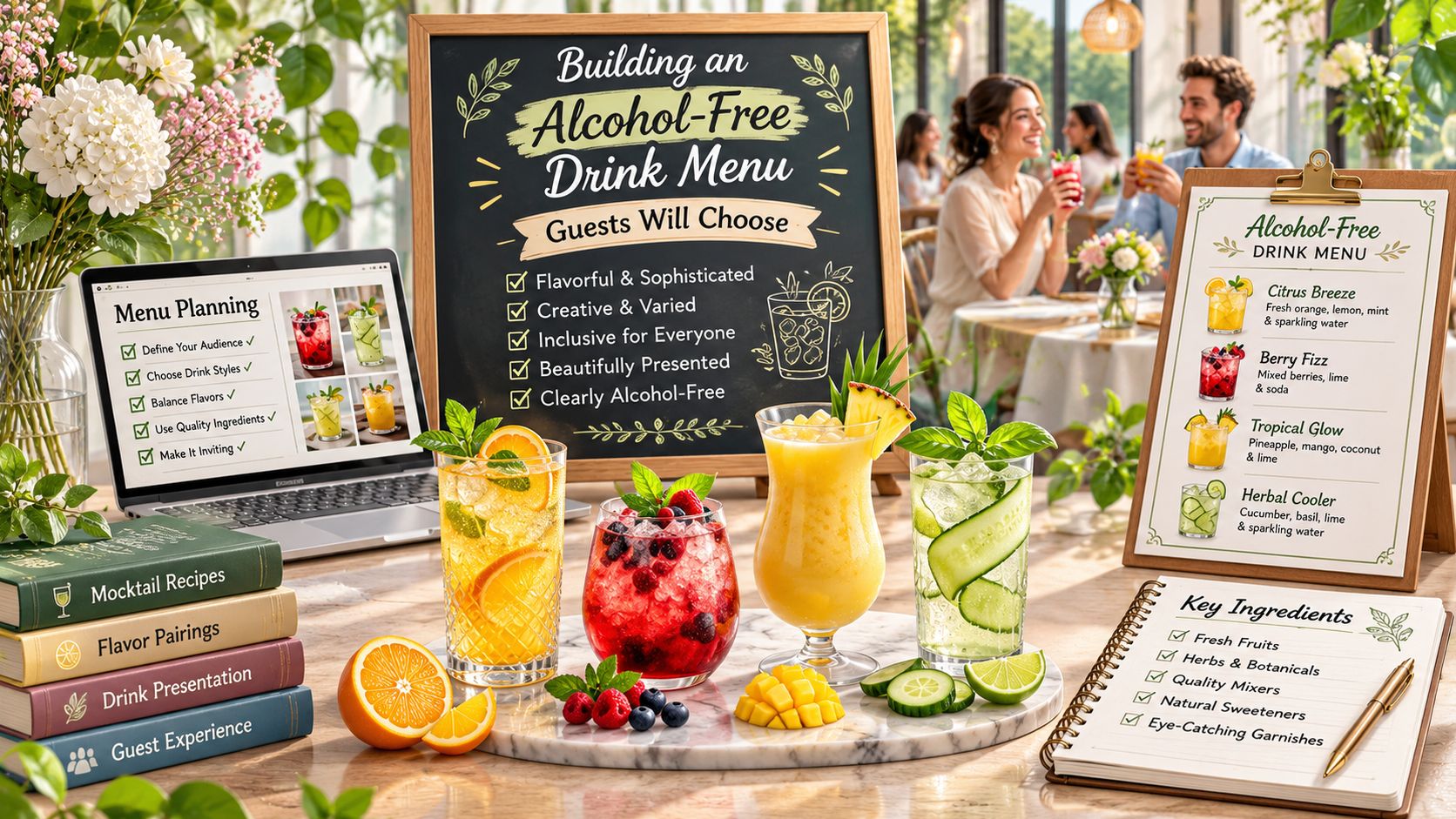
Interest in alcohol-free wedding drinks is growing. Falstaff's reporting on wedding drinks notes that 78.8% of couples already offer non-alcoholic wine, sparkling wine or virgin cocktails, and that more than 70% prefer refined zero-proof spritzes over basic orange juice. Those preferences make a considered menu worthwhile, but the drinks still need to suit the people attending and the pace of service.
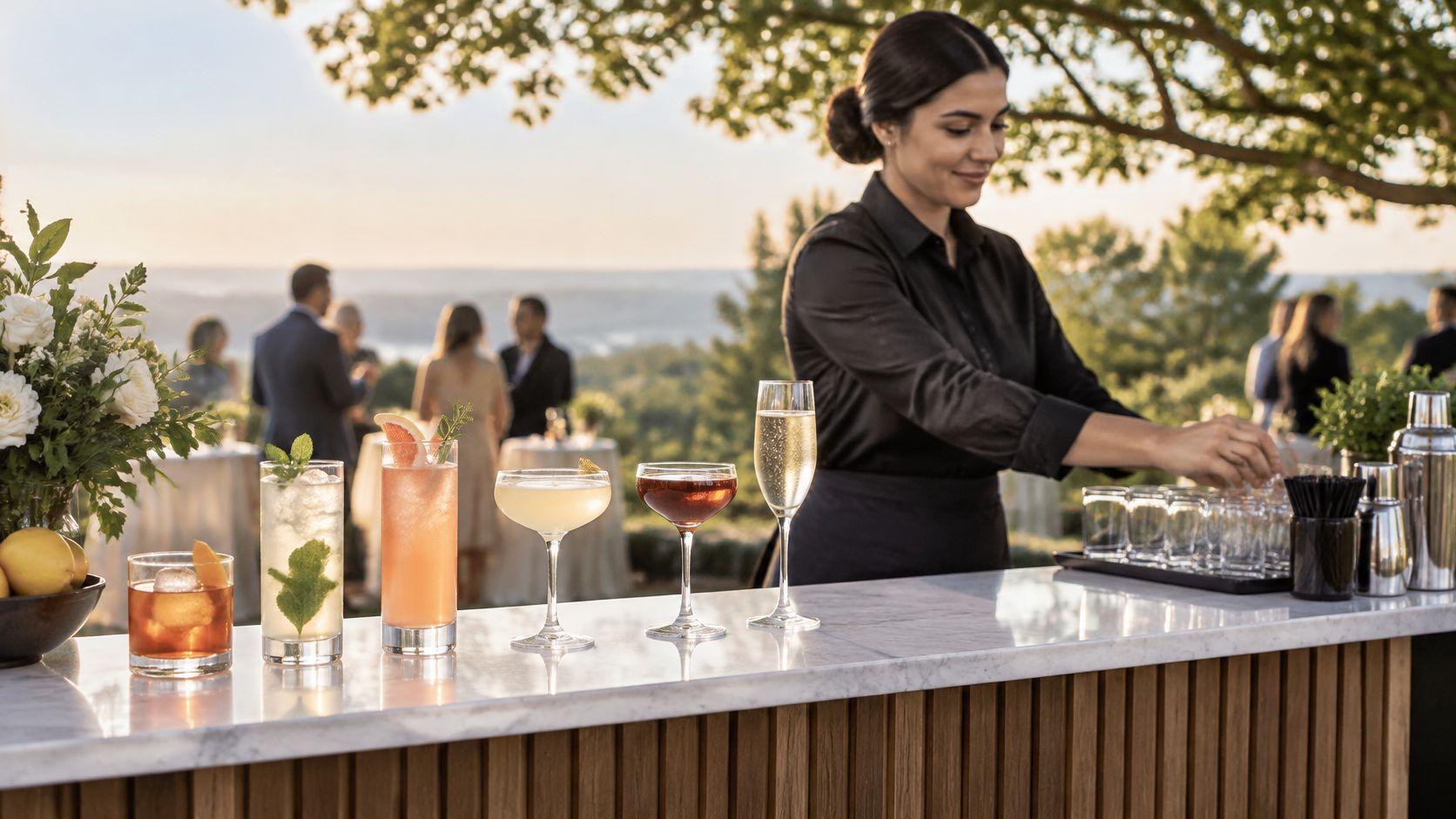
Choose two or three signature cocktails and a similar number of mocktails, then add a sparkling alcohol-free option. Use garnishes and glassware that give the zero-proof drinks the same finished presentation as the cocktails.
Place them clearly on the menu so guests can choose without having to ask. BeeHive tailors the drink list to your favorite drinks and the people you are bringing together, with familiar classics, personalized signature cocktails, and thoughtful alcohol-free options.
A mocktail made with the same care as the cocktail beside it does more for a welcome party than a third cocktail option does.
Keep the menu concise enough for staff to serve promptly as guests arrive in waves. A long list slows ordering and preparation, while a focused selection makes choices clear and helps the bar keep moving. For more ideas, explore this guide to non-alcoholic wedding drinks.
The quote should confirm which alcohol-free drinks are included, how they will be served, and whether a self-serve option is available. BeeHive's Refreshment Station is a self-serve option; confirm its availability and details for your event in the proposal. A separate station can give guests another way to get a drink while the bar handles cocktail orders.
Alcohol-free drinks give guests a choice, but they do not make driving safe after drinking. Pair the menu with a clear plan for food and getting home.
Host, Venue and Bar Responsibilities Checklist
The evening fails in the gaps between three sets of decisions rather than inside any one job. Write the answers down and send them to everyone before the event.
What the host owns
Buy and provide all alcohol from the shopping list. BeeHive doesn't buy, sell, supply, transport or deliver alcohol, so the purchase and its ownership stay with you.
Set the assumptions in writing: drinking-age guests, alcohol-service hours and the last-call time you've agreed.
Plan water, soft drinks, mixers, ice and garnishes as separate lines, since none of them come out of the alcohol estimate.
Decide whether toast pours are inside the estimate or added on top, so you don't buy the sparkling wine twice.
What the venue must put in writing
The alcohol policy itself, not a verbal summary of it.
The access window for setup and breakdown, and whether the room is yours for the full setup block.
Power, ice access, bar placement and an indoor or covered fallback for a fall or winter date.
For host-provided alcohol, confirm the venue’s rules and any applicable requirements with the venue and California ABC. For drink inspiration, see these signature wedding cocktail ideas.
What the bar service covers
Packages include the working supplies: bar tools, mixers, ice, coolers, plastic glassware, napkins, straws, setup, breakdown and a custom printed menu.
Bartender-only service is different. It covers bartending and standard bar tools, and you supply the bar surface, alcohol, mixers, ice, coolers, drinkware and garnishes. The $150 add-on supplies the mobile bar only, and a printed menu isn't automatically part of that service.
Tips are optional, and a tip jar needs approval from you and from the venue.
Your date is held by a signed contract and a 25% deposit. Neither one alone reserves it.
Food and venue arrangements stay with your caterer and your venue. Beverage service covers the drinks, the bar setup and the cleanup of the bar area.
Confirm the Quote and Book Your Bar Service
A welcome party rarely fills the room all at once. When you compare quotes, check that the service hours cover the arrival window and planned closing time, and that staffing suits the expected flow at the bar. For context, Zola's 2025 First Look Report put the average spend to host a wedding welcome party at $2,800. Use it as a benchmark, not as a bar-service budget.
A planning calculator can help estimate beer, wine and liquor from the guest count and service hours. Treat its output as an estimate, then confirm the alcohol plan with the host and venue. Keep the quote focused on what the bar team will provide and what the host must supply.
Start the Conversation. Share your event ideas, guest estimate and service hours so BeeHive can tailor the menu and setup to the occasion.
Customize Your Bar. Choose the service and drinks around the guests you are bringing together, including alcohol-free options. Familiar classics and signature cocktails can sit alongside those choices.
Confirm & Prepare. Review the proposal and confirm the bartender count, service hours, setup and breakdown timing, included supplies, any add-ons and the extra-hour rate. Extra time depends on availability and requires written agreement. Approve the details, sign the contract and pay the 25% booking deposit to reserve the date. The proposal or contract should state the remaining balance and its deadline.
Enjoy the Celebration. With the arrangements confirmed, you can spend more time with guests while BeeHive handles the agreed bar service.
Every event is quoted individually based on guest count, service hours and add-ons. Keep food and venue arrangements with your own team; BeeHive provides beverage service, not whole-event coordination. To begin, request a quote through the BeeHive Mobile Bar website and share your event details.