corporate event setup
Corporate Event Setup: A Practical Planning Guide
Plan your corporate event setup with a practical layout, vendor checklist, sample timeline and clear BeeHive mobile-bar and bartender-only options.
By BeeHive Mobile Bar ··10 min read
In this guide
The venue is booked, the guest list is taking shape, and someone asks where the bar will go. That decision affects check-in, food service, networking space and the presentation schedule. A useful corporate event setup plan gives each of those activities enough room and makes clear who is responsible for getting it ready.
Start with the event format, expected attendance, service hours and venue rules. Then bring the floor plan, vendor responsibilities and timing together in one document. Here is how to do that for a corporate reception, team celebration or brand event in Orange County.
Start with a brief every vendor can use
Your first vendor email should contain enough detail for a useful proposal. Share the date and venue, expected guest count, event format, program timing, preferred bar service and your main contact. Include the access window for setup and breakdown separately from the hours guests will be served.
For attendance, distinguish the invitation list from expected arrivals. Estimate how many guests may drink alcohol, what alcohol-free options you need and when the busiest arrival period will be. These are planning inputs, not separate guest counts to add together.
The format matters too. A networking reception needs room for people to circulate. A conference may need quiet service during presentations. A product launch needs clear sightlines to the product or stage. Describe those priorities before vendors recommend equipment or staffing.
Ask the venue to confirm:
The loading location, delivery restrictions and setup access time.
Which bar, coolers, drinkware or other supplies are already available.
Where the host’s alcohol may be delivered, stored and collected afterward.
Outside-vendor requirements and any insurance or authorization documents needed.
Available power and any water, drainage or waste arrangements the vendors require.
The approved room capacity, accessible routes and emergency exits.
Restrictions on signage, tip jars, disposable materials or outside beverages.
Confirm the alcohol-service arrangements for the specific venue and event before booking. Calling an event “private” does not by itself settle which permissions apply.
Choose a mobile-bar package or bartender-only service
The practical question is who will provide the bar and supplies. Our mobile-bar packages coordinate the listed equipment and beverage-service supplies with professional bartending. Bartender-only service suits a venue or host that already has a workable setup and can supply the other items.
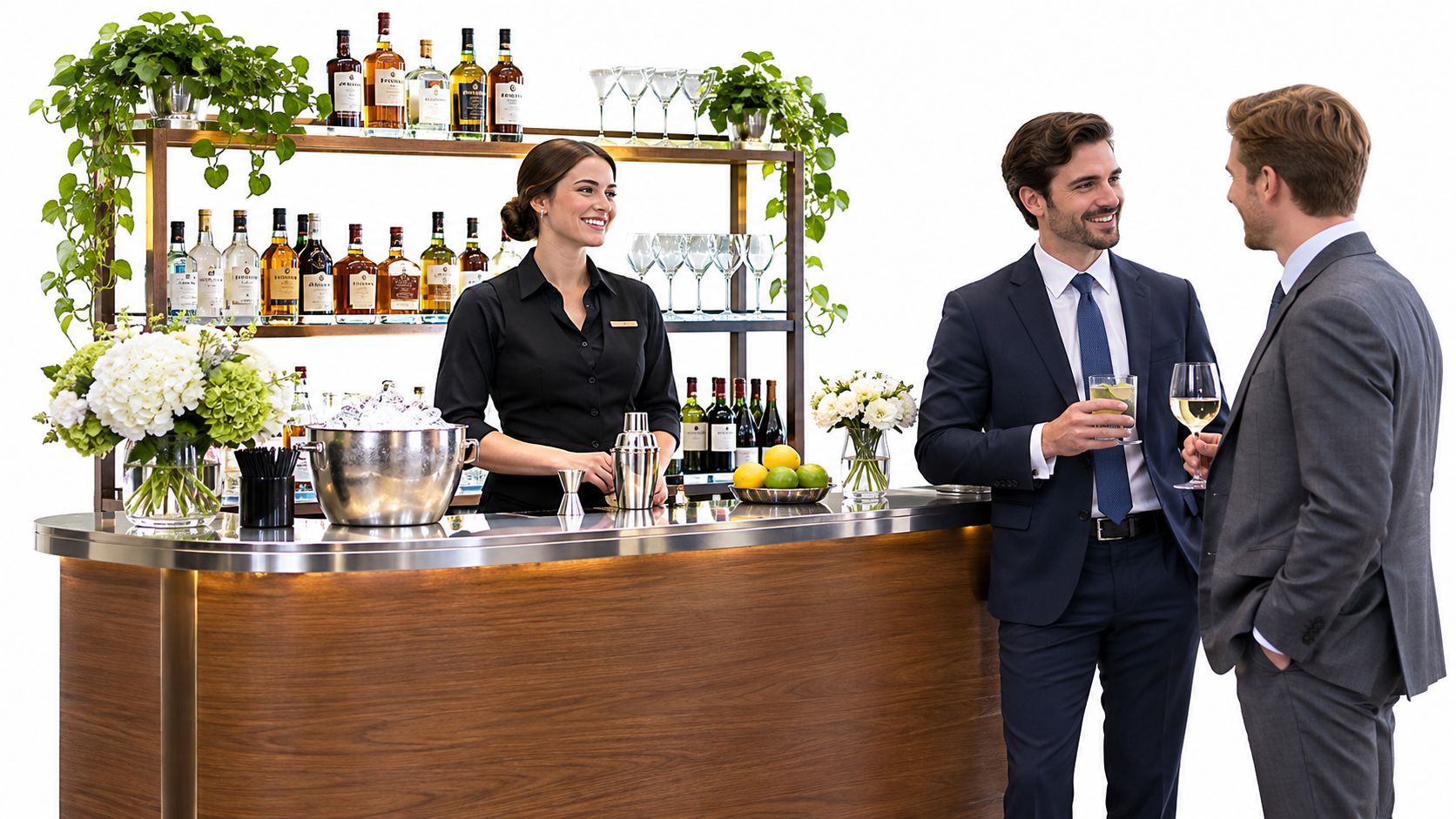
A venue-provided bar can work for bartender-only service. Confirm the drinkware and other supplies in your proposal.
| Service | Starting price and minimum | Guest guidance | Published highlights |
|---|---|---|---|
| Bronze | $750 · 3 hours | Up to 70 guests | Mobile bar, one bartender, two signature cocktails and standard garnishes |
| Silver | $1,150 · 3 hours | Up to 120 guests | Large mobile bar, two bartenders, three signature cocktails and premium garnishes |
| Gold | Custom quote · 3 hours | 120+ guests | Custom-styled bar, two or more bartenders, four signature cocktails, premium garnishes and presentation, soft drinks, water and a Refreshment Station |
| Bartender-only | $350 · 2 hours | Confirm staffing for your event | Professional bartending, bar tools, a shopping list, setup and cleanup |
Bronze, Silver and Gold also include ice, coolers, bar tools, mixers, plastic glassware, napkins, straws, garnishes, setup and breakdown, and a custom printed menu. Alcohol is purchased separately by the client using our tailored shopping list. Guest counts are planning guidance; we tailor staffing to your guest count and confirm the event scope in the proposal.
Bartender-only service does not automatically include a bar, ice, coolers, mixers, garnishes or drinkware. The optional $150 mobile bar add-on is available with bartender-only service and provides the mobile bar itself only. Assign responsibility for every other item before the event. If the venue or client provides glassware, confirm its quantity, delivery and cleanup arrangements.
Additional service time is $100 per hour per bartender for Bronze, Silver and Gold, or $75 per additional hour for bartender-only service. Confirm any extension and its billing terms in the proposal.
For example, using Silver’s published starting price and its two bartenders, one additional hour would add 2 × $100 = $200, bringing that illustrative service subtotal to $1,350. This assumes the quoted Silver service covers the initial three hours and both bartenders stay for the fourth. It excludes host-purchased alcohol and any separately quoted travel or add-ons; the final proposal controls the total.
Our mobile bar service guide explains the two service models in more detail.
Design the layout around guest movement
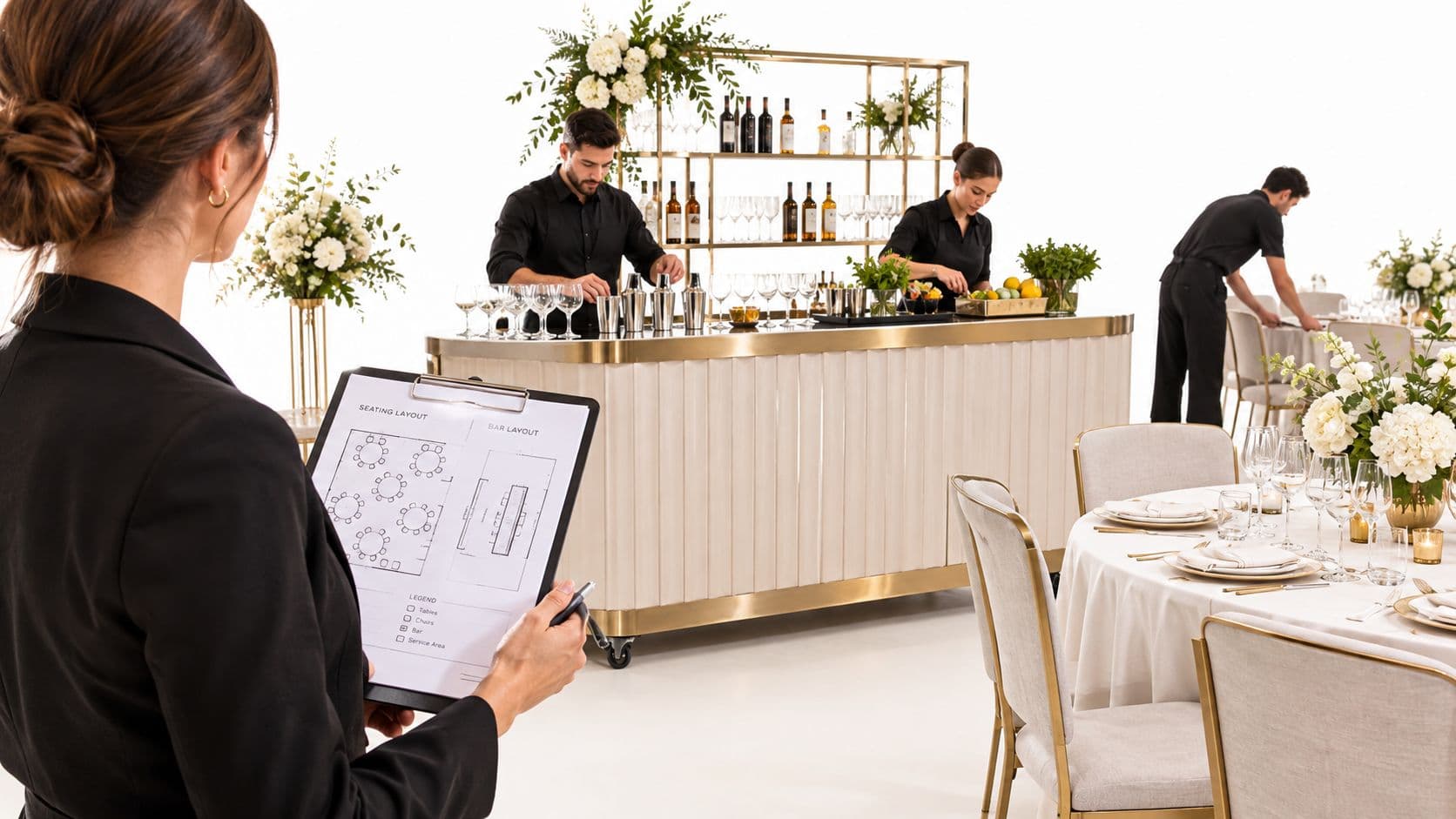
Trace the route from the entrance through registration, the bar, food stations, seating, restrooms and the presentation area. Place the bar where it is easy to reach without sending its queue through check-in or blocking the stage.
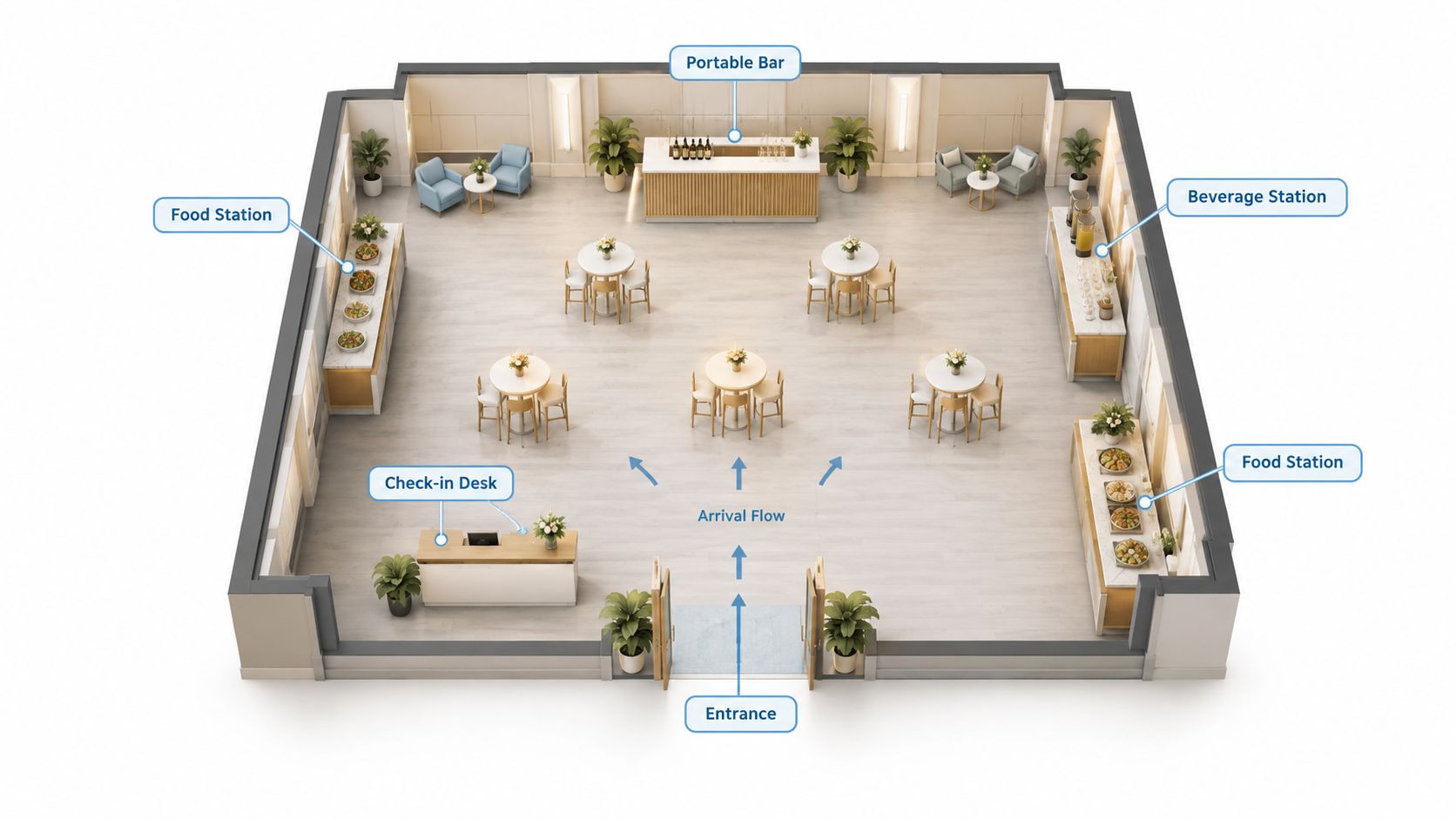
Illustrative layout, not to scale. Have the venue confirm capacity, accessible routes, exits, clearances and the final furniture positions.
Keep coolers, backup supplies and preparation space behind the bar. Give food stations their own queueing space. Show the footprint of equipment and storage on the plan, not just the front of the service counter.
Test check-in using the actual guest list, devices and badge process. If guests need help with a missing registration or name change, handle that away from the main line. Keep an offline backup and assign someone to resolve exceptions.
As a planning example, suppose 40 guests are expected in the busiest 20 minutes and a rehearsal takes 45 seconds per check-in. One station can complete about 26 check-ins in that window; two can complete about 52 before allowing for delays.
Two stations provide more room for that arrival wave, but a concentrated rush or complex registration needs additional capacity. Use your measured process time rather than treating this example as an industry benchmark.
Have the venue check the accessible approach, ordering position, counter access, turning and passing spaces, and emergency routes. A single aisle-width number is not a complete accessibility check. The U.S. Access Board’s accessible-route guidance explains why clear width and maneuvering space must be considered together.
Before opening, walk the actual room with the venue lead. Look for cables across routes, chairs pushed into circulation space, deliveries left near exits and queues that could overlap. Provide readable menus and clearly identified alcohol-free options.
Turn the plan into a timeline
Work backward from guest arrival. Confirm access and equipment needs with each vendor; setup time depends on the room, loading route and service scope. Our 25% deposit confirms a booking, and the proposal states the remaining balance and when it is due.
The following is a sample for a reception with bar service from 6:00 to 9:00 p.m. It is a planning example, not a promise that every setup takes the same amount of time.
| When | Action | Lead to confirm |
|---|---|---|
| Before the proposal is approved | Confirm venue rules, bar location, access, menu, staffing, supply responsibilities and payment schedule. | Client, venue and vendors |
| By the agreed purchasing deadline | Finalize the guest estimate and shopping list; arrange host-purchased alcohol and any client-supplied items. | Client with bar team guidance |
| 4:30 p.m. | Begin the agreed vendor access window and load-in. Adjust this time if the venue or vendors require more preparation. | Venue lead and each vendor |
| 5:30 p.m. | Check the installed layout, supplies, equipment and AV; resolve missing items. | Planner and vendor leads |
| 5:45 p.m. | Walk the guest routes and brief staff on the schedule and escalation contact. | Planner and venue lead |
| 6:00 p.m. | Open registration and the planned bar service. | Registration lead and bar team |
| During presentations | Follow the agreed service plan so queues and noise do not disrupt the program. | Planner, AV and bar team |
| 9:00 p.m. | End the scheduled service; begin breakdown when the venue and program allow. | Bar team and venue lead |
| Before the agreed departure deadline | Collect remaining host-owned alcohol and equipment; complete each vendor’s agreed cleanup. | Client, venue and vendors |
Name the person who can approve any timing change or extra service. A delayed speech does not automatically extend a vendor’s booked hours. Share the same final schedule with the venue, caterer, AV lead, photographer and bar team.
Assign each item to a person
A checklist becomes useful when someone owns each task. Fill in actual names and deadlines for the following responsibilities. Our corporate event bartender guide adds context for coordinating the bar team.
| Item or task | Owner to confirm | Completion check |
|---|---|---|
| Registration and guest communications | Planner or registration lead | Arrival instructions sent; list and equipment tested |
| Bar location and venue access | Planner and venue coordinator | Floor plan, load-in and departure times approved |
| Alcohol purchase and transport | Client | Shopping list purchased; delivery, storage and collection agreed with venue |
| Ice, coolers, mixers, garnishes and drinkware | BeeHive for included package items; client or venue for other agreed items | Each item and quantity assigned in the proposal |
| Water and alcohol-free drinks | Owner named in the proposal | Menu, quantities and service location confirmed |
| AV, food and presentation timing | AV lead, caterer and planner | Shared schedule checked with the bar team |
| Emergency response and room safety | Venue and designated event lead | Contacts shared; routes and exits checked |
| Waste, rental returns and cleanup | Each responsible party under its agreement | Collection points, return times and final walk-through assigned |
For alcohol quantities, use our alcohol-shopping calculator with the number of guests who may drink, the bar hours and the planned beer, wine and cocktail shares. It produces an inventory estimate, not a recommendation to consume alcohol. Plan mixers, ice, water, alcohol-free drinks, garnishes and any separate toast alongside it.
Confirm alcohol-service responsibilities
BeeHive operates on a dry-hire basis: clients purchase and provide alcohol using our shopping list. We provide bartending and the equipment and supplies included in the selected service. We do not sell, buy, supply or deliver alcohol; the client arranges its transport to and from the venue.
Ask the venue to confirm its alcohol rules and which approvals apply to your event. If a separately hired business will sell or supply alcohol under a Type 58 caterer’s permit, check its event authorization with that provider. California ABC explains that Type 58 process; it should not be treated as a blanket rule for every dry-hire booking.
Document the division of responsibility before service begins. Our dry-hire guide explains the client-purchasing model. Tips are optional and appreciated, and tip jars require client and venue approval.
Check the room before guests arrive
Confirm that each vendor has the final guest estimate and schedule.
Walk the entrance, registration queue, bar approach, food areas and exits.
Check that the agreed supplies are on site and someone owns any missing item.
Confirm water, alcohol-free options and readable menus.
Test AV and check-in equipment, with a backup process ready.
Confirm who can approve changes and who handles the final collection and cleanup.
For a corporate event in Orange County, share your date, venue, guest count, service hours and existing bar setup when you request a BeeHive proposal. We can confirm the service, staffing and supplies for your event.