new years drinks
New Year's Eve Party Drinks: 9 Ideas for Every Stage of the Night
Plan New Year's Eve party drinks with nine seasonal cocktails, mocktails and toast ideas, plus a practical timeline for hosts.
By BeeHive Mobile Bar ··18 min read
In this guide
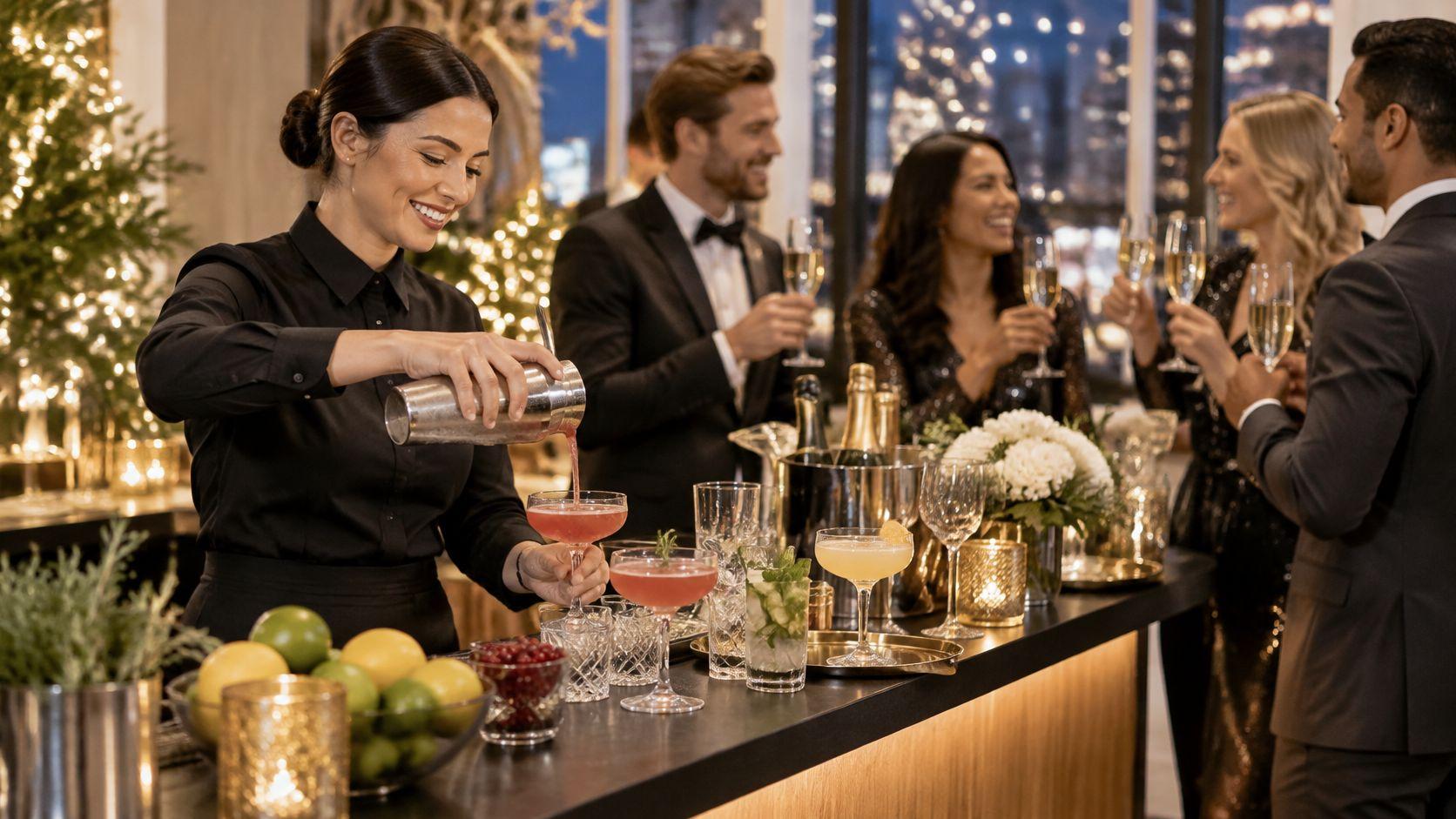
You've got the guest list, the playlist and a rough headcount. What you don't have yet is a drink plan that survives contact with midnight. That's where most New Year's Eve party drinks fall apart: everything gets bought as one pile, the bar backs up at 11:50 p.m., and half the room ends up holding a warm glass of whatever was left.
Split the night into three phases instead. Arrival gets one easy-to-serve cocktail and one alcohol-free match built on the same flavors. The main gathering gets a long drink, a stirred drink and a tart zero-proof option so guests can move between food and conversation without queuing. Midnight gets a coordinated toast, poured and handed out on a schedule rather than improvised.
Two rules make this work. Toast bottles are counted separately from your cocktail spirits and dinner wine, so the countdown never drinks into the rest of the bar. And you buy and provide all alcohol, including the toast bottles; we provide only the bar service quoted in your proposal.
Set the space up so the bar isn't the only destination. Our guide to creating the perfect backyard atmosphere covers lighting and layout that keep guests spread out. A 2023 CivicScience survey found alcohol remained part of New Year's Eve plans for 37% of drinking-age Americans, which is exactly why every phase below carries an alcohol-free twin.
1. Cranberry Rosemary Bourbon Fizz (Arrival Cocktail)
Guests arrive in clusters, coats in hand, and the first pour has to move faster than conversation. This fizz is built in the glass: no shaker, no strainer, no queue.
Per drink: 2 oz bourbon, 1 oz unsweetened cranberry juice, 0.75 oz fresh lemon juice, 0.5 oz rosemary simple syrup, 2 oz club soda. Build over ice in a highball, stir once, garnish with a rosemary sprig and a lemon slice.
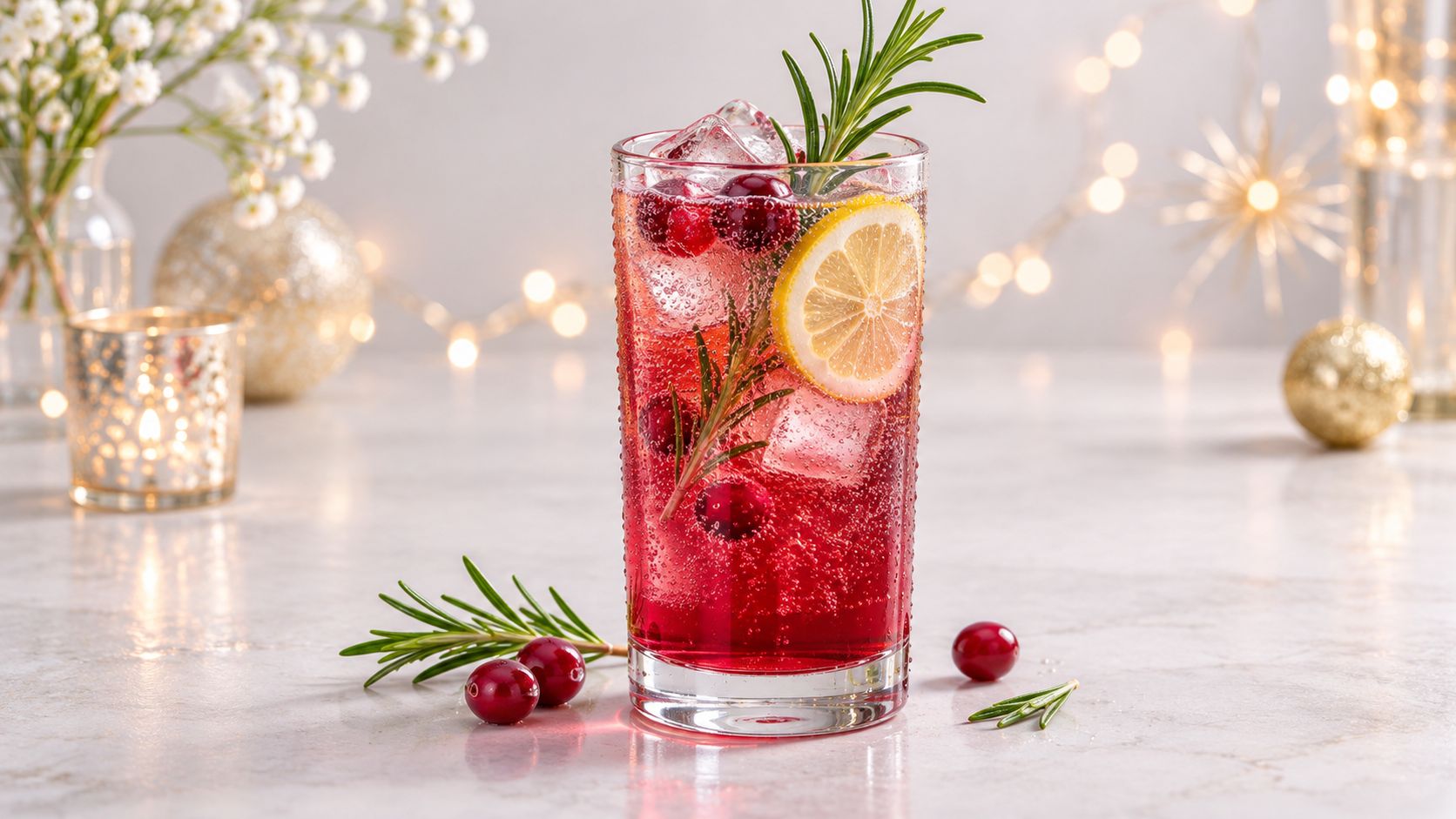
Batch the base; add bubbles at service
Count bases, then count soda separately. The still base is 4.25 oz per drink before soda: for 10 drinks, chill 20 oz bourbon, 10 oz cranberry juice, 7.5 oz lemon juice and 5 oz rosemary syrup, 42.5 oz total. For larger arrival waves, multiply by expected servings and keep carbonation out of the pitcher; our Holiday Cocktails for a Crowd guide handles pitcher math and chilling order.
Syrup a day ahead: Simmer equal parts sugar and water with fresh rosemary, steep off heat, strain, chill.
Unsweetened cranberry only: Cocktail-juice blends make the syrup redundant and the drink cloying.
Mind the pour: The NIAAA standard drink reference sets one drink at 1.5 oz of 40% ABV spirits, so a 2 oz bourbon build pours like a generous single rather than a light cocktail.
Say 30 guests arrive over the first hour and half take this drink. That is 15 builds, about 64 oz of base, roughly 1.5 batches, poured 4.25 oz at a time and finished with cold soda glass by glass.
2. Cranberry Rosemary Spritz (Alcohol-Free)
Put this spritz on the printed arrival menu with a counted batch, starting with 14 spritzers for a 40-guest arrival where roughly a third choose alcohol-free. It gives the alcohol-free option a clear place in the pour plan, with its own quantity, glassware count and service lane.
Per drink: 3 oz unsweetened cranberry juice, 0.75 oz fresh lemon juice, 0.5 oz rosemary syrup, 3 oz sparkling water. Build over ice, garnish with rosemary. The base is 4.25 oz per drink before the sparkling water, but the recipes differ. Make separate, clearly labeled pitchers: the cocktail base contains bourbon.
Circana's alcohol survey found 49% of Americans were trying to drink less alcohol in 2025 and 58% planned to try a nonalcoholic drink. That is enough to justify a real menu line and a real count. Keep the alcohol-free pour visible at arrival, where guests can choose without stopping the line to ask.
For 40 guests, batch 14 bases: 42 oz cranberry juice, 10.5 oz lemon juice and 7 oz rosemary syrup. Add sparkling water glass by glass at service, so the spritz stays bright instead of going flat in a pitcher. Keep the cranberry refrigerated until the first guest walks in, and buy mixers and sparkling water on a separate shopping list line from the spirits.
Assign one person to pour bases and another to top, garnish and distribute. That split keeps the entry table moving and protects the midnight toast inventory, because the spritz bottles do not get pulled into the final countdown pour.
3. Golden Pear and Thyme Cooler
The main gathering needs a drink that survives being set down mid-conversation. This cooler does that. Pear nectar, lime and thyme add a fresh herbal note, and ice keeps it cold without demanding attention.
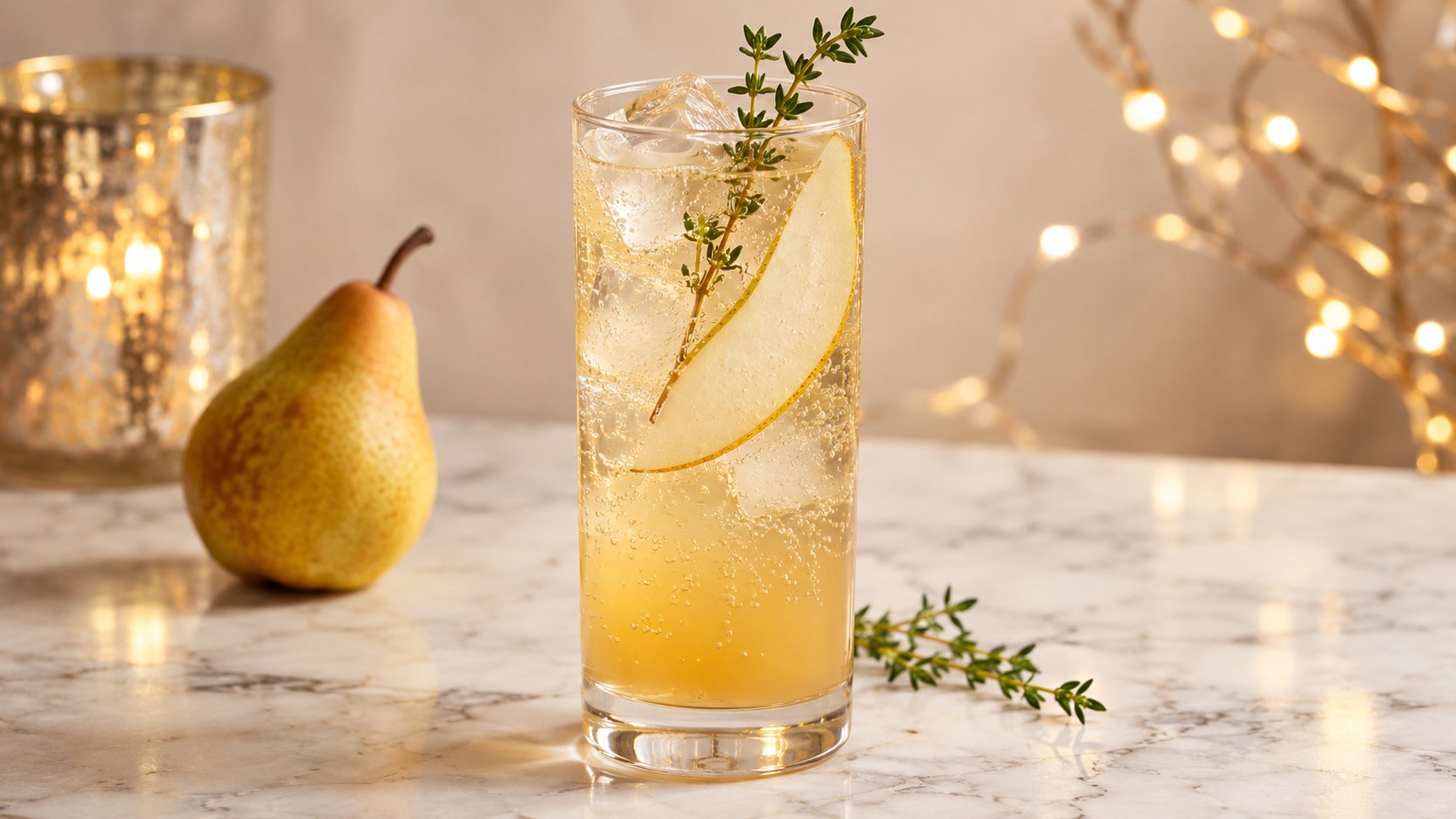
Per drink: 2 oz vodka, 0.75 oz fresh lime juice, 1 oz pear nectar, 4 oz club soda. Build over ice in a tall glass or a large copper mug with room for ice, garnish with a pear slice and a small thyme sprig. Plan sparkling water by drink count.
A 12 oz can of club soda covers three drinks at 4 oz each. For 45 coolers, allow 180 oz, or 15 cans, plus a little extra for spills.
Pre-cut garnish an hour before: Toss pear slices in lemon juice to slow browning, and rinse and cover the thyme.
Chill the base: Combine vodka, lime and pear nectar ahead and refrigerate; add club soda per glass.
Copper is optional: It looks the part and holds cold well, but a tall glass works well too.
4. Blood Orange Old Fashioned
Some guests will ask for whiskey, and a stirred drink is the right answer for them. It's also the slowest thing on this menu, which is why it belongs in the middle of the night rather than at the door.
Per drink: 2 oz bourbon, 0.25 oz maple syrup (about 1.5 teaspoons), 2 dashes Angostura bitters. Stir with ice for 20 to 30 seconds, strain over one large cube, express a blood orange peel over the top.
Batching for 10 means 20 oz bourbon, 2.5 oz maple syrup and 20 dashes of bitters, stirred together and chilled. Pour a single serving of that batch over fresh ice per glass. Don't pre-dilute the batch and then also stir each serve, or the drink lands watery by the third round.
A cocktail isn't automatically one drink. NIAAA's container guidance notes a mixed drink may contain one or more standard drinks depending on the recipe and the spirits used, which is worth remembering when a guest orders their second stirred drink of the hour.
The trade-off is speed. One bartender building pear coolers can serve a crowd; one bartender stirring old fashioneds cannot do both at once.
If this drink is on your menu for a large gathering, keep it as the second option behind a built drink, and put a zero-proof sparkling option next to it so the whiskey order isn't the only interesting one. For an alcohol-free option, serve blood orange juice with sparkling water and a rosemary sprig over ice.
5. Pomegranate Ginger Spritzer (Alcohol-Free)
Tart, bubbly and visually loud, this is the drink that stops alcohol-free guests from feeling like they've been handed a consolation soda. It stands up next to bourbon on the same tray.
Per drink: 3 oz unsweetened pomegranate juice, 1 oz fresh lime juice, 0.5 oz ginger syrup, 3 oz sparkling water or tonic. Build over ice, finish with a lime wheel and a small spoon of pomegranate arils. Total build is 7.5 oz before ice, so use a tall glass or a large wine glass rather than a rocks glass.
A 2025 Leger survey found 35% of U.S. consumers expected non-alcoholic beverages at holiday gatherings, with mocktails at 11%. Those are holiday-wide figures rather than a New Year's Eve forecast, but they're a sensible benchmark for how much of your menu to build without alcohol.
Taste the juice first: Pomegranate sweetness swings hard between brands, and a sweet juice plus ginger syrup turns this into candy.
Sparkling water last: Add it in the glass, never in the batch, or you'll serve flat drinks by the second hour.
Label the pitcher: A small card reading "alcohol-free" removes all hesitation at a self-serve table.
For a hypothetical 50-guest party, batching 20 spritzers takes 60 oz pomegranate juice, 20 oz lime juice and 10 oz ginger syrup, with sparkling water opened as you go.
6. Blackberry Sage Lemonade
Not everyone wants tart and bubbly. This is the soft, sweet option for guests who'd rather sip something herbal, and it works as a self-serve pitcher so the bartender stays on cocktails.
Per drink: 4 oz lemonade, 1 oz blackberry sage syrup, 2 oz sparkling water, over ice. For the syrup, simmer 1 cup blackberries, 0.5 cup sugar, 0.5 cup water and 4 sage leaves for about 10 minutes, then strain and cool. That yields a variable amount; measure the strained syrup and allow 1 oz per drink.
Where a self-serve station earns its place
Our self-serve Refreshment Station starts at $125 and includes four gallons of house-made lemonade, infused water, iced tea or a seasonal refreshment, with additional gallons at $25 each. Approximately 45 guests is a planning estimate that shifts with portion size and consumption, not a guaranteed capacity. A custom blackberry sage flavor isn't included unless it's confirmed in your proposal, so treat this recipe as your own pitcher and the station as the volume behind it.
Worked example, hypothetical: 60 guests, a four-hour party, half of them drinking alcohol. Two pitchers of this lemonade on a side table with a stack of cups and a bowl of ice will absorb the guests who want something in hand without joining the bar queue.
Taste the syrup before you scale it, since blackberry sweetness varies with ripeness, and keep the sage leaves out of the finished syrup so the flavor stays gentle.
7. Espresso Martini for Late Evening
After the toast, the room splits. Some guests want one more rich drink, others want to start winding down. This is the rich option, and it needs no hot equipment at all, just cold coffee and a shaker.
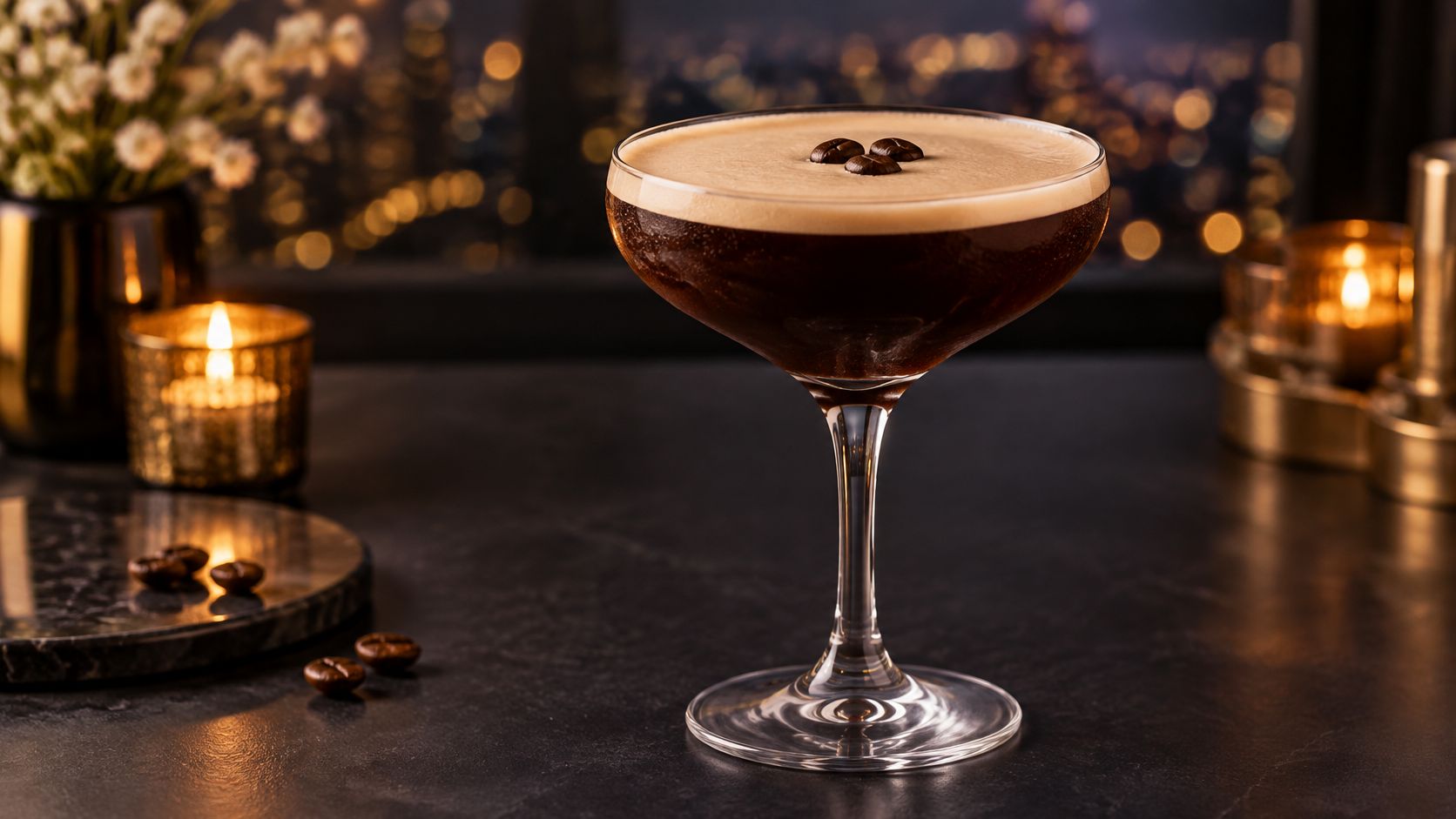
Per drink: 1.5 oz vodka, 1 oz coffee liqueur, 1 oz chilled espresso or cold brew, 0.25 oz simple syrup. Shake hard with ice for a full 15 seconds and strain into a chilled coupe, garnished with three coffee beans. You supply the vodka, coffee liqueur and coffee.
Chill the espresso completely before service. Warm coffee melts the ice instantly, the shake goes slack and you lose the foam that makes the drink worth ordering. Cold brew concentrate diluted to drinking strength works fine and saves you pulling shots at 12:15 a.m.
Two things to settle before this drink goes on the menu. First, it sits inside your written last-pour plan, not after it. Second, coffee doesn't sober anyone up. Neither does food, water or an alcohol-free hour, so late pours and the ride home are the same conversation. NielsenIQ's holiday beverage analysis reports that half of consumers planned to go out for New Year's Eve, which means your end-of-night plan should account for guests leaving on foot, by rideshare or with a designated driver, whichever you've arranged.
8. Sparkling Pomegranate Toast
Give the toast its own inventory line, counted from 4 oz per guest. It sits outside the dinner wine estimate and outside the cocktail spirits, because a bottle you planned to pour at 8 p.m. will not still be cold and full at midnight.
Per guest: 4 oz sparkling wine or champagne in a flute, plus a small spoon of pomegranate arils for color. Add the arils just before serving.
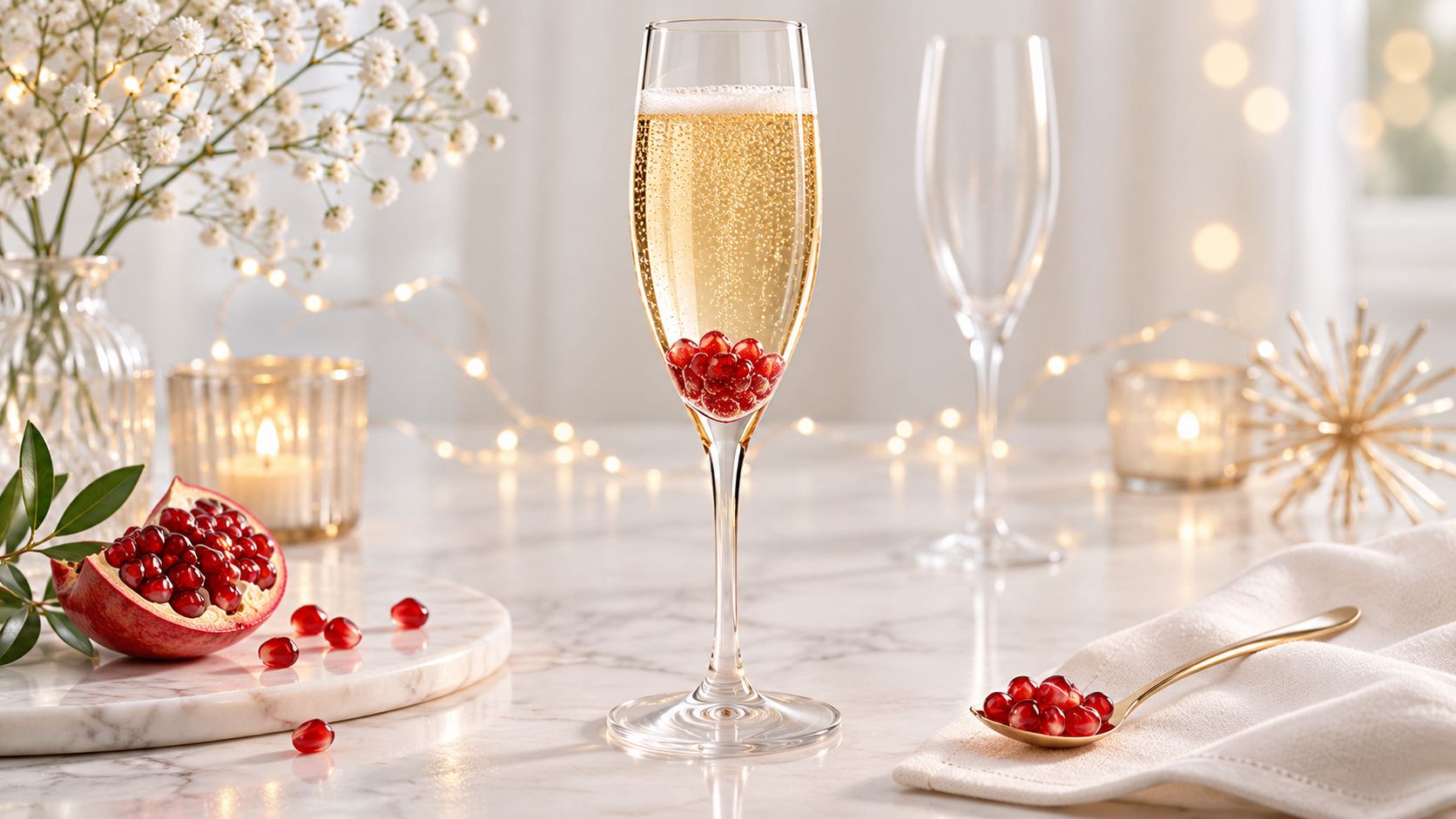
Run the bottle count separately
Worked example, hypothetical: 60 guests, with 45 choosing wine and 15 choosing an alcohol-free toast: 45 wine pours at 4 oz each total 180 oz. A 750 mL bottle holds about 25.4 oz; that is about 7.1 bottles, so allow 8 bottles of sparkling wine.
For 15 alcohol-free pours, allow 60 oz; at 25.4 oz per 750 mL bottle, allow 3 bottles of an appropriate alcohol-free option. Run your own headcount through the same formula rather than folding the toast into a general wine estimate.
The pour size is why the count differs. NIAAA's container reference puts a 750 mL wine bottle at about five standard drinks at 5 oz pours, so a 4 oz toast pour is deliberately smaller than a full glass of wine. Count those bottles as dinner wine and you'll be short at midnight, short at dinner, or both.
Chill the toast bottles on their own schedule, earlier than the cocktail builds need the fridge space, and buy them yourself along with the rest of the alcohol. A spare bottle beyond the math covers whoever tops up a flute a second time before the countdown.
9. Alcohol-Free Sparkling Toast
At the countdown, guests choosing alcohol-free drinks should have a sparkling pour ready with everyone else's. Choose the bottle before the party, so their midnight drink feels as considered as the arrival cocktail.
Per guest: 4 oz sparkling cider or non-alcoholic sparkling wine. Use the same serving volume as the alcoholic toast, with pomegranate arils if you want a matching finish. Choose cider or wine according to your guests' preferences rather than treating the two as interchangeable.
Check the bottle before buying
Read both the alcohol description and the bottle volume on the label. Choose a product that matches your guests' alcohol-free requirements, then calculate the quantity from its stated size. Multiply the number of alcohol-free toast guests by the measured pour, then divide by the bottle's volume in the same units. Round up to whole bottles.
Give the person pouring the product name, and have the distributor offer it explicitly as the alcohol-free toast.
Our guide to non-alcoholic wedding drinks explains how to build a parallel menu. Apply that approach across the night: offer alcohol-free arrival and gathering drinks, then reserve the chosen sparkling pour for midnight. If you also want it available earlier, include those servings in your purchase quantity.
Who Pours, Who Distributes and When for the Midnight Toast
A toast for 60 people doesn't happen by itself. Someone has to fill 60 flutes and get them into 60 hands inside about ten minutes, and that job needs a name attached to it before the party starts.
Assign one or two trusted volunteers to distribute, working from trays rather than a table guests have to crowd. The pouring is either your volunteers' job or your bartender's, depending on whether the toast falls inside booked service hours. Confirm agreed service hours, overtime and late-night availability in the proposal before you promise anyone a bartender at midnight.
A hypothetical four-hour timeline
Booked beverage service runs 8:30 p.m. to 12:30 a.m., four hours, which clears our three-hour service minimum. Setup and breakdown are confirmed separately in the proposal and aren't counted in those four hours.
8:30 to 9:30 p.m.: Welcome pours, bourbon fizz and cranberry spritz, built at the bar as guests arrive.
9:30 to 11:45 p.m.: Main gathering, pear coolers and old fashioneds, spritzer and lemonade self-serve.
11:45 p.m. to midnight: Toast pours and distribution, both versions, trays moving through the room.
Midnight: Countdown and toast.
Midnight to 12:30 a.m.: Late service, espresso martinis and water.
A host-set last-pour time doesn't shorten booked service hours or waive the minimum. If your bartender's hours end before midnight, the toast becomes your volunteers' job, and you should stage the chilled bottles and flutes for them ahead of time. Check bartender count for your guest total with our Bartender Staffing Calculator, and see our gala bar service planning notes for how larger rooms handle a synchronized pour.
You arrange food, transportation and venue permissions. Plan music around your guests and event schedule.
Drink and Toast Plan at a Glance
Read this table as a prep sheet, not a recipe card. The measured builds sit with each drink above; what matters here is where each pour lands in the night, which alcohol-free twin rides alongside it, and what you can finish hours before guests arrive. Every phase carries an alcohol-free option, so nobody's glass depends on a last-minute substitution.
| Drink | Phase | Alcohol-Free Twin | Make-Ahead Step |
|---|---|---|---|
| Cranberry Rosemary Bourbon Fizz | Arrival | Cranberry Rosemary Spritz | Batch and chill the base; add soda per glass |
| Cranberry Rosemary Spritz | Arrival | Alcohol-free pour | Chill the base; top with sparkling water at serving |
| Golden Pear and Thyme Cooler | Main gathering | Golden pear and thyme spritzer (pear nectar, lime, thyme and club soda) | Chill the base; add club soda last |
| Blood Orange Old Fashioned | Main gathering | Pomegranate Ginger Spritzer | Batch and chill; pour over fresh ice |
| Pomegranate Ginger Spritzer | Main gathering | Alcohol-free pour | Make ginger syrup ahead; add sparkling water at serving |
| Blackberry Sage Lemonade | Main gathering, self-serve | Alcohol-free pour | Make and strain the syrup ahead; keep the pitcher chilled |
| Espresso Martini | Late evening, after the toast | Non-alcoholic coffee or tea | Brew and chill the espresso ahead |
| Sparkling Pomegranate Toast | Midnight countdown | Alcohol-Free Sparkling Toast | Pour close to the toast to keep the bubbles |
| Alcohol-Free Sparkling Toast | Midnight countdown | Alcohol-free pour | Chill separately in its own bottles |
| Midnight toast pour and distribute | Midnight countdown | Alcohol-Free Sparkling Toast on the same pass | Stage chilled bottles, flutes and trays before the countdown |
The pattern worth noticing: anything carbonated gets added at the bar or at the moment of service, while syrups, batched bases and chilled espresso all tolerate time in the fridge. Do the work where the table says to, and the only jobs left once the evening starts are pouring, topping with bubbles and keeping the toast bottles cold.
Confirm the Hours, Then Raise the Toast
The drink list is the easy part. A smooth New Year's Eve depends on a few decisions made in writing, while there is still time to adjust staffing, glassware and counts.
Start with the clock. Confirm the booked beverage-service hours, whether extra time is available, and whether service is scheduled through midnight before promising a coordinated toast. An early alcohol cutoff is a service decision, not a shorter booking. Keep that decision separate from the toast moment, because champagne, sparkling cider and glassware all need their own timing.
Then name the people. One person pours, one or two distribute, and both the sparkling wine and the alcohol-free sparkling go out on the same pass so nobody waits for a second round of trays. Write those names down and brief them at 11:30 p.m., not 11:55 p.m. The role matters as much as the recipe at midnight, especially when guests are moving, counting down and reaching for phones.
Keep three shopping lists rather than one:
Cocktail and bar supplies: List spirits that the host buys separately. Confirm who supplies mixers, ice, garnishes, water and alcohol-free drinks in the proposal.
Toast wine: Bottles counted from guest count and pour size, never borrowed from the dinner wine.
Alcohol-free toast and refreshments: Their own bottles, their own glassware, their own place on the tray.
The alcohol shopping list calculator estimates beer, wine and liquor needs, using 1.5 oz of liquor per cocktail as the standard amount, with a 2 oz larger option. Those are planning figures, not consumption targets. Its list does not include mixers, water, alcohol-free drinks, ice, garnishes or a separate toast, so those belong on the other two lists.
When you're ready to lock the plan, request a personalized quote with your event date, guest count and venue, and we'll build the menu and shopping list around your three phases.
BeeHive Mobile Bar provides dry-hire mobile bar packages and separate bartender-only service across Orange County and surrounding Southern California by arrangement, with menu planning, a personalized alcohol shopping list and alcohol-free options built alongside the cocktails. Clients buy and provide the alcohol, and we handle the quoted bar service, from arrival pours through the coordinated midnight toast. Visit BeeHive Mobile Bar to request a quote for your date.