mobile bartending cart
Mobile Bartending Cart Setup Ideas for Orange County Events
Explore mobile bartending cart setup ideas for Orange County events, from bar placement and guest flow to styling, lighting, access, and venue planning.
By BeeHive Mobile Bar ··13 min read
You're usually not searching for a bar setup because drinks are an afterthought. In many cases, it is the opposite. The moment you walk a venue, backyard, courtyard, or ballroom, you can often tell that the bar will shape how the event feels.
A bar placed too far from cocktail hour can pull guests away from the action. A bar set too close to the dance floor can create crowding. A beautiful setup without enough surrounding space can look polished in photos but feel awkward once lines begin to form.
That is why choosing a mobile bartending cart is really about choosing how the bar will function inside the event space. For Orange County weddings, private parties, corporate events, and brand launches, the best setup is the one that supports guest movement, fits the venue, and feels visually intentional from the start.
BeeHive Mobile Bar provides the portable bar as part of a complete dry-hire bartending service, then helps clients think through layout, presentation, and event flow so the bar feels integrated into the space rather than added at the last minute.
Table of Contents
- Why Bar Placement Matters More Than Most Hosts Expect
- How to Choose the Right Spot for a Mobile Bartending Cart
- Setup Details That Make the Bar Feel Organized
- Styling Ideas by Event Type
- A Short Pre-Event Venue Checklist
- Choosing a Setup That Fits the Space
Why Bar Placement Matters More Than Most Hosts Expect
The bar influences traffic, not just drinks
One of the easiest mistakes to make is thinking of the bar as a visual feature first and a service area second. In reality, the bar affects how guests circulate, where they pause, and how the room fills in during key moments.
Guests tend to notice the bar early, and at many events it becomes a natural gathering point within the first few minutes of arrival. If it is placed well, it can help distribute people evenly through the space and create a social focal point. If it is placed poorly, it can bottleneck an entry, block access to tables, or split the event into disconnected pockets.
This matters in almost every setting:
A wedding cocktail hour needs easy access without pulling guests away from the couple's planned flow.
A backyard party needs enough clearance so guests are not wedged between the bar and patio furniture.
A corporate mixer often needs the bar close enough to encourage interaction, but not so central that it interrupts conversation.
A brand launch may want the bar visible as part of the presentation while still keeping ordering space clean and functional.
Start with guest movement, not decor
Before thinking about styling, start with movement.
Ask where guests will enter, where they will naturally gather, and where the event's focal points will be. Those may include a ceremony area, lounge seating, dining tables, stage, photo moment, dance floor, or presentation space. The bar should support those zones, not compete with them.
A useful planning question is simple: Where will guests already be walking, and where should they not have to squeeze through a bar line?
That question usually leads to better placement than choosing the bar location based only on an empty wall or a photogenic corner.
How to Choose the Right Spot for a Mobile Bartending Cart
Bar placement and guest walking paths
A well-placed mobile bartending cart should feel easy to approach, easy to leave, and easy to pass by without creating congestion.
As you look at your venue, think in terms of walking paths rather than fixed furniture. Guests rarely move in straight lines once an event begins. They drift toward drinks, friends, food, restrooms, music, and seating. The bar should sit where it can be found quickly, but not where it stops that movement.
Helpful placement guidelines include:
Leave open space in front of the bar for a short line to form naturally.
Avoid placing the bar directly beside the main entrance if guests need room to check in or greet each other.
Keep the bar out of narrow transition zones such as hallways, side gates, or the route to restrooms.
Make sure guests can step away from the pickup point without colliding with new arrivals.
Consider what happens during peak moments, not just when the space is empty.
If the venue has a strong visual axis, such as a ballroom entry facing a dance floor, it often helps to place the bar slightly off-center rather than directly in the path. That keeps the bar visible while preserving a cleaner line through the room.
Cocktail hour versus reception placement
One of the most useful planning decisions is whether the bar should serve cocktail hour, reception, or both from the same general area.
For cocktail hour, the bar usually works best near mingling space, lounge seating, lawn games, or appetizer service. Guests are moving around more freely at this stage, so the bar should feel accessible without becoming the only destination.
For the reception, placement often needs to support a different rhythm. Guests may order before taking their seats, during transitions between dinner and dancing, and again later in the evening. In that setting, the bar usually works best where it is visible and easy to reach, but not so close to dining tables that conversations are interrupted by constant foot traffic.
In some venues, one location works for both. In others, cocktail hour and reception are far enough apart that the full event sequence should shape the setup from the beginning. If the event shifts from lawn to ballroom, courtyard to dining room, or ceremony space to indoor reception, it helps to decide early which area matters most for the bar's long-term placement.
Indoor versus outdoor layouts
Indoor and outdoor setups create different priorities.
Indoor layouts usually make lighting, wall placement, and line control easier. You may have more defined traffic patterns, established entrances, and natural visual anchors. The main concern indoors is often avoiding crowding around tables, dance floors, or presentation areas.
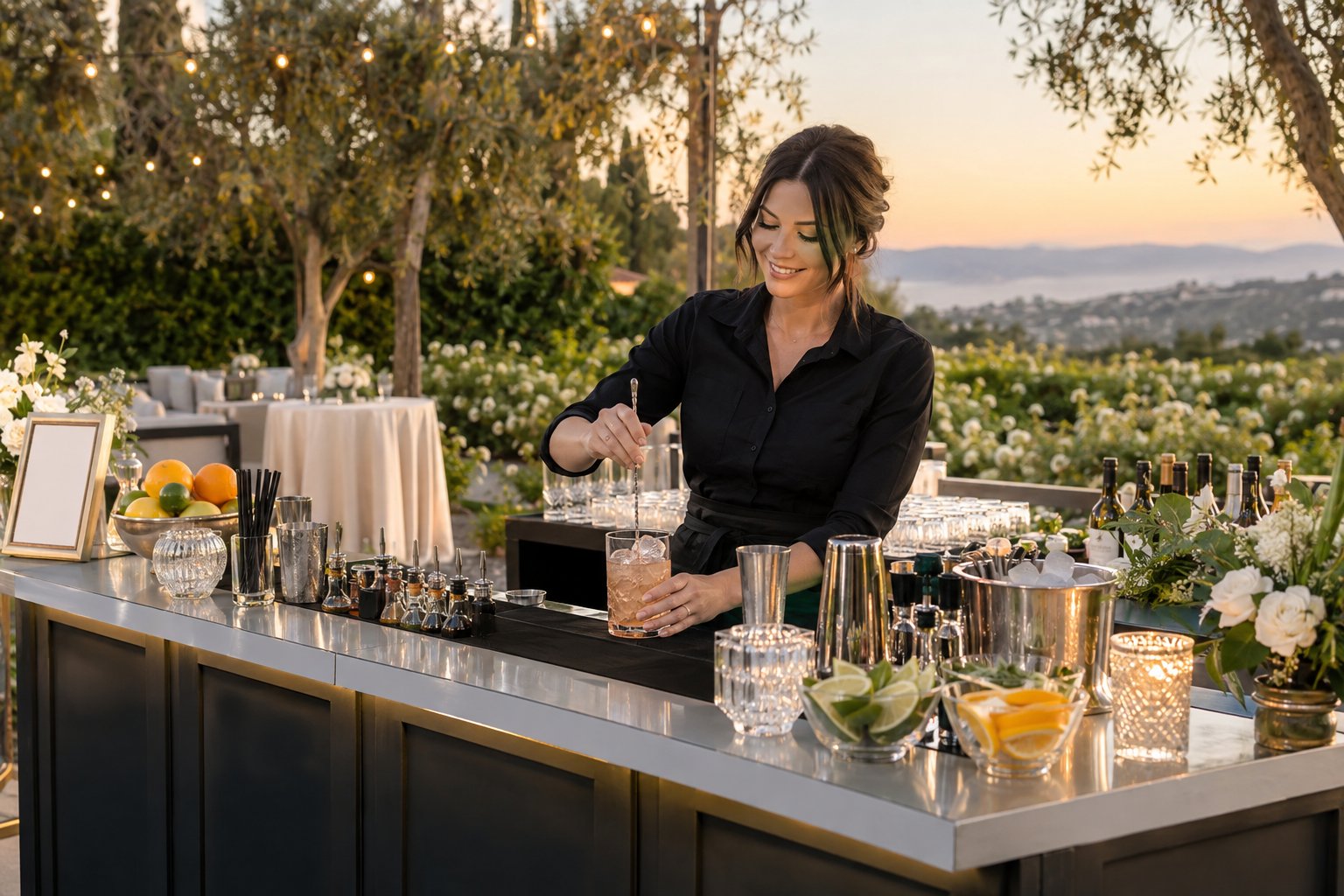
Outdoor layouts often offer more flexibility, but they also require more foresight. A bar on a lawn, patio, pool deck, or private property needs enough stable ground, enough space around it, and enough protection from sun or weather. Outdoor events also make it more important to think about guest comfort while they wait, especially during warm Orange County afternoons.
If you are planning around a residential property or smaller venue footprint, our guide to a mobile drinks bar for private events can be a useful companion for thinking through compact hosting spaces.
Setup Details That Make the Bar Feel Organized
A beautiful bar setup usually feels polished because the practical details were handled well. Guests may not consciously notice each decision, but they do notice when a bar area feels calm, intuitive, and uncluttered.
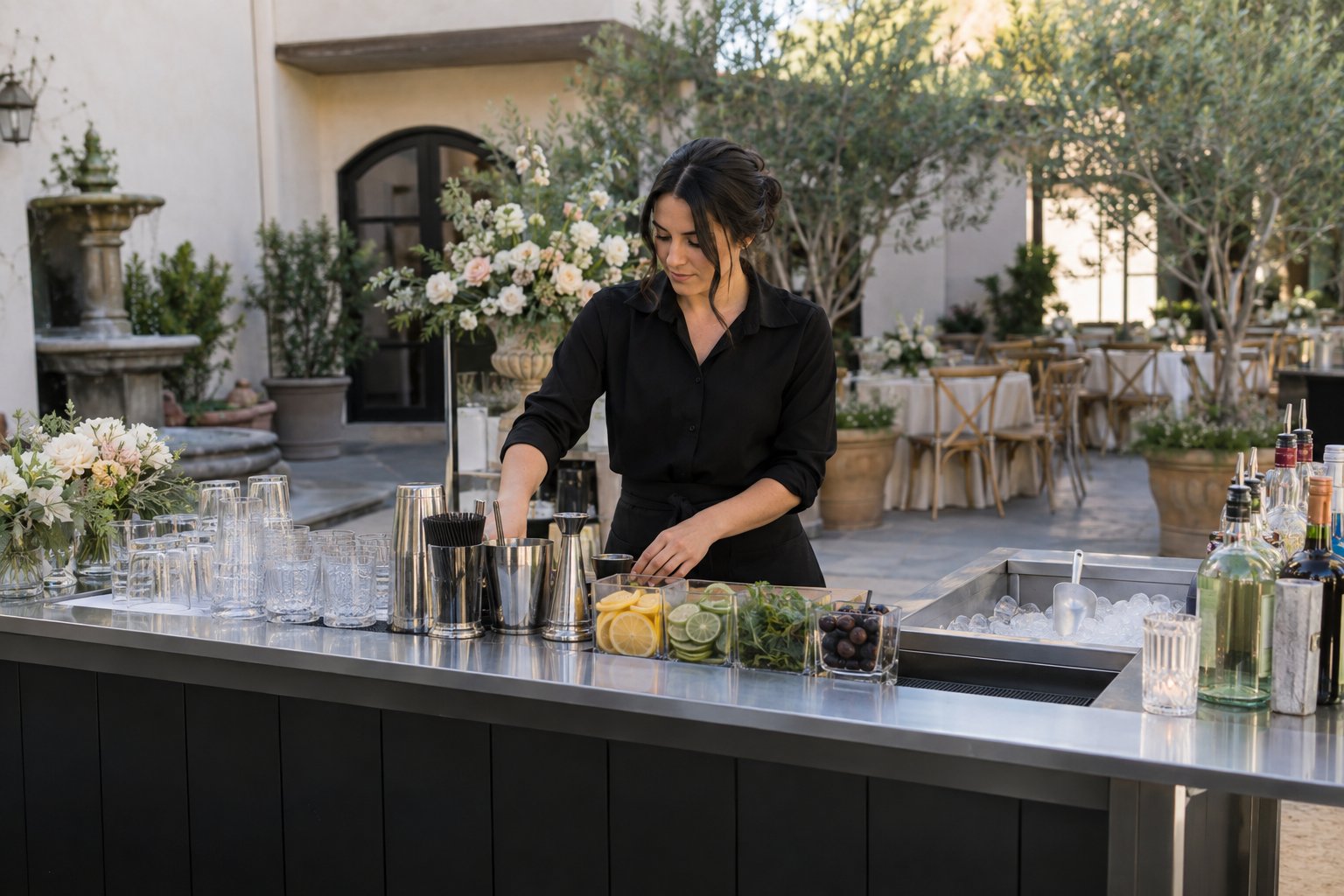
Where to place menus, glassware, garnishes, and backup supplies
The front of the bar should feel clear and welcoming. Too many items on display can make a portable bar look crowded, especially in smaller spaces.
A few layout principles help:
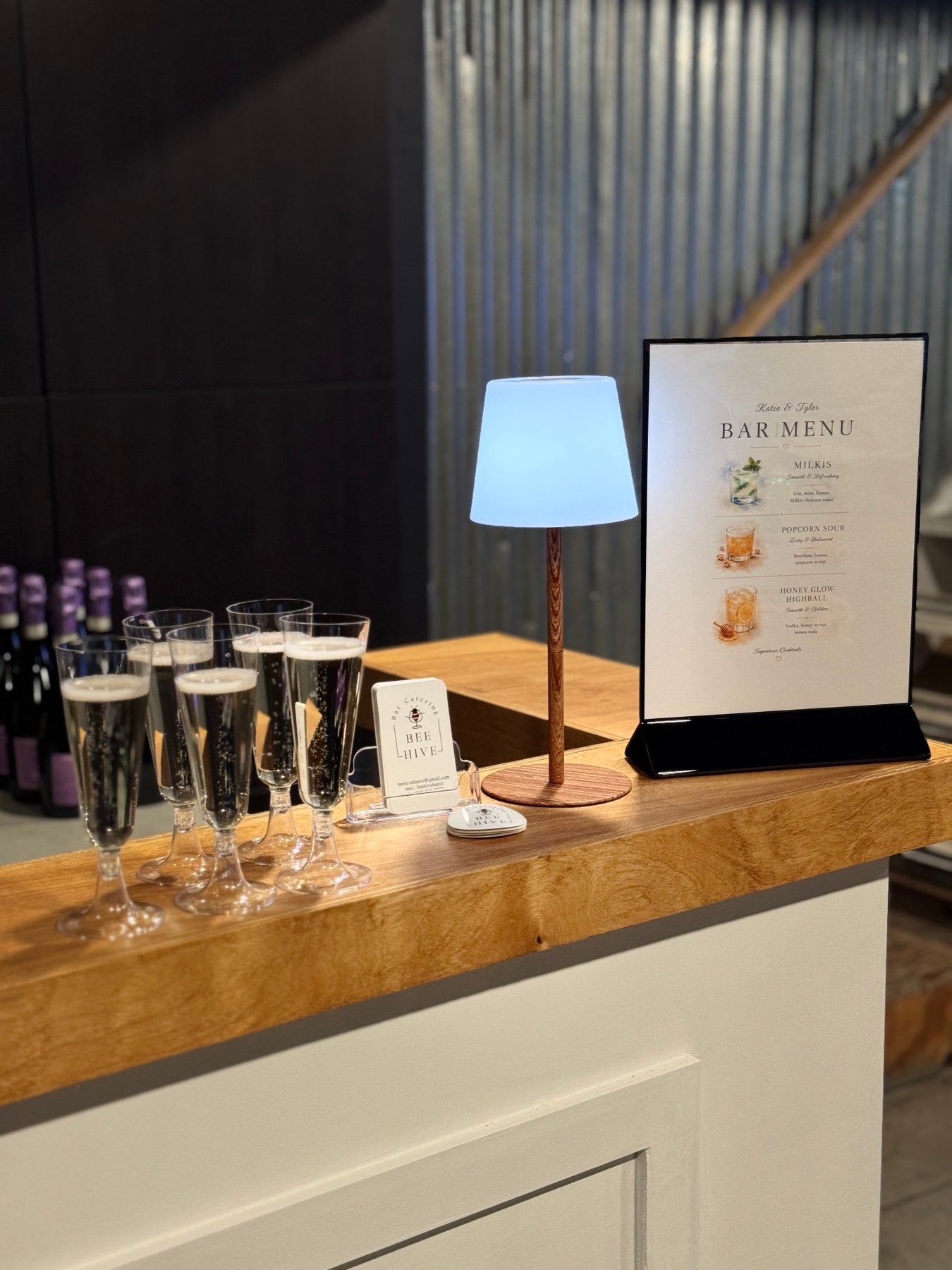
Menus should be visible before guests reach the ordering point. A small, easy-to-read sign placed just beside or slightly in front of the bar helps guests decide faster and keeps the line moving.
Glassware should stay organized behind the main service surface or in a clearly designated side station, not spread across the front edge where it competes visually with the decor. In tighter spaces, clean vertical organization matters more than abundance on display.
Garnishes should be easy for the bartending team to reach without becoming a decorative distraction. They should support the look of the bar, not overtake it. This matters even more at weddings and brand-forward events where every visible detail affects the overall impression.
Backup supplies should stay tucked away from guest view whenever possible. Extra napkins, bins, cases, restock items, and utility supplies should not sit in the same visual zone as the guest-facing design. If there is a nearby service corner, wall edge, or side area that can be used discreetly, it usually helps the bar feel more refined.
A useful rule is to divide the area into two zones:
Guest-facing zone: menus, finished drinks, polished presentation, clean surfaces
Support zone: extra stock, restocking items, utility supplies, and anything not needed in constant view
That distinction helps the setup feel deliberate instead of busy.
Lighting, shade, weather, and access
The most attractive bar placement on paper may not be the best placement once the event begins. That is why environmental details matter.
Shade is one of the first things to assess outdoors. Direct afternoon sun can make the bar area less comfortable for both guests and the bartending team. If the event is outside, look at where the sun will fall during the actual service window, not just during the venue tour.
Lighting matters indoors and outdoors. As evening sets in, the bar should still be easy to find and easy to read. Menus, garnish surfaces, and pickup space all benefit from thoughtful lighting. A dim corner may look atmospheric, but it can make the bar less functional and less inviting.
Weather exposure should be considered early for patios, lawns, coastal venues, and private homes. Breeze, heat, and temperature shifts can all affect where a portable bar feels best in the space.
Access is just as important as guest comfort. Consider how the bar will reach its final location and whether the path includes stairs, side gates, gravel, narrow entries, elevators, or long distances from unloading areas. The smoother the access path, the easier it is to create a clean setup without last-minute compromises.
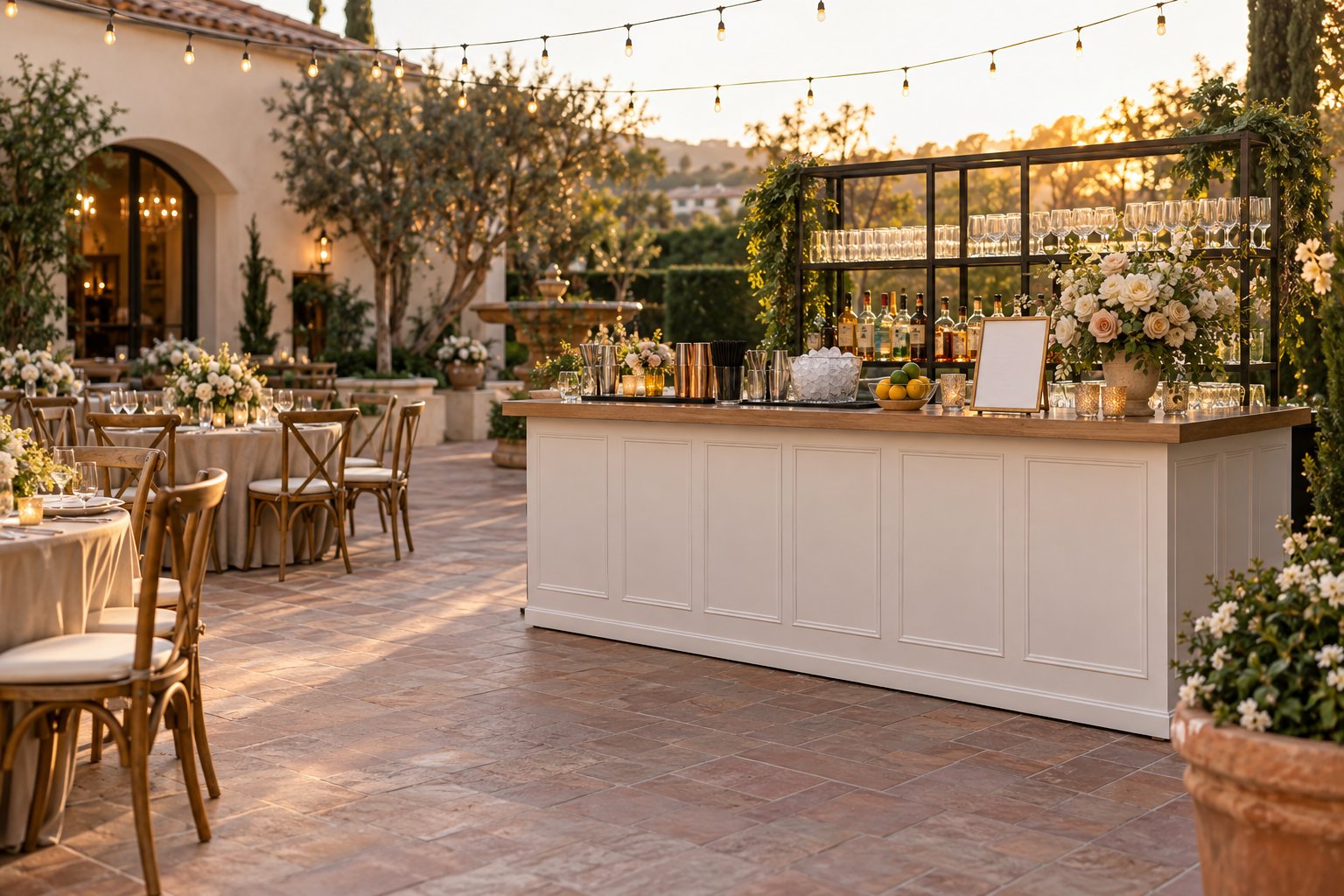
Styling Ideas by Event Type
Once the bar is placed well, styling can help it feel connected to the event instead of separate from it.
Weddings
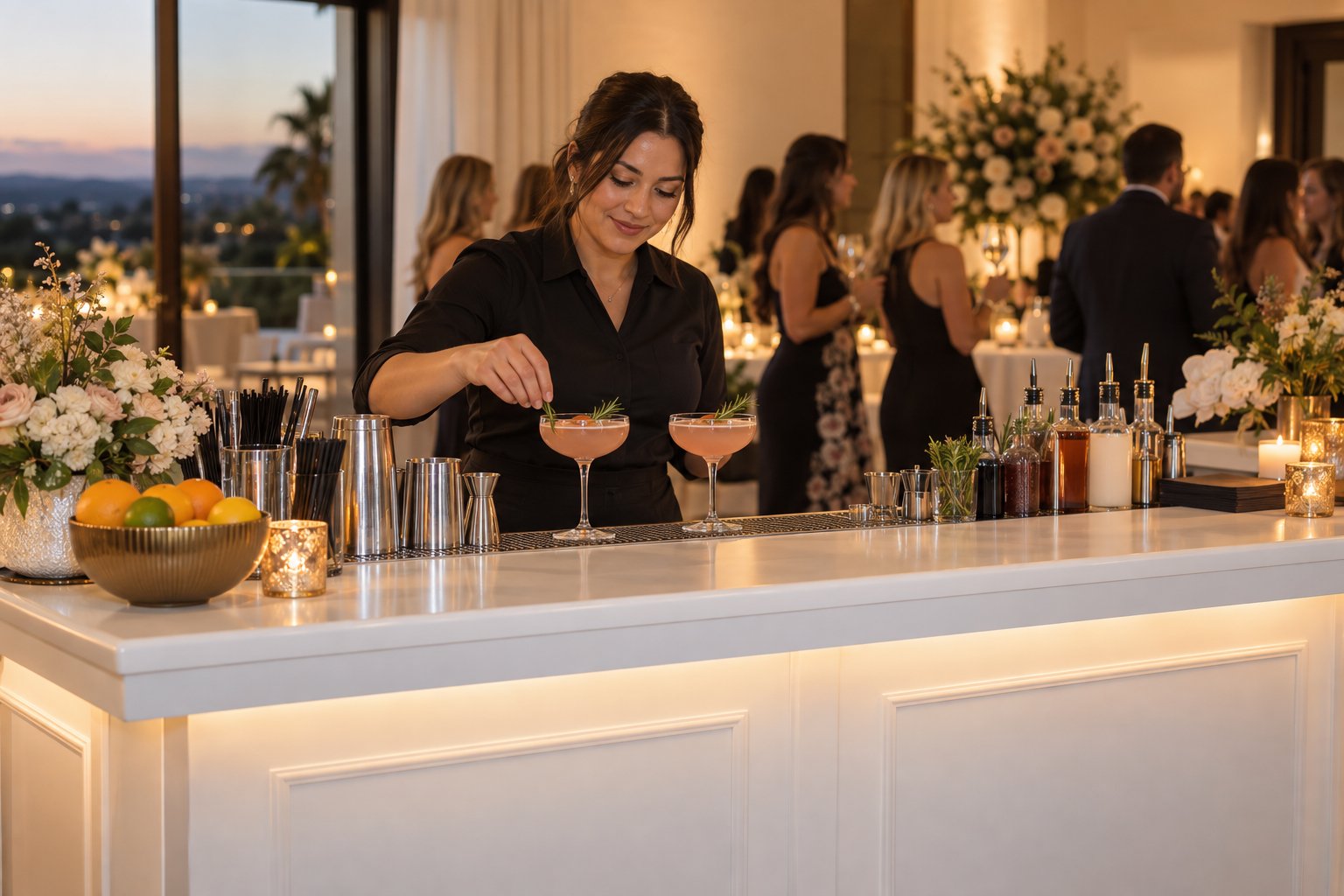
For weddings, the bar often works best when it feels polished, soft, and integrated into the overall design. Placement near cocktail hour activity or within clear reach of the reception space usually matters more than making the bar the dominant focal point.
Styling often works well when it echoes the couple's palette through florals, signage, linen accents, or subtle decorative details. Clean menu display and a tidy service surface usually look more elevated than heavy decoration. If the bar will appear in photos, keep the surrounding area open enough that the setup still looks intentional once guests gather around it.
Private parties
Private parties usually benefit from a relaxed setup that still feels thoughtful. The goal is often to make the bar approachable and natural within the home, patio, or venue layout.
For birthdays, anniversaries, showers, and holiday gatherings, the bar often works best near the main social zone, but not in the tightest traffic lane. A simple visual approach, coordinated signage, and a clean surrounding footprint usually make the setup feel more finished than trying to over-style it.
Homes and backyards especially benefit from checking sightlines. A bar may look well placed from one angle but interfere with gates, furniture movement, or food access once guests arrive.
Corporate events
Corporate events tend to look strongest when the bar feels crisp, efficient, and visually aligned with the room. Guests often appreciate quick readability and a layout that does not interrupt networking.
In practice, that means keeping menus clear, front-facing surfaces uncluttered, and nearby standing space open enough for brief conversation without blocking new orders. If the event includes brand colors or event signage, those details usually work best when they are incorporated cleanly rather than layered too heavily across the setup.
If you are comparing how different event formats affect overall bar presentation, our overview of mobile bartending packages offers broader context on service scope.
Brand launches
Brand launches often ask the bar to do two jobs at once: support service and reinforce the visual identity of the event.
For that reason, placement should usually favor visibility without obstructing hero moments such as product displays, press backdrops, guest photography, or presentation zones. The bar can contribute to the event atmosphere, but it should not compete with the main brand focal point.
In these settings, even small details matter. Menu signage, garnish presentation, nearby styling, and the cleanliness of the surrounding floor space all affect how the activation reads in photos.
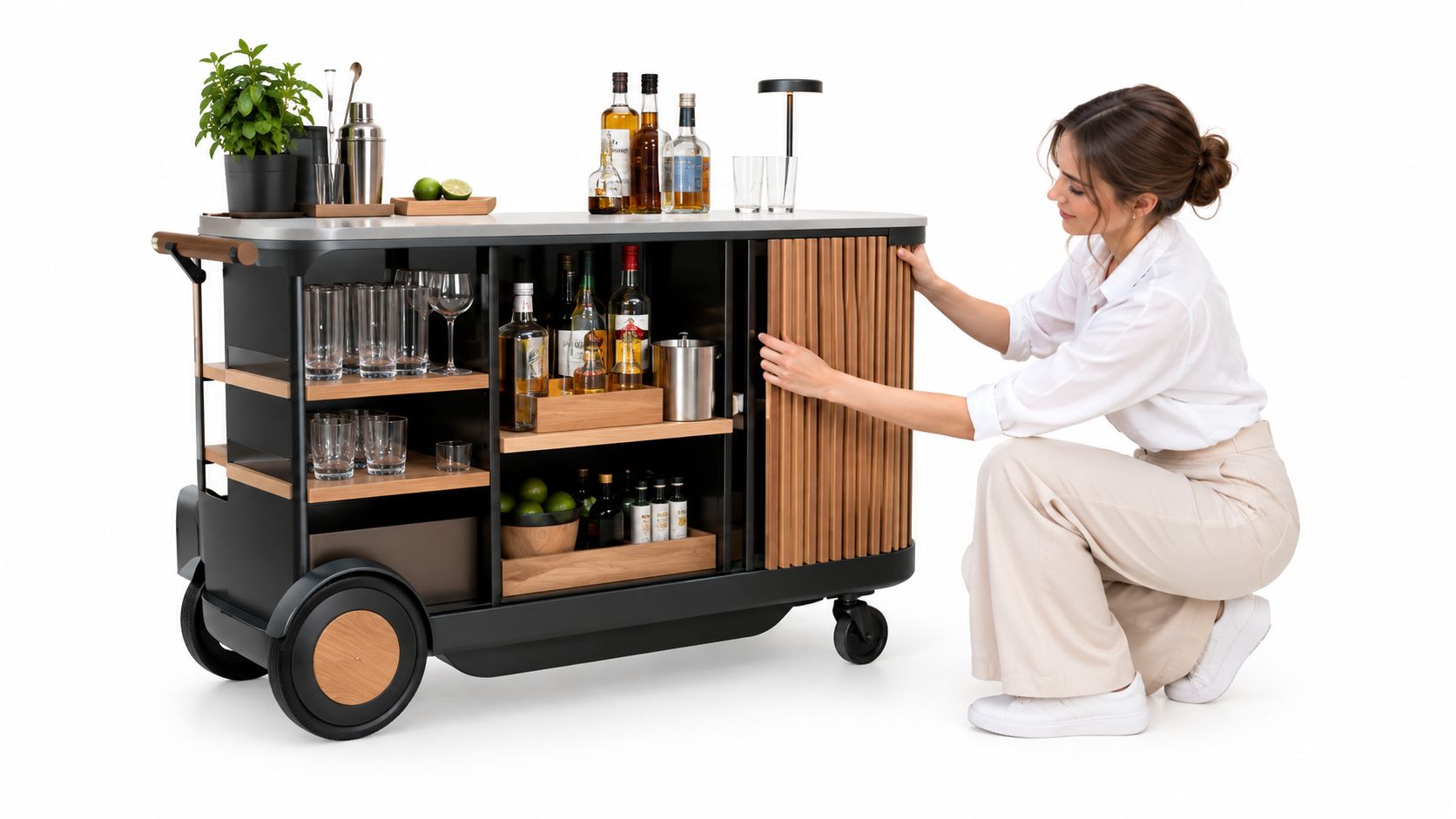
A Short Pre-Event Venue Checklist
Before finalizing your setup, walk through this quick checklist:
Where will guests first see the bar?
Is there enough open space in front of it for ordering and stepping away?
Does the bar interrupt any major walking path, entrance, or route to restrooms?
Will the placement still work during the busiest part of the event?
Is the bar closer to cocktail hour activity, reception activity, or both?
For outdoor events, what will the sun, shade, and weather feel like during service?
Is the area well lit once daylight changes?
Is there a discreet place nearby for backup supplies?
Can menus be seen before guests reach the front of the line?
Is the path into the venue simple and accessible for setup?
Even a short venue walk-through with these questions in mind can prevent the most common setup issues.
Choosing a Setup That Fits the Space
The right mobile bartending cart setup should do more than hold drinks. It should fit the layout, support guest flow, and feel like a natural part of the event design.
For Orange County events, that usually means thinking early about placement, walking paths, indoor versus outdoor conditions, styling, lighting, and practical support space behind the scenes. When those pieces come together, the bar feels easier for guests to use and more polished in the room.
BeeHive Mobile Bar helps clients plan portable bar setups that work beautifully within weddings, private parties, corporate events, and brand launches across Orange County. If you want help choosing the right setup for your venue and event style, visit BeeHive Mobile Bar to request a custom quote.