wedding bar
How to Stock a Bar for a Wedding: The OC Guide
Plan your wedding bar with clear beer, wine and cocktail calculations, a practical shopping checklist, and BeeHive's dry-hire service guide.
By BeeHive Mobile Bar ··11 min read
In this guide
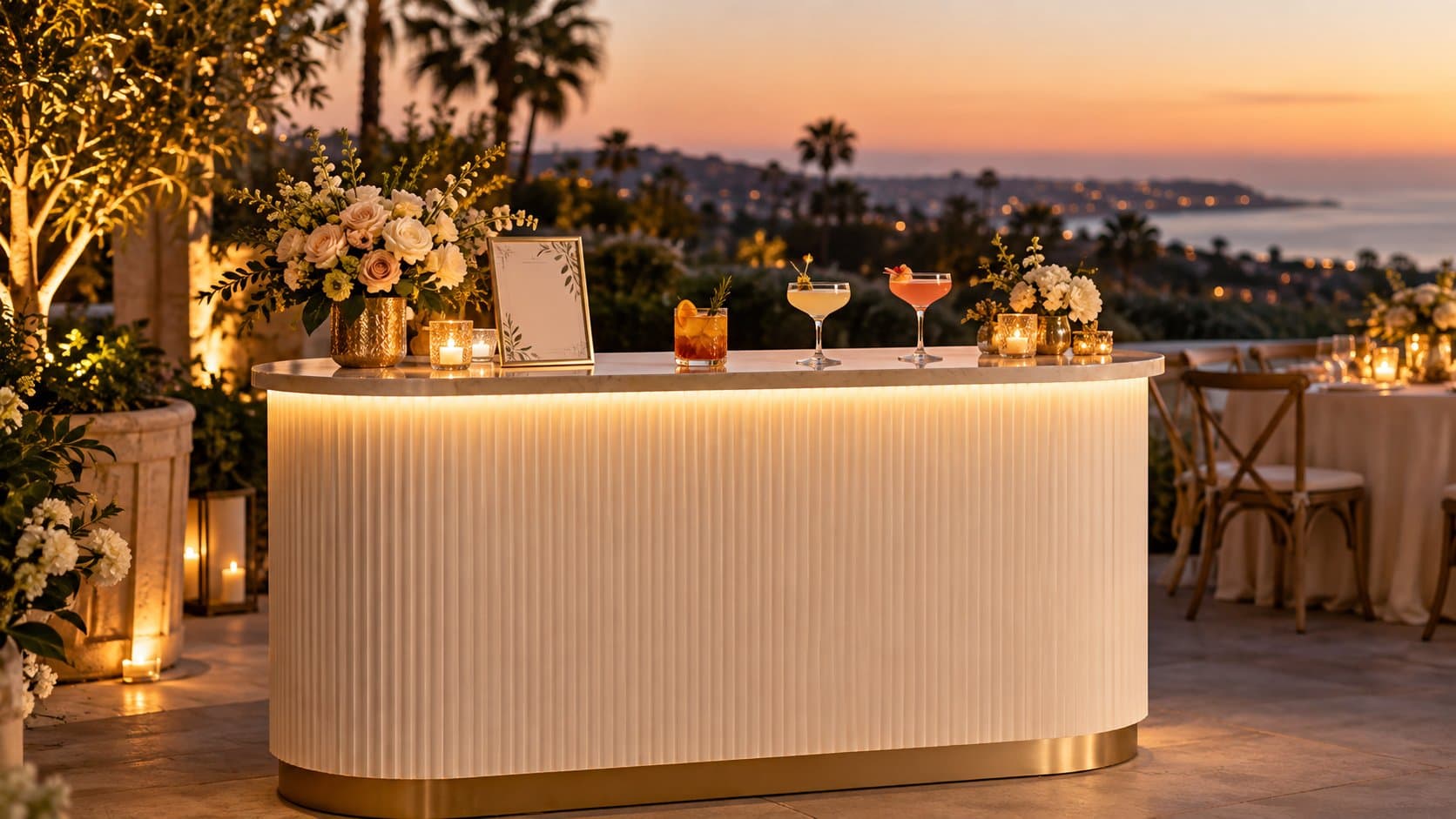
Illustrative wedding bar styling. Alcohol is purchased by the host; your proposal confirms the equipment and supplies included.
To stock a wedding bar, start with the guests who may drink alcohol, the actual bar hours and the drinks on your menu. Turn that estimate into bottles and packs, then plan water, alcohol-free drinks and any separate toast alongside it.
The shopping list also depends on the service you book. BeeHive Mobile Bar is a dry-hire service: you purchase the alcohol using a tailored shopping list. Mobile-bar packages include the listed bar supplies, while bartender-only service has different inclusions. Confirm that division before buying ice, mixers or drinkware twice.
Start with the Real Numbers Before You Buy Anything
Use your RSVP information to estimate who may drink alcohol. Include children and guests choosing alcohol-free drinks in the overall event count, but leave them out of the alcohol calculation. There is no single drinking percentage that fits every wedding.
Next, set the actual service window. Include cocktail hour when the bar will be open, and list a separate welcome drink or toast if it sits outside the main estimate. Confirm access, chilling space and restocking arrangements with your planner and venue.
Inputs for the worked example in this guide
| Input | Example assumption | What to confirm for your wedding |
|---|---|---|
| Total guests | 100 | Everyone attending, including children and non-drinkers |
| Guests who may drink alcohol | 80 | Your own guest estimate, rather than a fixed percentage |
| Bar service | 4 hours | Opening and closing times, including cocktail hour if applicable |
| Purchasing model | Hourly only: 1 planned serving per drinking guest per hour | Use the same model throughout your calculation |
| Drink shares | 25% beer, 25% wine, 50% cocktails | Guest preferences and the agreed menu |
| Pour sizes | 5 US fl oz wine; 1.5 US fl oz base spirit per cocktail | The actual recipes and pours |
These are example purchasing assumptions, not a recommendation that each guest consume that amount. In BeeHive’s wedding alcohol calculator, select Hourly only to reproduce this example. The tool also offers an hours-plus-one model, which produces a different estimate.
The calculator does not automatically add a reserve. It excludes mixers, ice, water, alcohol-free drinks, garnishes and a separate toast, so those need their own planning lines.
Calculate Your Drink Mix Using Beer, Wine and Cocktails
For our example, 80 guests who may drink × 4 hours × 1 planned serving per hour = 320 alcoholic servings. Dividing that total by the example menu shares gives:
Cocktails: 320 × 50% = 160 servings.
Beer: 320 × 25% = 80 servings.
Wine: 320 × 25% = 80 servings.
The 50/25/25 split is an illustration, not a forecast for every crowd. Adjust the shares before buying if your guests prefer wine or beer. For beer-and-wine service, allocate the whole total between those two categories. All shares should add to 100%.
Keep the menu focused: the beer styles, red and white wine choices, and cocktails you actually intend to serve. Divide the cocktail portion by expected orders for each recipe rather than buying the same amount of every spirit.
Changing the model changes the order. For these same 80 drinking guests and four hours, the calculator’s hours-plus-one option plans 80 × 5 = 400 servings. At the same drink shares and 1.5-ounce spirit pour, its output is 5 beer 24-packs, 20 wine bottles and 12 equivalent 750 ml spirit bottles. Choose the model with your bartender; keep a separately agreed reserve visible rather than silently adding it twice.
Choose Between a Full Mobile Bar Package and Bartender Service
The service model determines which supplies you need to arrange. BeeHive’s current packages share a tailored alcohol shopping list, but their equipment and supply responsibilities differ:
BeeHive service responsibilities
| Service | BeeHive provides | Host arranges or confirms |
|---|---|---|
| Bronze, Silver or Gold mobile-bar package 3-hour minimum |
Portable bar, professional bartending, bar tools, ice, coolers, mixers, garnishes, plastic glassware, napkins, straws, printed cocktail menu, and complimentary setup and breakdown; tier details vary | Alcohol purchased using the shopping list; venue access and any event-specific requirements or extras |
| Bartender-only service Starts at $450; shorter bookings available, no 3-hour minimum |
Professional bartending, bar tools, tailored shopping list, setup and cleanup | Alcohol, bar or serving surface, ice, coolers, mixers, garnishes, drinkware and other physical supplies unless the proposal adds them |
Bronze starts at $750, with guidance for up to 70 guests, one bartender and two signature cocktails. Silver starts at $1,150, with guidance for up to 120 guests, a large mobile bar, two bartenders, three signature cocktails and premium garnishes. Gold is custom quoted for 120+ guests, with a custom-styled mobile bar, two or more bartenders, four signature cocktails, a fully custom cocktail menu, soft drinks and water, a signature refreshment, and premium garnishes and presentation.
Guest counts are package guidance; your proposal confirms staffing, hours, menu and add-ons. Extra service hours are $100 per hour per bartender. Staffing should consider everyone ordering at the bar, including alcohol-free drinks, as well as cocktail complexity, simultaneous stations and arrival timing. BeeHive’s bartender staffing calculator is a starting point for that discussion.
Convert Drinks into a Practical Shopping List
Use the actual pour and container sizes. A 750 ml bottle holds about 25.4 US fluid ounces; a 1-liter bottle holds about 33.8, and a 1.75-liter bottle holds about 59.2, according to the TTB net-contents conversion table. That gives the following full spirit pours, before any loss:
Full pours per spirit bottle, with the remainder left in the bottle
| Bottle size | 1.5 US fl oz pours | 2 US fl oz pours |
|---|---|---|
| 750 ml | 16 | 12 |
| 1 liter | 22 | 16 |
| 1.75 liters | 39 | 29 |
For the shopping order, calculate total ounces for each product, divide by the bottle’s volume, then round the final bottle count up. The table above rounds individual full pours down; BeeHive’s calculator uses bottle volume before rounding the final order.
Shopping estimate: 100 guests, 80 who may drink, four hours, hourly-only model, no added reserve
| Category | Planned servings | Assumed serving and container | Whole-container order |
|---|---|---|---|
| Cocktails | 160 | 1.5 US fl oz base spirit; 750 ml bottles | 10 equivalent spirit bottles, before splitting by recipe |
| Wine | 80 | 5 US fl oz; 750 ml bottles | 16 bottles, before splitting red and white |
| Beer | 80 | One 12-ounce beer; packs of 24 | 4 packs = 96 beers |
At a 2-ounce spirit pour, the same 160 cocktails require 13 equivalent 750 ml spirit bottles in the calculator. The wine and beer figures stay the same. These outputs were checked against BeeHive’s calculator using the stated inputs.
Split the order by recipe
Suppose the menu has 80 tequila cocktails and 80 vodka cocktails, each using 1.5 ounces of its base spirit. Each product needs 120 ounces, so buy five 750 ml tequila bottles and five 750 ml vodka bottles. If either recipe also uses a liqueur or another spirit, calculate that ingredient separately. Rounding separate products can increase the order above the combined equivalent-bottle estimate.
Mixers follow the recipes too. For example, if one planned cocktail uses 3 ounces of juice and 0.5 ounce of syrup, 80 servings need 240 ounces of juice and 40 ounces of syrup. If sold in 64-ounce and 32-ounce containers respectively, that rounds to four juice containers and two syrup containers. This is an example ingredient calculation, not a BeeHive recipe or a promise of an included quantity. Compare the list with your proposal before purchasing package supplies.
Plan the Alcohol-Free Side So It Feels Intentional
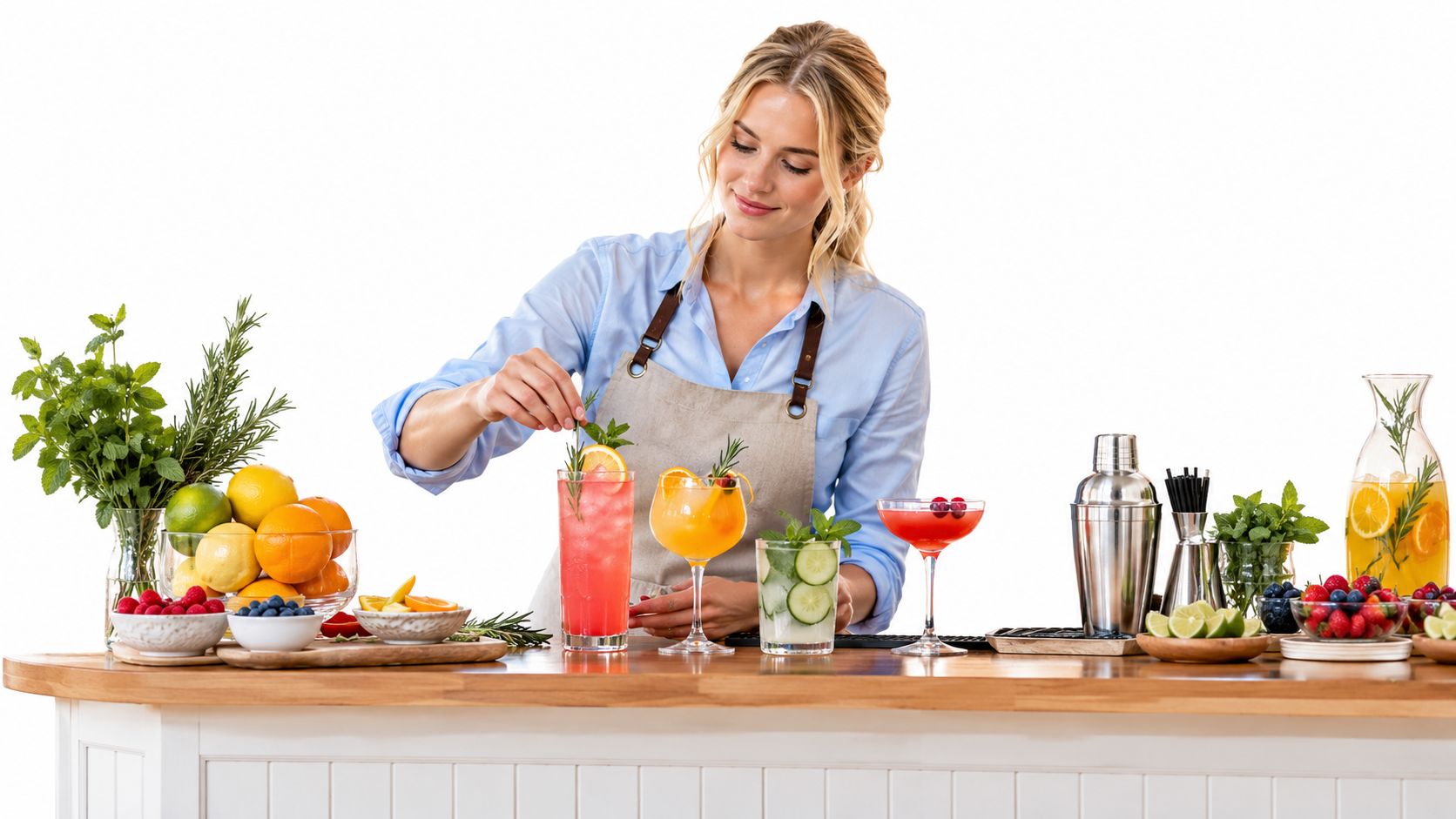
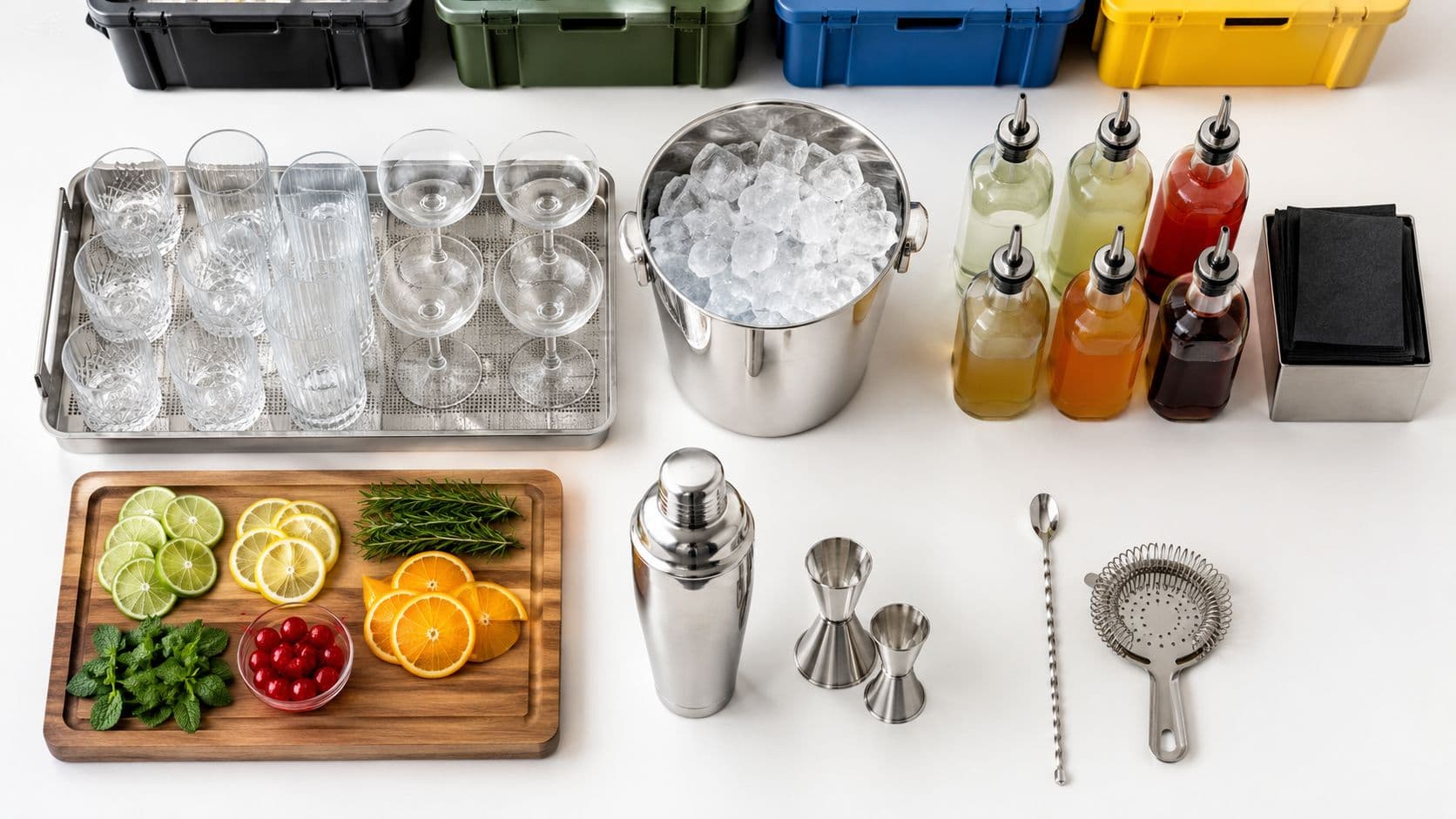
Illustrative drink preparation. Your proposal confirms the menu and staffing.
Water is for the whole guest list, including guests drinking alcohol. Plan access during the ceremony, reception and meal, with the venue or caterer supplying areas outside the booked bar service where appropriate.
Choose the alcohol-free options you want to offer: chilled or sparkling water, soft drinks, and a mocktail or signature refreshment. Agree on quantities, cup sizes, availability and who will refill them. Calculate mocktail ingredients from planned servings and the recipe, just as you would for cocktails; allow for guests switching between alcoholic and alcohol-free choices.
Gold includes soft drinks, water and a signature refreshment. Confirm arrangements for the other packages and bartender-only bookings. BeeHive’s soft-drinks-and-water add-on is $3 per drink, not per guest. Mocktail service and any other additions should be stated in the proposal.
Give the Toast Its Own Line Item
If you want a separate sparkling toast, count participants and choose a pour size. For example, 100 people joining the toast, including 20 receiving an alcohol-free option, with one 3-ounce pour each gives:
Separate toast example: 100 participants, one 3 US fl oz pour each
| Drink | Participants | Total volume | 750 ml bottles, rounded up |
|---|---|---|---|
| Sparkling wine | 80 | 240 US fl oz | 10 |
| Alcohol-free sparkling drink | 20 | 60 US fl oz | 3 |
The 20 alcohol-free participants are already part of the 100-person total. This toast is additional to the earlier 320-serving bar example. BeeHive’s champagne toast calculator lets you adjust the inputs. Confirm 100 suitable glasses before adding any agreed rental reserve, and assign chilling, pouring and distribution responsibilities.
Final Wedding Bar Stocking Checklist
A finished list needs quantities and owners. Replace each role below with a person’s name, record the agreed amount, and set a shopping or confirmation deadline before the event.
Planning and supply responsibilities to confirm
| Item | Practical planning basis | Who supplies or confirms it |
|---|---|---|
| Alcohol | Guests who may drink × chosen model; category shares, exact recipes and container sizes; any reserve shown separately | Host purchases from the tailored list and arranges for it to be available at the venue |
| Mixers and garnishes | Recipe quantity × planned servings of each drink | Included package supplies confirmed by BeeHive; host arranges bartender-only supplies unless added |
| Drinkware | All beverage users, replacement cups and any separate toast or rentals | Package plastic glassware included; host or rental supplier confirms any different glassware |
| Ice and coolers | Separate ice for drinks from chilling ice; consider duration, weather, storage and restocking | Included in mobile-bar packages; host arranges bartender-only supplies unless added |
| Water and alcohol-free drinks | Full attendance for water; menu, serving sizes and planned servings for flavored drinks | Gold inclusions confirmed by BeeHive; other arrangements assigned to BeeHive, host, venue or caterer in writing |
| Toast | Participants × pour size, split into alcoholic and alcohol-free choices; glasses and chilling | Host purchases alcohol; planner coordinates service responsibilities with the venue and bartender |
| Bar access and staff | Service window, everyone ordering drinks, menu complexity, number of stations and arrival timing | BeeHive confirms staffing in the proposal; planner and venue confirm access and placement |
| Handwashing, cleaning and waste | Venue facilities, bin locations, liners and agreed removal arrangements | Confirm with venue and BeeHive; a handwash station or waste bins are not assumed package inclusions |
| Cold storage and restocking | Storage location, chilling time, delivery timing and a named replenishment contact | Host and venue coordinate with BeeHive before the event |
Use BeeHive’s party ice calculator with event-specific inputs; its two-hour starting value should not be carried into a longer wedding without checking the ice plan. For a more detailed equipment list, see the mobile bartending supplies checklist.
Before booking, check the proposal’s inclusions, hours and payment schedule. A 25% deposit confirms the booking; the proposal states the remaining balance and deadline. A 20% gratuity applies if tip jars are not permitted. BeeHive primarily serves Orange County and travels to select surrounding areas; travel fees may apply based on the event location.
For a wedding bar plan built around your guest count, service hours and menu, request a BeeHive Mobile Bar quote. Your proposal and tailored shopping list will clarify what to purchase and who brings each part of the setup.