mimosas per bottle
How Many Mimosas Per Bottle: Serving Math for Events
See how many mimosas a 750 mL bottle makes at 2, 3 and 4 oz wine pours, with juice quantities, bottle tables and a practical 50-drink example.
By BeeHive Mobile Bar ··7 min read
In this guide
A standard 750 mL bottle makes 12 complete mimosas with a 2 US fl oz sparkling-wine pour, 8 with a 3 oz pour, or 6 with a 4 oz pour. Juice is added separately. For a straightforward planning starting point, eight mimosas per bottle works when each drink contains 3 oz of sparkling wine.
The key is measuring the wine, not the finished drink. A 6 oz mimosa made with 3 oz of sparkling wine and 3 oz of juice uses the same amount of wine as a 4 oz mimosa made with 3 oz of wine and 1 oz of juice. Choose your recipe before building the shopping list.
How Many Mimosas Per Bottle? A Quick Pour Guide
A 750 mL bottle holds approximately 25.36 US fluid ounces. Divide that volume by the wine in each mimosa, then round down to count the complete servings available from one bottle.
| Sparkling wine per drink | Complete mimosas from one bottle | Wine left after those pours |
|---|---|---|
| 2 US fl oz (about 59 mL) | 12 | About 1.36 oz |
| 3 US fl oz (about 89 mL) | 8 | About 1.36 oz |
| 4 US fl oz (about 118 mL) | 6 | About 1.36 oz |
These figures assume measured pours without spills. They describe the sparkling-wine portion, not a universal serving size. A measured 3 oz pour is a useful example, but your recipe and glass capacity determine what fits your event.
For comparison, Mumm's serving guide uses six 125 mL Champagne servings per bottle. That is a different pour from 3 US fl oz. Likewise, Bartend Long Island's mimosa recipe discusses different wine amounts. Check the actual recipe rather than assuming every mimosa has the same yield.
Finished drink size is not the wine pour
If a recipe calls for 2 oz of wine and 2 oz of juice, the finished drink is 4 oz, but you divide the bottle volume by 2. If it calls for 3 oz of each, divide by 3. The distinction also explains the different drink sizes discussed in WSJ Wine's mimosa guide.
Choose glasses with room for the complete drink and a little headspace. A glass labeled 6 oz may not comfortably hold a full 6 oz drink without filling to the rim.
How Much Juice Do You Need?
Write the recipe as wine ounces plus juice ounces. In the table below, every drink uses 3 oz of sparkling wine, so changing the juice does not change the wine-bottle requirement. Ratios are by volume, with wine listed first.
| Wine-to-juice ratio | Wine + juice per drink | Finished drink | Juice for 50 drinks |
|---|---|---|---|
| 3:1 | 3 oz + 1 oz | 4 oz | 50 oz / 1.48 L |
| 2:1 | 3 oz + 1.5 oz | 4.5 oz | 75 oz / 2.22 L |
| 1:1 | 3 oz + 3 oz | 6 oz | 150 oz / 4.44 L |
For shopping, round juice up to the container sizes available. For example, 4.44 L requires five 1 L cartons before any separate allowance for spills or other drinks. The equal-parts version uses exactly three times as much juice as the 3:1 version in this table.
BBC Food's mimosa recipe is another equal-parts reference, while this mimosa ratio guide explores variations. Keep your chosen wine amount consistent when comparing recipes; a ratio alone does not tell you how many drinks a bottle makes.
Scale the Bottles to the Drinks You Plan to Serve
Start with an estimated number of mimosa servings. Your total guest count is not automatically the mimosa count: some guests may choose other drinks, and the expected number of servings depends on the occasion and service window.
The following table uses a conservative complete-servings-per-bottle method. It assumes the small remainder in each bottle is not used toward another serving. Divide planned drinks by 12, 8 or 6, then round up.
| Planned mimosas | 2 oz wine: 12 per bottle | 3 oz wine: 8 per bottle | 4 oz wine: 6 per bottle |
|---|---|---|---|
| 25 | 3 bottles | 4 bottles | 5 bottles |
| 50 | 5 bottles | 7 bottles | 9 bottles |
| 75 | 7 bottles | 10 bottles | 13 bottles |
| 100 | 9 bottles | 13 bottles | 17 bottles |
This method can be higher than calculating the total liquid needed across all bottles. For example, 50 drinks × 3 oz = 150 oz. Dividing by 25.36 gives 5.92 bottles, or 6 bottles by total volume, provided all usable wine is used and losses are negligible. The conservative table gives 7 bottles. Both calculations have a clear basis; neither guarantees a spill-free service. Agree on the purchasing method before adding another reserve.
A practical 50-mimosa shopping example
Assume 50 planned servings, each with 3 oz of sparkling wine and 3 oz of orange juice. Using the conservative table:
Sparkling wine: 7 standard 750 mL bottles, allowing eight complete pours from each.
Orange juice: 150 US fl oz, about 4.44 L; buy five 1 L cartons for those 50 drinks.
Optional reserve: if you choose one additional wine bottle, label it separately. Seven base bottles plus one reserve equals eight bottles purchased.
Reserve juice: eight additional equal-parts mimosas need another 24 oz, about 0.71 L. To cover all 58 drinks, total juice is about 5.15 L—six 1 L cartons, rather than five.
Other drinks: add water, alcohol-free options and any separate toast to their own lines.
The reserve is a host-selected inventory allowance, not a recommended amount for guests to drink. Keep sparkling wine and juice chilled, open bottles as needed, and avoid preparing the entire sparkling batch long before service.
Keep Toasts and Other Drinks Separate
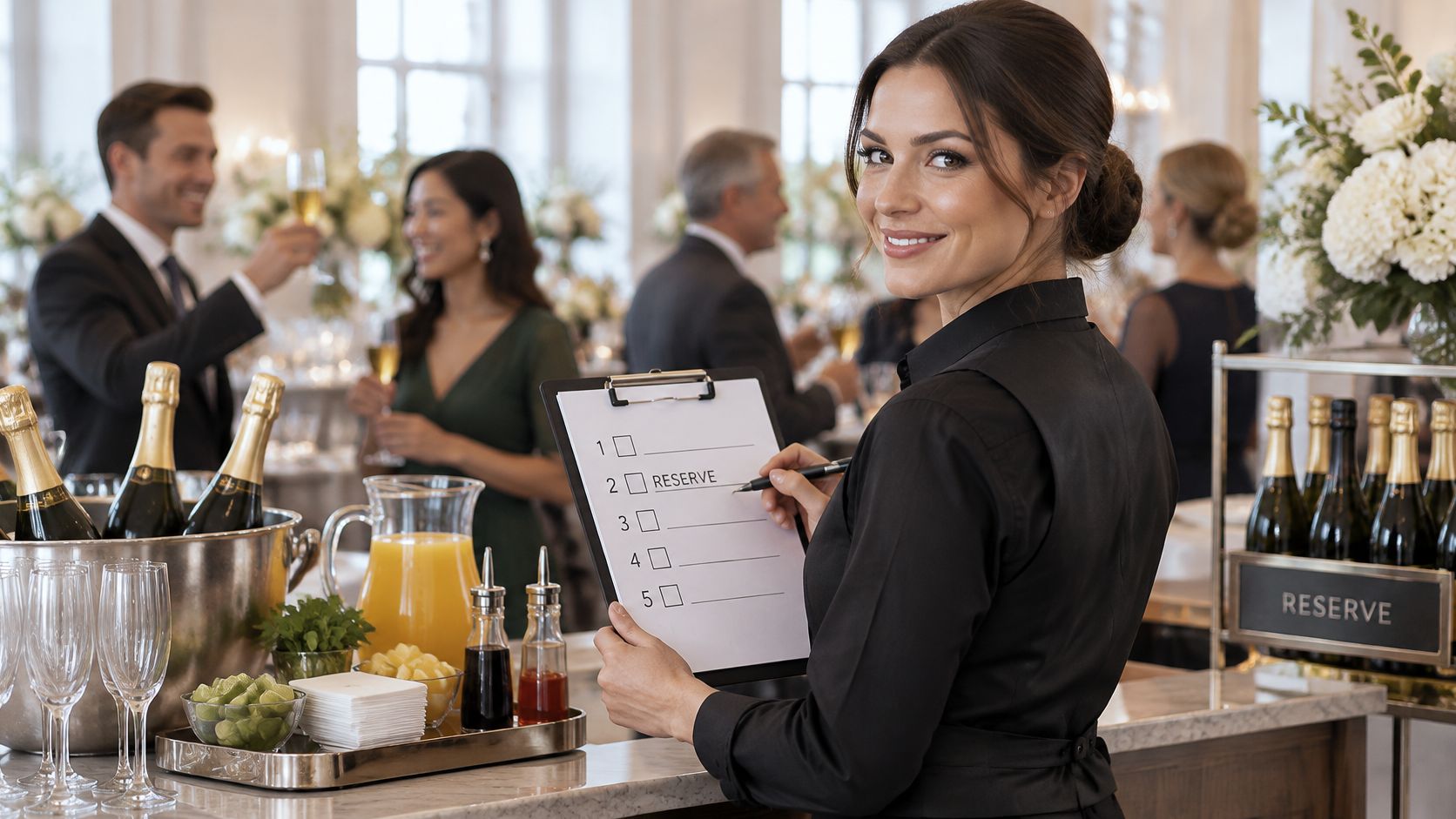
Assign each bottle once. If the same sparkling-wine purchase covers both mimosas and a toast, allocate bottles to each purpose before adding the totals. Keep any reserve separate so it is not accidentally counted twice.
Use the Champagne Toast Calculator for a separate toast. Choose the toast guest count and pour size independently of the mimosa recipe.
Use the Wedding Alcohol Calculator for the wider bar plan. Its wine and spirit assumptions are different from a mimosa recipe. Avoid including mimosa servings in both calculations.
List juice, water, ice, garnishes and alcohol-free drinks separately. A wine-bottle total is not a complete supply list.
Offer an alcohol-free option such as orange juice with sparkling water. Ask guests about their drink preferences without asking them to explain personal or medical reasons. Reporting on event beverage trends discusses growing interest in alcohol-free choices, but your own guest preferences should guide the quantities.
Who Supplies the Wine, Juice and Bar Setup?
BeeHive is a dry-hire service: you purchase and provide the alcohol, including sparkling wine. BeeHive does not buy, sell, supply, transport or deliver alcohol. Juice and other nonalcoholic ingredients follow the service you book; they should not be grouped with alcohol as automatically excluded.
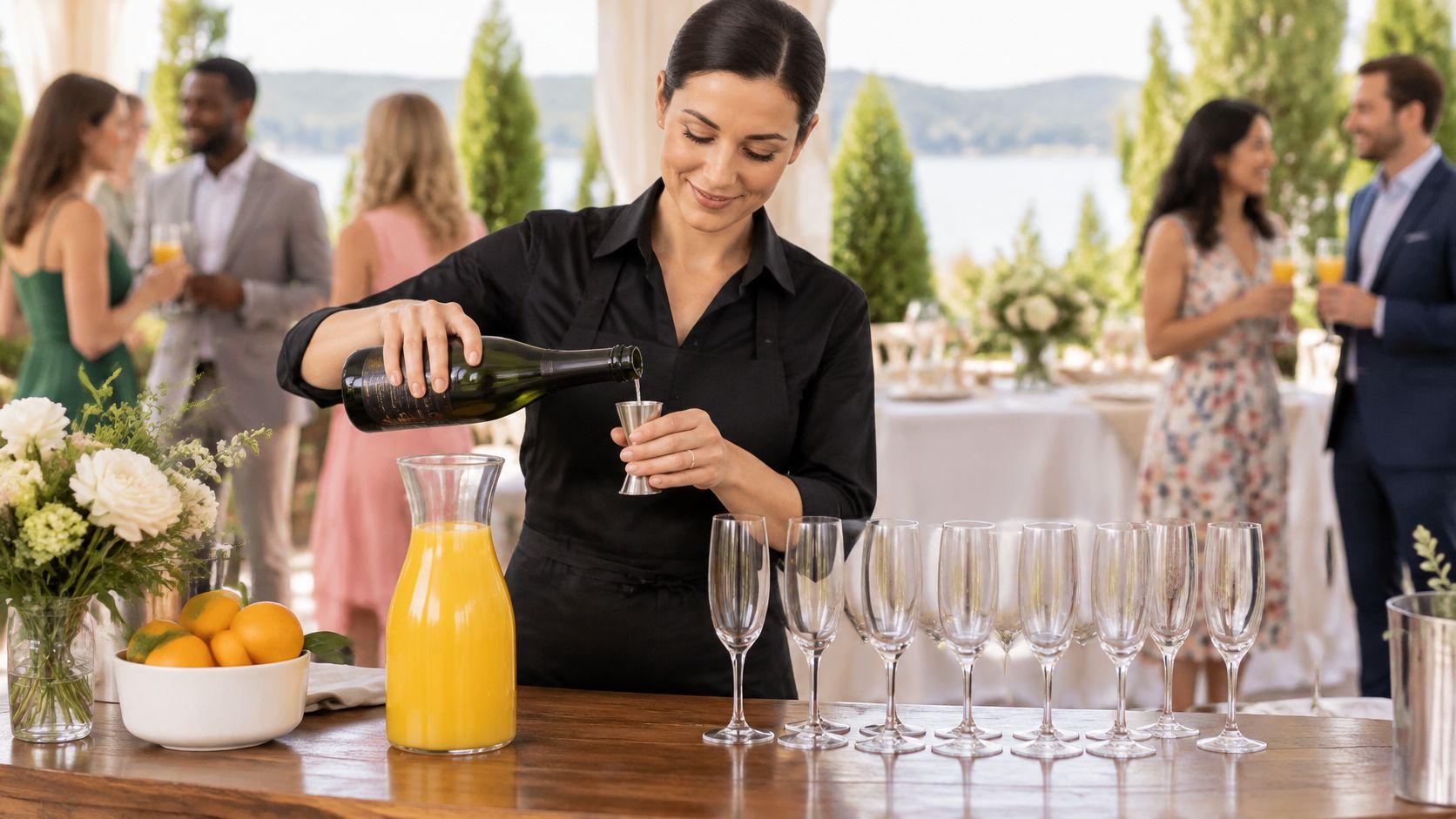
Bronze, Silver and Gold packages include a mobile bar, professional bartending, mixers, ice, coolers, garnishes, plastic glassware, napkins, straws, a custom printed menu, setup and breakdown. Confirm the selected mimosa juice, flavors and quantities in your proposal. Packages have a three-hour minimum. The real glass flutes shown in the illustrative photos would be supplied by the host, venue or rental provider if desired.
Bartender-only service starts at $350 with a two-hour minimum; additional hours are $75, subject to availability and agreement. It includes tools, setup and cleanup, and a shopping list. The host or venue provides the bar surface and consumables, including juice, ice, glassware and garnishes, unless otherwise agreed. The optional $150 mobile bar add-on provides the bar only.
Our event bartending service guide explains those differences in more detail. Send BeeHive Mobile Bar your event date, location, guest count and requested service hours, and we can help turn your mimosa menu into a clear bar plan.