wedding bar setup
Wedding Bar Setup Guide for Orange County Couples
Plan a wedding bar setup in Orange County with steps for placement, supplies, bartender staffing, package choices and a practical event timeline.
By BeeHive Mobile Bar ··13 min read
Updated
In this guide
You're probably looking at a venue floor plan, a growing guest list, and a shopping list that still doesn't explain who is bringing the ice. That's normal. A wedding bar setup isn't one purchase or one booking. It's a coordination plan that connects the bar's location, the service scope, the drink menu, and the timing of the reception.
For Orange County weddings, the right answer also depends on venue access, guest movement, outdoor conditions, and whether you want a complete mobile-bar package or professional bartending built around supplies you arrange separately. The earlier those decisions are made, the fewer event-day surprises you'll face.
What Couples Actually Decide in a Wedding Bar Setup
Most couples begin with the wrong question: “How much alcohol do we need?” That matters, but it comes after four decisions that shape the entire wedding bar setup.
Start with the four-way coordination problem
Placement determines whether guests can find the bar without blocking the entrance, dance floor, photography area, or service corridor. Service scope determines who provides the portable bar, ice, coolers, mixers, garnishes, drinkware, setup, cleanup, and bartenders. Menu design affects prep time, glassware, ingredients, and queue length. Timeline determines when supplies arrive, when the bar opens, how cocktail hour is staffed, and when breakdown can begin.
These choices interact. A full cocktail menu may require more bartending capacity than a beer-and-wine station. A bar placed beside the dance floor may be visible, but the queue can interrupt the first dance. A bartender-only booking can work well when the venue already has a suitable bar, but only if the proposal clearly assigns responsibility for every additional supply.
Before building a shopping list, write down:
Who may drink alcohol: Use drinking-guest count rather than total attendance in the Wedding Alcohol Calculator.
When the bar operates: Separate actual bar-service hours from the full reception length.
What the menu requires: Beer, wine, spirits, signatures, mocktails, water, and any separate toast.
Who supplies each item: Confirm the bar, alcohol, ice, coolers, mixers, garnishes, glassware, and staff in writing.
The calculator uses beer, wine, and cocktail shares, plus hourly or hours-plus-one purchasing assumptions. It uses 5 oz wine pours, 1.5 oz or 2 oz spirit pours, 750 ml bottles, and beer 24-pack equivalents. It excludes mixers, ice, water, alcohol-free drinks, garnishes, and a separate toast, so those lines need their own plan. The result is purchasing guidance, not a consumption recommendation or guarantee.
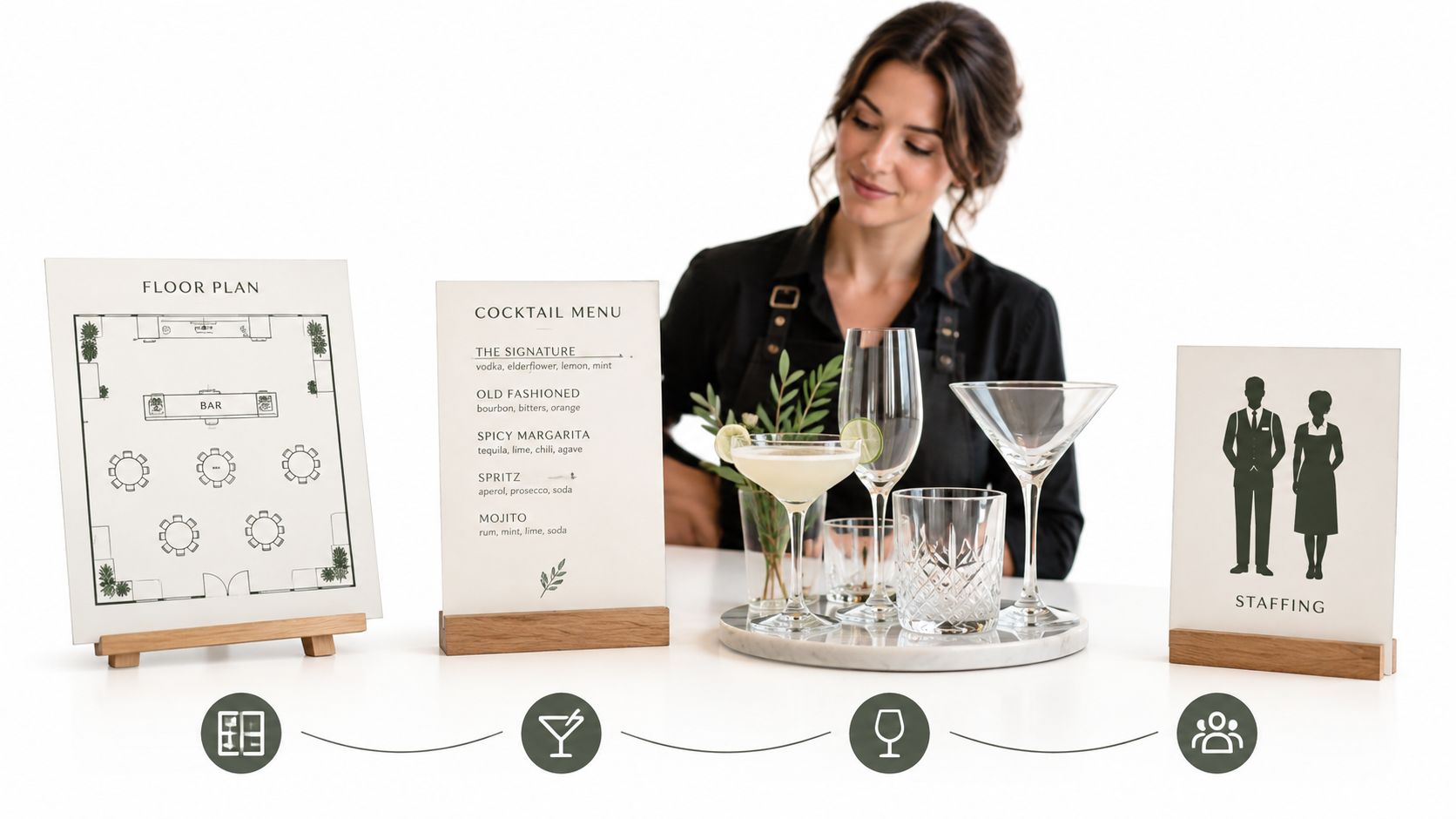
A common failure happens when a couple treats setup as one large task. They buy alcohol, assume the venue has everything else, then discover during cocktail hour that the ice is insufficient, the glassware doesn't match the menu, and one bartender can't keep up with several labor-intensive orders. Separating the four decisions prevents that chain reaction.
Bar Placement, Guest Flow, and Venue Coordination
A beautiful bar in the wrong location still creates a poor guest experience. Start with movement, not decoration. Trace the path from ceremony to cocktail hour, then from cocktail hour to dinner, and mark where guests will naturally pause for drinks, conversation, photos, and directions.
Read the room from the guest's perspective
The bar should usually be easy to see without sitting directly in the entry path. Guests need enough room to approach, order, collect a drink, and step away without standing in the doorway or forming a line beside the dance floor.
Keep speeches, the DJ or band, and major photography positions in mind. A bar that looks convenient on the floor plan may become disruptive once chairs, tables, musicians, and guests occupy the room.
For a large or divided venue, separate service points can distribute traffic. For a compact reception, a single well-positioned bar with a clear menu may work better than forcing a second station into a tight footprint.
The practical test is simple: stand where guests will enter and where dinner will be served. Can you see the bar?
Can you reach it without crossing the photographer's primary path or the catering team's route?
Confirm the venue details before booking
Orange County venues may have specific requirements for load-in, power, water access, lighting, placement near stages, and use of patios or tents. Ask for those rules before finalizing the proposal, especially for an outdoor setup. Shade protects staff and ingredients, while wind affects menus, napkins, signage, and garnish presentation. Uncovered areas also require a clear plan for evening lighting, drainage, and weather changes.
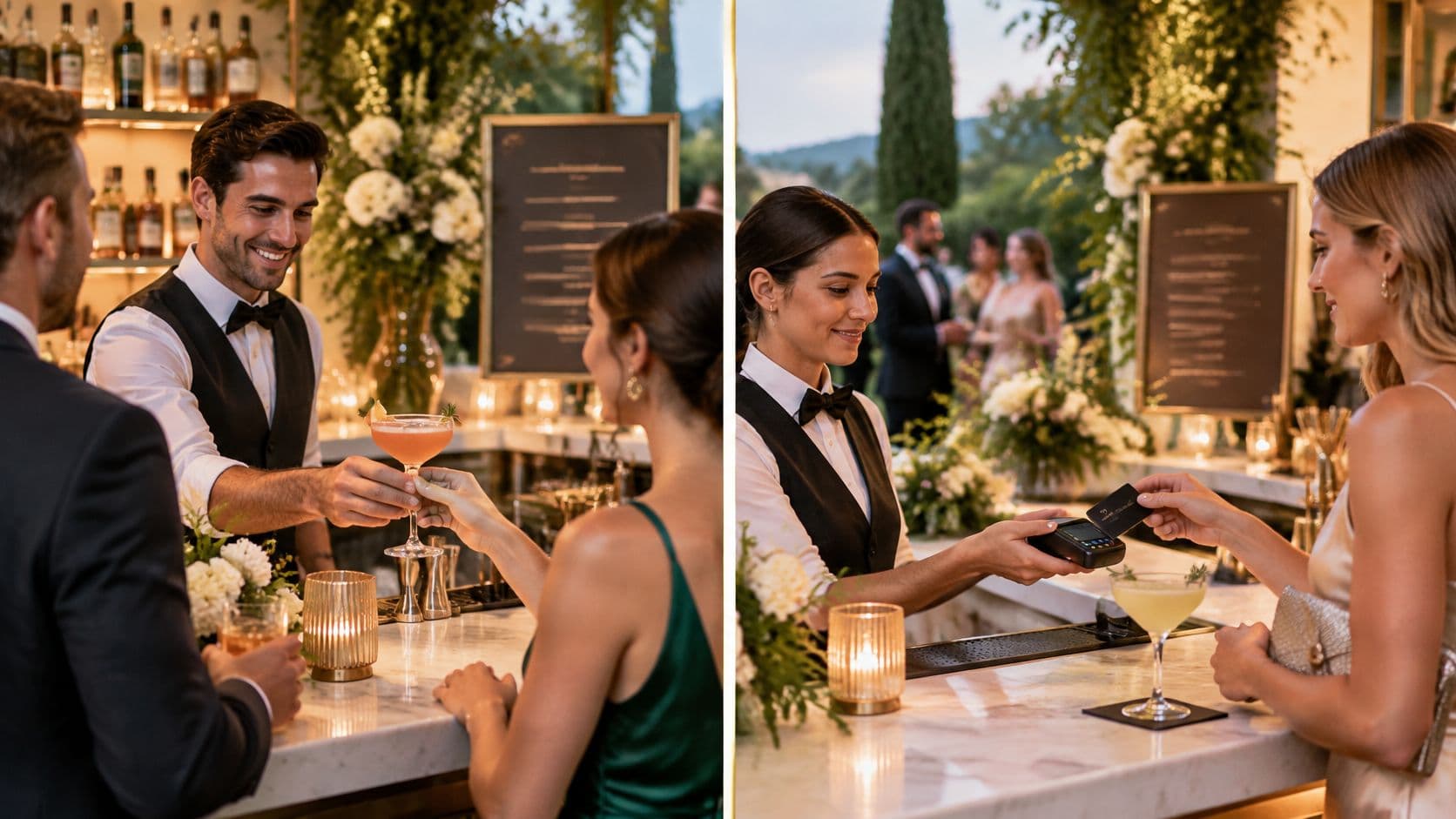
Coordinate the bar's visibility, lighting and décor with the venue while preserving enough working space.
For broader layout inspiration, Modern Lyfe’s wedding reception setup ideas cover room zones, lighting and table arrangements. If you are arranging your own refreshment equipment, HYDAWAY’s one-gallon beverage dispenser guide can help you compare capacity and materials. Confirm any host-supplied equipment with your venue and bar team; these examples do not define BeeHive’s package inclusions.
Our basic bar setup guide also helps couples identify the functional pieces that need to be staged before guests arrive.
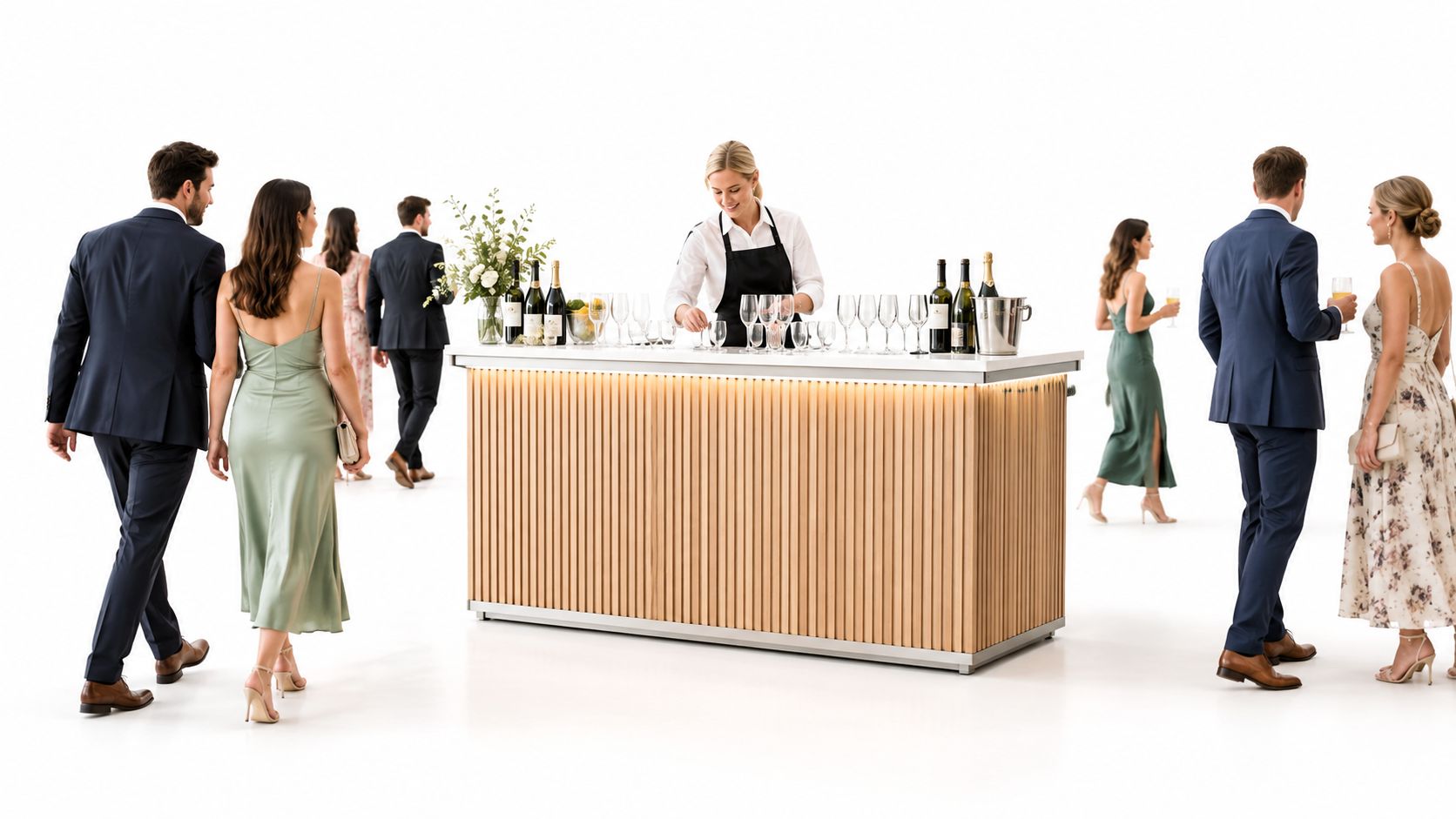
The venue should also confirm where the team can unload, how long the load-in window lasts, and where empty cases or backup supplies may remain. Photograph the proposed location if possible. That gives the bar team, coordinator, caterer, and entertainment team the same reference instead of relying on different interpretations of the floor plan.
Choosing Between Mobile-Bar Packages and Bartender-Only Service
The main service decision is whether you want a complete mobile-bar package or bartending built around equipment and supplies you arrange. Those are different scopes, and combining them in your assumptions creates avoidable gaps.
BeeHive's Bronze, Silver, and Gold mobile-bar packages require a 3-hour minimum. They include a portable bar, professional bartending, ice, coolers, bar tools, plastic glassware, napkins, straws, mixers, garnishes, a printed cocktail menu, setup, and breakdown. Clients still purchase alcohol separately using the custom shopping list.
| Option | Starting Price | Minimum Hours | Staffing | Signature Cocktails | Mobile Bar Included |
|---|---|---|---|---|---|
| Bronze | $750 | 3 hours | 1 professional bartender | 2 | Yes |
| Silver | $1,150 | 3 hours | 2 professional bartenders | 3 | Yes |
| Gold | Custom quote | 3 hours | 2+ professional bartenders | 4 | Yes |
Bronze is guidance for events up to 70 guests, while Silver is guidance for events up to 120 guests. Gold is guidance for 120+ guests and includes a custom-styled mobile bar, four signature cocktails, soft drinks and water, a Refreshment Station, and premium garnishes and presentation. These guest ranges are starting guidance, not guarantees. Each event is quoted individually based on guest count, service hours, staffing, and add-ons.
When bartender-only service fits
Bartender-only service starts at $350, has a 2-hour minimum, and costs $75 per additional hour. It includes professional bartending, bar tools, a customized shopping list, setup, and cleanup. It doesn't automatically include a portable bar, ice, coolers, mixers, garnishes, drinkware, or other mobile-bar package supplies.
A $150 mobile bar add-on is available only with bartender-only service. It provides the mobile bar itself, and nothing beyond that add-on. Ice, coolers, mixers, garnishes, drinkware, and other supplies remain separate responsibilities unless the proposal says otherwise.
Extra hours for Bronze, Silver, and Gold are $100 per hour per bartender. Soft drinks and water are $3 per drink, while Gold includes them. Confirm any custom request in the proposal rather than assuming it's standard.
Designing a Signature Cocktail and Mocktail Menu
A wedding menu should be judged by more than how attractive it looks on paper. Every drink affects batching, ice, garnish prep, glassware staging, and the time required to serve the next guest.
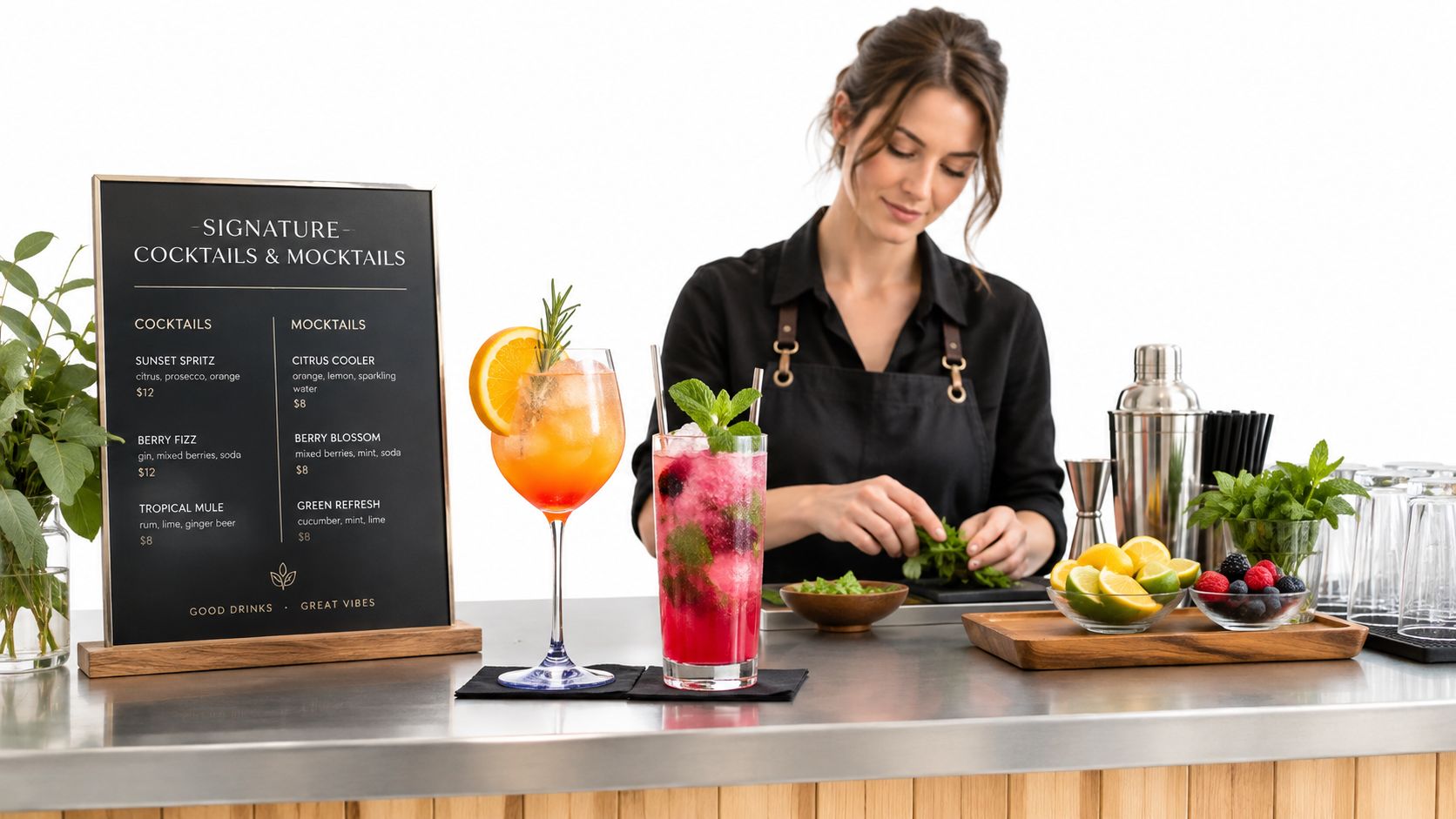
Silver supports three signature cocktails, while Gold supports four. That doesn't mean every event needs the maximum. Two well-designed signatures can give guests meaningful choice without turning the bar into a made-to-order laboratory. A lighter or fruit-forward option paired with a drier, herbal, or spirit-forward drink often creates useful contrast.
Build for speed and consistency
Start by listing each drink's ingredients and technique. Drinks built from a prepared base can move quickly, while drinks that require shaking, multiple garnishes, special rims, or separate preparations can create a queue during cocktail hour. Ask whether honey, simple syrup, or another base can be prepared in advance, and decide which ingredients need refrigeration or dedicated staging.
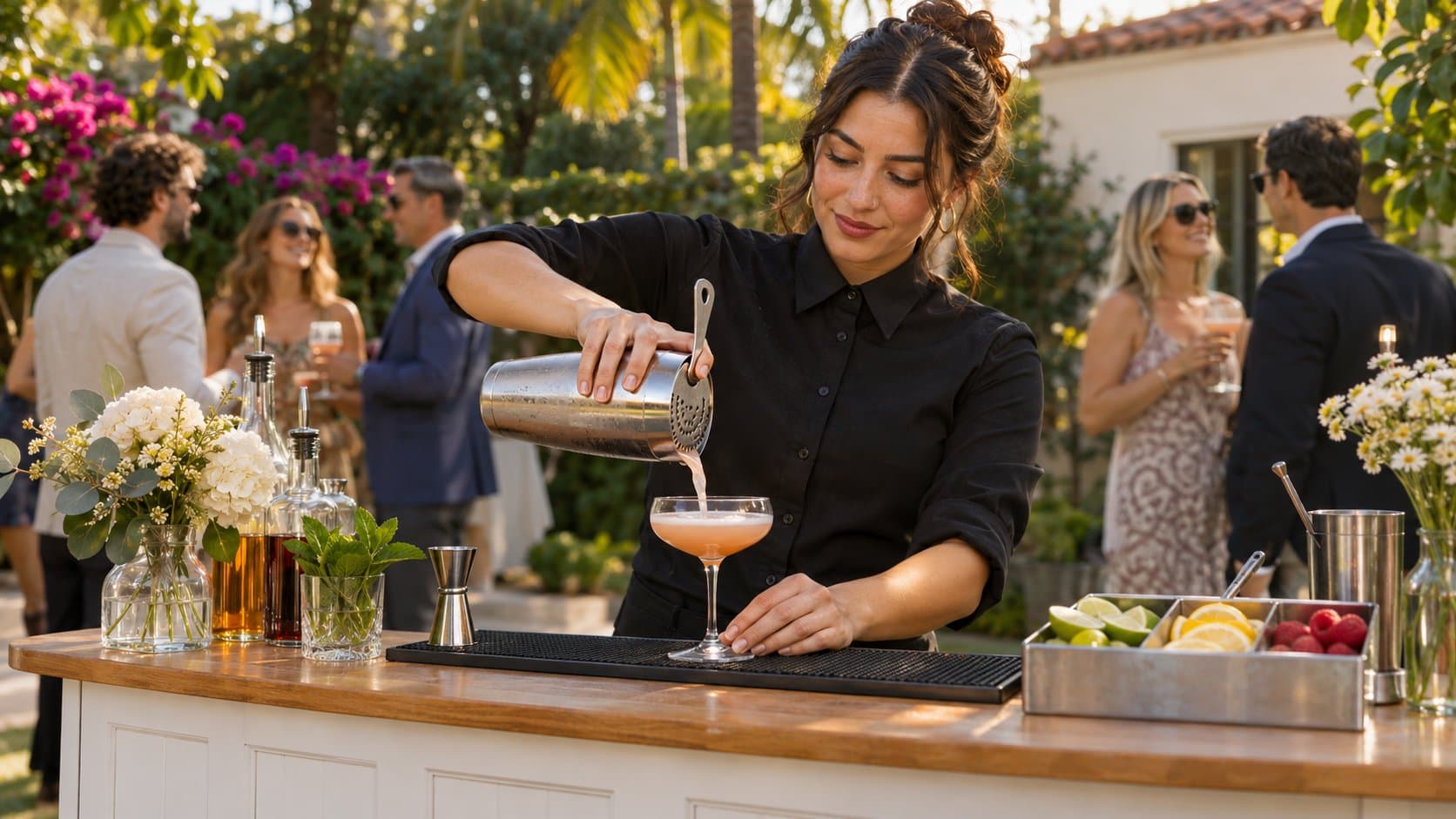
Glassware should follow the menu. If one drink needs a particular shape and another works in plastic glassware, place those supplies where the bartender can reach them without turning away from the guest. Garnishes should be portioned and replenished before service, not assembled from scattered containers during the busiest period.
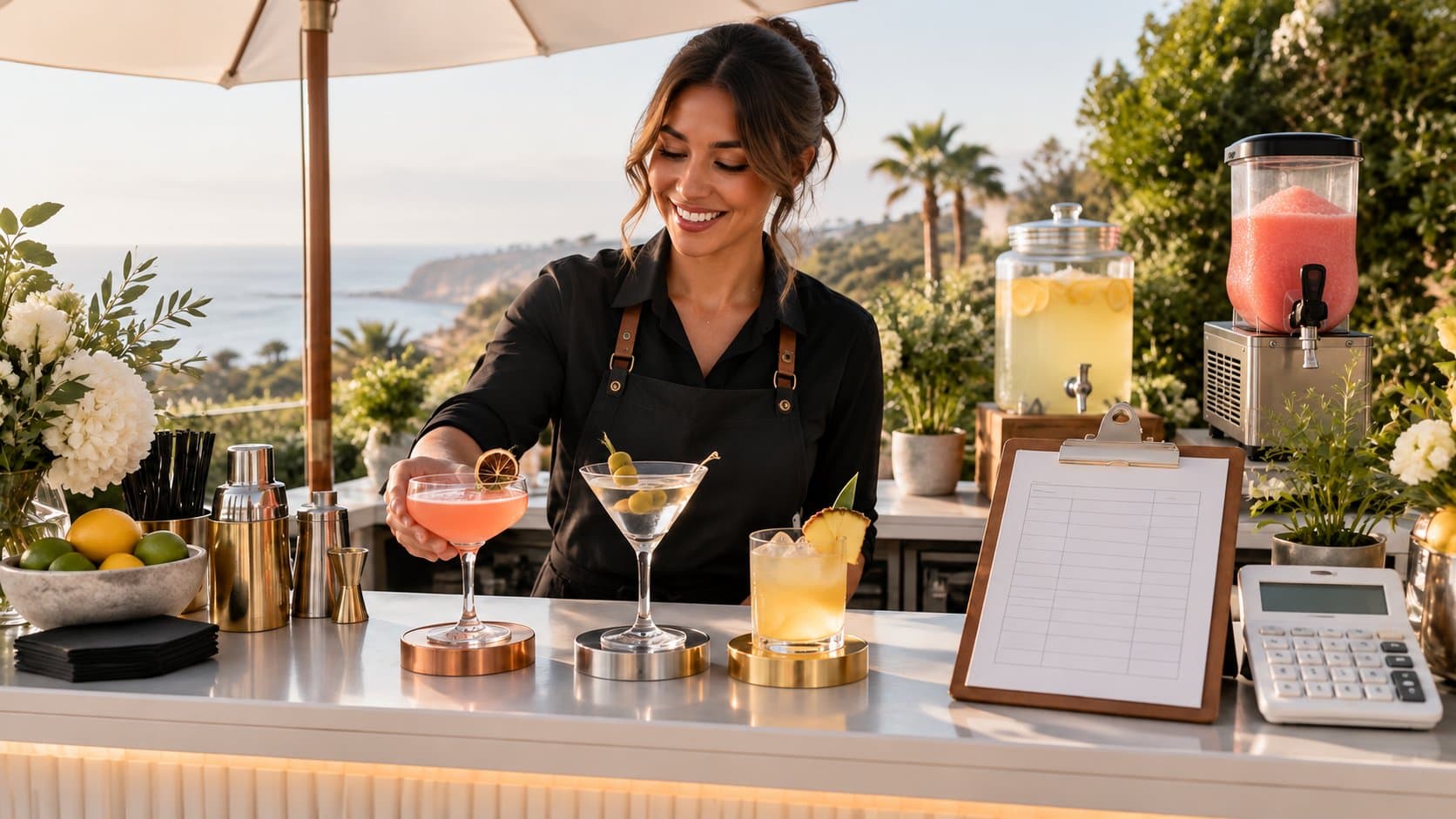
For larger receptions, a clearly displayed menu reduces repeated questions. A beverage dispenser can also suit water, lemonade, or another non-alcoholic refreshment when the venue permits it.
Confirm with the venue which dispensers and serving supplies are allowed and who will provide them.
Treat mocktails as part of the menu
Alcohol-free drinks shouldn't be an afterthought. Discuss custom alcohol-free mocktails during menu planning so they receive the same attention to flavor, garnish, glassware, and presentation as cocktails. Water and soft drinks should have a visible, convenient location, especially for guests who are driving, not drinking, or just want a break from alcohol.
Before approving the menu, ask three practical questions:
Can the team prepare the drinks consistently?
Can the chosen staffing handle the busiest service window?
Are the ingredients, ice, garnishes, and drinkware assigned to a specific supplier?
Our cocktail menu examples can help couples compare the feel and complexity of different menu directions. Custom requests still need confirmation in the event proposal.
Staffing the Bar for Peak Demand
Average attendance doesn't tell you whether guests will wait. Staffing also depends on the menu, number of bars, service hours, setup and cleanup.
BeeHive's Bartender Staffing Calculator uses starting baselines of 60 guests per bartender for cocktail or mocktail service and 75 guests per bartender for beer, wine and soft drinks. Treat this as a planning estimate; BeeHive tailors the final staffing recommendation to the event.
Apply the ratio to the actual menu
For example, assume 100 guests use one bar for four service hours. The calculator estimates two bartenders for either menu type: 100 divided by 60 rounds up to two for cocktails and mocktails; 100 divided by 75 also rounds up to two for beer, wine and soft drinks.
With one hour for setup and 30 minutes for cleanup, that is 5.5 hours per bartender, or 11 total staff hours. Share the menu, venue layout, number of bars and service window when requesting a quote.
For a divided venue, discuss whether separate service points fit the floor plan and confirm each station can access ice, glassware, mixers, garnishes and backup stock.
Practical rule: Staff for the rush you expect, not the quietest part of the reception.
Share the reception schedule with the bar team, including guest arrival, cocktail hour, speeches, dinner transition and last call. The proposal should identify staffing, service points, menu complexity and who handles replenishment.
Setup Timeline from Confirmation to Last Call
A clean wedding bar setup starts well before load-in. Once the scope is agreed, the booking is confirmed with a 25% deposit. The proposal states the remaining balance and payment deadline, so couples should read that document rather than assume a standard schedule.
Work backward from guest arrival
After confirmation, finalize the menu, guest drinking count, service hours, and shopping list. Clients purchase alcohol separately, and BeeHive's customized shopping list identifies the quantities and formats to review. Keep the alcohol calculation separate from ice, water, mixers, garnishes, glassware, and any ceremonial toast.
Before the event, confirm:
Venue access: Load-in window, parking, unloading route, power, lighting, water access, and outdoor requirements.
Service footprint: Exact bar location, guest approach, queue direction, backup-stock location, and separation from catering or entertainment paths.
Supplies: Who provides alcohol, ice, coolers, mixers, garnishes, drinkware, water, and alcohol-free beverages.
Menu production: Which components are prepared or batched, how garnishes are staged, and which glassware each drink uses.
End-of-night plan: Last call timing, final water service, breakdown location, and the venue's required departure time.
On setup day, the team should build the bar, stage glassware and tools, place the menu, organize garnishes, and position ice and coolers before guests arrive. A pre-reception inventory checkpoint catches missing bottles, misplaced cases, and supply gaps while there's still time to correct them.
Coordinate the bar's arrival with the venue coordinator, photographer, caterer, and entertainment team. Confirm in writing where breakdown can occur and whether the bar must be cleared immediately after last call or can remain while other vendors finish.
Common Setup Mistakes and How to Avoid Them
At a wedding with 100 guests, the bar can look fully stocked while still failing during cocktail hour. The common mistake is planning for the reception average instead of the busiest service period. That early rush determines bartender coverage, ice access, glassware staging, and whether a short menu can move quickly. Plan staffing and supplies for the busiest service window.
Another mistake is counting alcohol without counting the rest of the operating inventory. For example, a five-hour reception with 100 guests, 15 non-drinkers, and one drink per drinking guest per hour gives an estimate of 425 alcoholic drinks, based on 85 drinking guests multiplied by five hours. A sample mix of 25% beer, 45% wine, and 30% spirits equals about 106 beers, 191 wine servings, and 128 spirit-based drinks. The beer portion is roughly five 24-pack cases before any additional allowance. Treat these figures as planning examples, since meals, weather, guest habits, timing, and toast service can change demand. Use BeeHive's Wedding Alcohol Calculator to test the guest count and purchasing assumptions.
Separate the proposal into:
Alcohol: Client-purchased items from the shopping list.
Service supplies: Ice, mixers, water, alcohol-free drinks, garnishes, and drinkware.
Equipment: Portable bar, coolers, and bar tools, depending on the selected service.
Labor: Bartenders, service hours, and added staffing.
Bartender-only service may cover labor without covering the bar, ice, coolers, mixers, garnishes, or drinkware. Confirm each item before signing. BeeHive primarily serves Orange County and select surrounding areas, and travel fees may apply.
BeeHive Mobile Bar offers dry-hire mobile-bar packages and bartender-only service for Orange County weddings. Review BeeHive Mobile Bar to compare the service scope or request a proposal.