Corporate Events
Corporate Event Bar Planning: A Clear Brief for Seamless Service
By BeeHive Mobile Bar ··5 min read
Updated
At a glance
- Share one event brief with the venue, planner, and bar team.
- Keep the menu welcoming and efficient to serve.
- Confirm alcohol purchasing, access, timing, and the day-of contact.
In this guide
Give the venue, planner, and bar team one shared brief. A clear schedule, focused menu, and agreed responsibilities help service fit the purpose of your event.
Write a one-page bar brief
Start with the event date, address, expected attendance, guest arrival time, service window, catering schedule, and day-of contact. Then identify the format: client reception, team celebration, brand launch, holiday event, or conference mixer. This gives the bar team enough context to recommend an efficient setup and menu.
| Brief field | Why it helps |
|---|---|
| Arrival and service times | Prevents a bar from being ready too early or too late. |
| Guest mix | Helps plan beer, wine, cocktails, and zero-proof choices. |
| Brand or theme | Can guide menu names and presentation without overcomplicating service. |
| Venue contact | Resolves access, load-in, and bar-location questions quickly. |
Keep the menu welcoming and fast to serve
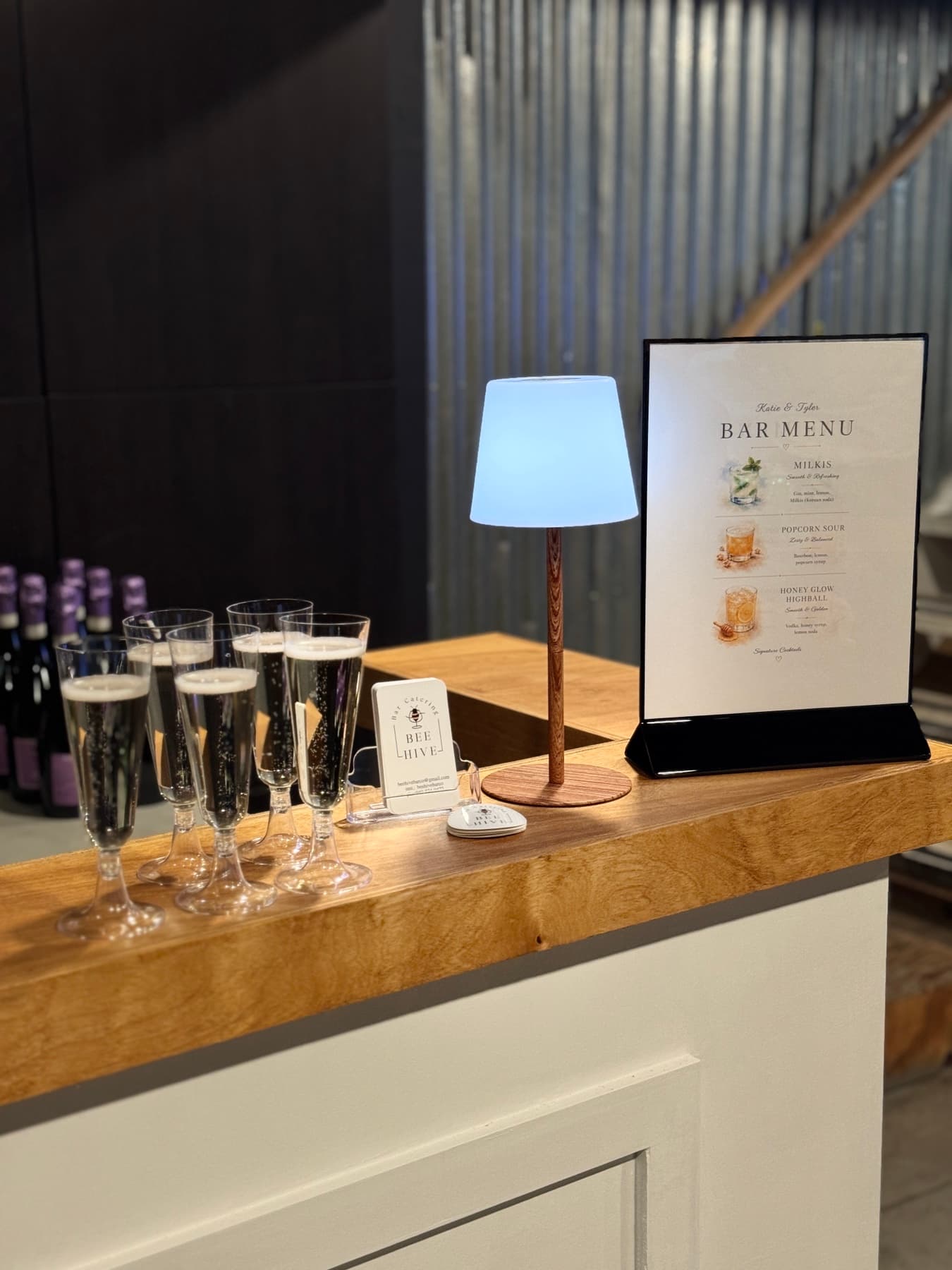
For most business events, a concise menu travels better than an elaborate cocktail list. Consider one or two signature drinks, a mocktail, water, and the familiar options your guests expect. Clear names and printed menus help guests choose without creating a long first-round line. If the group includes guests who do not drink, make the zero-proof choice feel intentional rather than an afterthought.
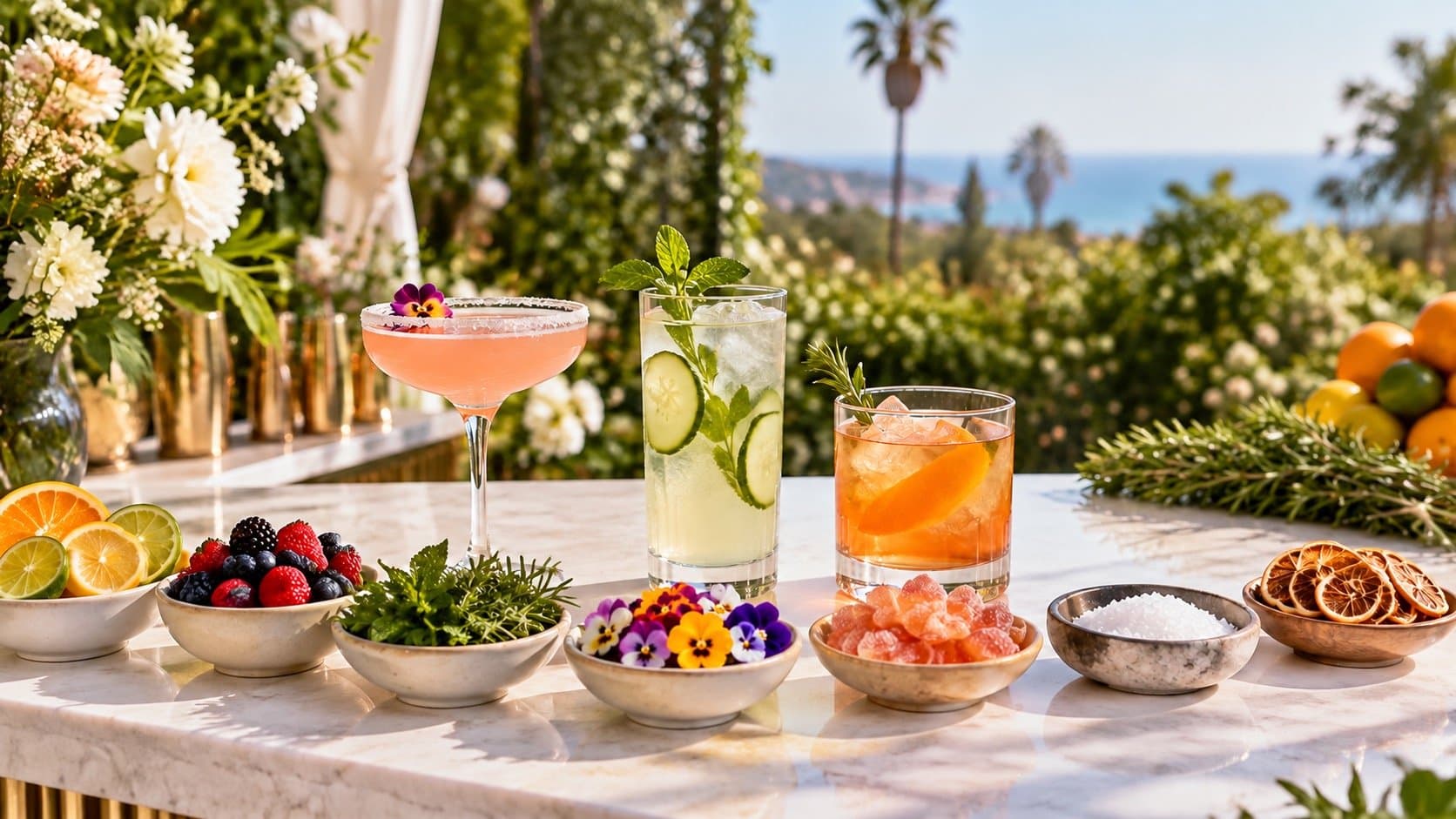
Our Silver mobile-bar package is designed for weddings and corporate events of up to 120 guests. Starting at $1,150, it includes a large mobile bar, two professional bartenders, three signature cocktails, mixers, ice, coolers, a shopping list, menu consultation, and premium garnishes such as dried fruit and edible flowers.
Bronze, Silver, and Gold have a three-hour minimum. For an event of 120 or more guests, discuss a custom Gold quote and staffing plan.
Clients purchase alcohol separately because BeeHive is a dry-hire service.
Separate service from alcohol purchasing
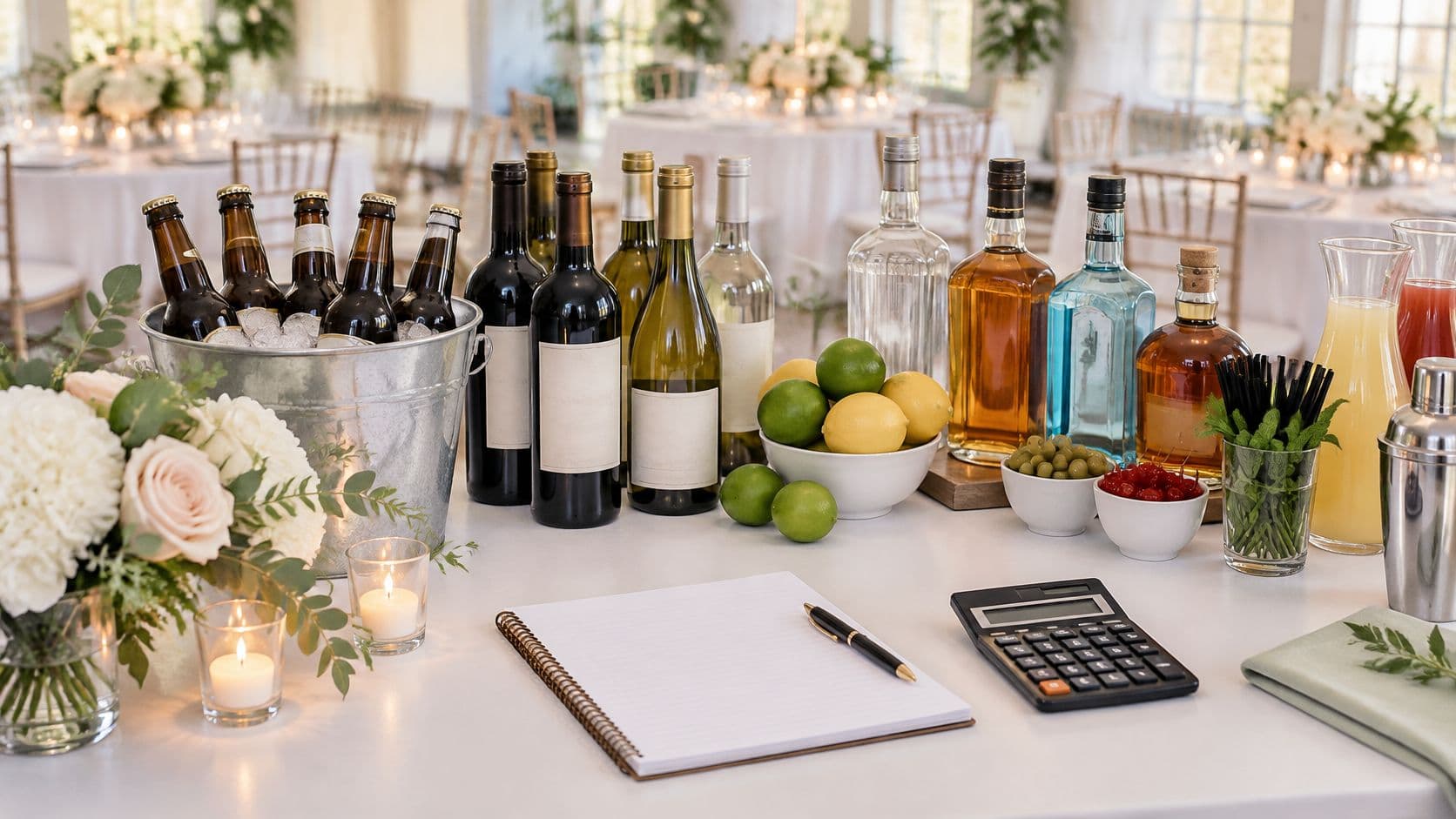
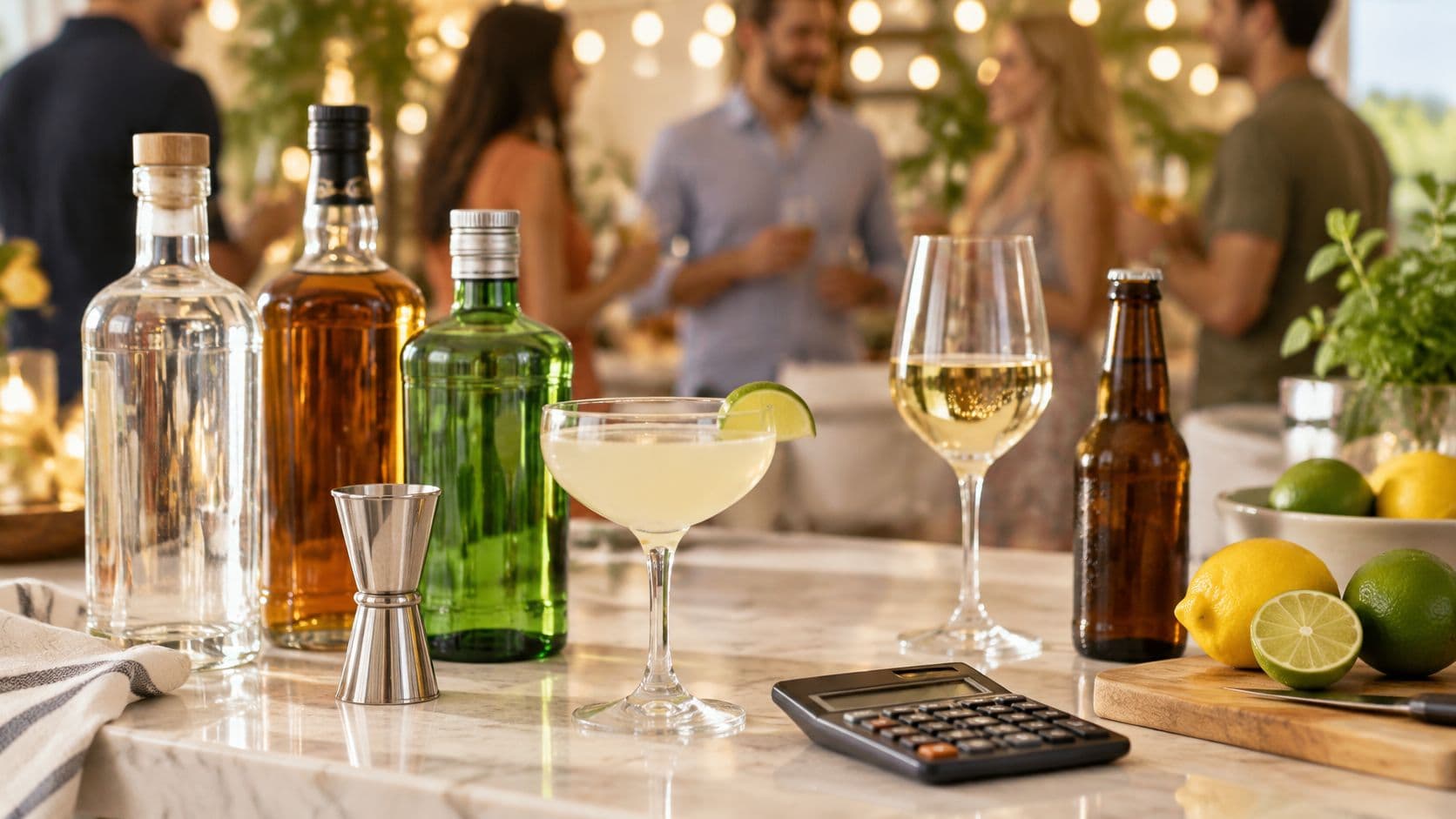
Assign one person to manage alcohol purchasing. That person should confirm the menu with the bar team, receive the shopping list, purchase the approved alcohol, and coordinate delivery and storage with the venue. Use the alcohol calculator as a first estimate and the ice calculator to plan cold storage. These are planning tools; adjust with your actual service length, food plan, and attendance.
Ask the venue which alcohol arrangement it permits and what it requires from outside vendors. California Alcoholic Beverage Control publishes licensing guidance, but venue and event arrangements differ; confirm the event’s specific requirements with the venue and the appropriate authority rather than relying on a general rule. Read California ABC’s licensing FAQ.
Day-of coordination checklist
- Confirm the service timeline and announcement moments.
- Give the bar team the venue contact and a direct day-of number.
- Confirm delivery, storage, loading, and setup access for host-purchased alcohol.
- Place the bar where it supports flow without blocking registration, food, or exits.
- Confirm whether the venue permits a tip jar. A 20% gratuity is added to the total when tip jars are not permitted.
Request a useful quote
Include the date, Orange County location, guest count, service hours, event type, and any menu or brand ideas when you request a custom quote. Full mobile-bar packages start at $750 for Bronze and $1,150 for Silver; Gold pricing is custom. Bartender-only service starts at $350 for a two-hour minimum, with each additional hour at $75, when a mobile bar and its supplies are not needed. A 25% deposit confirms the booking, and your proposal will include the remaining balance and payment deadline.
For a more detailed planning workflow, read the mobile bar cost guide and review current packages. A clear bar brief adds a polished hospitality experience without creating another burden for the organizer.
Choose the format before the menu
Short networking reception
Arrival happens in a concentrated window, so speed matters. Keep the menu compact, make water visible, and consider a ready-to-pour welcome option if it suits the event. Confirm whether food opens at the same time as the bar.
Company celebration
A longer event needs a schedule: when service opens, when dinner begins, and how the bar changes after a toast or announcement. The organizer should also confirm any company alcohol policies and identify one person who can approve day-of decisions.
Worked example: 150-person client mixer
For a 150-person mixer, the planner shares the guest count, arrival pattern, food timing, and desired menu. They plan a service window of at least three hours for a BeeHive mobile-bar package and request a custom Gold quote with staffing suited to the event. If the venue already has a bar and needs only two hours of bartender service, they can ask for a separate bartender-only proposal. The staffing calculator can begin the discussion: one caterer’s published planning ratio is one bartender per 50 guests for full cocktails and one per 75 for beer and wine. Use these ratios only as a starting point; complex drinks, mocktails, concentrated arrival times, and the station layout can change the final staffing plan. See the cited staffing guide.
The team then confirms venue access, host-purchased alcohol delivery, menu cards, water, and a contact who can make a quick decision. That is enough detail for a usable quote without turning the brief into a long production document.
Corporate event questions answered
Should mocktails be on the printed menu?
Yes. Naming the zero-proof option gives every guest an easy choice and makes it part of the hospitality plan.
Who manages alcohol purchasing with dry hire?
Choose one person to manage the purchase. They should follow the agreed shopping list, coordinate venue storage, and track alcohol separately from the service quote.