party liquor
How Much Liquor to Buy for a Party: Bottle-by-Bottle Math
Work out how much liquor to buy for a party with accurate bottle yields, a 100-guest shopping example, and BeeHive’s Orange County planning advice.
By BeeHive Mobile Bar ··11 min read
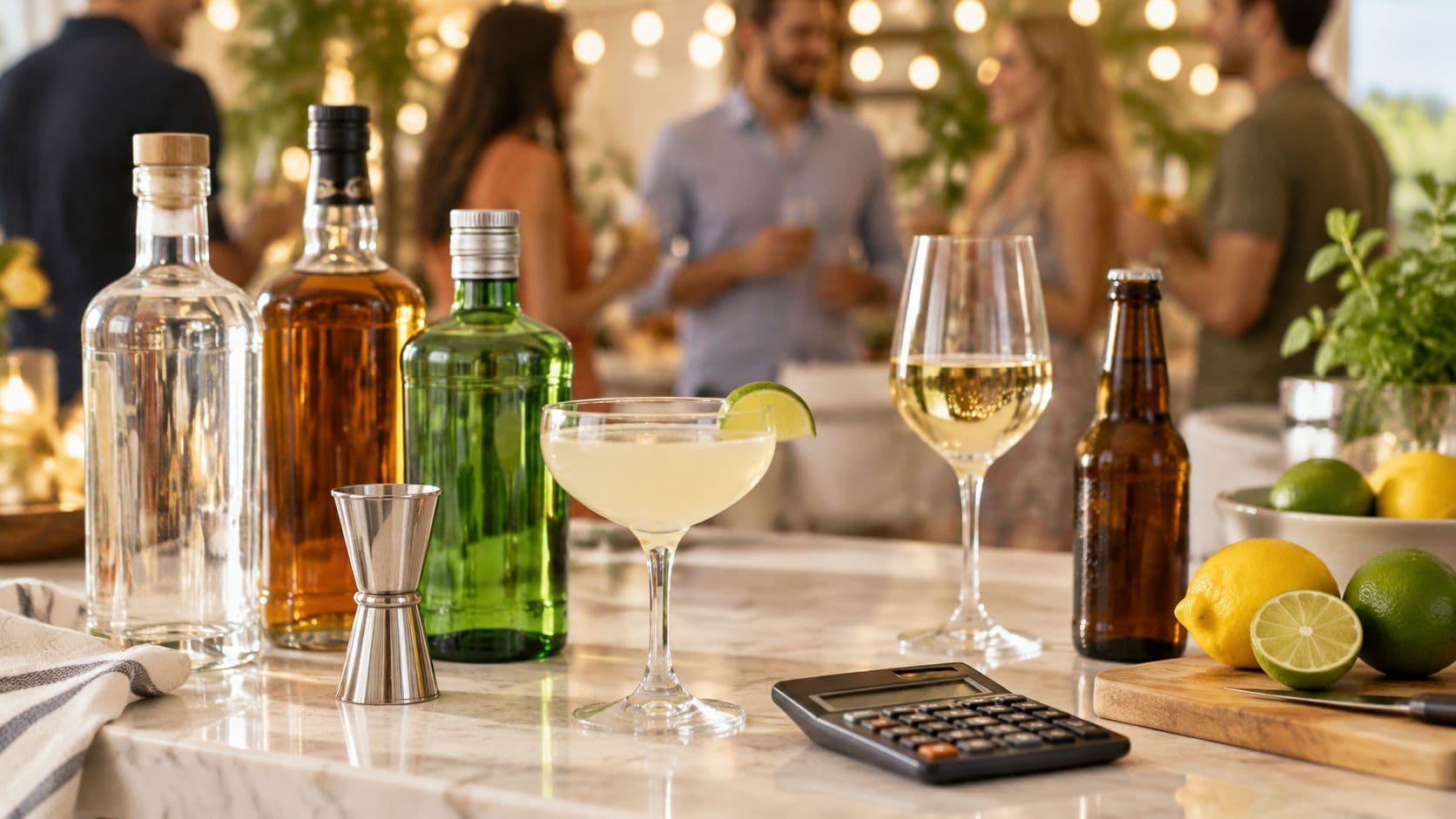
In this guide
To work out how much liquor to buy for a party, start with the guests who may drink, the hours the bar will serve, and the drinks on your menu. Estimate cocktail orders, calculate each recipe’s ingredients, then round up to whole bottles. A guest count alone cannot tell you whether you need six bottles of vodka or a mix of tequila, gin and liqueurs.
For an Orange County wedding, backyard celebration or company event, this approach gives you a shopping list you can discuss with your bartender. The example below takes a 100-guest party from a drink estimate to specific bottles, including the ingredients a general calculator cannot choose for you.
Start with guests, service hours and the menu
Use the number of guests who may drink alcohol, rather than the full invitation list. Then count actual bar-service hours, excluding time before the bar opens or after it closes. Estimate how orders will divide among beer, wine and cocktails; those shares should total 100%.
For example, 75 guests who may drink × 4 service hours × an assumed 1 serving per hour gives 300 planned alcoholic servings. This is an inventory scenario, not a drinking target or a guaranteed minimum. A daytime lunch, a long evening reception and a tasting may need different assumptions.
Guest mix: Consider non-drinkers, designated drivers, arrival times and early departures.
Service timeline: Check whether the bar stays open during dinner and speeches.
Preferences: Adjust the beer, wine and cocktail split to your guests instead of buying equal amounts of everything.
Separate drinks: Account for a toast, tasting or welcome drink without counting the same serving twice.
For ideas on tasting structure, you can read how to host a tasting with Blind Barrels. Use a separate sample-size calculation for that format; tasting samples and full cocktails are different purchases.
How many pours are in a bottle?
A 750 ml bottle contains about 25.36 US fluid ounces; a 1.75 L bottle contains about 59.17. Divide the bottle volume by the measured pour. The distinction between a mathematical yield and complete pours matters when you are close to running out.
| Bottle | Measured pour | Mathematical yield | Complete pours from one bottle |
|---|---|---|---|
| 750 ml spirits | 1.5 US fl oz | 16.9 | 16, with some left over |
| 750 ml spirits | 2 US fl oz | 12.7 | 12, with some left over |
| 1.75 L spirits | 1.5 US fl oz | 39.4 | 39, with some left over |
| 750 ml wine | 5 US fl oz | 5.1 | 5, with some left over |
“About 17 pours” is a useful approximation for a 750 ml spirits bottle at 1.5 ounces, but it does not mean that one bottle supplies 17 full measures. When buying several bottles of the same ingredient, calculate from their combined volume. Usable remainders can contribute to subsequent measured drinks; round the final ingredient requirement up to whole bottles.
Bottles needed = planned servings × ingredient amount per serving ÷ bottle volume.
Keep the units consistent. Calculate every alcoholic ingredient, including liqueurs and fortified wines, and combine any ingredient shared by multiple recipes before rounding. These are volume calculations before spills or an agreed reserve.
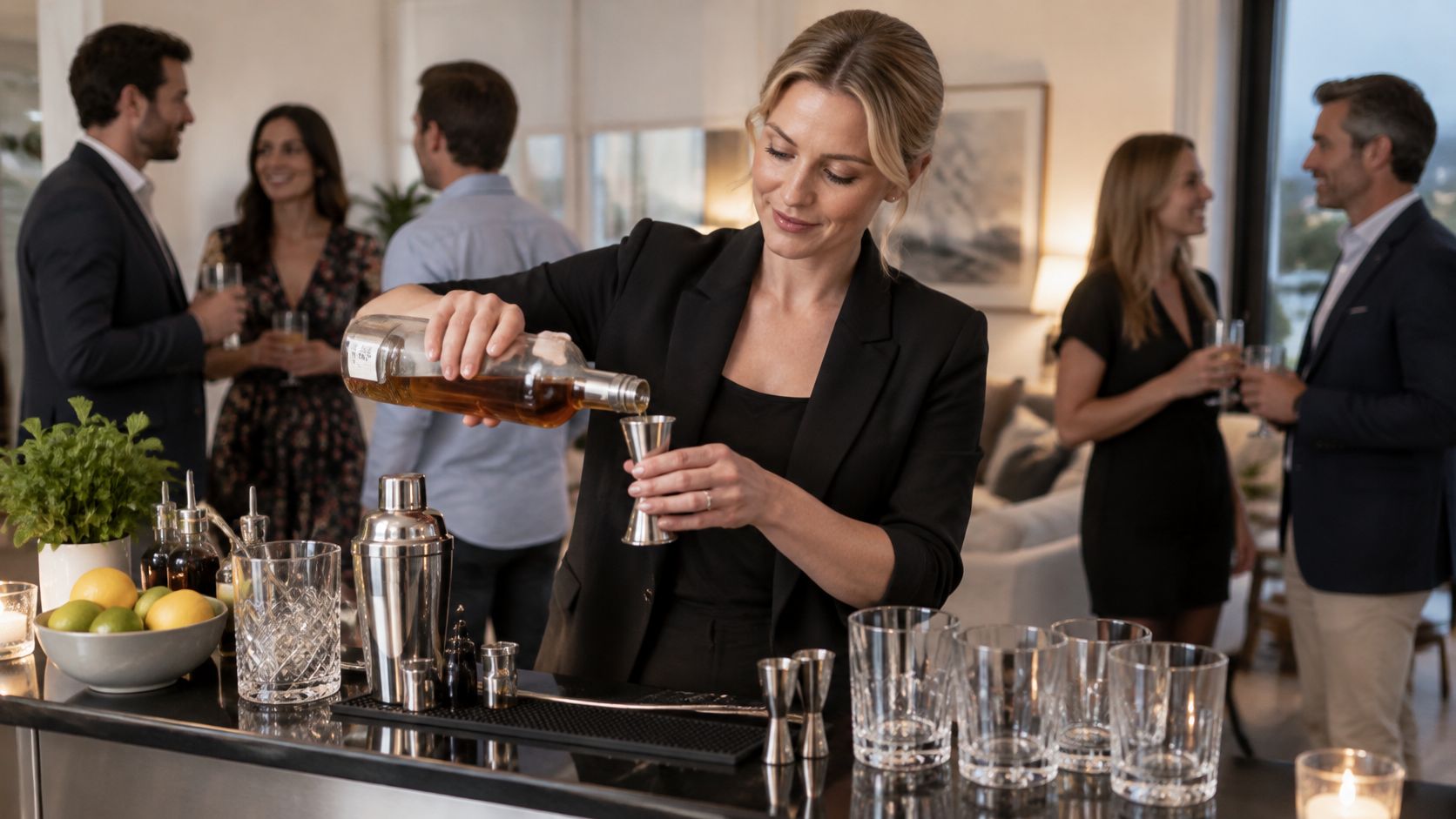
A bottle-by-bottle example for 100 guests
Suppose your party has 100 guests, 75 of whom may drink alcohol, with four hours of bar service. Using the 300-serving scenario above, you expect 30% beer, 20% wine and 50% cocktails.
| Category | Calculation | Planned servings | Purchase basis |
|---|---|---|---|
| Beer | 300 × 30% | 90 | Four 24-packs of 12-ounce cans provide 96 cans |
| Wine | 300 × 20% | 60 | Twelve 750 ml bottles cover 60 measured 5-ounce pours |
| Cocktails | 300 × 50% | 150 | Calculate each ingredient from the two recipes below |
Now split the 150 cocktail orders into 90 vodka cocktails and 60 tequila cocktails. For this purchasing example, each uses 1.5 ounces of its base spirit, and each tequila cocktail also uses 0.5 ounce of orange liqueur. These are illustrative recipe assumptions; your agreed menu may use different measures.
| Ingredient | Recipe requirement | Total volume | 750 ml bottles to buy |
|---|---|---|---|
| Vodka | 90 cocktails × 1.5 US fl oz | 135 US fl oz, about 3,992 ml | 6 |
| Tequila | 60 cocktails × 1.5 US fl oz | 90 US fl oz, about 2,662 ml | 4 |
| Orange liqueur | 60 cocktails × 0.5 US fl oz | 30 US fl oz, about 887 ml | 2 |
The cocktail shopping list is therefore six bottles of vodka, four of tequila and two of orange liqueur, all 750 ml. That is 12 bottles across three ingredients. Mixers, garnishes, ice, water and alcohol-free drinks still need their own quantities. The 25 guests not drinking alcohol are part of that plan, and other guests may choose alcohol-free drinks too.
If your beer share or container sizes differ, use our guide to how much beer to buy for a party to work through that portion.
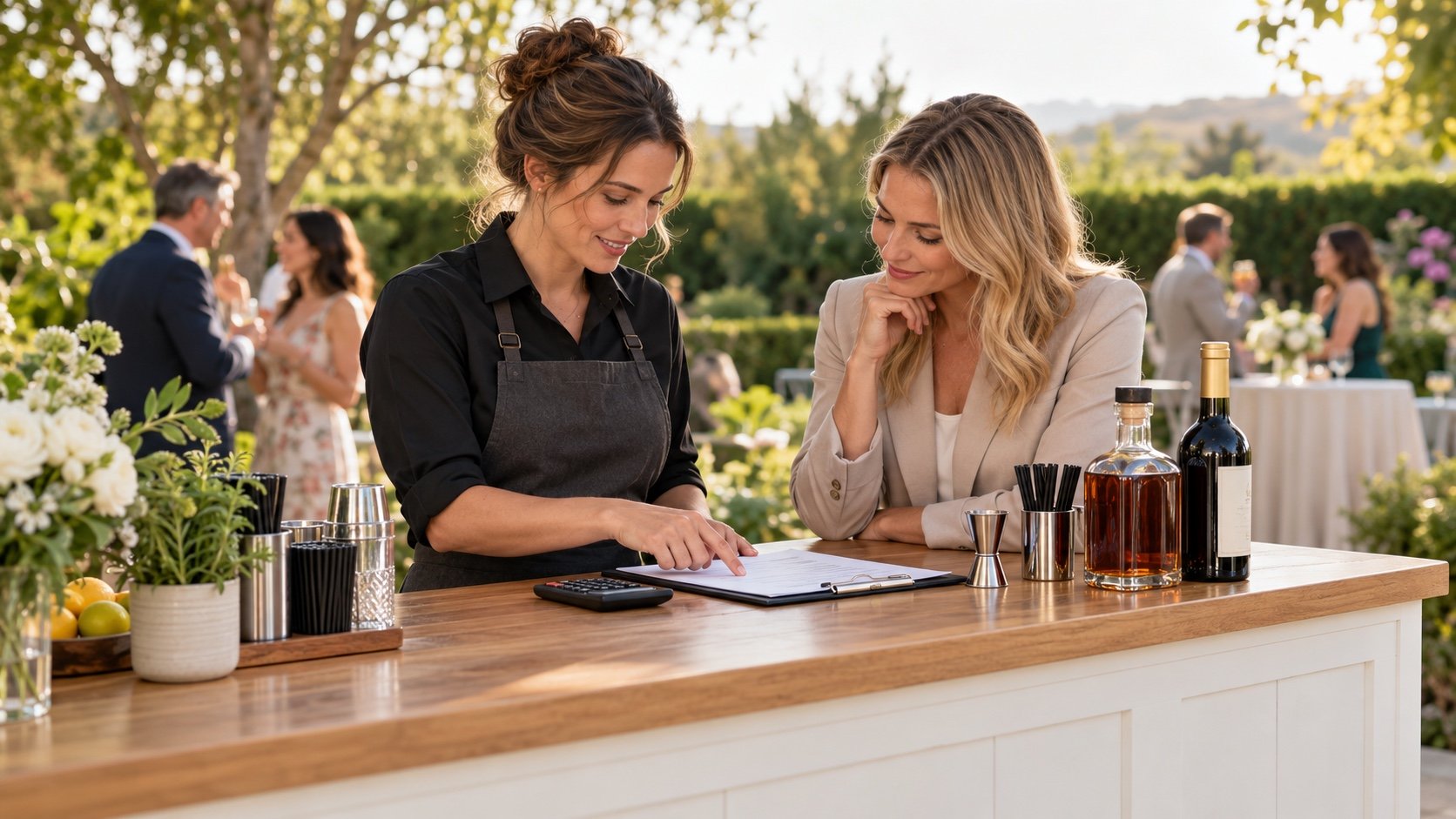
Use BeeHive’s calculator to check your list
Enter 100 total guests, 75 guests who may drink alcohol, four service hours, 30% beer and 20% wine. Under the advanced settings, choose “1 per hour” and a 1.5-ounce liquor pour. The remaining 50% is cocktails.
Open BeeHive’s Alcohol Calculator →
Those settings return 300 planned drinks, four beer 24-packs, 12 wine bottles and nine generic 750 ml liquor bottles. The nine-bottle figure covers the combined volume of 150 base-spirit pours at 1.5 ounces. It does not divide that volume among brands or recipes, or add orange liqueur.
That explains the difference from our recipe list: rounding vodka and tequila separately requires ten base-spirit bottles, and the liqueur adds two more. A spare vodka bottle cannot replace tequila in the selected recipe.
The calculator also offers “1 per hour + 1 extra.” For 75 drinking guests and four hours, that setting produces 375 planned servings instead of 300. Choose the assumption deliberately; neither result establishes a minimum or maximum that every event must follow. The calculator has no automatic reserve, so discuss any backup stock separately.
A cocktail serving is not always one standard drink
A standard drink measures alcohol content. According to NIAAA's standard-drink guidance, a US standard drink contains about 14 grams, or 0.6 fluid ounces, of pure alcohol. Examples are 12 ounces of 5% beer, 5 ounces of 12% wine, or 1.5 ounces of 40% spirits.
A stronger beer, larger pour or cocktail with multiple alcoholic ingredients can contain more than one standard drink. Our example counts menu servings for inventory, not equivalent amounts of alcohol. The orange liqueur adds alcohol to the tequila cocktail even though it remains one order.
NIAAA's Rethinking Drinking guide explains why container size and alcohol strength both matter. Check the product’s ABV and agree measured recipes with your bartender.
Batch cocktails or prepare them to order?
Both methods start with the same recipe math. Batching can simplify a repeated drink, while made-to-order preparation allows adjustments within the agreed menu. Confirm the method before buying extra ingredients or specialty equipment.
| Planning question | Batch cocktails | Made-to-order cocktails |
|---|---|---|
| How are ingredients counted? | Recipe amount × intended batch servings | Recipe amount × forecast orders |
| What needs confirming? | Batch size, storage, chilling, dilution and finishing | Preparation steps, tools and staffing |
| What can create waste? | Preparing too much of a less-popular drink | Buying ingredients for too many different drinks |
For example, a 20-serving batch of the tequila cocktail above needs 30 ounces of tequila and 10 ounces of orange liqueur before its mixers and dilution. Those 20 servings must come out of the planned 60 tequila cocktails, rather than becoming an accidental extra order.
Do not count a mixed drink as a single standard drink simply because it comes from one dispenser. NIAAA's guidance on defining alcohol quantities explains the difference between a serving and its alcohol content.
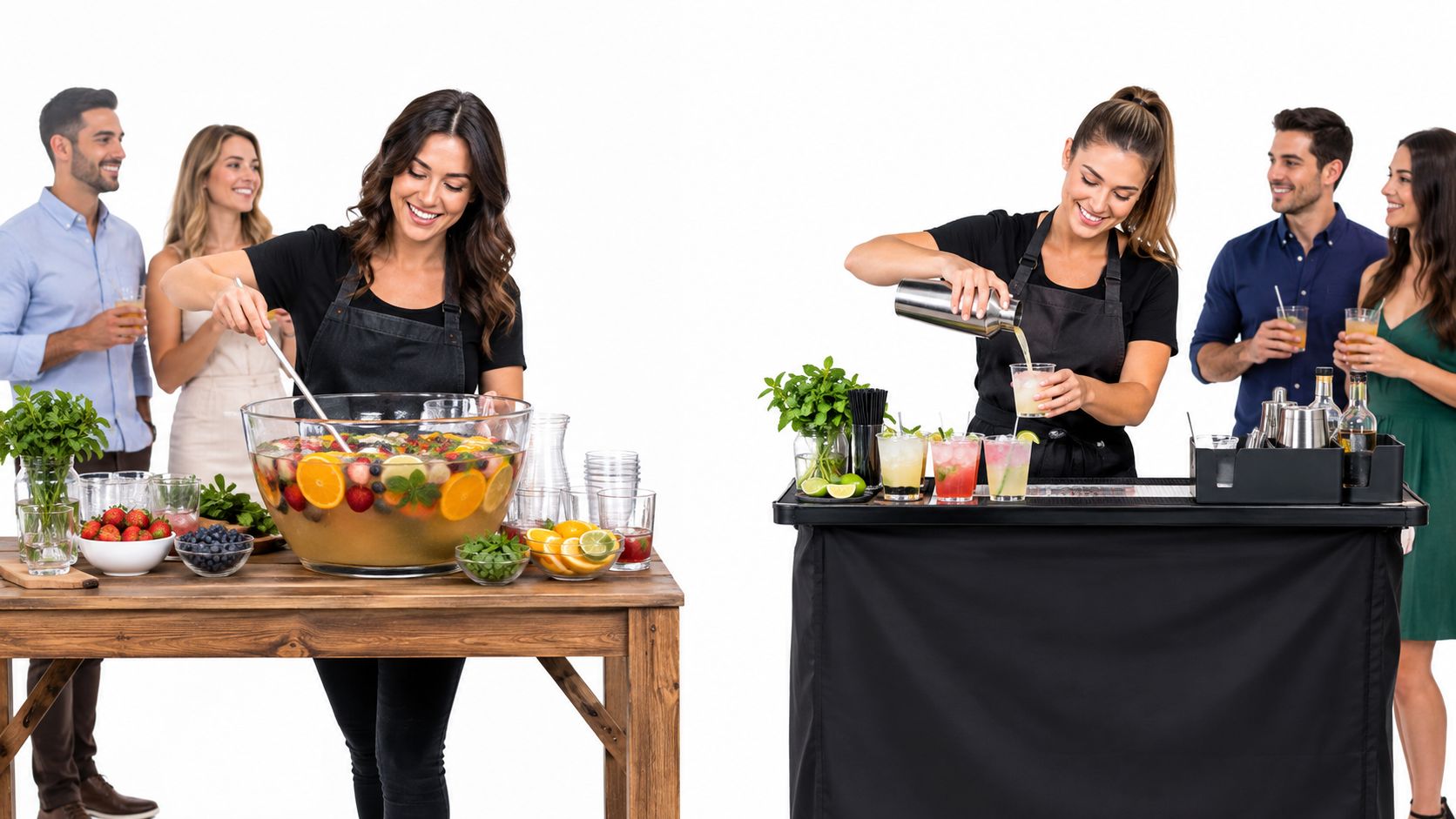
Choose glassware without changing the recipe
A jigger measures the ingredients; a glass holds the finished drink, including ice and mixers. Keep the alcohol measure fixed when changing glass styles. Use our cocktail menu examples to narrow the menu before choosing specialty drinkware.
For small-format drinkware, the guide to choosing event shot glasses with Monopack compares sizes using UK conventions. Treat it as a glassware reference; use the US measures in this article for your shopping calculations. You can also compare coupe and Nick & Nora glasses for presentation ideas. Confirm who provides any real glassware, because BeeHive’s mobile-bar packages list plastic glassware.
Turn the bottle count into a complete shopping list
Write down the product, size, quantity and person responsible. Review non-alcohol items with our mobile bartending supplies guide, then use a checklist like this:
| Item | Quantity or planning basis | Responsibility to confirm |
|---|---|---|
| Alcohol | In this example: 6 vodka, 4 tequila, 2 orange liqueur, 12 wine bottles and 4 beer 24-packs | Host purchases, transports and provides it |
| Mixers and garnishes | Amount per recipe × planned servings; combine shared ingredients before rounding | BeeHive package supplies for the agreed menu, or host for bartender-only service |
| Water and alcohol-free drinks | Plan for all 100 guests, including the 25 not drinking alcohol | Gold inclusions, an agreed add-on, or host supply |
| Ice and cooling | Separate serving ice from ice used to chill bottles; confirm weather and storage needs | Package inclusion or a named host supplier |
| Drinkware and disposables | Expected servings, drink styles, reuse policy and backup stock | Package supplies or host/venue arrangements |
| Separate toast | Toast participants × agreed pour, with an alcohol-free alternative | Host purchases alcohol; confirm serving supplies |
| Venue facilities and leftovers | Handwashing, waste bins, cold storage and removal plan | Assign a venue or host contact; do not assume equipment is included |
Round each ingredient once, then decide whether you need a reserve. Extra servings from case sizes, rounded-up bottles and a higher-demand estimate already add stock. Avoid layering another buffer onto every line without checking the total.
Confirm retailer return conditions, venue rules, delivery access and cold storage before shopping. Name the person receiving the host-purchased alcohol and the person taking it away afterward.
Match the shopping list to your BeeHive service
BeeHive is a dry-hire mobile bar service based in Orange County. We help plan your menu and alcohol shopping list; you buy and provide the alcohol. We do not sell, purchase, supply, transport or deliver it.
Bartender-only service starts at $350 with a two-hour minimum and includes professional bartending, bar tools, a shopping list, and setup and cleanup of the bartending work area. Additional hours are $75 per hour. The host or venue arranges the bar surface, ice, coolers, mixers, garnishes, drinkware and other supplies unless the proposal adds them.
The optional $150 mobile bar add-on for bartender-only service provides the mobile bar only. It does not add package supplies.
Bronze, Silver and Gold mobile-bar packages have a three-hour minimum. They include a mobile bar, professional bartending, bar tools, ice, coolers, mixers, garnishes, plastic glassware, napkins, straws, setup and breakdown, and a custom printed menu. Gold also includes soft drinks, water and a Refreshment Station. Staffing and the final scope follow your selected package and proposal.
Extra service hours for Bronze, Silver and Gold are $100 per hour per bartender. Confirm the final hours and charges in your proposal. A 25% deposit confirms the booking; the proposal shows the remaining balance and due date.
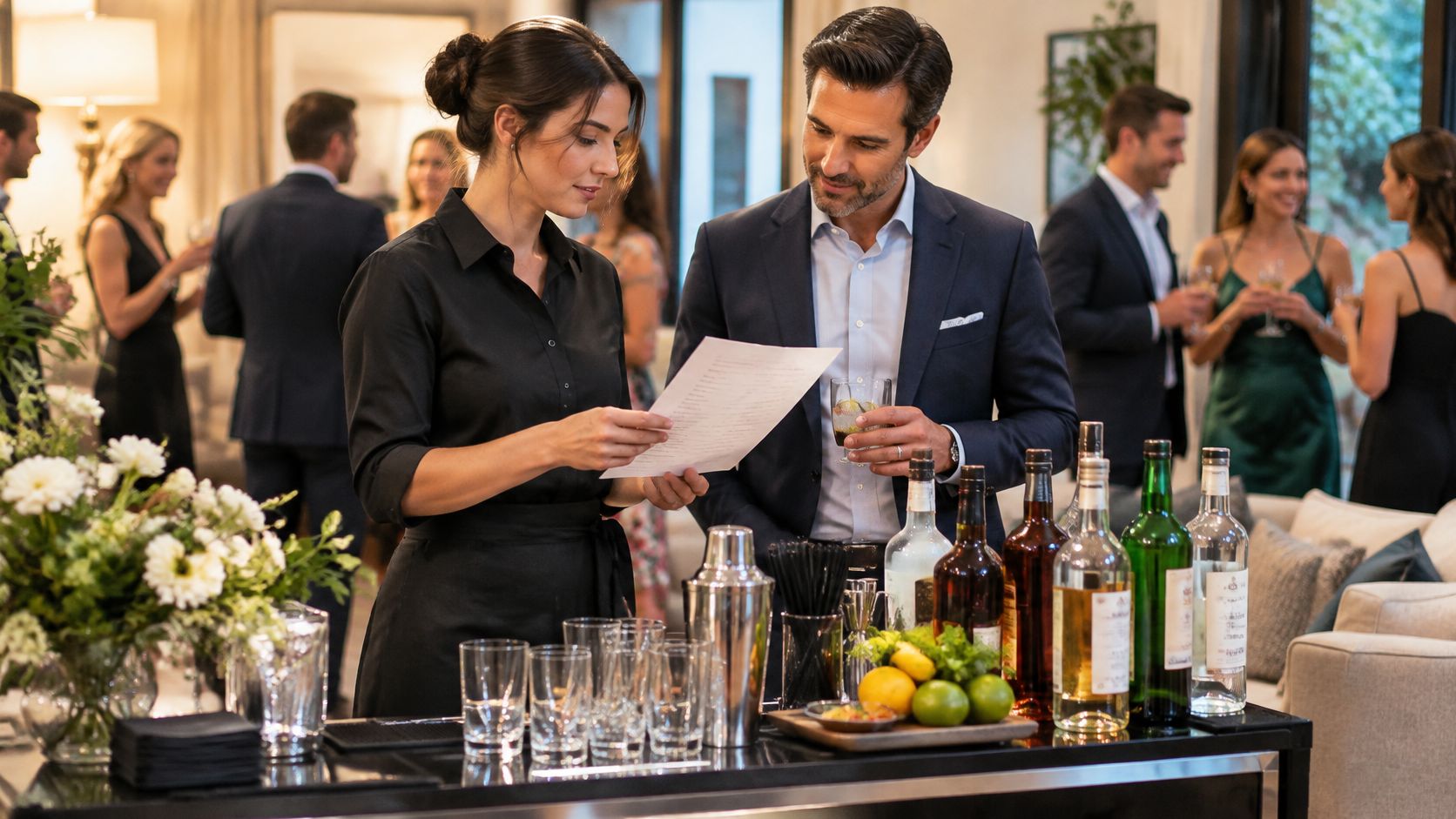
Planning a party in Orange County or the surrounding Southern California area? Send BeeHive Mobile Bar your date, city, guest count, service hours and preferred drinks for a quote and a shopping plan matched to your event.