client appreciation
8 Client Appreciation Event Ideas for Year-End Thank-Yous
Client appreciation event ideas for year-end thanks: eight indoor formats, mocktail-friendly menus and a sample timeline for Orange County hosts.
By BeeHive Mobile Bar ··18 min read
In this guide
Your best client's December calendar is already full. You want to thank them for a year of business, but you have a Tuesday evening and a firm end time.
A good year-end client appreciation event keeps things simple: an indoor space, a brief cocktail-and-mocktail menu and a sincere thank-you at a planned moment. It doesn't need a theme or a sales pitch.
These eight client appreciation event ideas range from an office reception to a twelve-person dinner. Each gives the thank-you a place in the program and assigns clear owners for the bar, food, gifts and activities.
None of this is December-only. A mid-year thank-you, an anniversary reception or a post-renewal gathering runs on the same structure. Change the menu, keep the format.
1. Holiday Cocktail-and-Mocktail Reception for Existing Clients
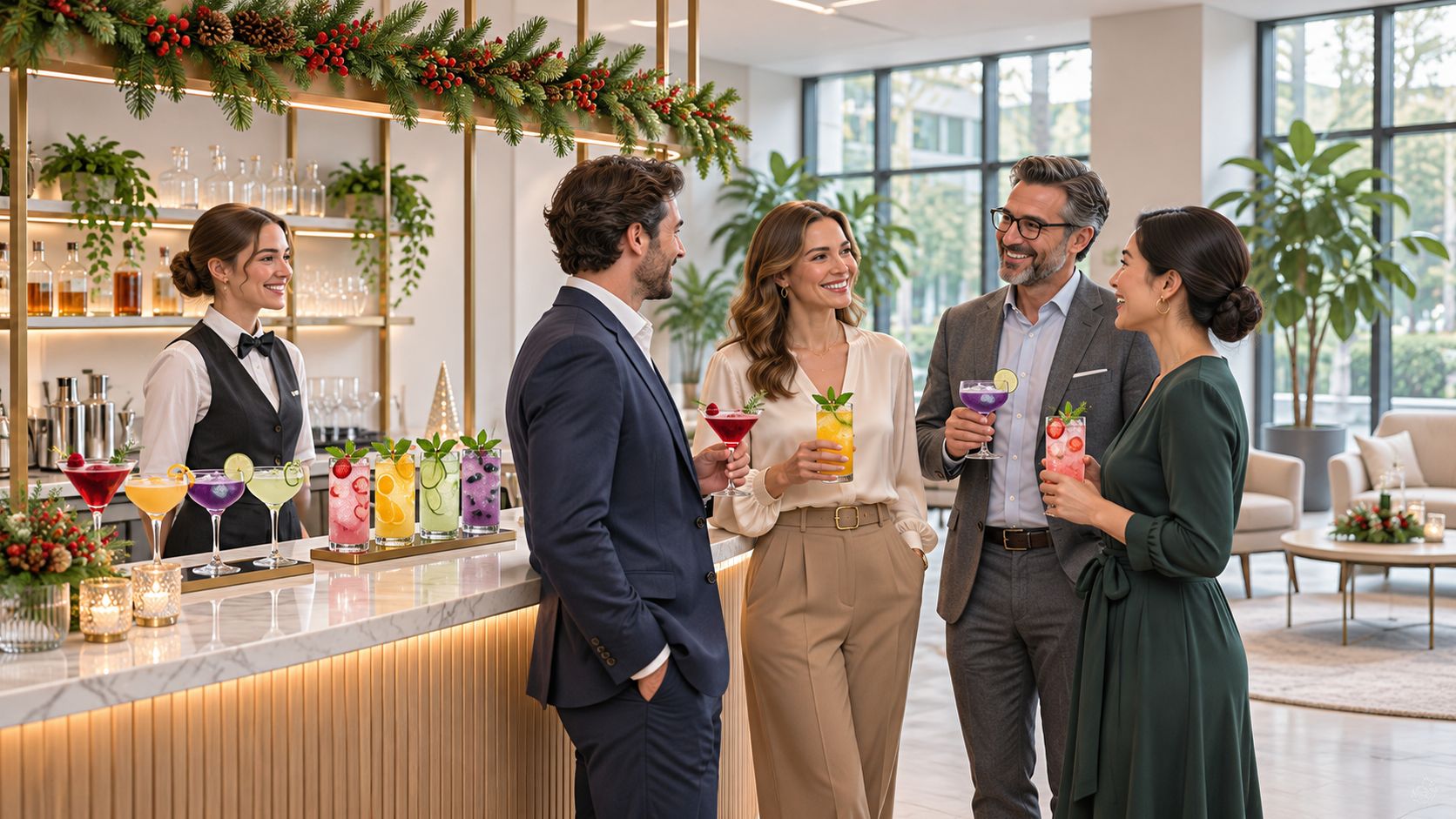
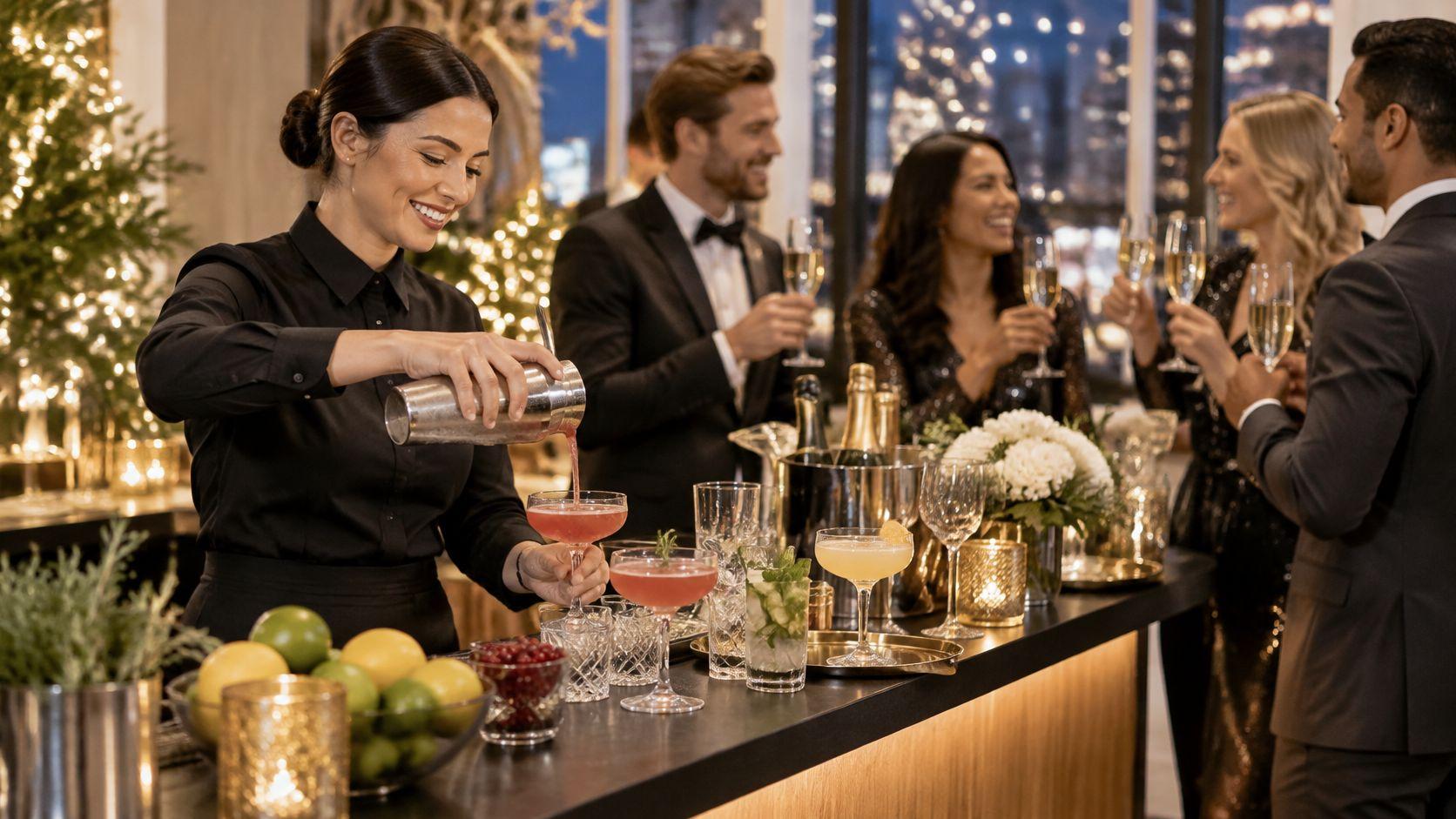
A standing reception in an indoor office, retail space or rented venue room, running 90 minutes to two hours, is the easiest year-end format to schedule and the easiest for a busy client to drop into. Guests arrive when they can, hold a drink, talk to the person they came to see and leave without waiting for a course to finish.
Seating stays optional, which keeps the room flexible and the guest list easier to stretch.
Where the thank-you lands
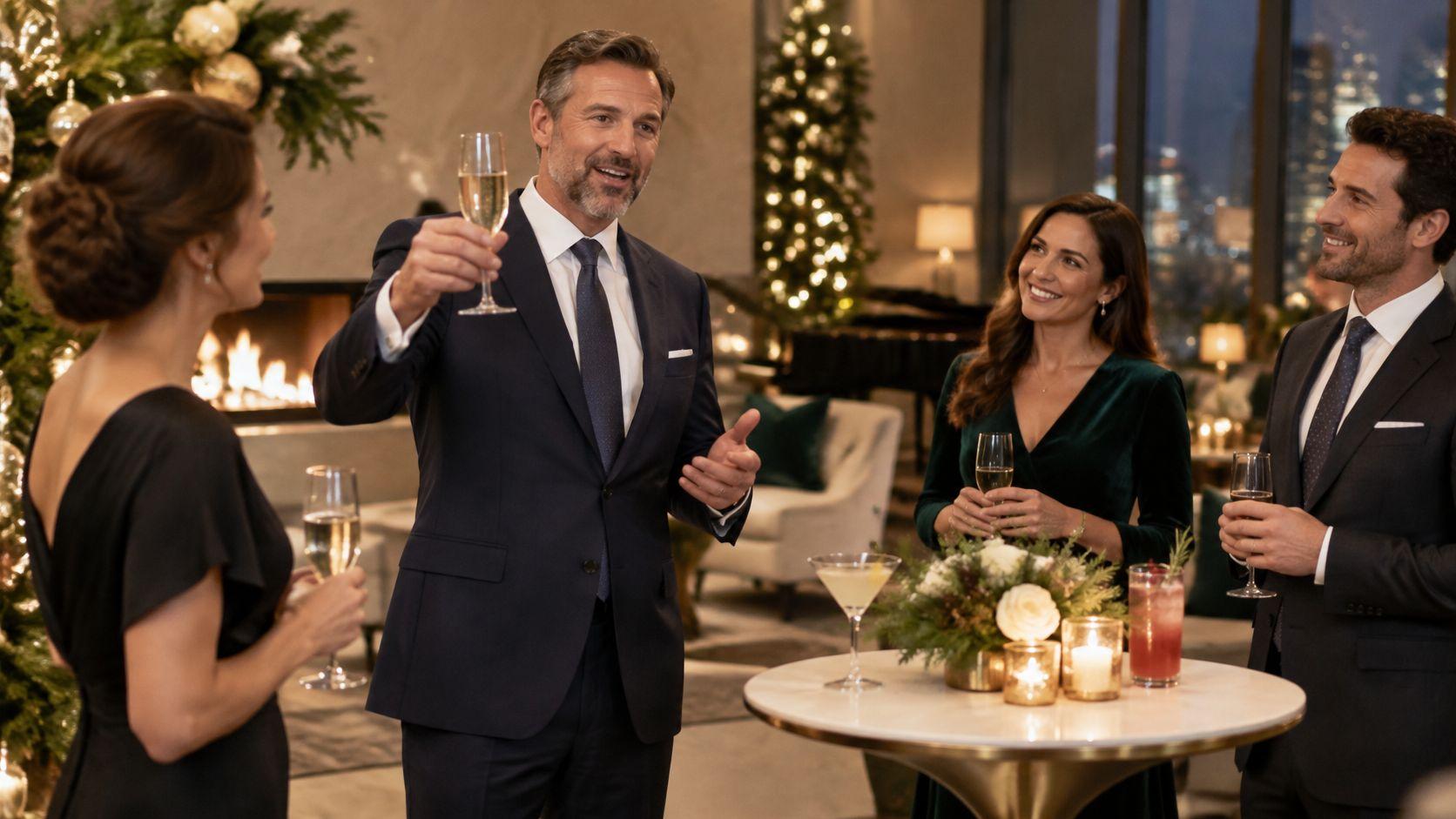
Put the welcome and toast at the midpoint, roughly 45 minutes in, when most guests have arrived and the room has warmed up. Two minutes, one senior voice, no slides. Say what the year meant, name a specific piece of work if you can, then raise a glass and stop talking.
Menu and quantities
Keep the list short so the line moves:
- Two or three cocktails: one stirred and spirit-forward, one citrus and bright, one seasonal. Batching the stirred option ahead cuts bar wait times noticeably, and this guide on how to make party cocktails in a pitcher covers dilution and chilling properly.
- Alcohol-free options: give mocktails the same menu visibility and presentation as cocktails. Bronze, Silver and Gold include a custom printed menu; bartender-only service does not automatically include one. Confirm the cocktail and mocktail selections in your proposal.
- A starting quantity: the Montgomery County beverage serving planning guide uses one drink every 45 minutes and recommends planning three drinks per person for a two-hour event, divided across the beverage types you're serving.
Practical rule: Bronze, Silver and Gold have a three-hour service minimum, with complimentary setup and breakdown arranged separately. Bartender-only service has a two-hour minimum. Confirm service and setup timing in the proposal; a shorter reception does not waive the applicable minimum.
We tailor bar staffing and quantities to the event and confirm them in your proposal. Bronze, Silver and Gold include their listed mixers, ice, garnishes and custom printed menu. Bartender-only does not automatically include those items; water and soft drinks depend on the package or proposal. Plan alcohol-free drinks and toast pours without double-counting. For seasonal menu variations, our corporate holiday party ideas go deeper on winter flavors.
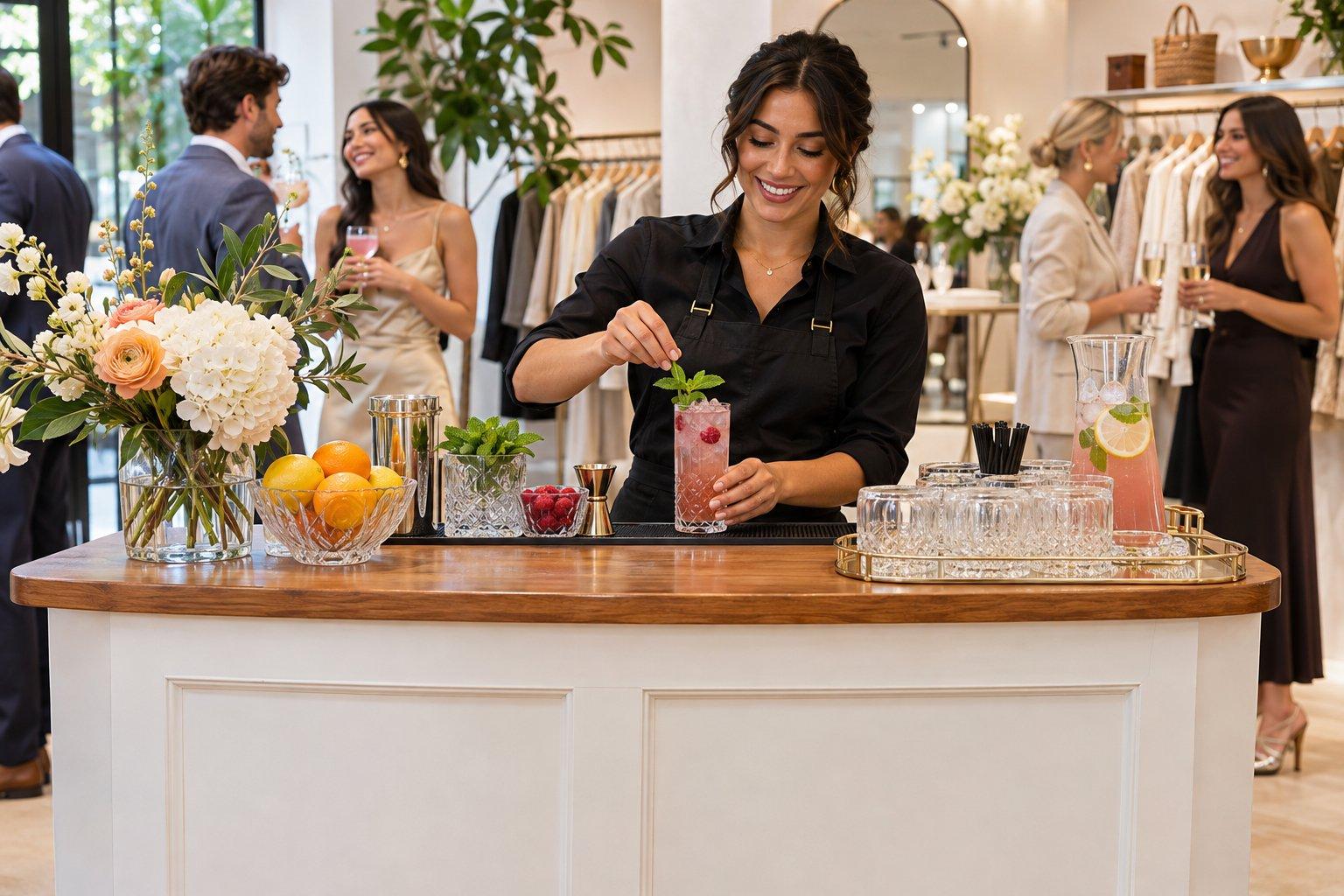
2. In-Store After-Hours Client Thank-You Evening
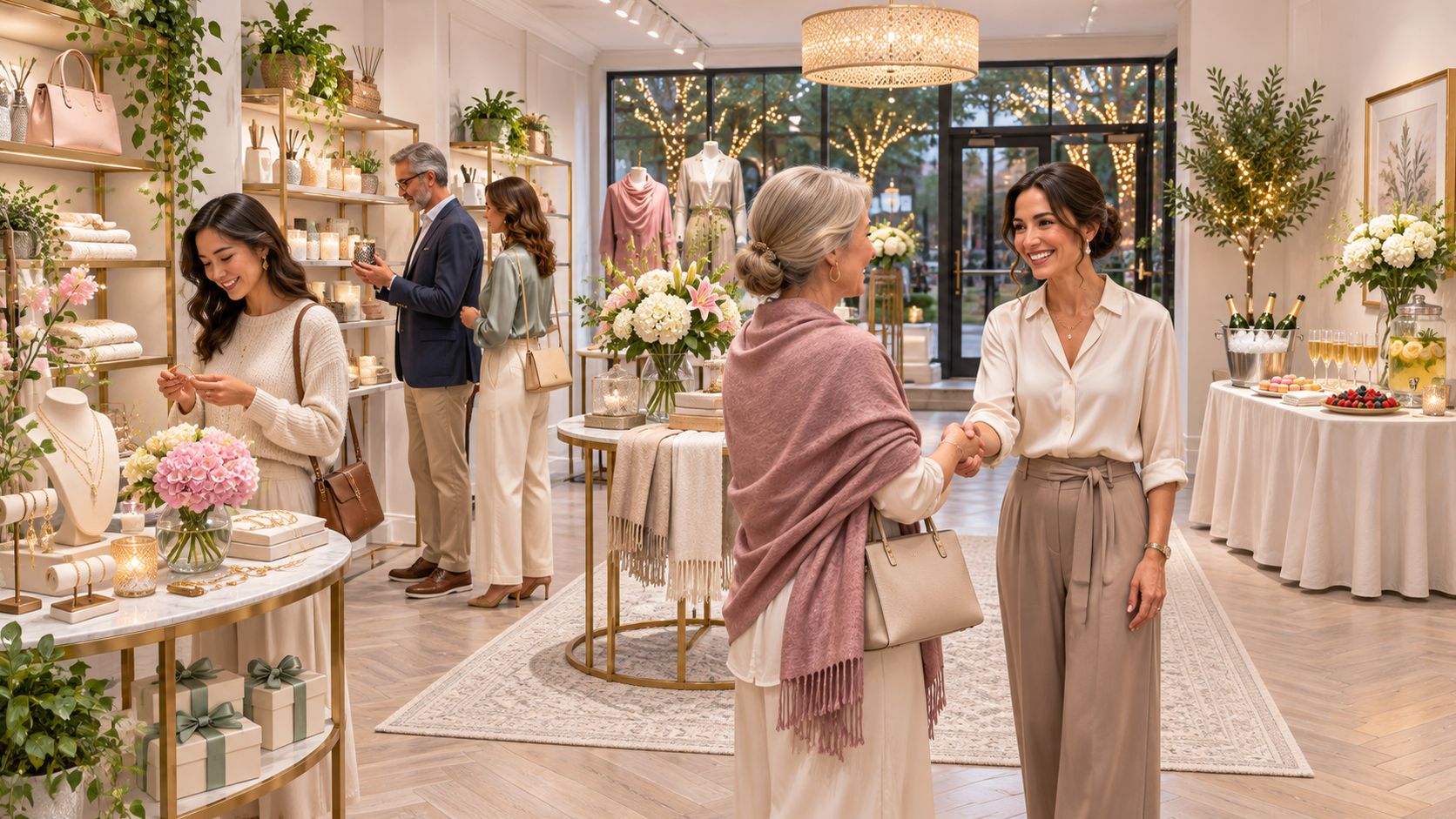
A boutique closes at six, reopens the doors at six-thirty for forty repeat buyers, and the owner says thank you before anyone picks up a glass. That ordering matters. In a retail space, guests drift toward displays the moment they walk in, so remarks scheduled for later get delivered to a scattered room.
This isn't a launch or a grand opening. No new-customer promotion, no sign-up sheet at the door, no public announcement. Invite by name or with a short personal note, and keep the guest list to people who already buy from you.
Personalize at the counter, not just the signage
Bizzabo's 2025 benchmarking research highlights the value organizers place on on-site personalization. In a store, a two-question RSVP about preferred drink style and dietary needs can help shape a concise menu. Bronze, Silver and Gold include a custom printed menu; confirm the drink selections in your proposal.
Layout and permissions
- Distance from product: Keep the bar and the queue away from fragile displays and open shelving. Guests turn with glasses in hand.
- A clear waiting area: Set the bar near it, not in the middle of the browsing path.
- Property rules first: Confirm guest access, music and alcohol service with the property manager before you send invitations.
Split the work before the doors open: the host owns the remarks, we own the bar, and someone on your team owns the gift bags, staged near the exit so nobody carries a bag through the showroom.
3. Office Open House Reception
A late-afternoon office open house works because the client sees the place behind the emails. For professional services firms, agencies and corporate teams, it is the lowest-friction year-end format: no venue hunt, no travel for your team, and a conference area plus lobby can carry the room.
The trade-off is atmosphere. Offices still read as offices, so lighting, music and a warm greeting do more than decoration.
Give the reception a firm end time in the invitation, because a workday event without one either empties early or drags into approved overtime.
Alcohol in a workplace
California's ABC licensing FAQ states that unlicensed bartenders may work at private parties when the host pays them only for bartending services, not for alcohol sales, and the host buys all alcoholic beverages in advance. That matches our structure: you buy and provide the alcohol, and we provide bartending suited to the event and guest count. Check the building's rules on alcohol and guest access separately, since a lease can be stricter than state rules. Tips are optional, and tip jars require approval from you and the venue.
Give conversation somewhere to happen
In 2025, 51% of attendees surveyed in Freeman's business-events research said effective networking was sufficient reason to return to an event, according to BizBash's coverage of the findings. At a client open house, that means introductions around shared problems, not a pile of business cards.
- Assign hosts: One team member per guest cluster, briefed on who is coming.
- Split the drinks: Our self-serve Refreshment Station includes lemonade, infused water, iced tea or a seasonal refreshment, which keeps alcohol-free guests out of the bar line.
- Plan the layout early: Measure doors, elevators and the route to the bar before booking. Confirm placement against the actual room, then choose glassware and service details that fit the space.
For a simple office reception, I would put the thank-you moment near the middle, after guests have settled and before the room breaks into hallway conversations. Keep gifts with the host team near the exit, so clients leave with the gesture fresh.
4. Seated Client Dinner with a Thank-You Toast
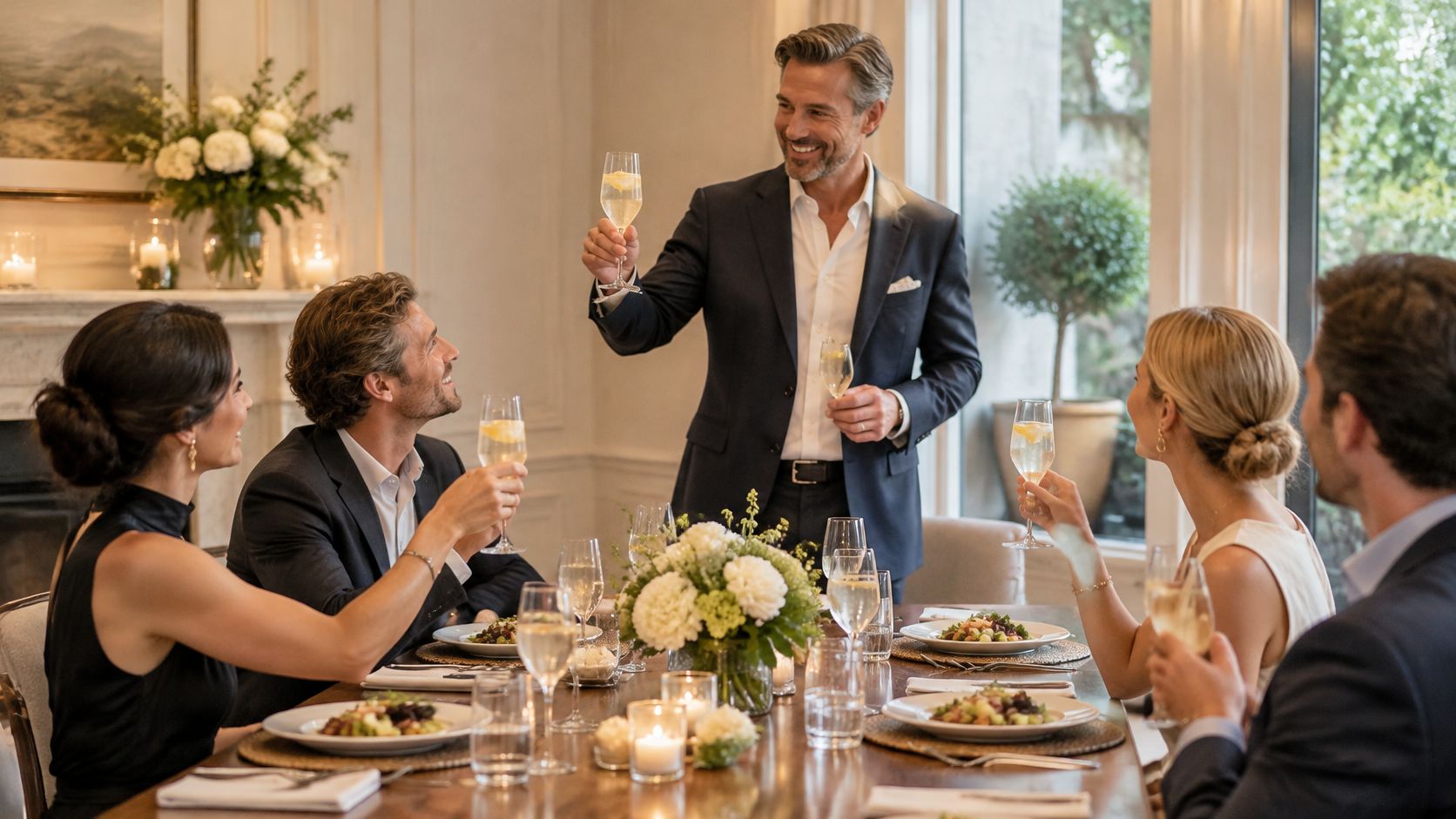
Twelve key clients, one private room, ninety minutes. This is the most personal format here and the least scalable, which is the point. You get real conversation with each person instead of ninety seconds of small talk at a standing bar.
Ownership splits cleanly here. The venue owns food and wine service, the host owns the welcome and the toast, and the bar owns the arrival pour. The menu shrinks accordingly: one signature cocktail on arrival, one mocktail at every place setting, and the rest handled by the venue's wine service. A seated dinner works best with a short, clear menu and a toast that lands.
Why the toast carries the evening
Freeman's 2025 Trust Report, based on a Harris Poll of 1,824 U.S. employed adults who had attended a professional in-person event in the prior year, found that 92% said live events made them feel closer to a brand or company and 90% valued personalized content or experiences, per the Freeman Trust Report hosted by the U.S. Travel Association. Closeness comes from being addressed directly, which a small table allows and a crowded room doesn't.
Schedule the toast in a natural pause, after the appetizer clears or before dessert. Never over a plated course, and never while servers are pouring.
Confirm in writing
- Host-provided alcohol: Ask the venue whether outside alcohol is permitted and what service or corkage fees apply. Get the answer in the contract, not in a phone call.
- Preferences at RSVP: Dietary needs and alcohol preferences in one reply, so the kitchen and the bar plan from the same list.
- An equal toast: Every glass filled, including alcohol-free, before anyone stands.
For arrival service that flows into a seated meal, our gala bar service planning covers timing and staffing. We size the bar team to the room's headcount, so the arrival pour wraps before the first course lands.
5. Daytime Client Brunch or Lunch Reception
Some clients will never give you an evening in December. They'll give you a Tuesday lunch. A late-morning brunch or midday reception in a private restaurant room or an indoor venue space respects that, and it leaves the evening free for their own family commitments.
The menu can shift lighter, with sparkling or citrus-forward options and alcohol-free drinks given equal billing. Keep the selections concise and confirm them in the proposal.
Comfort is the format's real advantage
A daytime room is quieter, brighter and easier to get around than a loud evening reception, and that's a genuine inclusion benefit rather than a nice extra. Research on accessibility at events found that 93% of disabled delegates still encounter obstacles, with overstimulating environments reported by 27% and inaccessible layouts by 28%. Lower the stimulation and you widen the guest list without spending more.
- Ask plainly in the invitation: "Let us know about any dietary or access needs and we'll plan for them." One line, no form to fill out.
- Seating with a route: Chairs for guests who can't stand for an hour, and a clear path between the bar, the food and the restrooms.
- Label everything: Alcohol-free drinks named on the printed menu, not identified by asking the bartender.
The patio question
Book the indoor room as your primary space and treat any patio as optional. Check the forecast about a week out, confirm the indoor backup with the venue in writing, and don't let a pleasant November afternoon talk you into an outdoor-only plan. Late-fall weather in Orange County turns fast, and moving forty guests and a bar indoors mid-event is a job nobody enjoys.
6. Client Workshop Followed by a Reception
A useful session gives clients a reason to attend that isn't the party. A 45-minute year-ahead planning workshop, a market update or a compliance briefing, then a 60-minute reception in the same room. The learning earns the calendar slot, the reception delivers the appreciation.
Freeman's 2025 Commercial Trends Report, which surveyed 1,022 attendees, found that 96% agreed hands-on exposure makes it easier to advocate for a product, per the Freeman Commerce Report 2025. Build the session so clients do something rather than watch something: a planning worksheet they fill in for their own business, a scenario they work through in pairs, a short exercise with a takeaway they'll use.
Keep the pitch out of it
The moment the workshop turns into a product demo, the thank-you reads as a pretext. Informational content only, and no closing slide with a call to action.
Sample run of show
- 4:00 to 4:45: Workshop, led by your presenter. Seats in rows or clusters, no bar service yet.
- 4:45 to 4:55: Reset. Rows break into standing clusters, food comes out, bar opens.
- 4:55 to 5:00: Host thank-you and toast, while the room is still together.
- 5:00 to 5:55: Open reception and conversation.
Start the reception within ten minutes of the session ending or the energy drains and people leave with their notebooks. Book our service time to begin at reception start, not workshop start, and confirm setup timing in the proposal so the bar is ready before the first guest stands up. Three owners here: presenter, host, bar team. Our networking event ideas cover conversation formats that work after a session.
7. Year-Ahead Planning Preview with Refreshments
A retail brand shows its top clients the coming spring collections before the holiday rush. A consultancy walks a dozen accounts through next year's roadmap and asks what they'd change. Seventy-five minutes indoors, a light refreshment plan, and a thank-you that comes first rather than last.
That ordering is the whole distinction between this and a sales meeting. Open with gratitude, then share plans, then invite feedback. Send the agenda in advance so clients know they're attending a conversation, not a pitch, and cap the presentation portion so discussion has room.
Refreshments stay light
One cocktail, one mocktail, water. The focus is the conversation, and a busy bar competes with it. Use our free bartender staffing calculator to size staffing for the reception portion, then confirm the final quote once the guest count settles.
Decide what you're actually measuring
Guidance from Converve on customer appreciation events recommends measuring outcomes against the event's purpose, such as renewal rates among attending accounts compared with similar non-attending accounts, new contacts and meetings per account, or referrals generated afterward. Pick one before you send invitations and record the baseline.
Judging a thank-you by immediate leads pushes your team toward prospecting on the night, and guests feel it. Review renewals and referrals over the following months instead.
Keep follow-up consent-based and low-pressure: a short note, the roadmap document they asked for, and an offer to talk when they're ready. A preview format also travels well outside December, which makes it the most reusable idea in this set.
8. Community Giving Reception in a Client's Name
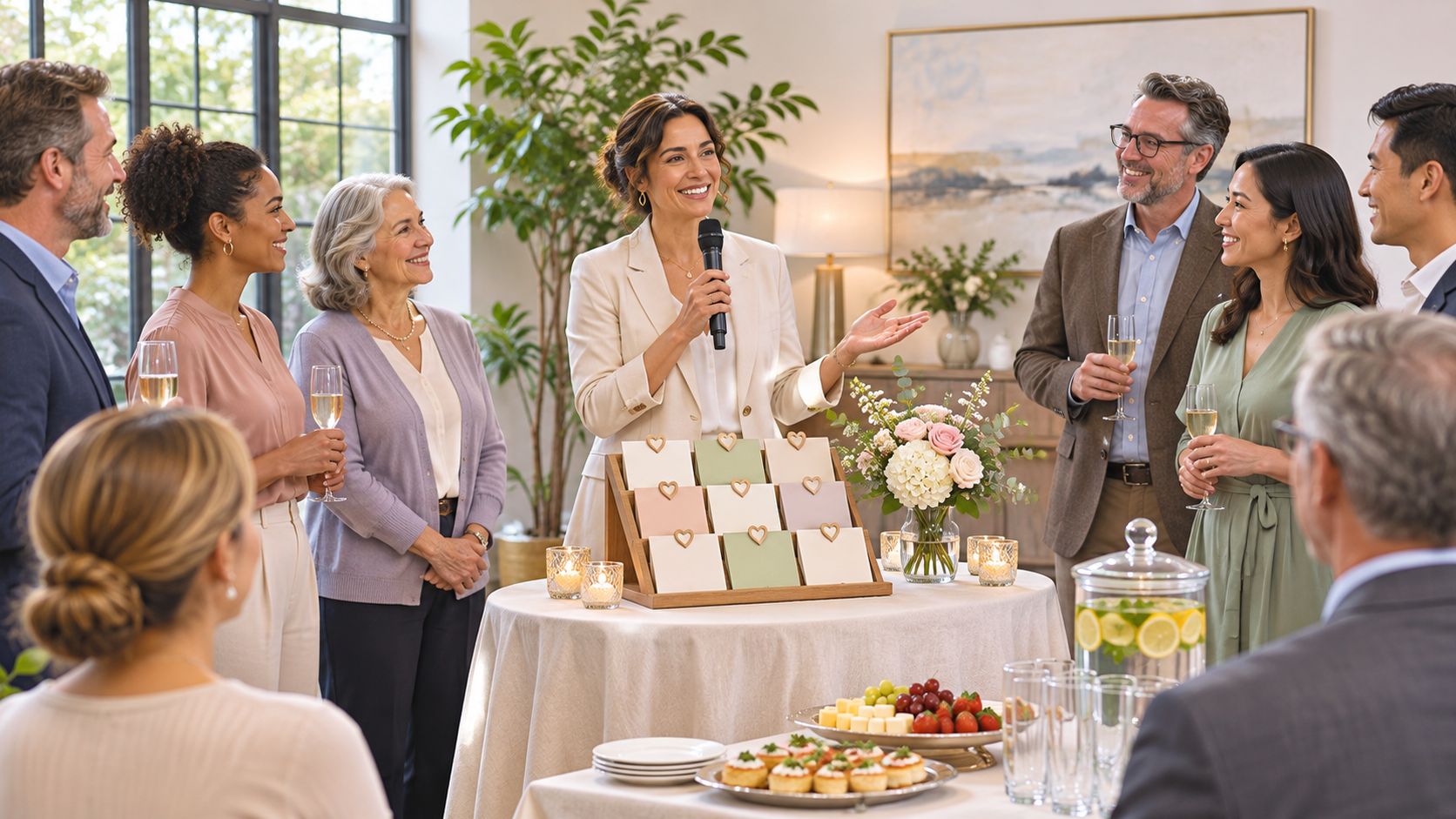
Your company makes a donation to a local food bank or community cause in your clients' names, and the reception is where you tell them. Ninety minutes indoors, a brief cocktail-and-mocktail menu, and a short remark about the gift. Done well, it's the most memorable format here, because clients share something rather than just receive something.
Make the donation real before you announce it
- Confirm in writing: Charity name, tax status, amount and date, settled before invitations go out.
- No unverified impact claims: Don't say the gift funds a specific number of meals unless the charity has confirmed that figure to you.
- Keep remarks factual and brief: Two minutes, then back to the guests. The donation isn't a marketing asset.
A variation that works well: invite guests to choose between two vetted local causes when they RSVP, then announce the split at the toast. It gives everyone a small part in the decision.
Lock the venue early
Holiday dates go first, and this format depends on the announcement having a confirmed place in a confirmed program. If you're looking at a public venue rather than your own office, check the rules before you commit. OC Parks' permit FAQ states that serving alcohol requires a permit and additional fees, and that only certain facilities allow alcohol, with permitted alcohol events subject to special service provisions and security requirements. Confirm venue approval, who pulls the permit, insurance and security in writing.
How the year-end client thank-you formats compare
The formats differ less on décor than on logistics. Three variables decide most of the planning work: how long you hold the room, whether guests sit or stand, and the moment the thank-you lands. Get those three right, and the catering, staffing and invitation decisions fall into place around them.
| Format | Typical length | Seating | Where the thank-you lands |
|---|---|---|---|
| Holiday cocktail-and-mocktail reception | 90 minutes to 2 hours | Standing, with a few high tables | A planned toast partway through, while the room is full |
| In-store after-hours evening | About 2 hours, after closing | Standing; guests circulate past displays | At the beginning, before guests browse |
| Office open house | 2 to 3 hours, drop-in | Standing across the workspace | A fixed toast slot, announced so early and late arrivals both catch it |
| Seated client dinner | 2 to 3 hours, paced by courses | Fully seated | The toast between courses or before dessert |
| Daytime brunch or lunch reception | About 2 hours | Seated or café-style | Near the end, before guests return to the workday |
| Workshop followed by a reception | 30 to 45-minute session plus about an hour of reception | Seated for the session, standing after | At the transition, as the reception opens |
| Year-ahead planning preview | 60 to 90 minutes | Seated around a table | At the beginning, before the preview and discussion |
| Community giving reception | 90 minutes to 2 hours | Standing | The donation announcement itself is the thank-you moment |
Standing formats reach more clients in the same footprint, but the toast competes with conversation, so give it a fixed slot in the program rather than waiting for a quiet moment that never comes. Seated formats buy you a held room for the thank-you, at the cost of a smaller guest list and a firmer end time.
Once the format is set, we staff the bar to your event and your guest count, and we quote every event individually based on guest count, service hours and any add-ons.
Plan Your Year-End Thank-You Before the Calendar Fills
Pick one indoor format, set a clear end time, give the toast a fixed slot and assign separate owners. That's the difference between a reception clients remember warmly and one your team spends the evening firefighting.
Sample timeline
- Four weeks out: Confirm the room and its alcohol rules, set the guest list, send invitations with an RSVP date, an end time and a line asking about dietary and access needs.
- Three weeks out: Request your bar quote with guest count and service hours. Book food and any gifts separately, and confirm the charity details if you're running a giving reception.
- Two weeks out: Close RSVPs, finalize the cocktail and mocktail menu, and confirm the printed menu wording.
- One week out: Check the forecast if a patio is involved, confirm the indoor backup, send a reminder with parking and arrival details, and brief whoever delivers the toast.
- Event day: Setup completes before doors open, toast at the planned slot, last pour fifteen minutes before the stated end.
Who owns what
- Bar and menu: We handle setup, drink service, breakdown and the printed menu. You purchase and provide all alcohol, and we supply a personalized shopping list.
- Food: Your caterer or restaurant, with a delivery time that precedes doors opening.
- Gifts: One named person on your team, staged near the exit.
- Activities and workshop content: Your presenter or host, never the bar team.
- Toast: One senior voice, two minutes, written in advance.
Every BeeHive event is quoted individually based on guest count, service hours and any add-ons, and we can build custom add-ons beyond the listed options if your reception needs something specific. If you're also sorting gifts for your own team, these personalized employee appreciation gift ideas are a separate project from client gifting, with different rules and a different tone.
For a year-end thank-you, request a personalized quote at beehive-bar.com or call (949) 740-6960. Quotes are typically provided within 24 hours, and a signed contract with a 25% deposit reserves your date.
BeeHive Mobile Bar provides dry-hire mobile bar packages and separate bartender-only service for corporate receptions, client thank-yous and private celebrations across Orange County and surrounding Southern California by arrangement. You buy the alcohol. Bronze, Silver and Gold packages include a bar and custom printed menu; bartender-only service does not automatically include either. The optional $150 mobile bar add-on is available only with bartender-only service, not as a standalone rental, and provides the bar only. Visit BeeHive Mobile Bar to run your numbers through our free planning calculators and request a quote for your year-end reception.