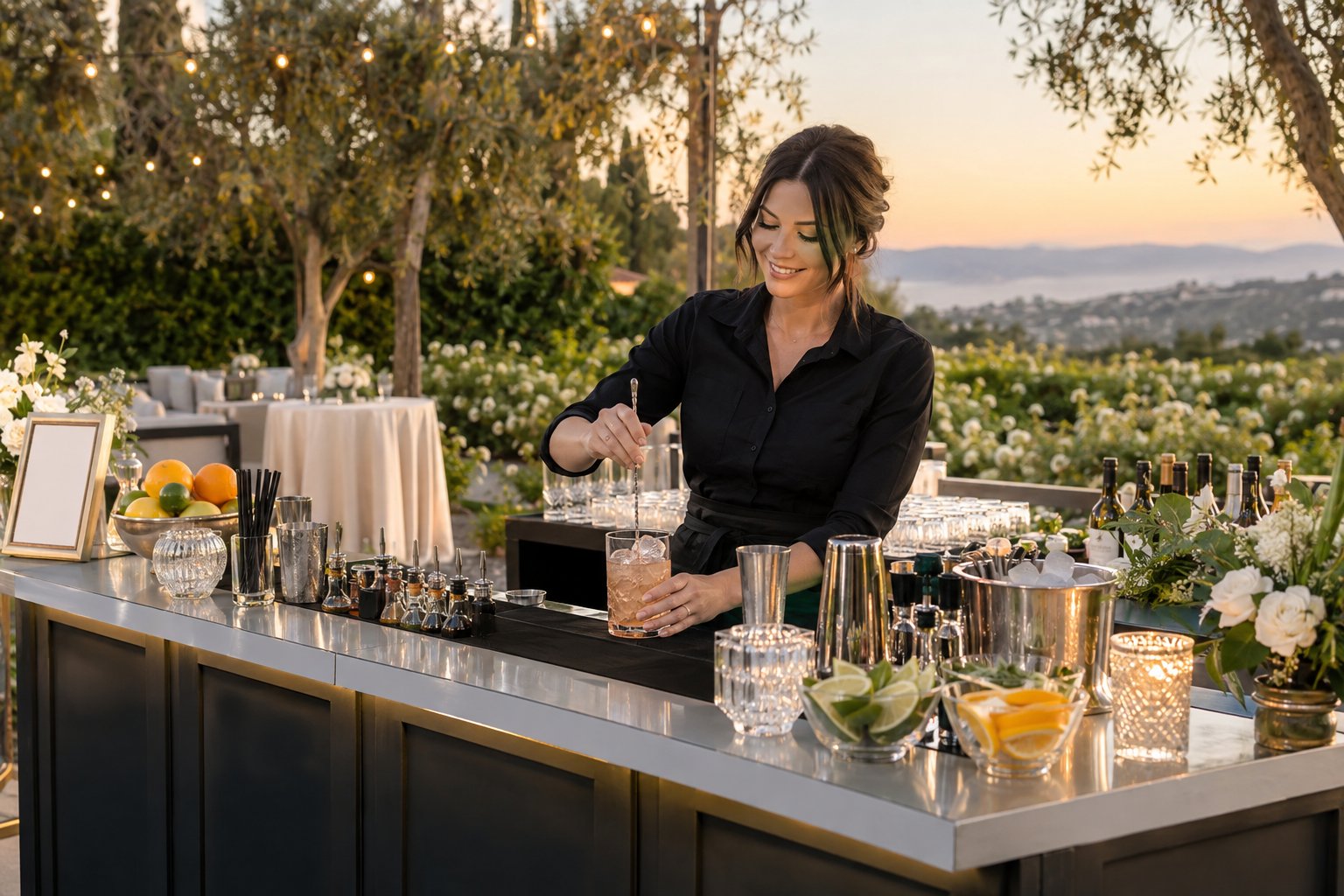
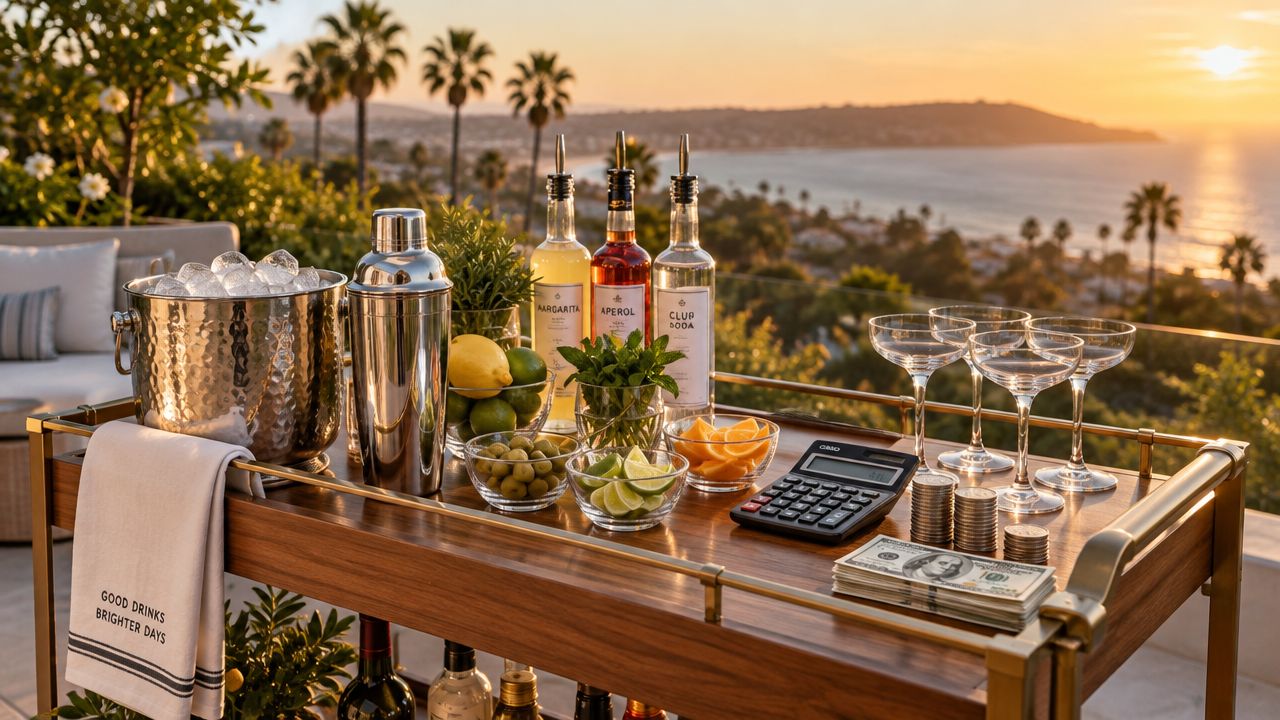
bar service for event
How Bar Service for Events Works: From Planning to Last Pour
Learn how BeeHive bar service for event planning works, from inquiry and menu consultation to alcohol shopping lists, service, last call, and cleanup.
By BeeHive Mobile Bar ··13 min read
Updated
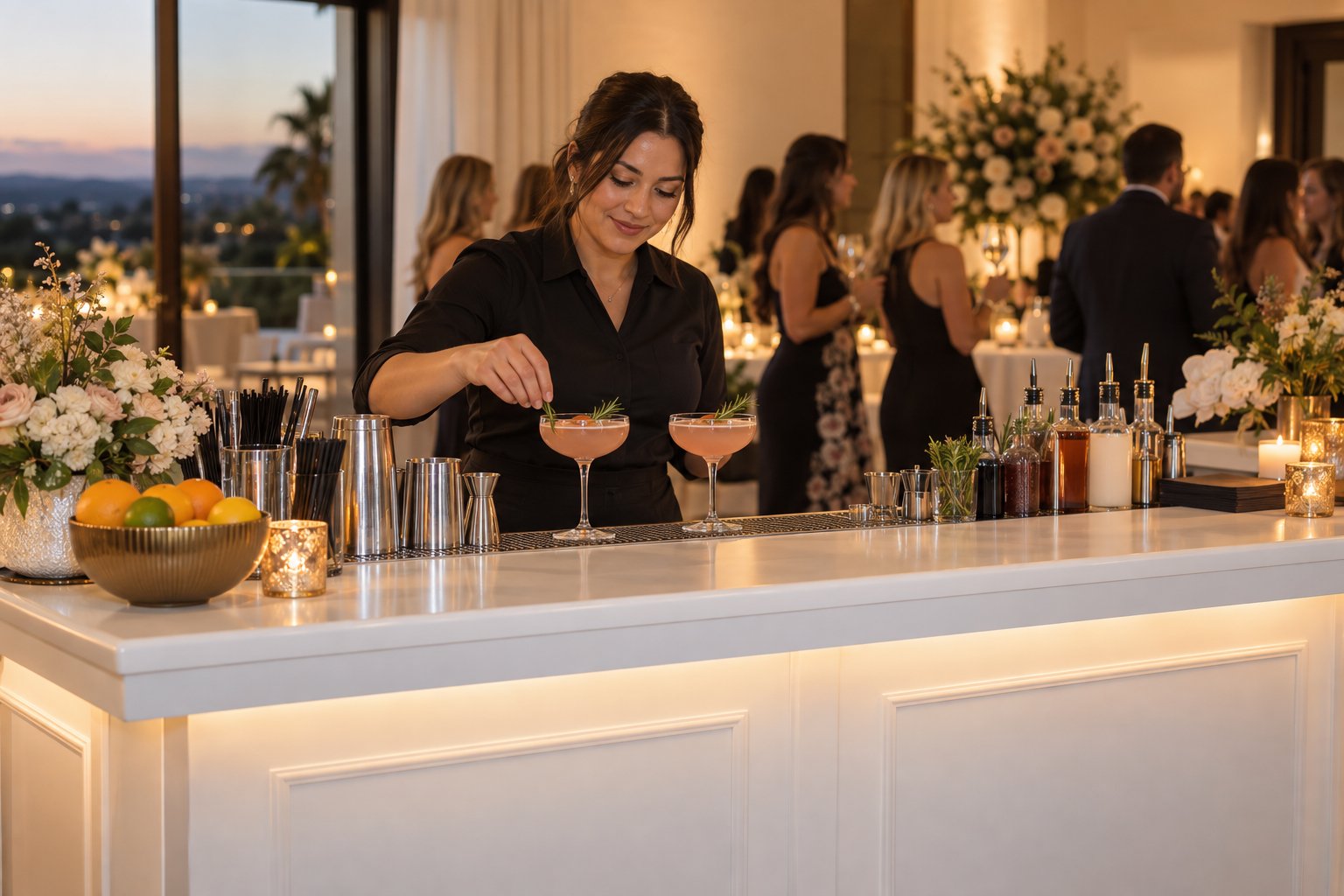
You've chosen the date, secured the venue, and started mapping out the guest experience. Then the drinks question moves to the front of the planning list. Who is supplying the alcohol? Who is building the menu? How does setup work? What happens during service? And what exactly should you have ready before you ask for a quote?
This guide walks through bar service for event planning as a simple timeline, from your first conversation with BeeHive through the final cleanup at the end of the night. If you are booking mobile bar service for the first time, the goal is to make the process feel clear, manageable, and predictable.
At BeeHive Mobile Bar, the experience is designed to be collaborative without putting the operational burden on the client. You make the key event decisions and purchase the alcohol. We guide the beverage plan and handle the service side, including bartenders, mixers, ice, bar tools, coolers, plastic glassware, garnishes, setup, active bar service, and cleanup according to the scope of your event.
Table of Contents
- What bar service for event planning includes
- Step 1: Send your inquiry and event brief
- Step 2: Review the dry-hire model
- Step 3: Menu consultation and beverage planning
- Step 4: Choose cocktails and mocktails
- Step 5: Receive your tailored alcohol shopping list
- Step 6: Purchase the alcohol and confirm responsibilities
- Step 7: Final pre-event confirmations
- Step 8: Load-in and setup on event day
- Step 9: How bartenders manage service during the event
- Step 10: Last call and bar closeout
- Step 11: Cleanup after service ends
- What to have ready when requesting a quote
- A simple next step
What bar service for event planning includes
When people hear "bartending," they often think only about someone pouring drinks for guests. In practice, bar service for event planning includes much more than that. It involves menu coordination, supply planning, event timing, alcohol guidance, setup logistics, active guest service, and end-of-event cleanup.
That is why the process works best when it starts early enough to be part of the broader event plan, not a last-minute add-on. The beverage service affects the shopping list, timeline, service window, and guest experience from the moment the first drink is ordered to the moment the bar closes.
With BeeHive, the process is built to feel straightforward. We help you understand what decisions are yours, what support we provide, and how the event moves from idea to execution without leaving you to figure out the details alone.
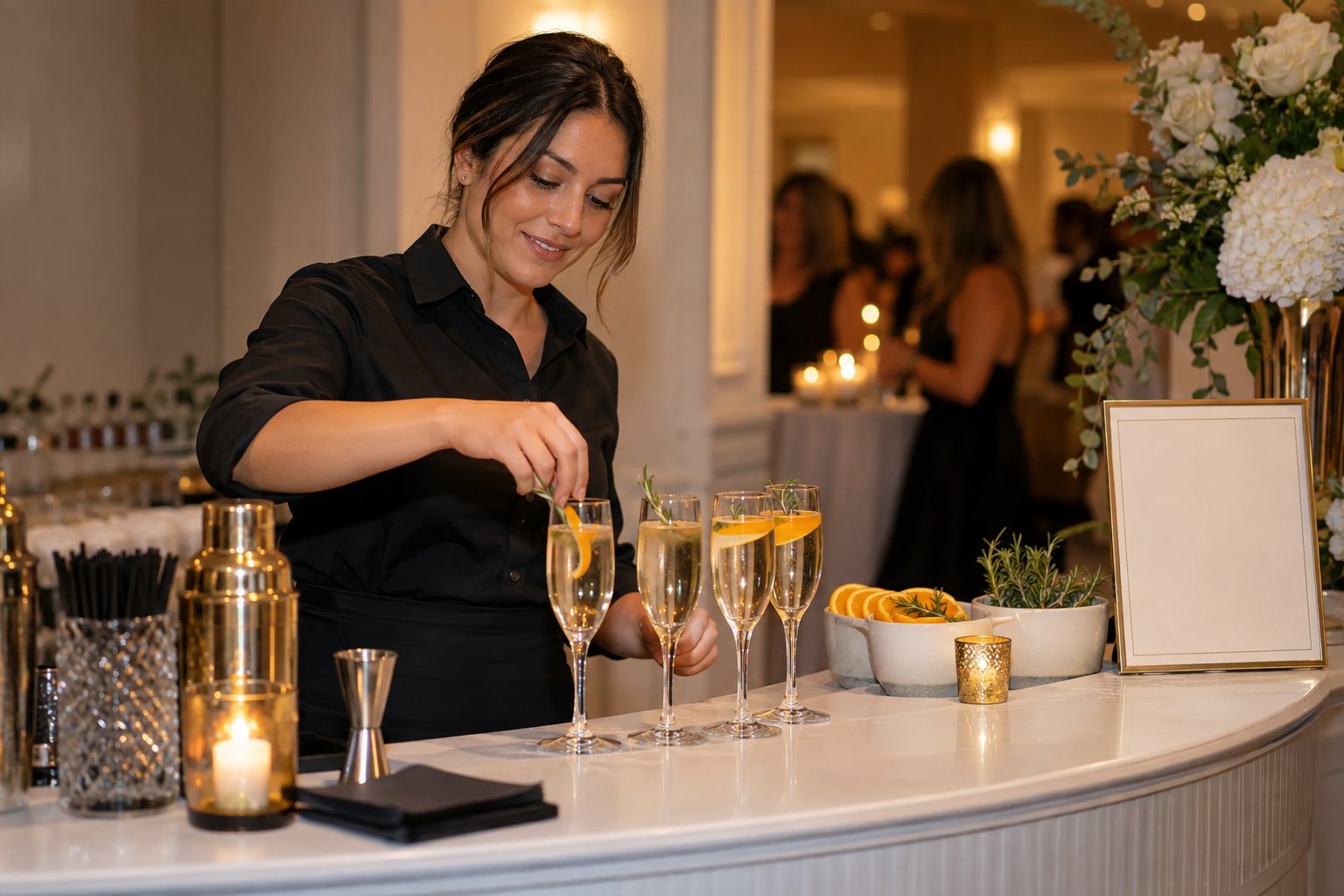
Step 1: Send your inquiry and event brief
The client experience begins with the first inquiry. This is the stage where BeeHive learns the basics of your event and starts identifying the level of bar support you may need.
A helpful event brief does not need to be long or complicated. It simply needs to cover the core planning points, such as:
the event date
the venue or event location
the estimated guest count
the hours guests will be served
whether you want cocktails, mocktails, beer, wine, or a combination
any known venue rules or service restrictions
the kind of overall experience you want guests to have
At this stage, exact decisions are not always final, and that is completely normal. Many first-time clients reach out while they are still narrowing down the drink menu or confirming the final headcount. The purpose of the first conversation is to establish the event scope and begin shaping a realistic plan.
If you are still deciding what type of mobile beverage setup makes sense for your event, our mobile drinks bar guide can offer additional context before you request a quote.
Step 2: Review the dry-hire model
BeeHive operates as a dry-hire mobile bar, and it helps to understand that model early in the process.
In a dry-hire setup, the client purchases the alcohol, while the bar service provider handles the non-alcohol service side. That means BeeHive does not sell, supply, purchase, or deliver alcohol. Instead, we help you plan what to buy and then manage the professional service built around it.
In practical terms, BeeHive's role can include:
bartenders
menu consultation
mixers and supporting bar ingredients
ice and coolers
bar tools and service supplies
plastic glassware, napkins, and straws according to the event scope
garnishes
setup, service, and cleanup
Your role is to purchase the alcohol from the tailored list we provide, approve the menu, and share the event details we need in order to prepare the bar correctly.
This structure keeps the alcohol purchase in your control while giving you professional support for the part most hosts do not want to manage on event day.
Step 3: Menu consultation and beverage planning
Once the basic event details are in place, the next step is menu consultation. This is where the service begins to feel personalized.
The menu conversation is about more than selecting drinks that sound appealing. It is where BeeHive helps translate your event into a beverage experience that makes sense for your guests, schedule, and service flow. A good menu should feel cohesive, clear to order, and realistic to execute during the busiest parts of the event.
Some clients already know exactly what they want. Others begin with a general idea, such as one signature cocktail, one mocktail, beer, and wine. Either starting point works. Our job is to help refine the options so the final menu feels intentional and manageable.
This is also the moment when we discuss guest preferences and practical considerations, such as whether the event needs lighter options, seasonal choices, spirit-forward drinks, or stronger nonalcoholic offerings. The result is not just a drink list. It is a service plan built around what your guests are most likely to order.
Step 4: Choose cocktails and mocktails
After the consultation, the beverage direction becomes more specific. Clients choose the cocktails and mocktails they want BeeHive to prepare and serve.
For many events, this is where the bar begins to feel memorable. Signature drinks can reflect the season, the tone of the gathering, or the host's personal preferences. Mocktails are equally important because they ensure nonalcoholic guests have options that still feel considered and celebratory.
The strongest menus usually balance personality with simplicity. Guests should be able to understand the choices quickly, and the bar team should be able to prepare them consistently throughout service. That balance supports a smooth guest experience without turning every order into a custom project.
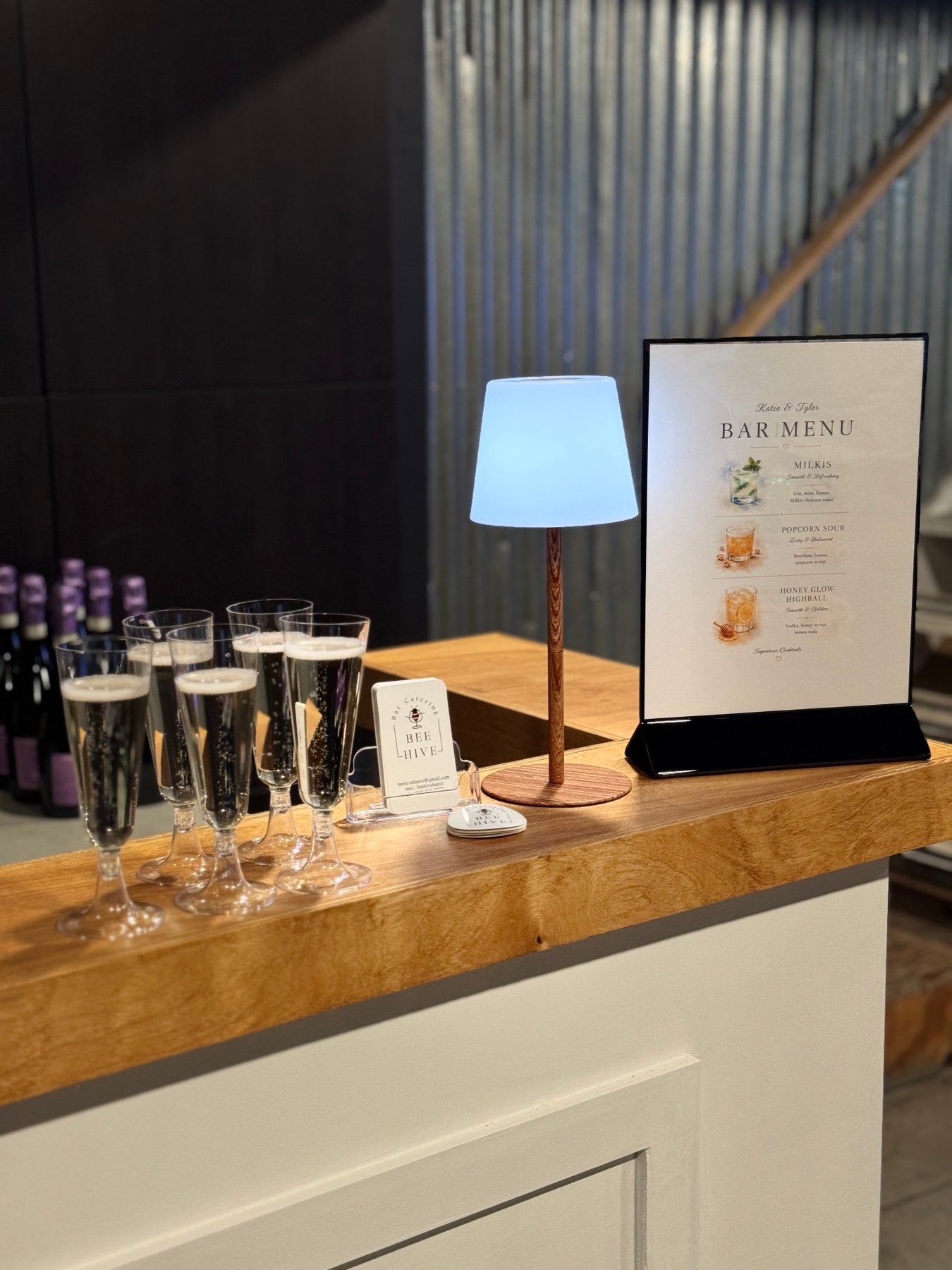
BeeHive can also provide printed cocktail menus so guests know what is available as soon as they approach the bar. That reduces confusion and helps the service line move more smoothly.
For clients comparing beverage ideas across formats, our mobile bartending packages page provides a broader overview of how service can be structured.
Step 5: Receive your tailored alcohol shopping list
Once the menu is approved, BeeHive prepares a tailored alcohol shopping list for your event.
This is one of the most useful parts of the planning process because it replaces guesswork with a clear purchase guide. Instead of trying to estimate bottles and product types on your own, you receive recommendations based on your guest count, selected drinks, and service window.
The purpose of the shopping list is not only to tell you what to buy. It is also to make sure the alcohol order matches the actual menu. If you are serving specific cocktails, the list reflects the spirits required for those drinks. If beer and wine are included, those recommendations are coordinated with the rest of the beverage plan.
Because BeeHive does not supply alcohol directly, this step gives clients structure without taking away purchasing control. You can buy the alcohol yourself while knowing the list was created around the bar service plan.
Step 6: Purchase the alcohol and confirm responsibilities
After receiving the shopping list, the client purchases the alcohol independently. This is the main responsibility that remains on the client side once the service plan has been outlined.
special-event bar stocking guide
For first-time clients, it helps to think of the purchase in simple terms. If it contains alcohol, you buy it. If it supports alcohol service but is not alcohol itself, BeeHive typically covers it according to the event scope.
That means the client is responsible for purchasing the approved beer, wine, and spirits on the list. BeeHive handles the supporting service materials included in the agreed scope, such as mixers, ice, coolers, bar tools, garnishes, and related service items.
If there are any venue-specific requirements, delivery timing considerations, or handoff instructions for the alcohol, those should be confirmed before event day so everyone understands how and when the alcohol will be available for setup.
Step 7: Final pre-event confirmations
As the event date approaches, BeeHive confirms the practical details needed for a smooth service.
This stage usually includes a final review of:
guest count updates
the confirmed service window
the finalized beverage menu
venue access instructions
setup timing
parking or unloading details
where the alcohol will be delivered or handed off
any venue rules that affect bar operations
This is also when final adjustments can be made if the scope has changed. For example, a guest count increase or a broader menu may affect the staffing and service plan. Rather than using a fixed formula, BeeHive tailors staffing and overall scope to the guest count, menu, venue, and service window.
The goal of pre-event confirmation is simple. By the time event day arrives, both the client and the bar team should know exactly what is happening, when it is happening, and what is needed to execute the service well.
Step 8: Load-in and setup on event day
On the event day, BeeHive arrives for load-in and begins preparing the bar for service.
This phase includes bringing in the service equipment, organizing supplies, chilling what needs to be chilled, prepping garnishes, arranging tools, and making sure the station is ready before guests begin ordering. If printed menus are part of the event, they are placed at the bar during setup.
From the client's perspective, this is the point where the planning shifts into execution. The goal is for you to see the bar come together without having to direct each step. Because the service details have already been confirmed in advance, setup can proceed in an orderly way.
If alcohol handoff is happening on-site, the team coordinates that as part of the setup window so everything is in place before the first order is placed.
Step 9: How bartenders manage service during the event
Once the event begins, the bartenders take over the active service side of the guest experience.
This is where professional bar service becomes especially valuable. The team is not only making drinks. They are maintaining the pace of service, following the approved menu, monitoring supplies during the event, keeping the station organized, and serving guests with consistency and professionalism.
BeeHive bartenders work from the agreed beverage plan rather than improvising a full open-ended bar. That creates a cleaner service experience for both the client and the guest. Orders are clearer, ingredients are prepared in advance, and the service remains aligned with what was planned.
Responsible alcohol service is also part of the role. Professional bartenders are there to serve guests attentively while keeping the bar process controlled and appropriate to the event.
The result should feel easy from the guest side. People approach the bar, understand their options, place an order, receive their drink, and move back into the event. Meanwhile, the client is free to host, celebrate, or focus on the larger occasion rather than managing beverage logistics.
Step 10: Last call and bar closeout
As the service window comes to an end, the bar moves into last call and closeout.
Last call is the transition between active service and shutdown. It gives guests a clear final opportunity to place an order before the bar closes and helps the event end in an orderly way rather than stopping abruptly.
At this point, bartenders finish the remaining approved service, begin consolidating supplies, and prepare the station for breakdown. Because the end of service has already been established in the event timeline, this part should feel expected and smooth.
For the client, this means there is no need to personally announce every operational step. The bar team manages the close of service in a professional manner and keeps the process aligned with the agreed schedule.
Step 11: Cleanup after service ends
After last call, BeeHive handles bar cleanup according to the event scope.
Cleanup generally includes breaking down the bar area, clearing service items, packing tools and remaining bar materials, and leaving the service space in order. This matters more than many first-time clients expect. A bar is not finished when the final drink is poured. There is still an operational wrap-up that needs to happen efficiently at the end of the event.
Having the same team manage setup, service, and cleanup creates continuity. The people who understand the station, menu, and supplies are also the ones responsible for closing it out properly.
For hosts, that means less end-of-night stress and fewer loose details to chase once the event is over.
What to have ready when requesting a quote
If you are ready to contact BeeHive, a few key details will help make the quote process faster and more accurate.
Try to have the following information ready:
event date
venue name or location
estimated guest count
expected bar service hours
whether you want cocktails, mocktails, beer, wine, or a combination
any early menu ideas or signature drinks you have in mind
any venue restrictions or access notes you already know
whether the alcohol will be purchased locally or delivered to the venue in advance
You do not need every detail finalized before reaching out. A quote request is simply more useful when it starts with a realistic picture of the event. From there, BeeHive can help refine the beverage plan and clarify next steps.
If you are still evaluating staffing considerations, our bartender staffing calculator can be a helpful reference point alongside your quote request.
A simple next step
A good bar experience should feel organized long before the first drink is served. When the process is clear, clients know what to expect, what they are responsible for, and how the service will unfold from inquiry through cleanup.
BeeHive's approach to bar service for event planning is designed to make that process easier. You share the event details, collaborate on the menu, receive a tailored alcohol shopping list, purchase the alcohol, and rely on our team to handle the professional bar service around it.
If you are planning an event and want a clear, tailored quote, send your date, venue, guest count, service window, and beverage ideas, and BeeHive can help you build the right plan from the first conversation to the last pour.