mobile bar service for weddings
Mobile Bar Service for Weddings: The Complete Planning Guide
By BeeHive Mobile Bar ··13 min read
Updated
At a glance
- Confirm your venue’s bar facilities and setup requirements.
- Plan the menu, staffing, and service window together.
- Agree on alcohol purchasing and responsibilities before the wedding.
In this guide
A mobile bar can bring the setup and service your wedding venue needs. Start with the available space, guest count, and timeline, then confirm the menu and staffing.
Why Couples Are Choosing Mobile Bar Services
A couple tours a vineyard, loves the view, and then hears the sentence that changes the budget conversation, “We don't have a permanent bar.” That's common at ranches, beachfront spaces, industrial lofts, and many other wedding venues that were designed for events, not for beverage service. In that situation, a mobile bar service for weddings isn't a luxury add-on, it's the thing that makes the site workable.

The appeal is practical, not just aesthetic
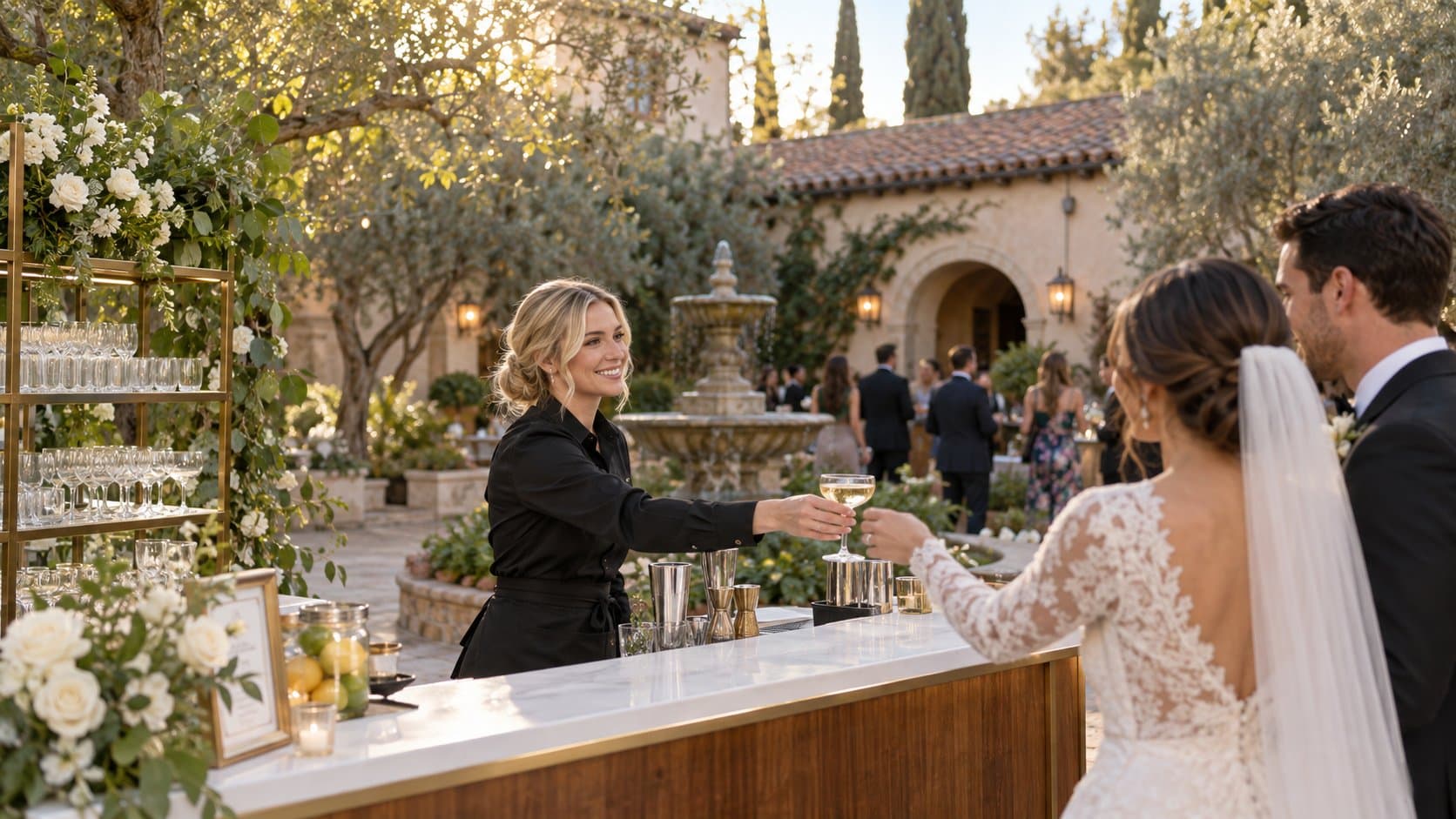
Couples want a bar that looks good, but they book it because they need the basics handled without drama. A mobile bar brings a physical service point, trained bartenders, and a setup that can fit into a space without a built-in beverage program. That matters more than the decor trend of the moment.
The service also gives hosts control. You choose the drinks that fit your crowd, your menu, and your budget, instead of buying into a venue package that doesn't match your guest list. That's a better deal for a lot of weddings, especially when the guest mix includes both cocktail drinkers and people who want something zero-proof.
Practical rule: if your venue doesn't already function like a bar, hire a team that does.
This is why mobile bars have become such a standard solution at modern weddings. They turn an empty corner, patio, lawn, or barn entrance into a real service area with a start, finish, and cleanup plan. The couple gets the atmosphere they wanted, and the reception doesn't stall every time a guest asks for a second drink.
How the Dry-Hire Model Works for Wedding Bars
Dry-hire sounds complicated until you break it into one simple rule, you buy the alcohol, the bar team handles the service. That's the model behind a lot of professional mobile bar work, and it fits weddings well because it separates the legal and operational pieces from the drinking inventory itself. The host controls what's served, and the bar company controls how it's served.
What the host buys and what the bar company provides
For BeeHive’s Bronze, Silver and Gold dry-hire mobile-bar packages, the couple or planner purchases alcohol using a tailored shopping list. BeeHive brings the portable bar, professional bartending and the supplies listed in the selected package, with setup and cleanup. Bartender-only service has different inclusions, so confirm who provides the bar, mixers, ice, garnishes and drinkware in the proposal. That division keeps the plan clear from the beginning.
The best dry-hire teams also give you a tailored shopping list before you buy anything. That list should tell you how much alcohol to purchase so you don't overspend on bottles you'll never open or panic-buy at the last minute. In other words, you're not guessing, you're following a service plan built around your guest count and hours of service.
Why this model exists
This setup isn't just a budgeting trick, it's often tied to venue rules and alcohol compliance. Some event sites allow outside bartending but not outside alcohol sales, and some require the host to own the alcohol outright. Dry-hire keeps the bar company in the service lane, not the retail lane.
A good dry-hire quote should tell you exactly who buys the alcohol, who pours it, and who clears it away.
That clarity gives couples more control than a per-person beverage package usually does. You know what you're paying for, you can tailor the menu to the crowd, and you keep the final inventory decisions in your own hands. That's the advantage, not just flexibility, but control.
Wedding Bar Package Tiers and What They Include
The cleanest way to compare mobile bar service is by guest count, menu complexity, and how much you want handled for you. A small wedding doesn't need the same setup as a luxury reception with multiple signature pours and a longer service window. That's why package tiers exist, and why couples should choose based on logistics first, then aesthetics.
| Feature | Bronze ($750+) | Silver ($1,150+) | Gold (Custom) |
|---|---|---|---|
| Bar setup | Mobile bar | Large mobile bar | custom-styled mobile bar |
| Bartenders | 1 professional bartender | 2 professional bartenders | 2+ professional bartenders |
| Drinks included in menu design | 2 signature cocktails | 3 signature cocktails | 4 signature cocktails |
| Menu support | Menu consultation and shopping list | Menu consultation and shopping list | Fully custom cocktail menu and shopping list |
| Service items | Mixers, ice, coolers, and standard garnishes | Mixers, ice, coolers, and premium garnishes such as dried fruit and edible flowers | Mixers, ice, coolers, one Refreshment Station, soft drinks and water, and premium garnishes and presentation |
| Beverage support | Not specified | Not specified | Soft drinks and water |
Bronze fits intimate receptions
Bronze starts from $750 and covers the essentials, a mobile bar, one professional bartender, two signature cocktails, mixers, ice and coolers, a shopping list, menu consultation, and standard garnishes. That's the right fit for smaller guest counts, especially if the wedding is more intimate and the bar menu stays tight.
Silver is the workhorse tier
Silver starts from $1,150 and steps up the staffing and service footprint. You get a large mobile bar, two professional bartenders, three signature cocktails, mixers, ice and coolers, a detailed shopping list, menu consultation, and premium garnishes such as dried fruit and edible flowers. For most mid-size weddings, this is the tier that keeps the line moving without making the bar feel oversized.
Gold is for custom experience design
Gold is custom priced, and that's appropriate because it's built around the event rather than a preset template. Two or more professional bartenders, a custom-styled mobile bar, four signature cocktails, mixers, ice and coolers, a shopping list, a fully custom cocktail menu, soft drinks and water, one Refreshment Station, and premium garnishes and presentation make sense when the bar is part of the event design, not just a service station.
If you want the bar to feel luxurious, don't start by adding random upgrades. Start by matching the tier to the guest count, then layer on extras only if they fit the flow of the night.
Calculating Drink Quantities and Staffing Needs
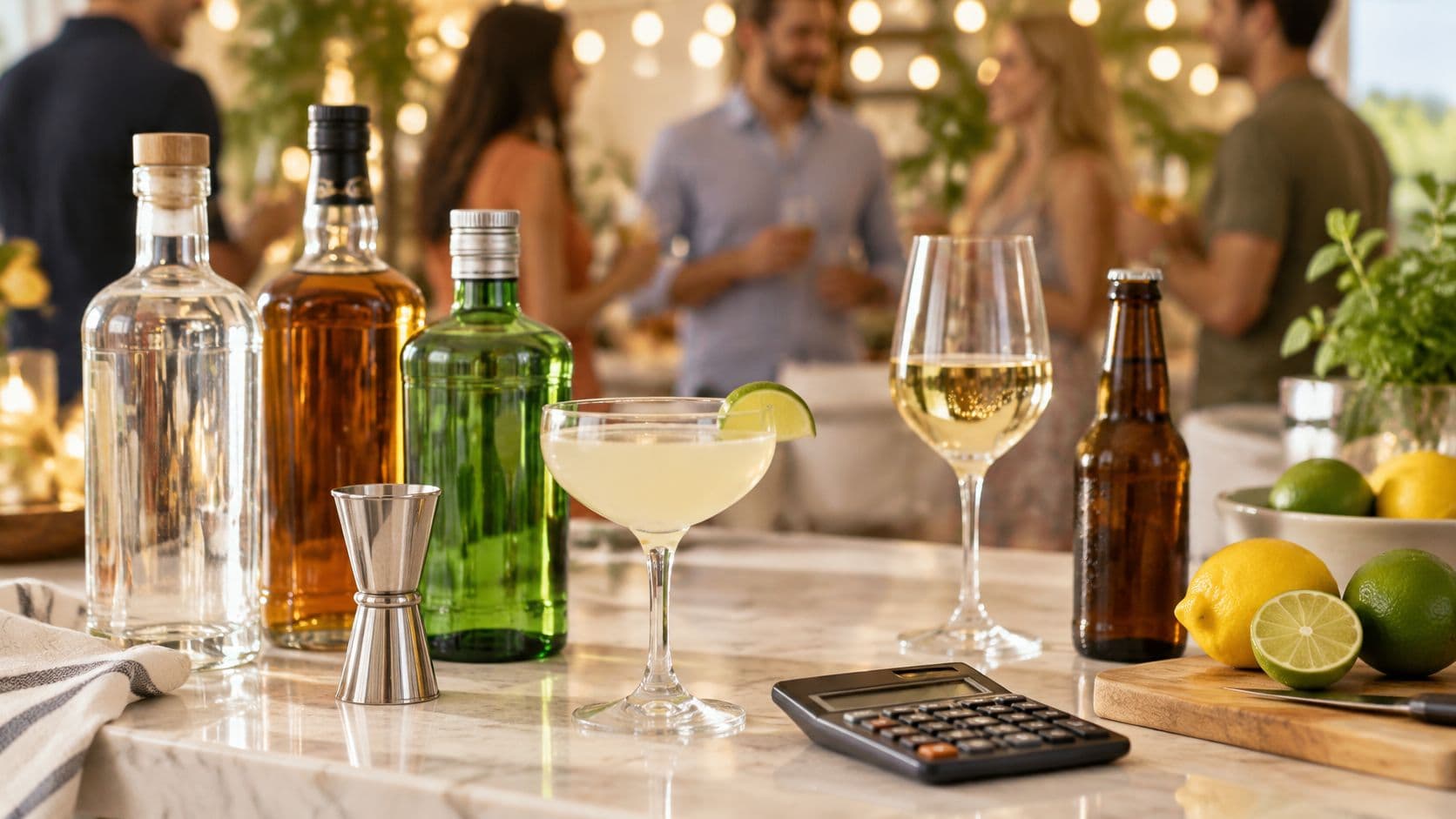
Drink planning goes wrong in two ways. Couples either underbuy and run out, or overbuy and end up with unopened cases after the reception. A practical baseline is about 1 drink per guest per hour, and many planning guides use 2 drinks in the first hour and 1 drink per hour after that (Better Homes & Gardens). For a 4-hour reception, that comes out to roughly 5 drinks per drinking guest, or about 250 total drinks for 50 drinking guests.
Why demand usually runs above the baseline
That math is a purchasing estimate, not a prediction of what every guest will drink. Using the same hours-plus-one assumption, 100 drinking guests over 5 hours gives 600 planned alcoholic servings. Count guests who may drink alcohol rather than the full attendance, and plan water, alcohol-free drinks, and any separate toast alongside that estimate. Bartender staffing also needs to account for busy arrival periods and guests ordering in bursts.
Staffing needs the same blunt treatment. A common planning ratio is 1 bartender per 50 to 75 guests, with the tighter end used when the cocktail menu is more complex or the line needs to move quickly (Wedding Tip Calculator). More guests per bartender does not just slow service. It creates long lines during arrival windows and again right before toasts.
Build the bar from the numbers, not from guesswork
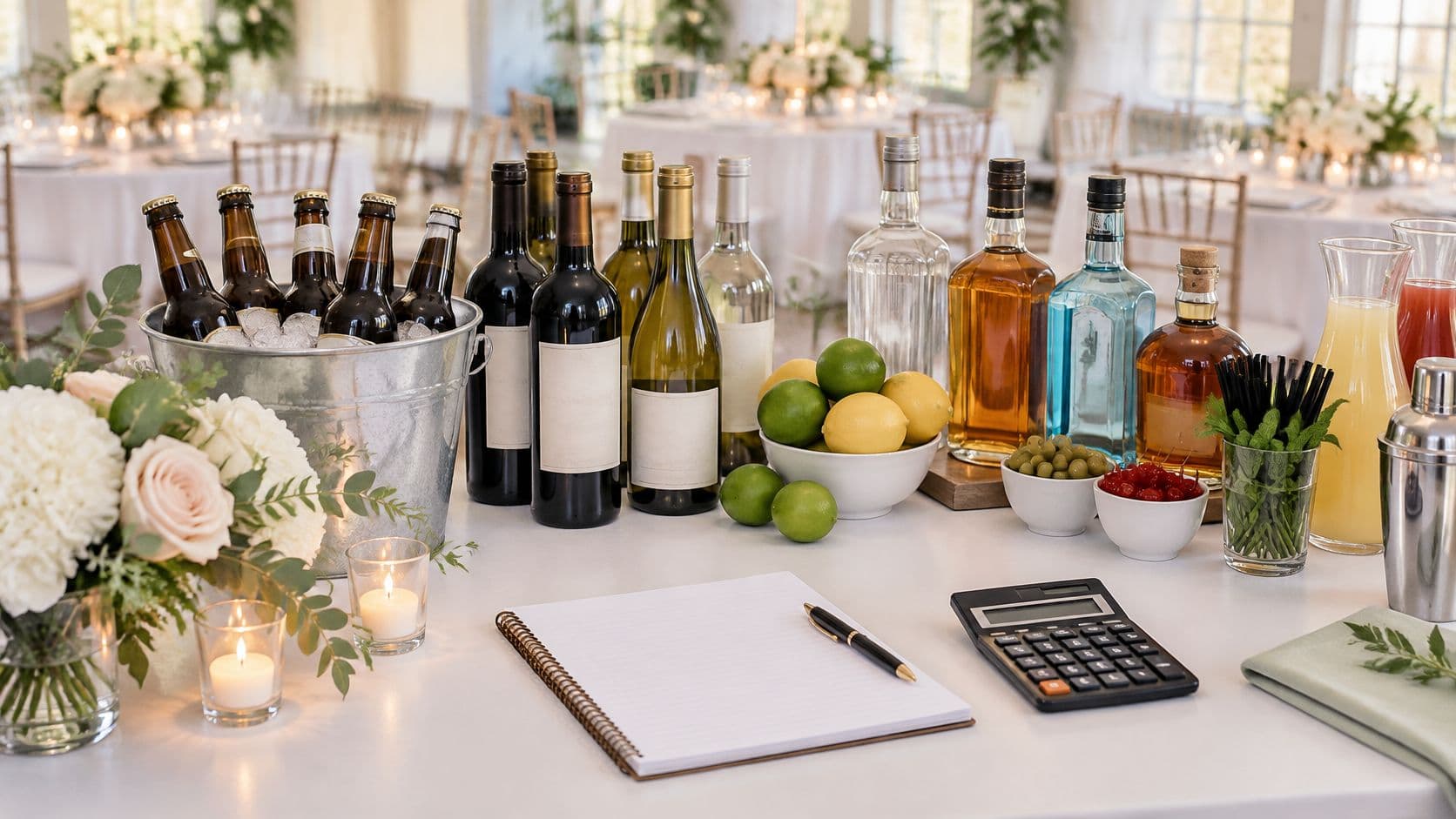
A solid forecast should turn guest count into beer, wine, and spirits before anyone shops. Professional planning tools help because they size the service around the event instead of leaving the host to guess. That matters even more in a dry-hire setup, where the bar team is working within venue rules and a fixed service window, not a hotel beverage department.
BeeHive Mobile Bar, for example, offers drink calculator planning and shopping list support so hosts can buy the right alcohol quantities instead of winging it. That support helps avoid the two mistakes that wreck bar service, too little product and too few hands behind the bar.
Bronze, Silver and Gold mobile-bar packages require a three-hour minimum. Bartender-only service starts at $350 for a two-hour minimum, with each additional hour at $75. It includes professional bartending, bar tools, a tailored shopping list, setup and cleanup. Confirm any additional equipment or supplies in your proposal.
Underbuying alcohol creates obvious problems. Understaffing creates the slower, more annoying version of the same problem.
Navigating Venue Rules and Alcohol Licensing
Couples often ask the wrong question first. They ask what the bar looks like, when they should ask who is legally allowed to do what on-site. That matters more, because the nicest bar in the world can still create trouble if the venue rules and alcohol responsibilities don't line up.
The license question is usually about the service model, not the décor
For an Orange County wedding, confirm the alcohol-service arrangement and any applicable requirements with your venue and California’s Department of Alcoholic Beverage Control. BeeHive’s service is dry hire: the client purchases alcohol separately, and BeeHive provides the services and supplies stated in the proposal. Do not assume another state’s rules establish the requirements for your California event.
For couples, the important part is simple. Ask whether your venue allows outside alcohol, whether the bartender must carry a specific certification, and whether the venue's insurance or vendor rules require any extra documentation. If the venue says no outside alcohol, the whole bar plan changes.
Gratuity, tip jars, and venue restrictions
At BeeHive Mobile Bar, tips are optional and appreciated. Tip jars require client and venue approval. Confirm the venue’s policy before the wedding so the bar setup follows its rules.
Check the venue contract before you sign the bar contract.
Confirming responsibilities early helps avoid surprises. You don't want to learn after booking that your venue blocks certain service styles, or that alcohol must be purchased in a specific way. Couples, planners, and venue coordinators should confirm those details early, especially for California weddings and destination-style events where rules can vary by property.
Designing a Modern Wedding Bar Menu With Zero-Proof Options
A wedding bar should work for guests with different drinking preferences. The Knot’s 2025 wedding-drink roundup includes distinctive mocktails, mobile bars and lighter aperitivo-style drinks. Use these as inspiration rather than a promise that any particular feature or equipment is included in BeeHive’s packages.
Build the menu around hospitality, not assumption
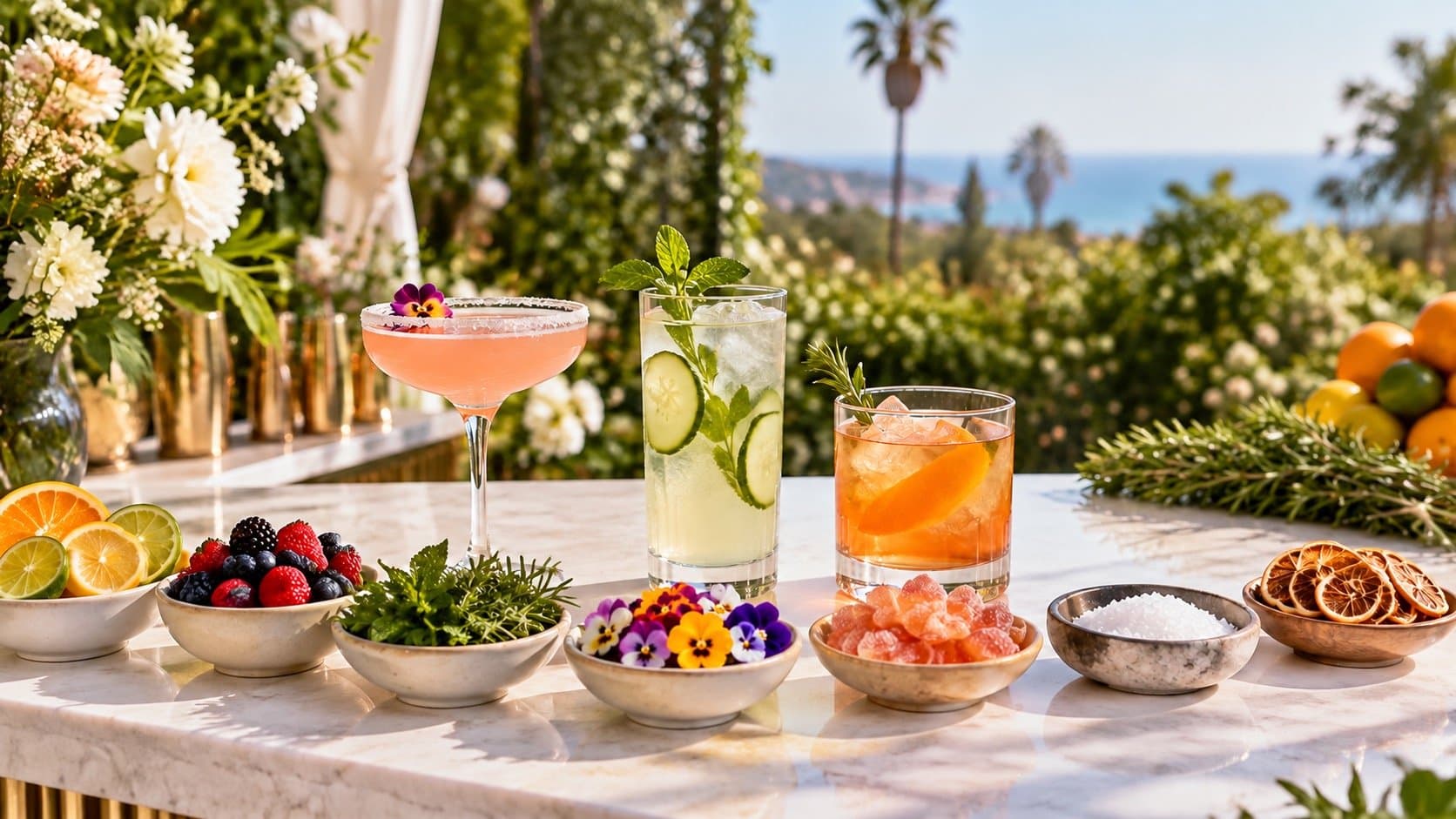
Not every guest wants alcohol, and not every guest wants the same amount of it. That's why a polished wedding menu should include signature cocktails, a real mocktail lineup, soft drinks, water, and at least one refreshing option that feels deliberate, not like a concession. House-made lemonade, infused water, iced tea, and coffee or matcha stations can all fit that role if they're presented well.
The key is presentation. A mocktail should not look like a sad alternate pour. It should have the same garnish standard, the same printed menu treatment, and the same visual polish as the rest of the bar.
Make the alcohol-free lane feel intentional
The best menus use parallel structure. If there's a citrus-forward signature cocktail, there should be a citrus-forward zero-proof option beside it. Give the alcohol-free drinks equally thoughtful garnishes and menu descriptions so every guest has an appealing choice.
That also keeps the guest experience more balanced. People who are pacing themselves, driving, pregnant, or not drinking still get a premium experience, and the wedding feels more inclusive without losing style.
For couples who want help building that structure, BeeHive Mobile Bar's menu development process includes signature cocktails, mocktails, and printed menus, which is the right framework for a modern reception. The point isn't to add a mocktail for the sake of appearance, it's to build a bar menu that works for the full room.
Your Wedding Mobile Bar Planning Timeline
Start the bar conversation early, because the best service teams need time to plan the menu, the shopping list, and the staffing. If you wait until the final month, you'll force rushed decisions and lose most of the value that a mobile bar service can provide.
A simple timeline that works
6 to 9 months out. Choose the package and confirm the venue's rules. At this stage, the bar team needs your guest estimate, event date, service style, and any venue restrictions.
3 to 4 months out. Build the menu. That's when you narrow down signature cocktails, mocktails, and any special refreshments, then decide whether you want add-ons such as soft drinks and water, a Refreshment Station, or a custom garnish style.
4 to 6 weeks out. Finalize the shopping list and buy the alcohol. Don't shop before the bar team gives you quantities, because guessing leads to waste or shortages.
2 weeks out. Confirm the final headcount and adjust staffing if needed. This is when the service plan gets tightened, not reinvented.
Wedding week and day-of. Lock in setup timing, service flow, breakdown, and vendor access. The bar team should handle setup, service, and cleanup so you're not managing the endpoint of the reception while you're still trying to enjoy it.
What good planning removes
Good planning removes last-minute questions about who buys what, who pours it, and who packs it up. It also prevents the two mistakes that cause the most frustration, not enough drinks and not enough hands behind the bar.
A well-run bar feels invisible until the line gets long. Then everyone notices who planned ahead.
If you want a bar that's built around dry-hire logistics, staffing math, and a menu that includes zero-proof options without feeling like an afterthought, BeeHive Mobile Bar is a practical place to start. Visit BeeHive Mobile Bar to talk through your venue, guest count, beverage plan, and add-ons such as extra service hours, soft drinks and water, a Refreshment Station, or a Slushie Machine before you lock in the rest of the reception.