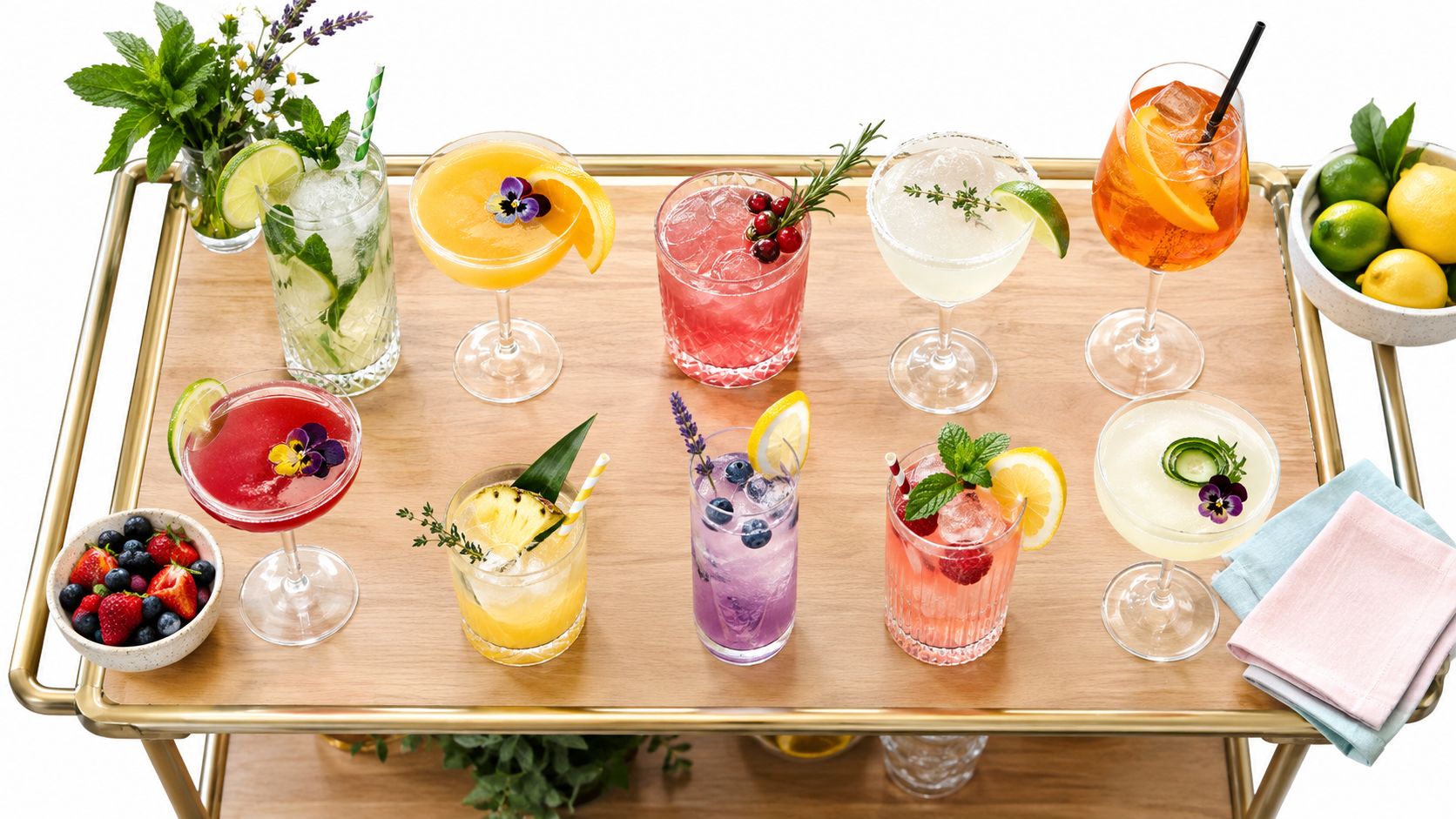
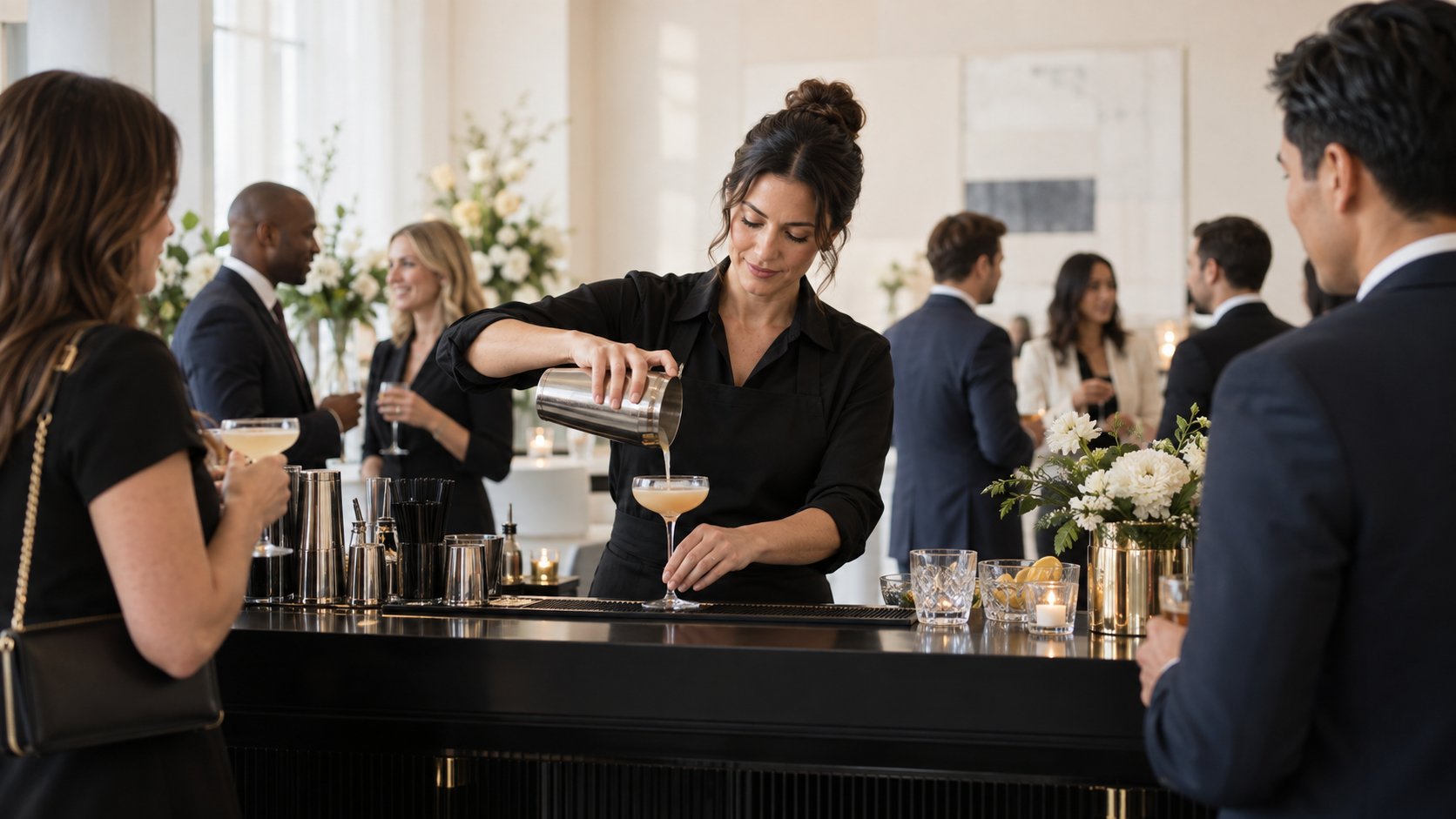
private party bartender
How to Hire a Bartender for a Private Party
Learn how to hire a bartender for a private party, from staffing ratios and certifications to contracts, interviews, and day-of coordination.
By BeeHive Mobile Bar ··11 min read

When you are hiring a bartender for a private party, your guest list is only part of the picture. A beer-and-wine backyard party and a craft-cocktail reception need different preparation and staffing. This guide helps Orange County hosts compare service options, ask useful questions, and book a bar team that fits the occasion.
Table of Contents
- What Hosts Get Wrong About Hiring a Bartender
- How Many Bartenders Your Party Actually Needs
- Certifications, Insurance, and Questions to Ask Candidates
- Independent Bartender vs Dry-Hire Mobile Bar Package
- Contract Terms Every Host Should Require in Writing
- Coordinating the Bartender on the Day of the Event
- Your Hiring Checklist and Next Steps
What Hosts Get Wrong About Hiring a Bartender
A common mistake is choosing staffing by guest count alone and overlooking menu complexity and service style. A 60-guest beer-and-wine reception needs different coverage from a 60-guest party built around signature cocktails, garnish work, and individual orders. Simple pours can move quickly, while more involved cocktails need extra preparation and serving time.
Start with the drink program, not the headcount
Use a four-part decision frame. First, define the drink program. Second, match service style to venue flow. Third, confirm legal and insurance exposure. Fourth, decide whether you need a solo bartender or a packaged bar service.
Practical rule: share a simple outline of the drinks you would like, even if the menu is not final. Your bartender can help refine it and recommend suitable staffing.
That frame matters because the right bartender depends on what they're serving and how quickly the bar has to move. A simple open bar and a custom menu with multiple pours have different labor demands, even if the guest list is identical. Once you understand that, vendor quotes stop looking random and start making sense.
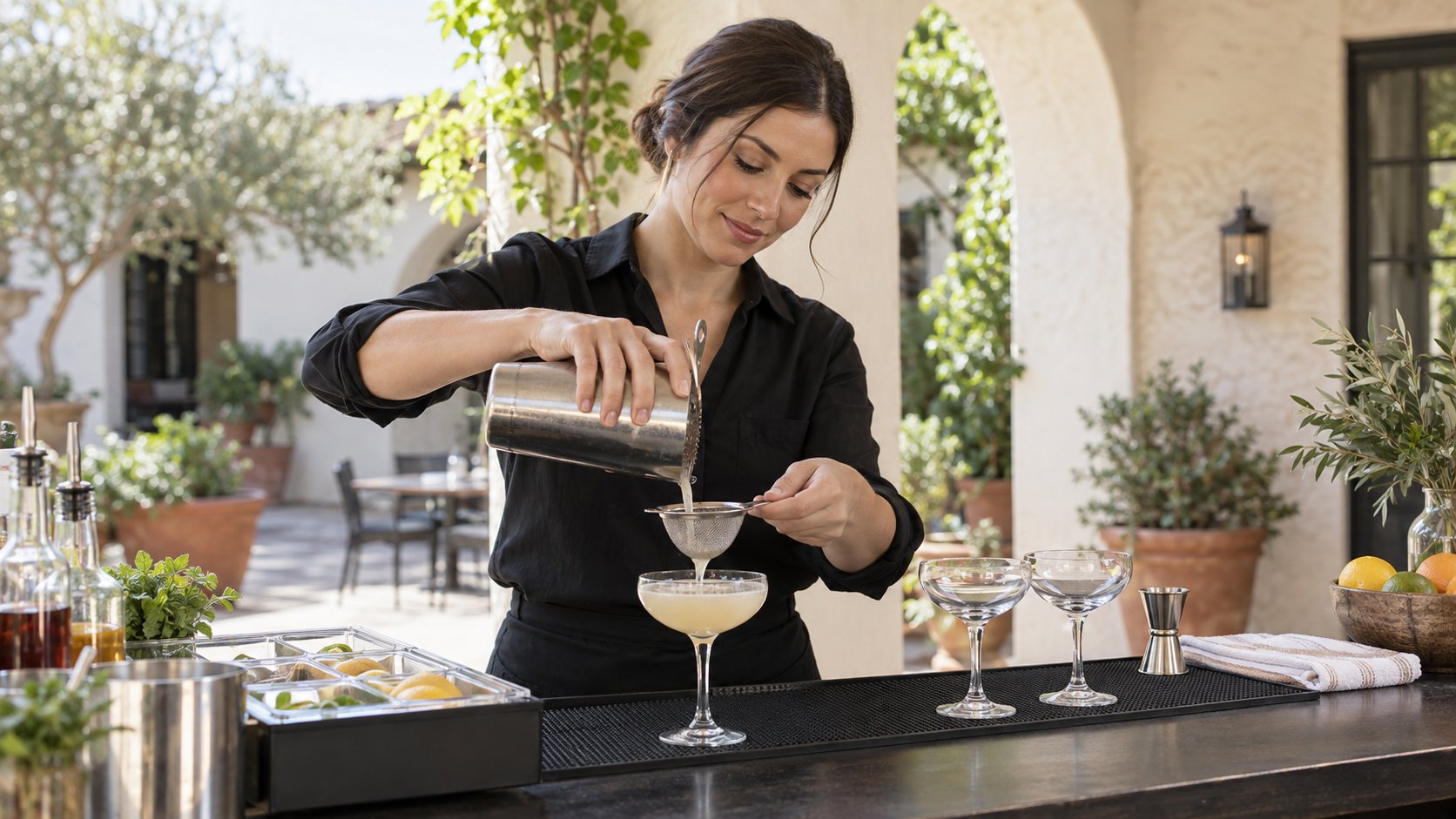
The hosts who skip this framework usually overpay for the wrong kind of help, or they under-staff a menu that needs real speed. Either mistake shows up fast, usually in the form of long lines, stressed catering staff, and a bar that can't recover once the first rush hits.
How Many Bartenders Your Party Actually Needs
Start with your guest count, then ask how many bartenders your chosen menu and venue layout need. Confirm who will replenish ice, restock supplies, and collect used drinkware so those tasks do not interrupt service.
Size the bar for the peak window
Plan for the busiest 20-minute window, not the event average. That rush usually arrives with guest entry, follows a toast, or begins during post-dinner cocktails. If the bar cannot keep pace, guests crowd the service area, catering staff lose room to work, and the event feels disorganized.
Use these benchmarks as a planning baseline:
| Service Style | Bartenders per Guests | Peak Window Notes |
|---|---|---|
| Beer and wine only | 1 per 75 to 100 | Fits simple pours and steady service |
| Standard mixed drinks | 1 per 50 | Suits a basic open bar with moderate volume |
| Cocktail-heavy menu | 1 per 35 to 40 | Allows time to build more involved drinks |
| Signature-heavy ordering | Toward the tighter end of the range | Test staffing against the busiest 20-minute window |
A solo bartender can handle a compact menu with limited customization. Add shaken drinks, fresh garnishes, multiple spirits, or a welcome cocktail, and you need tighter coverage. A second bartender may protect service speed more effectively than adding another full bar station.
Understaffing creates predictable problems. Guests wait, the bar becomes crowded, pours get rushed, and drink quality varies. A long line can also push the bartender into reactive service, making inventory control and responsible cutoffs harder to manage.
Use the bartender staffing calculator for a faster estimate, then adjust for your menu and venue layout. Dry-hire mobile bar packages deserve the same comparison. Their staffing may be bundled with the bar setup, tools, ice, and service flow, so a lower standalone bartender quote may not represent the lower total cost.
Staff for the rush your menu creates, not the average pace you hope to maintain.
Certifications, Insurance, and Questions to Ask Candidates
Alongside cocktail skills and a welcoming manner, look for clear responsible-service practices and appropriate documentation. Ask about relevant training, insurance, and venue requirements early so you can compare providers with confidence.
What to verify before you book
Ask about alcohol-service training and responsible-service procedures, and request proof of insurance appropriate to your event. California RBS requirements depend on the licensed setting and event arrangement, so confirm the applicable requirements with your venue or California ABC. Also check any venue requirements for additional-insured status and any applicable food-handling documentation.
Use a folder, not scattered emails. Keep the certificate, the certificate of insurance, and references together before you sign anything.
If coverage is unclear, ask for the documents and confirm they meet your venue’s requirements before booking.
Questions that cut through the fluff
Ask these exactly, or close to it:
Largest solo event: “What's the largest event you've staffed alone, and what was the drink program?”
Cutoff judgment: “How do you handle a guest who's clearly reached their limit?”
Running dry: “What do you do when a popular cocktail runs out mid-service?”
Inventory control: “How do you keep service moving if the bar gets slammed in the first hour?”
The bad answers are easy to spot. If the candidate can't speak clearly about guest count, dismisses cutoffs, or doesn't have proof of insurance ready, keep looking. A polished bar setup doesn't fix weak judgment.
Independent Bartender vs Dry-Hire Mobile Bar Package
Orange County hosts typically save the most stress here, if they compare the right things. An independent bartender is a person you hire for service. A dry-hire mobile bar package gives you a broader bar solution, usually with staffing plus the physical setup and service components bundled together. BeeHive Mobile Bar is one dry-hire option, and clients purchase the alcohol using BeeHive's curated shopping list while the team handles the rest of the bar details.
Compare the actual scope
An independent bartender may bring tools, but the host often still has to sort out alcohol, a bar surface, backup coverage if the bartender cancels, and proof of insurance. A packaged dry-hire setup usually reduces the moving parts because the bar unit, service items, and setup responsibilities are coordinated as one deliverable. That matters in private estates, backyard venues, and hotel suites where there isn't a built-in bar to lean on.
| Factor | Independent Bartender | Dry-Hire Mobile Bar Package |
|---|---|---|
| Core deliverable | Service labor | Service labor plus bar setup package |
| Host workload | Higher | Lower |
| Alcohol sourcing | Usually on the host | Host still buys alcohol |
| Event setup | Host coordinates more details | More of the setup is bundled |
| Best fit | Simple menus or hands-on hosts | Complex menus or hosts who want fewer loose ends |
For a simple beer-and-wine gathering, an independent bartender can be enough if you're comfortable managing the rest. For weddings, corporate receptions, or any event where the bar is a design element as much as a service point, the packaged route is cleaner. If you want fewer decisions, fewer handoffs, and a bar that looks intentional, choose the bundle.
See how a bundled setup is structured here: mobile bartending packages.
Contract Terms Every Host Should Require in Writing
A clear written agreement helps both you and the bartender understand what is included. Confirm the service details, costs, and responsibilities before paying a deposit so there are fewer surprises on the day.
The clauses that protect you
Start with scope of service. The agreement should spell out arrival time, hours of service, dress code, and the exact number of bartenders committed. Then lock down compensation, including hourly rate or package total, gratuity expectations, overtime thresholds, and payment timing with deposit terms.
Confirm what general liability and alcohol-related liability coverage applies to your event, and whether the venue requires an additional-insured endorsement. If staff are employed, ask the provider to confirm any applicable workers’ compensation arrangements.
The cancellation language needs to be specific. Illness, weather, and venue shutdowns all belong in that clause, along with any force majeure language. You also want an alcohol-service boundary clause that covers ID checks, service cutoff, and refusal protocols, because bartenders need clear authority when a guest has had enough.
Finish with indemnification, damage waiver language, and privacy terms if the event is sensitive or high-profile. Then make sure the signature page matches an attached scope sheet. That exhibit is what you point to when somebody remembers the job differently after the event.
Coordinating the Bartender on the Day of the Event
The day-of handoff should feel boring. That's the goal. If the bartender knows where to go, what to set up, and who answers questions, the bar starts on time and stays calm.
Load-in and setup
Confirm the arrival window before the event, not after. The bartender should know who meets them at the venue, where the bar surface goes, and how they'll access the space. Ice, glassware, mixers, and any signature cocktail components should be staged where they're easy to reach, not buried behind décor or catering equipment.
If you're doing welcome drinks or tastings, prep those items early. A bartender can move quickly only when the build is clean and the setup is predictable.
Service flow and cleanup
During service, keep the bartender connected to catering. Glass turnover, water placement, and toast timing all affect how smoothly the bar runs. If a speech runs long or guests shift rooms, the bartender should know immediately so they can pace service instead of guessing.
Mid-event pivots happen. A guest asks for a new drink, the line spikes, or a mixer disappears sooner than expected. A good setup leaves room for those changes without turning the bar into a scramble.
For a useful service checklist that helps with handoffs, see bar service for event.
At the end, the cleanup handoff should be obvious. Confirm trash, recycling, leftover alcohol handling, and the final walkthrough. Tipping should be decided before the night starts, especially if tip jars aren't allowed, because nobody wants to negotiate that in front of guests.
Your Hiring Checklist and Next Steps
Use this as your working order, not a nice-to-have list.
Define the drink program. Write down whether the bar is beer-and-wine only, standard mixed drinks, or cocktail-heavy.
Map the service window. Identify the busiest 20-minute stretch, not just the event length.
Set staffing expectations. Decide whether one bartender is enough or whether the menu needs more coverage.
Verify credentials. Collect alcohol-service certification, insurance proof, and any needed food handling documentation.
Compare structure. Decide between an independent bartender and a dry-hire mobile bar package.
Read the contract. Confirm scope, payment terms, cancellation language, and alcohol-service boundaries.
Plan the day-of handoff. Assign the venue contact, setup location, and cleanup expectations.
Lock the package details. Make sure the final scope matches the menu, guest count, and service style you need.
For help planning your bar, request a custom quote based on your guest count, venue, menu style, and service window. Or browse BeeHive’s dry-hire mobile bar packages and confirm the staffing, setup, ice, and drinkware included in your chosen package. You purchase the alcohol, and BeeHive helps you plan what to buy.
BeeHive Mobile Bar provides dry-hire mobile bartending for private events across Orange County and nearby Southern California areas. We handle certified bartenders, styled bar setups, custom menus, mixers, ice, garnishes, setup, service, and cleanup, while you purchase the alcohol with a customized shopping list from our team. Visit BeeHive Mobile Bar to explore packages or request a quote for your event.