BYOB wedding
BYOB Wedding Alcohol: Who Buys, Serves and Stores It
Plan a BYOB wedding with clear alcohol responsibilities, venue checks, storage tips and a practical checklist for the host, venue and bartending team.
By BeeHive Mobile Bar ··14 min read
In this guide
A BYOB wedding lets you choose and purchase the alcohol for your celebration. To make it work smoothly, agree who will transport it, keep it chilled, serve it and take the leftovers home. The venue’s permission and your bartending proposal should make those responsibilities clear.
This guide helps couples planning in Orange County and Southern California by arrangement divide the work between the host, venue and bartending team. Start with venue approval, then choose the service and supplies that fit your wedding.
What Bringing Your Own Alcohol Really Means
BYOB means the host provides the alcohol rather than purchasing it through a venue beverage package. You can plan cocktails, beer and wine, or a combination, provided the venue approves the drinks and service arrangement.
BeeHive is a dry-hire service. Clients purchase and provide all alcohol using our personalized shopping list. We don't sell, buy, supply, transport or deliver alcohol. We provide the labor, tools and other items included in the selected service.
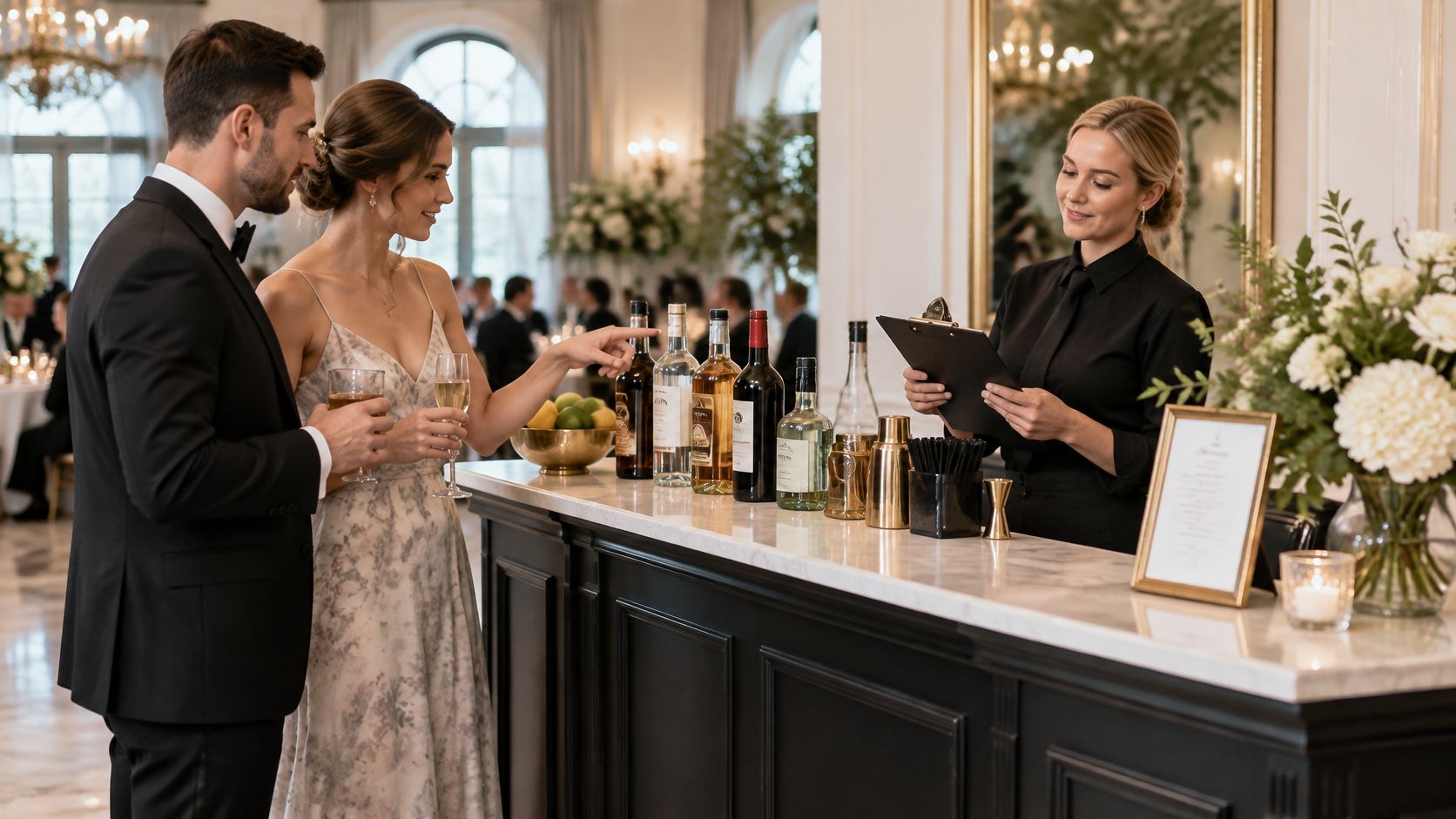
Separate permission, permits and responsibility
Couples often combine several questions that need separate answers:
Venue permission: Does the property allow host-provided alcohol, including the types you want to serve?
Permit requirements: Does this location and service arrangement require approval from an alcohol-control agency?
Financial responsibility: What insurance does the venue require, and what coverage should the host consider?
Hiring a bartender doesn't automatically settle the permit or insurance questions. Likewise, permission to bring wine doesn't establish permission to bring spirits or place bottles on guest tables.
Practical rule: A venue's BYOB label is the beginning of the conversation, not the finished service plan.
Choose the menu once the venue’s boundaries are clear. Whether you prefer beer and wine or include signature cocktails, confirm who purchases each ingredient and who supplies the equipment.
Check supplies against your chosen service before shopping. BeeHive’s mobile-bar packages include the listed bar supplies for the agreed menu; bartender-only clients arrange consumables separately unless added to their proposal. Confirm drinking water and alcohol-free options as well.
Who Buys, Brings and Serves the Alcohol
Alcohol responsibilities by party
Confirm the final scope in the proposal, including the named person handling each host responsibility.
| Responsibility | Who handles it |
|---|---|
| Venue permission and documentation | Host requests written approval; venue sets its conditions. Confirm any permit and insurance requirements before booking. |
| Alcohol purchase and transport | Client purchases all alcohol and arranges transport or an approved retailer delivery. BeeHive does not purchase, collect or deliver it. |
| Mixers, garnishes, ice and coolers | Included for the agreed menu with Bronze, Silver and Gold. With bartender-only service, the client arranges them unless the proposal adds them. |
| Drinkware, napkins and straws | Plastic glassware, napkins and straws are included with packages. Bartender-only clients arrange these; real glassware may be client- or venue-provided by agreement. |
| Bar and tools | Packages include the bar and tools. Bartender-only includes tools; the client provides a suitable bar or adds the $150 mobile bar, which supplies the bar only. |
| Water and alcohol-free drinks | Soft drinks, water and a Refreshment Station are included in Gold. For other services, agree the selection, price and who provides it. |
| Storage before setup | Host and venue arrange an approved, secure receiving and storage area. Confirm refrigeration and access times separately from service-day coolers. |
| Service and last call | Agree ID checks, access to reserve stock and the service cutoff with the bartending team and venue. |
| Leftovers and cleanup | Host names the person who removes unused alcohol and client-supplied items. Confirm BeeHive’s setup/cleanup scope and the venue’s waste and equipment-return arrangements. |
Purchasing isn't a bartender errand
The California ABC frequently asked questions explain that unlicensed bartenders may work parties for bartending fees, but cannot bring alcohol and charge by the glass, purchase alcohol for reimbursement, or accept a prepaid alcohol order and deliver it. Keep alcohol purchases separate from service fees.
We provide the shopping list; the client handles purchasing and transportation. Use our guide to how much alcohol to buy for a wedding to prepare for that purchasing discussion.
Put service checks in the proposal
Write down who checks identification, where reserve bottles will sit and who can access them. Don't leave age checks to whichever person happens to be nearest the cooler.
For bartender-only arrangements, the client supplies the work surface, mixers, ice, coolers, drinkware, garnishes and other beverages unless the proposal says otherwise. A bar structure doesn't automatically bring those supplies with it.
Assign individuals: Replace “family will handle it” with a person's name and contact details.
Record shared items: Give each cooler, water station and delivery a single accountable owner.
Coordinate ceremonial drinks: If you're incorporating a family custom, resources such as Kilts4Less's Scottish traditions for civil ceremonies can inform the celebration. Any associated drinks still need a purchasing and service owner.
Tips are optional and appreciated. Tip jars require both client and venue approval.
Confirm Venue Rules and Permits Before You Buy
Send the venue these questions before committing to alcohol purchases or bartending:
Outside alcohol: Will you approve host-provided alcohol and our intended drink categories?
Service model: Must we provide a host bar or use a licensed caterer?
Documentation: Is an ABC permit, insurance certificate or other approval required?
Boundaries and timing: Where may alcohol be stored, served and consumed, and when must service stop?
Use venue-specific rules carefully
The examples below show how requirements can differ. Sonoma County and Santa Clara County are outside BeeHive’s usual Southern California service area; their policies are examples, not rules for an Orange County wedding. Always obtain the current policy for your own venue.
| Source | How to use it |
|---|---|
| Upper Las Virgenes Ranch guidelines | This linked document is dated 2023. Ask the venue for its current alcohol policy and service cutoff before relying on it. |
| Sonoma County Veterans Memorial Auditoriums alcohol policies | For the facilities covered by this policy, private events with 100 or more guests require a licensed caterer. Confirm the required documentation and service hours with that venue. |
| Santa Clara County parks wedding guidance | This guidance restricts consumption to the reserved site and requires an ABC license or permit for alcohol sales. It applies to those county parks. |
| California State Parks Great Basin District special-event FAQ | This district FAQ requires an ABC permit when an outside vendor, caterer or bartender serves alcohol at covered events. Ask the district responsible for your chosen park which requirements apply. |
Some official guidance also applies only to a particular license type. The ABC advisory on private functions at Type 74 craft distilleries concerns licensed craft-distillery premises. It does not establish permission for a BYOB wedding at an unrelated venue. Confirm your event’s arrangement with the venue and ABC where needed.
When reviewing distinctive properties, including private events at Clos Pegase, use the property's own event information as a starting point for questions, not as evidence that outside alcohol is allowed.
Close the approval loop
Request the venue's alcohol policy in writing.
Confirm the permit question with the venue or relevant agency using official California guidance.
Confirm insurance and any licensed-caterer requirement.
Name the venue contact for event day.
Venue conditions can be stricter than baseline state requirements. BeeHive doesn't determine an individual event's permit status. Our guide to hiring a bartender for a wedding helps frame the service discussion.
Insurance is a separate decision. Ask what event coverage the venue requires and whether to review personal event coverage with a qualified insurance or legal adviser. This article isn't legal advice.
Store, Chill and Transport Alcohol Safely
Name the person receiving the alcohol and confirm where it will be stored. Use a secure area with access limited to the designated adults, and check that they can reach the stock and refrigeration throughout setup and service. Agree how reserve bottles will reach the bar.
Check the actual cooler or refrigerator space against your bottle and can quantities. Keep beverage ice separate from ice used to chill bottles or cans, and use a clean scoop for ice that goes into drinks.
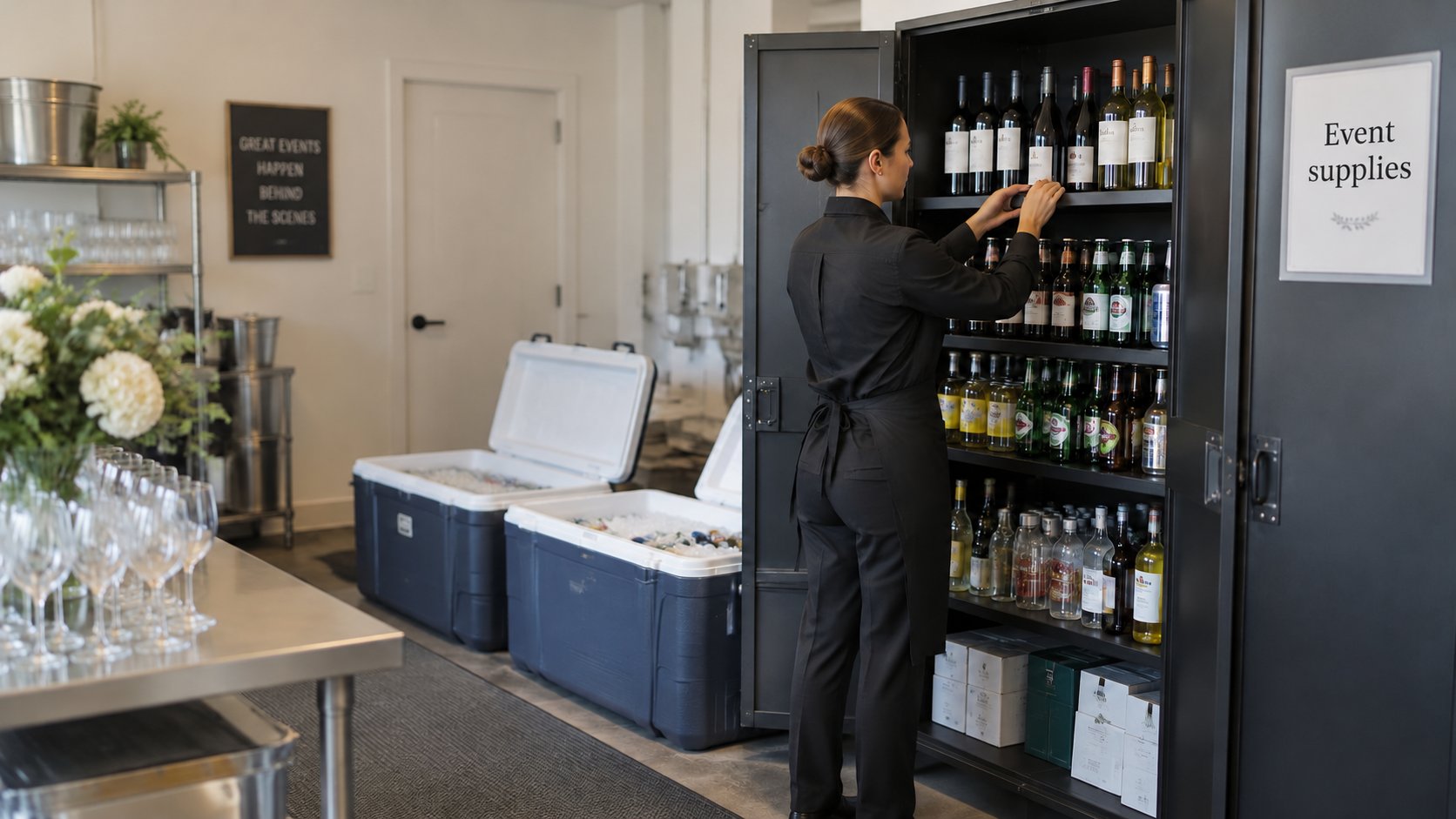
Arrange transport and the receiving handoff
The host arranges collection or an approved retailer delivery, confirms the loading window and names the receiving person. Ask whether venue staff accept deliveries or move cases; do not assume those tasks are included.
Use sturdy, divided cases to prevent bottles knocking together during transport. Presentation packaging, such as branded bags for bottles, can be useful for gifts, but should not replace protective transport cases. Confirm any gifting supplies separately; they are not a stated BeeHive inclusion.
Run service through a controlled bar rather than reachable reserve coolers. Keep food and water moving through the room, and agree in advance who the bartender contacts when a guest pushes back on a refusal.
At the handoff, count the stock against the shopping list, confirm its storage location and tell the bartending team who has access.
Estimate stock without confusing it with consumption
Worked example: For 100 guests who may drink alcohol and five hours of bar service, an inventory assumption of one serving per person per hour gives 100 × 5 = 500 planned servings. Choosing one extra serving per person for the entire event adds 100, giving 600. The extra serving is optional, not an automatic requirement.
Use BeeHive’s wedding alcohol planning guide to turn that estimate into beer, wine and cocktail quantities. These are purchasing scenarios, not drinking targets. Adjust the plan for your menu, guest preferences and service hours.
Plan mixers, water, alcohol-free drinks, ice and garnishes separately, then mark which are already included in your service. For a toast, decide whether its servings come out of the planned total or are an additional purchase. Do not count the same toast twice.
Service Timeline From Booking to Last Call
Use the timeline below to agree responsibilities before the wedding. The suggested timing is a planning example; your venue deadlines and proposal take priority.
BYOB planning timeline
Adjust these deadlines to the venue's approval process and permitted access windows. Permit, insurance and policy approvals run in parallel and can move every date below, so settle them with the venue before you build the schedule.
| When | Task | Owner |
|---|---|---|
| Before signing the bartender agreement | Confirm scope, staffing level, supplies and who supplies and stores the alcohol | Host and bartender |
| When the guest list is firm | Hand over one final count and the service start and end times | Host |
| Two weeks out | Lock the toast pour, glassware and who distributes it | Host and bartender |
| Delivery day | Count stock in, confirm cold storage and who can access it | Host and venue |
| Setup, before doors | Build the controlled bar, label alcohol-free options, confirm the last-call time | Bartender and host |
| Last call | Stop pouring at the agreed time and move opened bottles out of guest reach | Bartender, host and venue |
| Day after, if permitted | Remove remaining stock and complete venue disposal requirements | Host |
Match the purchase to the actual service window
Calculate alcohol quantities from actual bar-service hours. Ceremony timing, dinner arrangements and venue cutoffs can affect that window. Review the shopping list with your bartender before buying so recipes, purchases and included supplies agree.
For a toast, confirm who chills the bottles, provides the glasses, pours and distributes them. Agree the timing and whether extra help is needed so the toast can be prepared without interrupting the main bar.
Handoff check: Before guests arrive, the bartender and host contact should confirm available stock, alcohol-free labels, reserve access and the service cutoff.
Agree any extra service hours and their price in advance, subject to availability. BeeHive lists additional bartender-only time at $75 per hour and package time at $100 per hour per bartender. Your proposal confirms the arrangement. Our guide to bar service for an event explains the wider setup and staffing decisions.
Handle Leftover Alcohol and Cleanup
Leftover alcohol remains the host's property. Paying for bartending doesn't transfer ownership or responsibility for unused bottles to the bartender.
Name the collection person before the wedding and confirm whether the venue requires removal that evening. Overnight storage must be expressly permitted; don't assume a day-after pickup is available.
Close the inventory before clearing the space
Count remaining bottles and record opened and unopened stock separately. Keep the count with purchase receipts so you can review what was used and check any retailer's return policy without assuming returns are available.
Once service ends, move open bottles out of guest reach. Confirm the venue's removal and disposal rules before anyone starts carrying stock away.
Count remaining stock: Give the host's collection person the inventory and designated storage location.
Secure unopened alcohol: Remove it or store it under the venue's approved arrangements.
Clear opened and mixed supplies: Handle leftover mixers, prepared drinks and ice according to the cleanup plan.
Return equipment: Check venue refrigerators, borrowed tubs and storage areas before departure.
Record shortages: Note missing supplies and unused ingredients for future planning.
Keep cleanup boundaries practical
Under bartender-only service, we clean the bartending work area as booked. The host handles client-supplied coolers, trash, drinkware and leftover supplies unless the proposal assigns those tasks differently.
That distinction matters when the bartender's work is finished but cases, melting ice and rental items remain. Give the collection person access instructions and a departure deadline so the venue isn't left holding the host's inventory.
Confirm Responsibilities Before You Book Your Bar
Choose bartender-only service if you or the venue can prepare a suitable bar and arrange the consumable supplies. Choose a mobile-bar package when you want BeeHive to bring the bar and its listed package supplies. In both cases, the client purchases and provides the alcohol.
Bartender-only and mobile-bar service compared
| Option | Starting price | Hours | Included |
|---|---|---|---|
| Bartender-only | $350 | Two hours included; two-hour minimum | Bartending, bar tools, an alcohol shopping list, setup and cleanup of the work area |
| Bartender-only plus mobile bar add-on | $350 plus $150 | Two hours included; two-hour minimum | Bartender-only service plus the mobile bar itself, with no additional supplies or services |
| Bronze mobile bar | From $750 | Three hours included | One bartender, two signature cocktails, the bar, tools, mixers, ice, coolers, plastic glassware, napkins, straws, standard garnishes, a custom printed menu, setup and breakdown |
Bronze is planning guidance for up to 70 guests, with one bartender and two signature cocktails; final scope is confirmed in your proposal. Its included supplies differ from bartender-only service, so use the responsibility checklist above for your selected option.
Settle three points in writing before you sign:
Staffing: Confirm guest count, menu complexity, service hours and the busiest arrival period. Package guest guidance is not a guaranteed capacity; your proposal confirms the team.
Menu printing: Packages include a custom printed menu. It is not automatically included with bartender-only service or the $150 bar add-on.
Booking and payment: A 25% deposit confirms the booking. Your proposal sets out the event-specific total, remaining balance, payment deadline and any agreed extra time.
BeeHive is based in Orange County and serves Southern California by arrangement. Confirm travel fees, venue permission and the person responsible for the alcohol handoff when requesting your quote.
Share your date, venue, guest count and preferred drinks with BeeHive Mobile Bar for a personalized wedding quote.