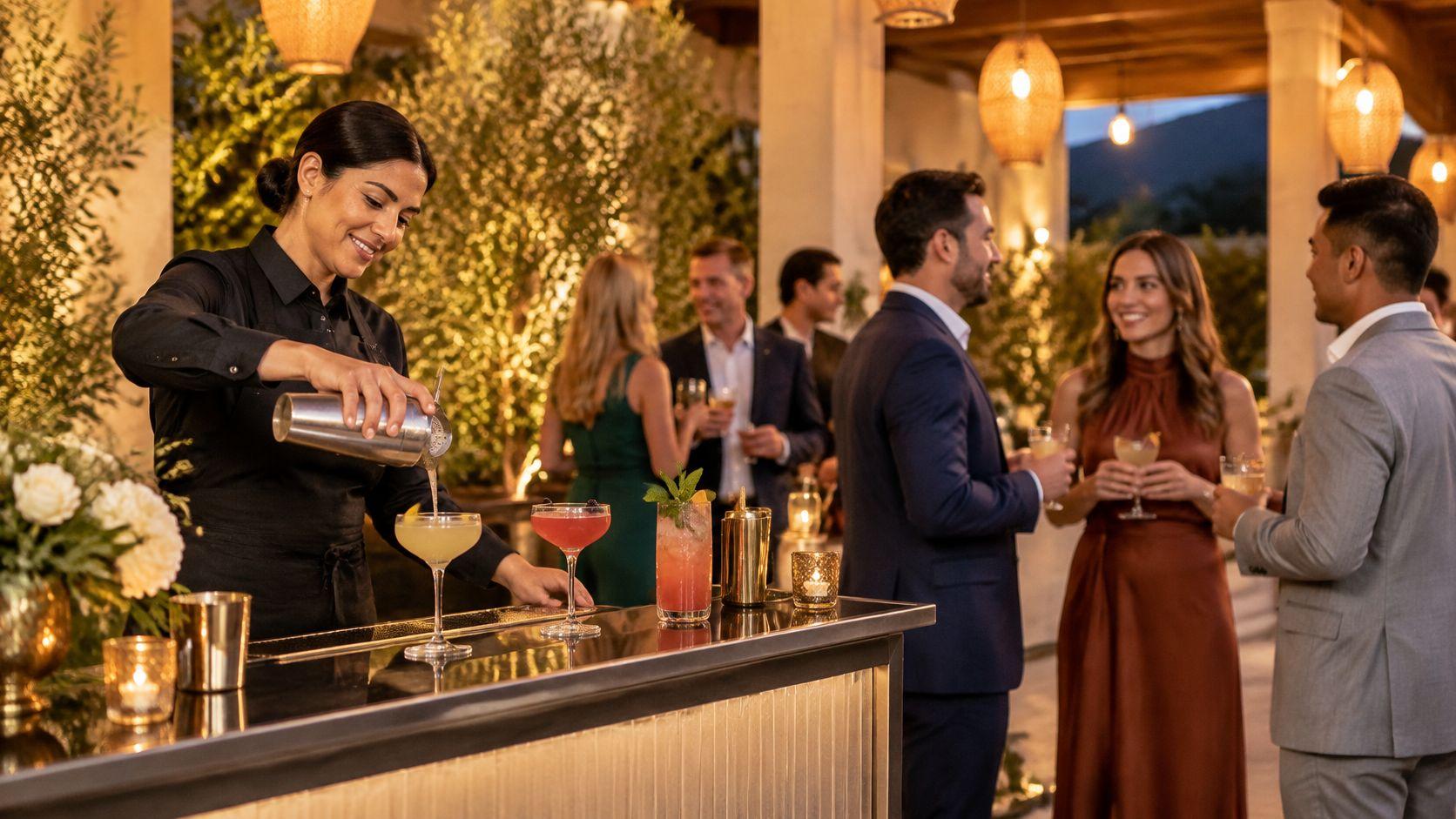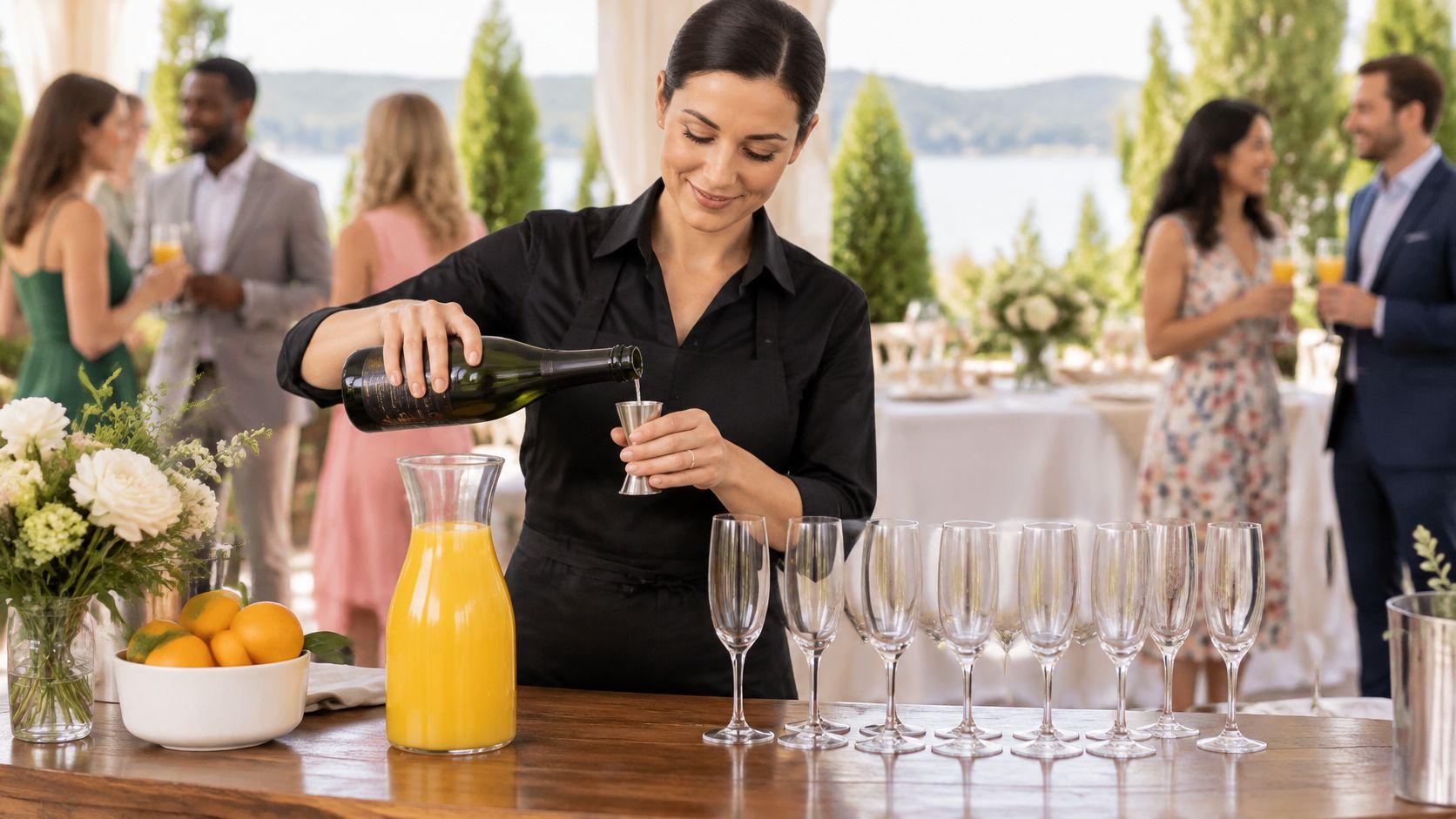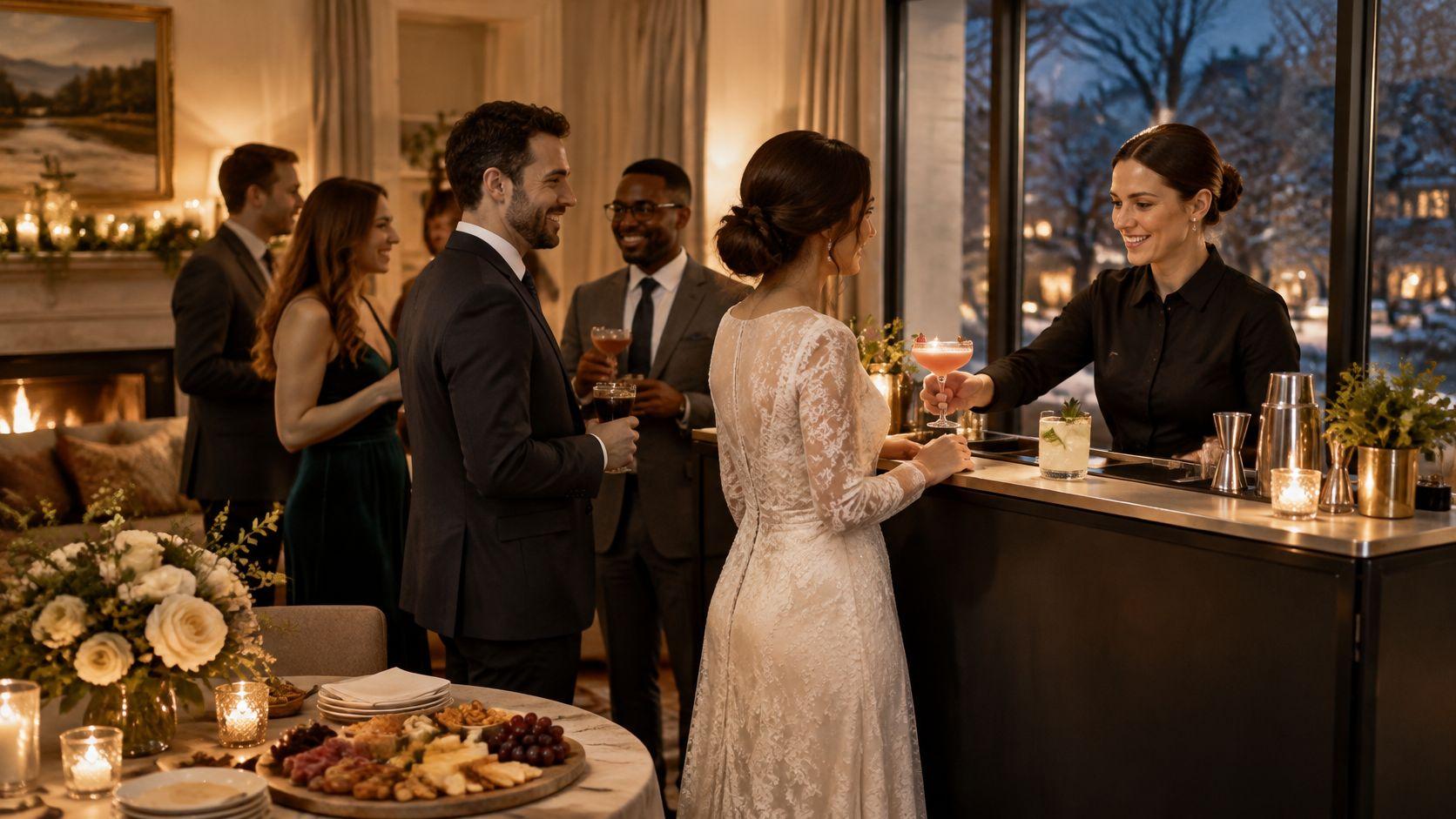
engagement party checklist
Engagement Party Checklist: Hosts, Timeline and Bar Setup
Plan your engagement party with a practical checklist for hosts, budget, venue rules, drinks, toast quantities and cleanup responsibilities.
By BeeHive Mobile Bar ··13 min read
Updated
In this guide
A useful engagement party checklist starts with five decisions: who is hosting, who is paying, how many guests you expect, where the party will happen and what the venue permits. Set those first, then book food, bar service and rentals around the same plan.
Whether you are planning a family gathering at home or a private venue in Orange County, keep one shared checklist with a named person responsible for each task. It makes invitations, purchases and vendor questions easier to manage.
Engagement Party Checklist by Planning Stage
Build the engagement party checklist backward from the event date. Lock the venue, the target guest count, the budget, the service format and the alcohol policy first, then schedule vendor confirmations, menu decisions, rentals, a floor-plan review and the final headcount.
In Orange County, California, that usually means choosing between a home, a restaurant's private room and a community venue with a rentable space, and that one choice decides whether outside bartenders and host-provided alcohol are even allowed.
Use the stages below in order and adapt the timing to your venue and vendor deadlines. You do not need a complicated planning system; a shared document with owners and due dates is enough.
| Stage | Key tasks | Owner | Confirm before moving on |
|---|---|---|---|
| 1. Set the foundation | Name the hosts, agree who pays and set a budget with a contingency | Hosts | Payer and host roles written down |
| 2. Choose the setting | Shortlist venues, confirm bar rules and check for an indoor or covered backup | Hosts | Venue confirmed in writing |
| 3. Lock the guest list | Agree the invite list and the estimated number of drinking guests | Hosts | Guest list approved before invitations go out |
| 4. Choose the bar service | Agree the menu, service window and whether bartender-only or a mobile bar fits | Hosts with the bar provider | Comparable scope supplied to each provider |
| 5. Send invitations and track replies | Set a response date, track RSVPs and dietary needs, follow up with guests who have not replied | Hosts | Final headcount sent to vendors |
| 6. Arrange food and rentals | Book the caterer or food separately, confirm rentals and seating | Hosts | Food and rental counts match the final headcount |
| 7. Plan toast, cleanup and final checks | Set toast time, confirm the cleanup owner, check supplies and contract balance | Hosts and bar provider | Event-day plan agreed in writing |
Build the budget from current quotes and keep a reserve for named uncertainties, such as weather backup or extra rental time. For example, a host choosing a 10% reserve on a $3,000 working budget would set aside $300, making the total budget $3,300. This is an illustration, not an average event cost or required percentage.
Outdoor settings need a practical access and weather plan. Destination inspiration, such as these beaches near Arecibo, Puerto Rico, can help you think about the setting, but it does not establish your venue’s event permissions, facilities or weather provisions. Confirm those directly with the venue.
Share the same estimated guest count, venue details, service window and supply responsibilities with each provider so you can compare quotes fairly.
Who Hosts, Pays and Sets the Guest List
Agree the guest list with the couple, then name a main host for invitations and vendor communication. Record who pays for the venue, food, bar service, alcohol and rentals. Hosting and paying can be shared responsibilities; neither should be assumed.
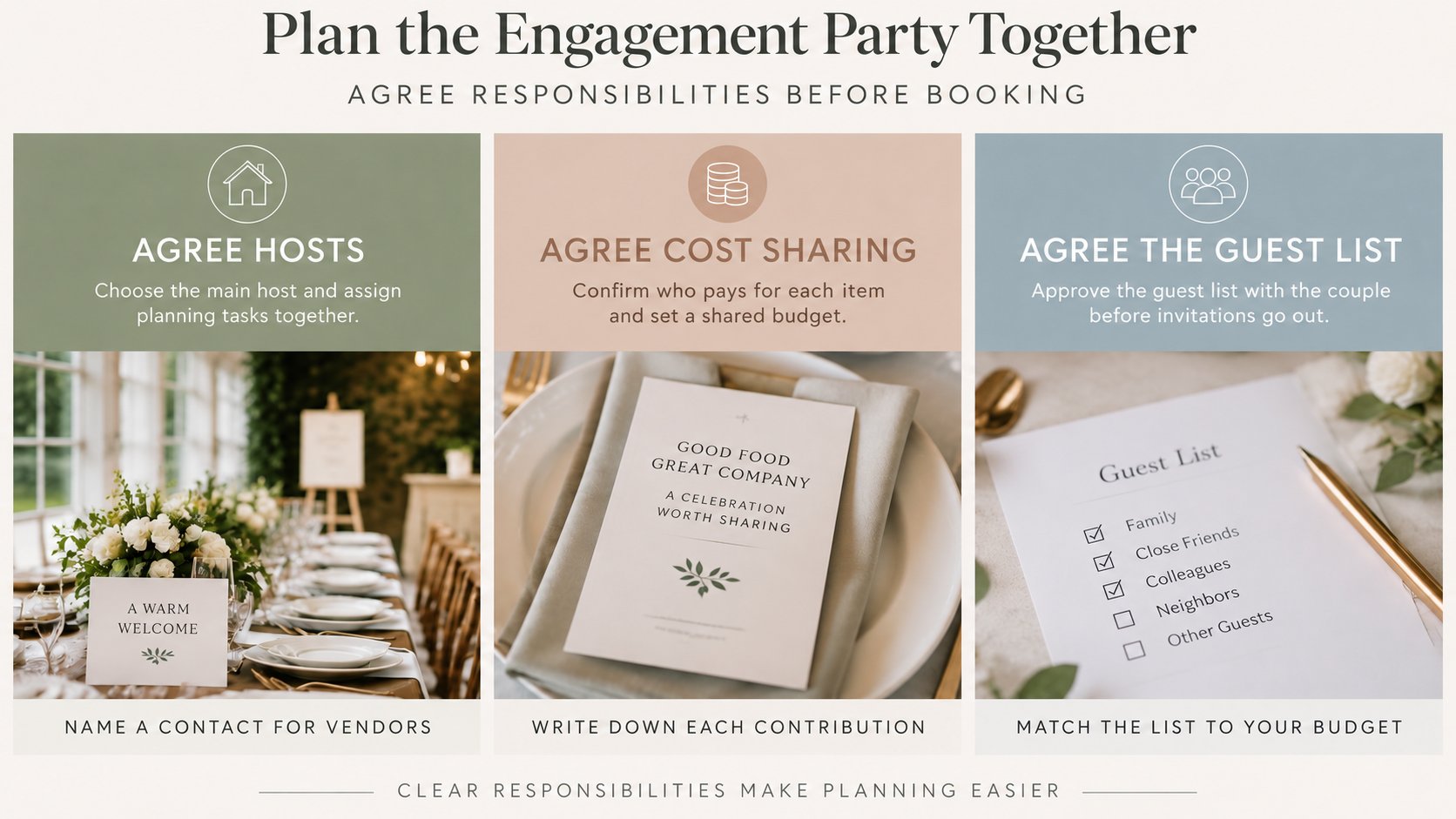
Roles stay straight when they're drawn once and shared with everyone contributing money.
Choose guests by who should share this particular celebration, and keep the list from setting expectations for the wedding itself. Inviting someone here and leaving them off the wedding list is the awkward conversation nobody wants in eight months.
Track five fields, not one
One shared sheet handles the whole response process. Every invitee gets response status, dietary or accessibility needs, plus-one details, the person responsible for follow-up, and a follow-up date. Without those last two fields, nonresponses sit untouched until the week of the party.
Base the final count on replies and direct follow-up rather than a generic attendance percentage. Record the vendor’s headcount deadline beside your RSVP deadline so there is time to resolve missing responses.
Name the list owner. One host answers for the final count.
Name the bar payer. And the payer for food, rentals and any venue fee.
Record two numbers. Total headcount and estimated drinking guests, because quantities depend on who drinks.
Venue Rules to Confirm Before Booking Bar Service
Put five questions to the venue before any bar booking, in the order they affect the plan.
Outside bartenders and host-provided alcohol. Some venues restrict one or both. If the answer is no, the service format changes before pricing ever comes up.
Bar location. Indoor or covered, with a backup space if weather shifts, a clear footprint for a standalone portable bar and a safe path for guests carrying drinks.
Access and timing. Load-in time, the time the event must end and any closing time the venue sets. Confirm in writing that an early alcohol cutoff doesn't shorten booked service hours or waive minimums.
Facilities. Sinks, ice storage, handwashing, power and trash. A missing sink changes how a bar operates.
Supplies and cleanup. Who removes empties, where leftover supplies go and who owns the work area afterward.
Tell the venue how the event will operate: invited guests, host-provided alcohol, any admission charge or fundraising, and who will serve. Confirm the applicable requirements with the venue and California ABC. A rule written for a particular licensed business should not be treated as a general permit rule for every private party.
Calling the party private doesn't settle every permit question.
For a venue where you're supplying the alcohol yourself, the BYOB wedding planning guide walks through what hosts typically stage and transport.
Close the conversation with a short written list the venue signs off on: permitted service format, bar location, load-in and closing times, available facilities, and cleanup ownership.
Bartender-Only or Mobile Bar for Your Venue
The right choice comes down to what the space already has. Bartender-only service suits a venue with a usable bar or work surface where you're comfortable buying and staging supplies. A package suits a space that needs a complete portable bar with supplies built in.
| Item | Bartender-only service | Bronze, Silver or Gold package |
|---|---|---|
| Alcohol | Client buys and provides | Client buys and provides |
| Printed menu | Not included automatically | Included |
| Mobile bar unit | $150 add-on supplies the bar only | Included with the package |
| Soft drinks and water | Not included | Included in Gold |
| Self-serve Refreshment Station | Not included | Included in Gold |
BeeHive doesn't buy, sell, supply, transport or deliver alcohol under either arrangement, so the alcohol column never changes. Confirm the package that fits your guest count in the proposal, since guest guidance is planning direction rather than a guaranteed capacity.
The rule that decides it
California's Department of Alcoholic Beverage Control states that a host may hire an unlicensed bartender for service work, but that bartender cannot sell alcohol, bring alcohol to the event, pick it up for reimbursement or deliver it. The host purchases all alcohol in advance and keeps ownership of it, while the bartender may recommend beverages and quantities, bring equipment, charge a flat or hourly fee and collect tips for bartending, per the ABC licensing FAQ.
That single rule settles the most common misunderstanding at an engagement party: the host purchases and provides the alcohol; the bartender provides the agreed service.
Bartender-only service fits when the venue has a proper bar or counter, you're happy to buy mixers, ice, coolers, drinkware and garnishes yourself, and someone can receive deliveries and stage supplies before load-in. Add the mobile bar only if the surface is missing.
Choose a package when the space is empty, when the guest count is large enough that staging becomes a job in itself, or when you would prefer the included bar supplies to be handled for you. Confirm any optional station and its requirements separately before ordering supplies.
Cocktails and Alcohol-Free Options for Your Guests
A short drinks menu prevents three handoff problems: the host knows what to buy, the bartender knows what to batch, and guests who prefer alcohol-free drinks can see an appealing option on the same menu.
Keep the offer tight: one signature cocktail, one beer or wine option where the venue allows it, and one substantial alcohol-free choice that goes beyond soda. Serve the zero-proof drink at the same bar or station as everything else, label it clearly, and budget it as its own line because mixers, citrus, ice and extra drinkware do not behave like alcohol spend.
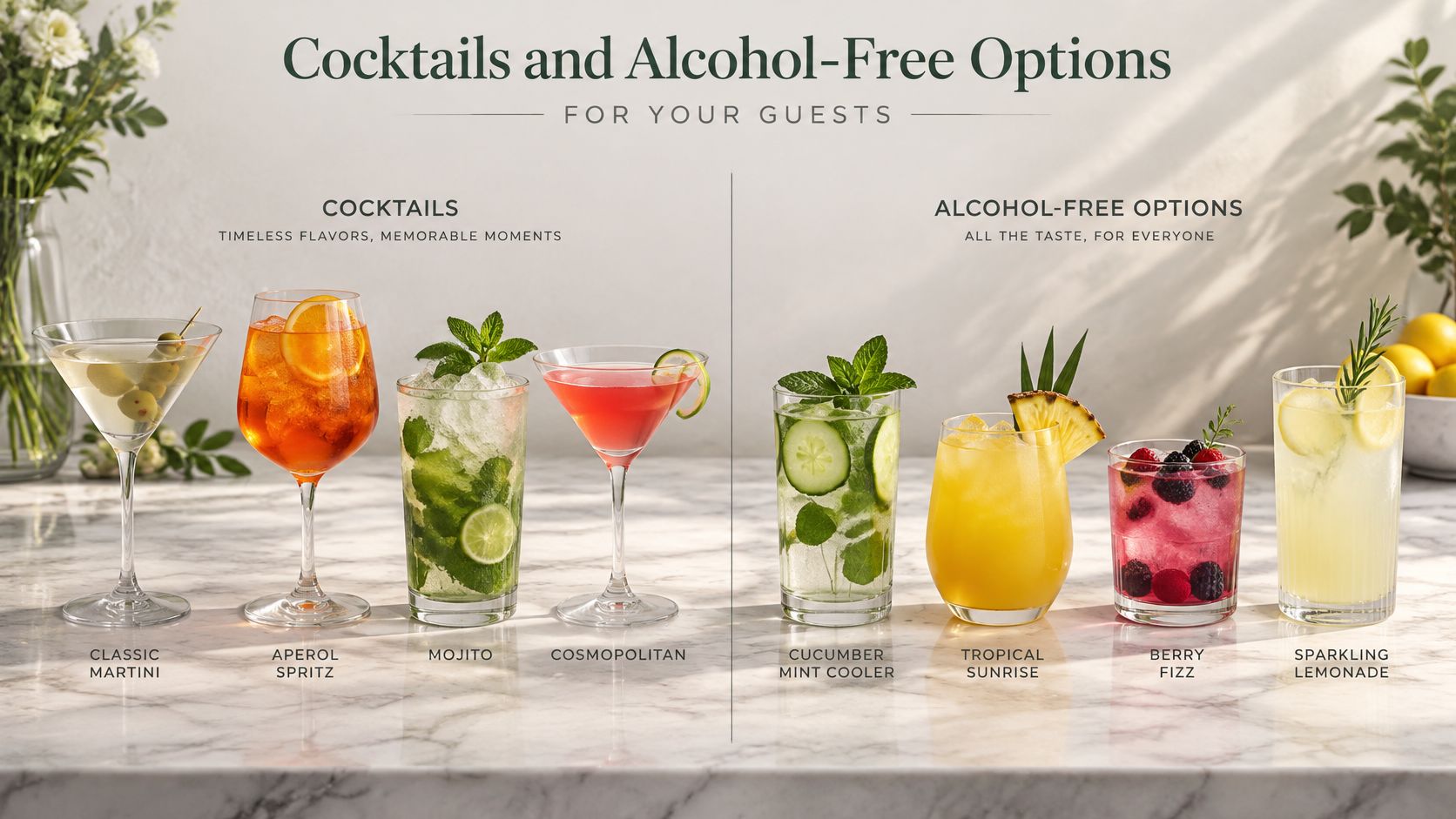
Menu inspiration. Confirm selected drinks and any client- or venue-provided glassware in your proposal; BeeHive packages include plastic glassware.
Assign every consumable to an owner before ordering. Alcohol sits on the host shopping list. Mixers, water, alcohol-free drinks, ice and garnishes need their own list, since the alcohol calculator covers alcohol only. Bronze, Silver and Gold packages include plastic glassware, napkins and straws; bartender-only service and a stand-alone mobile bar add-on leave those supplies to you. For depth beyond soda and juice, explore alcohol-free mixers and shrubs to give zero-proof drinks bitterness, acid and aroma rather than extra sugar. Our mocktail bar ideas cover builds that hold up at a family party.
Age control is a checklist item
California law prohibits selling, furnishing, giving or causing alcohol to be provided to anyone under 21, per the California Alcoholic Beverage Control Act. Family engagement parties routinely include younger guests, so decide in advance how identification gets checked, who supervises alcohol access and where alcohol-free drinks are offered.
Food, coffee and a zero-proof hour still leave driving risk with the guests. Put transportation on the checklist as its own task.
A Hypothetical November Timeline for Toasts and Cleanup
This example assumes a November engagement party for 60 guests, including 45 guests expected to choose alcohol, with a covered venue and an indoor backup. Adjust lead times to availability and the deadlines in your agreements.
| When | Task | Owner |
|---|---|---|
| Early planning | Name hosts, agree budget and contingency, shortlist indoor or covered venues | Hosts |
| About four months before | Book venue, confirm bar rules, access and closing time | Hosts |
| About three months before | Agree menu, service window and drink mix; request bar quotes with the estimated drinking-guest count | Hosts |
| About six weeks before | Send invitations with a response date | Hosts |
| About two weeks before | Follow up nonresponses; send final headcount to vendors | Hosts |
| One week before | Confirm weather backup, supply list, ice quantity and food delivery | Hosts |
| Toast window | Set toast time with the venue; record toast drinks separately, then reconcile them with the overall drinks estimate so they are counted once | Hosts |
| After the toast | Handle empties, leftover alcohol storage and trash as agreed in the proposal | Hosts and bar provider |
Two rows deserve a second look.
The toast window. Settle the time with the venue first, since the closing time and the bar's service window both constrain when a toast can happen. Then count toast drinks as a separate line so they aren't buried in the cocktail estimate. Our champagne toast calculator handles that number on its own.
Cleanup. Assign it before the party starts. Bottles, empties, leftover alcohol and trash need a named owner and a stated destination, and that agreement belongs in writing rather than in someone's memory at 10 p.m. Splitting the row between hosts and bar provider only works if each side knows which items are theirs.
For the toast, suppose 45 guests choose sparkling wine and 15 choose an alcohol-free drink. At a 3 oz pour, eight complete pours fit in each 750 mL bottle. Plan six sparkling-wine bottles for those 45 pours, plus 45 oz of alcohol-free drink for the other 15 guests before any reserve. If a toast is already part of your drinks estimate, do not add it again.
Send These Details to Request a Quote
Send enough detail that the quote reflects your event rather than a guess.
Event date, start and end time, and the venue name.
Whether the venue allows outside bartenders and host-provided alcohol.
Bar location, indoor or covered status, load-in time and the weather backup.
Total guest count and your estimate of drinking guests.
The service window and the drink mix you have in mind, including the alcohol-free plan.
Whether a toast is planned, when, and who handles cleanup.
If you're considering bartender-only service, which supplies you expect to provide.
Each event gets quoted individually based on guest count, service hours and any add-ons. Extra hours require availability and a written agreement, and partial-hour billing is confirmed in the proposal rather than assumed. Travel beyond Orange County is arranged case by case. To reserve the date, we need both a signed contract and a 25% deposit, and the proposal states the balance and its deadline.
Food sits outside our scope, so line up the caterer in parallel. These questions for vetting caterers on allergies and staffing are worth asking before you sign anything.
Booking runs in four steps: start the conversation, customize your bar, confirm and prepare, then enjoy the celebration. When the proposal arrives, check its responsibilities against this list before you sign.
BeeHive offers Bronze, Silver and Gold mobile-bar packages, plus separate bartender-only service. Packages include the bar, tools, mixers, ice, coolers, plastic glassware, napkins, straws, garnishes, setup, breakdown and a custom printed menu. Bartender-only includes bar tools, setup and cleanup, and a shopping list; the host supplies the bar and beverage supplies unless the proposal says otherwise. The $150 mobile-bar add-on supplies the bar only. Clients purchase and provide all alcohol under either arrangement. Request an engagement-party quote with your date, venue, guest count and service hours.